Showing posts with label X-men Gold. Show all posts

Thursday, September 13, 2018

Time (Inevitably) Runs Out: X-men Blue #35

The following is my review of X-men Blue #35, which was posted on PopMatters.com.


Certain time-displaced, alternate universe, or cloned characters never wear out their welcome. Time paradoxes aside, someone like Cable is here to stay. Josh Brolin's role in Deadpool 2 and Dafne Keen's role in Logan effectively cements that. Those are rare exceptions, though. For the most part, characters derived from others or a byproduct time travel have an expiration date. It's arguable when that date was for the original five X-men who first came to the future in All-New X-men, but most agree that date has long since passed.

Pretty much every circumstance that kept the time-displaced X-men in the future is moot at this point. Jean Grey is no longer dead. Cyclops never causes a mutant genocide. Iceman doesn't stay in the closet. Angel never loses his wings. At one point, there are legitimate barriers keeping them in the future, which play out in X-men: Battle of the Atom. However, most of those barriers crumble throughout Cullen Bunn's run on X-men Blue. They're now at a point where they not only have the ability to go back. They accept that they must go back.


While the logistics of that story play out in Extermination, there's room for reflections and reconciliations. X-men Blue #35 doesn't act as a prelude to Extermination as much as it does an epilogue to the journey that Brian Michael Bendis began in All-New X-men. These characters, despite the many myriad of complications incurred by time travel, are in a very different place than they were when they first arrived. Some improve their situations. Some see it become much worse. In any case, they're all painfully aware of the headaches generated by time travel.

No matter their status, these iconic characters are no longer the wide-eyed idealists that they were when Charles Xavier began training them. They've seen a future where ideals get tainted at every turn and spirits get broken almost as often. In doing so, these characters diverge considerably from the path they were on before. The structure of X-men Blue #35 is built around each member of the time-displaced X-men confronting their future selves, but affirming that they're not the same person.

The problem is they can't be the person they've become anymore. Beast makes clear that in order to avoid any further pitfalls relating to time travel, he and his fellow time-displaced X-men have to forget everything they've experienced during their time in the future. Going back with the knowledge they have, from who wins in every superhero civil war to who plays in every Super Bowl, has serious implications for the overall continuity of the Marvel universe. Given the many convolutions of that continuity, as it stands, the timeline just can't handle that.

This makes for a strange, but intriguing tension between the characters. In each conversation they have with their future selves, they try to affirm they're their own person. However, they also acknowledge that they can't separate themselves from who they're destined to become. If they do, they break reality and after the events of Secret Wars, the timeline just can't handle that.


Each member of the time-displaced X-men deals with their own existential crisis, of sorts. Jean comes off as having a full-blown identity crisis, lamenting at how she feels false in the presence of her older self. To some extent, she's right. She and her teammates aren't the "true" version of the original five X-men at this point in the timeline. They're anomalies that have to disappear completely in order to keep reality intact. To them, though, going back to their own time doesn't mean resolving a long-standing time travel plot. It means erasing themselves from existence.

It's actually Bobby who seems to understand this more than the others. For him, going back in time means going back to being closeted and that bothers him. It's one of those ideas that would bother anyone identifying as LGBT, having to go back to that isolated place and live a lie. Even though his older self is in a much better place in terms of accepting his identity, it doesn't make the underlying notion less distressing.

That's the overall sentiment of each time-displaced character in X-men Blue #35. They agonize over the idea that everything they've done in the present will only serve those in the present. They still have to go back and endure all the hardships, heartaches, and losses. Despite accepting that they must return to their own time, they establish that their preference is to stay. Existing is just inherently more appealing to oblivion.

While it's easy to sympathize with those feelings, Bunn belabors the consequences of following those feelings. Parallel to the interactions between the time-displaced X-men and their counterparts, there are brief flash-forwards that depict the future that unfolds if they don't go back. This side-story doesn't just link X-men Blue #35 with the events of Extermination. It reveals the extent of the existential crisis the X-men face.


Even if going back to their own time is overdue, there are still a lot of problems that these characters want to resolve. Angel is still going to lose his mind and become a horseman of Apocalypse. Cyclops is still going to end up dead and vilified for all the wrong reasons. Beast is still going to end up a blue, furry ape man who plays fast and loose with time machines. Despite the many harsh realizations they've endured, they still retain that youthful idealism that defines the original five X-men.

If that's the primary goal in X-men Blue #35, it definitely succeeds. In terms of furthering the various other plots that have been unfolding since X-men Blue began, it doesn't fail, but it comes up short. There's a lot of lamentation and frustration, but not much else. This being the penultimate issue of the series, there isn't time to tie up every loose end. However, that's the appeal/irony of time travel stories. If everything were resolved, then time travel wouldn't be necessary in the first place.

Final Score: 7 out of 10

Thursday, September 6, 2018

Heroes, Criminals, and Heroes Operating As Criminals: Astonishing X-men #15

The following is my review of Astonishing X-men #15, which was posted on PopMatters.com.


In principle, being a superhero is simple. You find criminals, you fight them, and you defeat them. If you can cooperate with the authorities along the way, then that's a nice bonus. When heroes have to operate as criminals, though, things aren't as simple. That doesn't just apply to vigilantes like Batman and the Punisher, who overtly operate outside the law. Sometimes, a superhero has to function in an environment where they're branded a criminal for the wrong reasons.

That is Alex Summers' situation in Astonishing X-men. Now that he's not inverted anymore from the events of AXIS, he's attempting to rebuild his superhero credibility. His timing is actually really good, in some respects. With both his brother, Cyclops, and Captain America also having to salvage their reputations due to events like Secret Empire and Avengers vs. X-men, he's following ongoing trend among heroes. With the way things play out, however, he's going in the wrong direction and it's not entirely his fault.

Matthew Rosenberg and Greg Land give Havok plenty of opportunities to channel his brother's leadership skills. He manages to assemble a new team of X-men to carry out heroics on their own terms. It's not exactly a team of A-list heavy hitters, though. Between Warpath's attitude in Weapon X and Colossus still recovering from his failed wedding in X-men Gold #30, Havok needs more than just leadership to get them on the same page.

The underlying plot of Astonishing X-men #15 starts off simple. The Reavers are on the loose again and the X-men usually don't have many qualms about fighting Reavers. However, some major complications emerge that would hinder Captain America on his best day. These aren't the traditional, mutant-hunting Reavers the X-men are used to. They're now directly sponsored by the government and operating under the guise of law enforcement. Given the government's tenuous history with policing mutants, it's only shocking that they didn't resort to killer cyborgs sooner.


This immediately puts Havok and his new team are already behind the curve. Their confrontation with these state-sanctioned Reavers goes so badly that even Kitty Pryde has dissociated the X-men from Alex's team. Logistically speaking, they can't even call themselves X-men. In the eyes of both the law and their friends, they're not superheroes operating as criminals. They're just criminals.

This isn't just bad press like the kind Spider-Man deals with every other day. Officially, Havok's team fight and evade government agents. That's both frustrating and jarring because it subverts the X-men's traditional approach to battles. Like Sentinels or evil clones crafted by Sinister, the Reavers are the kinds of enemies that X-men usually battle without a second thought. It's almost like a reflex akin to Captain America saluting the flag or Deadpool making a dirty joke.

The difference this time is that the Reavers are sanctioned by the government. It's not entirely a mutual partnership. The Reavers, led by Donald Pierce, make it abundantly clear that this partnership was imposed. They didn't cooperate with the government out of civic duty. They were essentially drafted into serving and Havok doesn't find that out until it's too late.


This creates an unusual, but interesting backdrop to the conflict. There's no mind control or inverted personalities at work here. The only alteration to the X-men/Reaver clash is that the Reavers are now operating under the whim of the authorities. Even if they do it unwillingly, they're still technically government operatives and Havok's team fought them. From a legal perspective, they assaulted agents of law enforcement. That's not what heroes do. That's what criminals do.

It's less about the ethics of heroism and more about the bureaucracy surrounding it. Any team of heroes, be they X-men or Avengers, can take down all the cyborg assassins they want. Both the public and those in government will gladly cheer them on. However, as soon as those same cyborg assassins start operating with the government's seal of approval, those cheers turned to outrage.

It puts Havok in an unusual predicament. He wants to redeem himself. Instead, he and his new team find themselves on the wrong end of the law and public opinion. The media doesn't frame the story as the X-men heroically defeating the Reavers before they can harm innocent mutants. They report it as a group of rogue mutant terrorists battling government forces.

Technically, that's not some misleading headline on the front page of the Daily Bugle. That actually happens, forcing Havok and his new team to lay low. That doesn't work either, though. The Reavers still find them, which means they have to defend themselves. Doing so means fighting back, but that only compounds the problem because they're still fighting government officials.

It's a no-win situation for Havok. Unlike his older brother, he doesn't have a boy scout reputation to fall back on. People may question a news story that claims Captain America sucker-punched a police officer, but they're less inclined to doubt that Cyclops' less capable brother did something awful, especially after being inverted for so long. He even acknowledges how bad it gets, escaping to a bar frequented by other colorful criminals. It seems every conceivable force is working against Havok's efforts to redeem himself and for once, that's not just brooding.


It's not completely hopeless. Rosenberg never lets the tone of the story get too bleak. Havok still gets a chance to do his brother proud, hatching a plan towards the end that requires him to embrace his new criminal connotations to some extent. It's bold, but fitting approach. Given how the plot is almost framed, it feels necessary.

That also feels like a flaw, of sorts, because neither Havok nor his team really have much choice along the way. There's never a sense that they have any agency in how they impact the plot. The same goes for the Reavers, as well. Having that government label really limits their agenda to serving whoever has the right emblems on their uniform.

Even with those limits, Astonishing X-men #15 succeeds in presenting Havok with a daunting, yet novel challenge on his path to redemption. Just forming a new team of X-men and following his brother's example isn't enough. He has to operate as a criminal in order to become the hero he wants to be. His brother would be proud, but probably just as frustrated.

Final Score: 7 out of 10

Thursday, August 16, 2018

Tenuous Temporal Deconstruction: Extermination #1

The following is my review of Extermination #1, which was posted on PopMatters.com.


There comes a point in every time travel story where the damage to the timeline become untenable. Sometimes, it takes too long to get to that point and when functional time machines are involved, that's saying something. It's debatable whether the original five X-men that, as ripped from the earliest issues of Uncanny X-men, have gotten to that point, but the circumstances surrounding Extermination #1 make a pretty convincing case that their time has come.

The details are unavoidable. The reasons why the time-displaced X-men came to the future and stayed there are obsolete. Cyclops never causes a mutant genocide. Jean Grey doesn't stay dead. Angel doesn't permanently lose his mind. Iceman doesn't stay in the closet. Everything that once horrified them about the future no longer applies. It makes their continued presence both superfluous and confusing. Ed Brisson and Pepe Larraz promise to resolve that with Extermination.

That necessarily requires more time travel and all the timeline-twisting machinations that come with it. As Back to the Future so eloquently demonstrates in 1985, the source of the temporal disruption must also be the solution to some extent. The events of Extermination #1 just add more urgency, as well as a new threat that promises to step up the time tables, literally and figuratively.


The nature of that threat is vague, but it involves familiar names. Things happen fast and suddenly. Big messy battles unfold, giving Larraz plenty of chances to create stunning visuals. There are also multiple casualties, each of which have weighty implications. However, since casualties in a time travel story are often tenuous at best, the drama is limited. Despite this temporal barrier, Brisson and Larraz find plenty of ways to inject it into the plot.

The stakes go beyond the integrity of the timeline. They get personal very quickly and hit the time-displaced X-men right in the proverbial heart. Some get hit harder than others and the emotions from characters like Cyclops and Jean Grey are palpable. For a time travel story, which often relies heavily on sub-plots laden with sci-fi technobabble, this kind of heartfelt anguish is refreshing. It makes Extermination #1 feel like something other than a time travel story, of which the X-men have many.

However, some of that melodrama comes off as forced. In between the destructive battles, the personal dimensions of the conflict emerge from outstanding side-plots that have been unfolding among the time-displaced X-men in recent years. The overall structure of Extermination #1 doesn't rely too heavily on it, but it doesn't complement it, either. There are even moments that don't entirely mesh with recent developments in the books that precede it.


The moments between Teen Cyclops and Bloodstorm don't really match with what has been going on with them in X-men Blue. There's an implied connection between them, but one that comes off as contrived for the sake of increasing the impact. The moments between Teen Jean, Rachel, and Cable also assume a lot about the relationship they have. While past issues of All-New X-men and X-men Gold establish that they are aware of one another, there's little indication that they've fleshed it out to any meaningful extent.

This doesn't make the events in Extermination #1 less coherent, but for anyone who has been following the journey of the time-displaced X-men, it feels disconnected from their over-arching story. To some extent, this keeps the story from getting bogged down by continuity. At the same time, it also overlooks the larger implications of the original five X-men's presence in the future. 

That's not a requirement to making the plot work, though. The time-displaced X-men don't need to have a deep, well-developed relationship with every character involved. Just knowing who Rachel and Cable are is enough to understand why the events that unfold are a big deal, both for original five X-men and the integrity timeline. It effectively shoves the cold, hard truth in their face in a way they can no longer ignore. Their presence in the future cannot continue. This is the end of the line for them and there's no scenario in which they can stay without incurring greater losses.

That's the underlying message of the story and Brisson effectively belabors that. Some characters, namely Teen Cyclops, openly acknowledge that they have to go back to their own time at some point. They even understand that has to happen soon, but there are a lot of factors keeping them in the future, including the unpleasant fact that one of their future selves is still dead. Like any approaching time paradox, though, they don't get much say in the matter.

When the past, present, and future finally catches up to the time-displaced X-men, it feels abrupt, yet necessary. There's a sense that there has to be consequences to them being in the future for as long as they have. Some characters suffer more than others and it weighs heavily on the time-displaced X-men. It also sets the stage for a much bigger, much more personal confrontation with two familiar characters who have a tendency to show up in dystopian futures.

Even with all these personal and temporal connections, there isn't a sense that what happens in Extermination #1 is a culmination of everything the time-displaced X-men have done. There's no critical mistake that puts them past the point of no return. Forces they neither control nor know about simply catch up to them and make them pay for daring to have personal attachments in the future. It's a common consequence of time travelers, but one that has just enough depth to work.

Extermination #1 certainly succeeds in firing the first shots in the conflict that will ultimately send the original five X-men back to the past. There's little mystery as to who is behind it. Brisson doesn't drag anything out and still leaves room for plenty of intrigue. The situation is dire, but it isn't hopeless and since the X-men are always one misstep away from creating another dystopian future, that counts for a lot.

Final Score: 6 out of 10

Thursday, August 2, 2018

Summer Camp Snoozer: X-men Gold Annual #2

The following is my review of X-men Gold Annual #2, which was posted on PopMatters.com.


Every great character goes through phases that don't put them in a very positive light. Some even become downright infamous, marking a dark period in their overall arc. In certain cases, those moments are best left forgotten in the same tradition as the original Clone Saga, Wolverine's relationship with Squirrel Girl, and that time time Juggernaut hooked up with She-Hulk.

Unfortunately, the recent events surrounding Kitty Pryde cannot be easily brushed aside. The events surrounding her wedding to Colossus in X-men Gold #30 are just too heavy to overlook. To say that she comes out of that ordeal looking less than heroic is like saying Mole Man needs a shower. She does herself a huge disservice, being the one to propose to Colossus and the one to break it off. In terms of superhero credibility, Kitty is near the bottom with Magneto.

That's not to say her character is beyond repair. X-men Gold #30 certainly adds complications, but not to the point of irreparable harm on the level of Hank Pym beating his wife. Kitty Pryde still stands out as once of those characters who undergoes the most growth over the course of her time with the X-men. She joins the team as a scared, uncertain teenager who just got thrust into this world of mutants, killer robots, and living weapons. X-men Gold Annual #2 takes a step back form her current melodrama and explores this critical side of Kitty Pryde, recounting less heartbreaking parts of her journey.

Seanan McGuire and Marco Failla don't try to reinvent Kitty Pryde. They simply attempt to reinforce the kind of person she already is and they don't even rely on killer robots to achieve this. Instead, X-men Gold Annual #2 recounts a younger Kitty Pryde taking a break from the Xavier Institute to go to summer camp. It's not exactly a journey through the Savage Land, but it's fitting in that it allows Kitty to feel normal for a while.

That ends up being a pretty significant theme, the act of being normal when unavoidable circumstances say otherwise. Kitty Pryde knows and acknowledges that she isn't normal. She can pretend to be normal and for a good chunk of the story, that's what she does. For the most part, it makes her happy. It gives her a chance to reconnect with old friends, enjoy traditional summer activities, and not worry about Magneto attacking every other week. For a young Kitty Pryde who has yet to get trapped in a giant space bullet, this should be cathartic.


That's not how things play out, though. Kitty learns fairly quickly that there's no use being normal. She's just not the same person she was before she found out she was a mutant. It shows in subtle ways at first. Her friends can't keep up with her anymore, she feels more restless at night, and she's a bit more willing to break the rules, which feels kind of like Wolverine's influence on her. It makes for powerful moments of self-awareness that put Kitty ahead of the curve for most teenagers. However, when mutant issues enter the picture, both the personal insight and the overall story start to falter.

Things devolve quickly for Kitty once she decides to stop being normal and exercise her inner X-men. She finds out that these friends who she gets along so well with for half the story actually harbor anti-mutant sentiments. It further shatters the notion that she can just be normal for a while. Her reaction is somewhat predictable. Her sentiments aren't much different from most expect of a teenager girl who just learns a hard lesson about the real world. She doesn't come off as Kitty Pryde, a future leader of the X-men with a thing for guys named Peter. She's just another upset teenager.

That's understandable, given her age in this story. It still hinders the overall drama. There's an effort to build more by having her cross paths with another young mutant who has to overhear the anti-mutant diatribes. It makes for a few nice moments, including Kitty's first kiss, but there's nothing iconic about it. There's no Spider-Man kissing Mary Jane on top of the Empire State Building. It's just two people who bear the brunt end of mutant hatred and help each other.

It's sweet, but contrived way to salvage Kitty's summer. Not much comes from it, though. There's some basic bullying on the part of their fellow campers. There's no nuance or depth to it. At times, it comes off as being copied from any teen drama movie made after 1987. Kitty doesn't even do anything to confront it. She doesn't change hearts or minds. She doesn't do anything to change anyone else's notion of normal. Granted, she's still young and inexperienced at this point, but the lack of ambition she shows seems out of character for an aspiring X-men.

As a result, there's no real resolution in X-men Gold Annual #2. Kitty meets up with her friends and they just apologize to her for how they reacted. It happens randomly and without any real incentive. They feel bad about how they acted and that's it. There's no greater story behind it and that limits the overall impact. Kitty doesn't even get an opportunity to be heroic or show them the error of their ways. It just happens and everyone shrugs it off. That's as interesting as it gets in the end.

That's not to say X-men Gold Annual #2 doesn't have merit. It's still a refreshing reprieve for Kitty Pryde, exploring another part of her past at a time when her present is such a mess. It even has a relevant message about being normal in a world that isn't always kind to the abnormal. Kitty tries to just fit in and ignore the things that make her weird. That's something plenty of teenagers and adults can relate to. There's a story there, but it's incomplete and downright bland at times.

Kitty Pryde still has a lot of room to grow. She's one of those characters whose journey reflects the struggles of the X-men and mutants, as a whole. It's part of what makes her endearing and likable. X-men Gold Annual #2 does nothing to undercut that, but it does little to enhance it. In the past, she's still a young woman who's destined to become a member of the X-men. In the present, she's still the one who leaves Colossus at the altar. For her, growth isn't just inevitable. It's necessary.

Final Score: 4 out of 10

Thursday, July 26, 2018

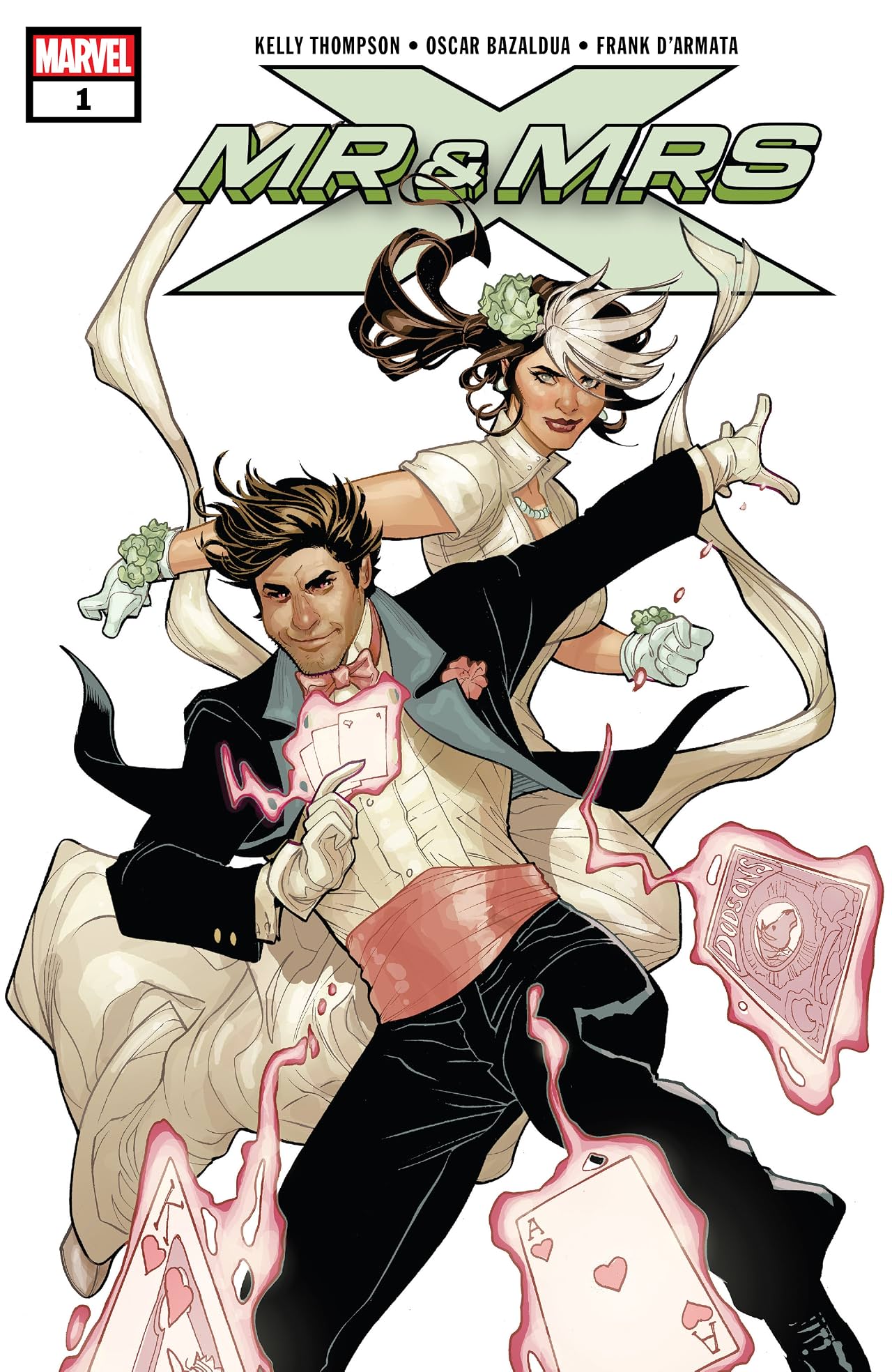
Righting the Romance and Loving the Love: Mr. and Mrs. X #1

The following is my review of Mr. and Mrs. X #1, which was posted on PopMatters.com.


These are difficult times in the history of superhero romance and for a history that includes marrying clones, spousal abuse, and deals with Mephisto, that's saying something. The summer of 2018 will go down as the summer of failed weddings. Marvel spent months hyping up the marriage of Kitty Pryde and Colossus in X-men Gold #30. DC also got into the spirit by promising to finally tie the knot with Batman and Catwoman in Batman #50. In both cases, though, the ceremonies don't go as planned and not because Magneto or the Joker crashed the party.

There is, however, one sliver of hope. Through the broken hearts and wasted wedding cake, one notable romance did manage to make their relationship official, tax benefits and all. Rogue and Gambit, a love story that will never be mistaken for a classic fairy tale, is now among the few superhero romances to make through the wedding.

Their journey to this point is somewhat sudden in how quickly it unfolded. Rogue and Gambit's romantic history is full of drama, complete with moments where they part ways, hook up with others, and generally avoid each other. Then, comics writer Kelly Thompson gets them back on track with Rogue and Gambit. Almost overnight, in the context of comic book time, their relationship is serious and now it's venturing into territory that few outside Reed and Sue Richards have ever gone.


As the one who brought them together, it's fitting that Thompson is the one to continue the story of Rogue and Gambit's unique love story in Mr. and Mrs. X #1. Having come so far so fast, it's easy to forget how much emotional baggage these two still have. Thompson doesn't avoid that baggage. If anything, she confronts it head-on before the happy couple get to the sexier parts of married life. By doing so, it doesn't just make the wedding seem like some reckless impulse on which every Las Vegas wedding chapel is built upon. It feels like a genuine evolution of a convoluted, but genuine romance.

The most important thing Mr. and Mrs. X #1 does is expand on disappointing outcome of X-men Gold #30. This ends up being critical because without that added context, Rogue and Gambit's wedding comes off as something they just do on a whim and don't really think about. While good impulse control have never been a defining trait for Rogue or Gambit, a little extra effort goes a long way towards giving weight to their wedding.

The fact that Thompson dedicates so much of the story to setting up the ceremony that already plays out in another issue shows that this marriage is serious. This isn't something that's going to get undone or overridden by time travelers or Mephisto, at least not yet. The fruits of that effort show in some of the sincere moments that Rogue has with Magik and Mystique, who makes a surprise appearance and doesn't attempt to shoot or seduce anyone for a change. It provides further proof that the Marvel universe is willing to give this marriage a chance.

Rogue and Gambit's is allowed to happen without something blowing up. They're also allowed to go on their honeymoon without someone getting abducted. They're even allowed to get frisky in bed, making for some sexy scenes that give Oscar Bazaldua a chance to craft some R-rated content. There's nothing subtle about it, but it never gets too crude either. It makes for a solid balance of sincerity and sex appeal, a rare combination in any comic book romance that doesn't involve Catwoman.

The majority of Mr. and Mrs. X #1 is lacking in typical X-men conflict. From the beginning, Thompson and Bazaldua make clear that the purpose of the issue is to establish how serious the Rogue/Gambit marriage is. This isn't a gimmick. It's the next step for these two characters and the quirky romance that they've had since the mid-1990s. Eventually, a more standard X-men style conflict does enter the picture, but by that point, the romance is already easy to root for.

The particulars of the conflict that interrupts the honeymoon, though, are somewhat generic. It involves the Shi'ar and requires that Rogue and Gambit squeeze a space battle in between their romantic sexy time. It's understandable that they're reluctant, but their willingness to accept the mission reveals something else that's important for any robust superhero marriage. Even after the wedding, they're still committed to being superheroes.

That is probably the most important take-away from Mr. and Mrs. X #1. The heroism doesn't have to end once a couple ties the knot. Their status among heroes isn't diminished. The potential for new and intriguing conflicts isn't undercut, either. Contrary to many bad sitcoms, marriage doesn't have to be an endpoint. It can just as easily be a catalyst for something new.

Mr. and Mrs. X #1 only offers a hint about what that something can be. With so much of the content dedicated to solidifying Rogue and Gambit's status as married superheroes, there's not much room for them forward in this issue. That's not a flaw, though. That's just a byproduct of insufficient ink and not enough pages. Even though the conflict with the Shi'ar isn't fleshed out, it does plenty to build intrigue for the rest of the series. The arrival of another unexpected, but relevant character in Rogue's life at the end only adds to it.

Mr. and Mrs. X #1 isn't just a comic about Rogue and Gambit getting married. There is a ceremony and it's plenty romantic, but that's only a small part of a much larger story that has been unfolding under Thompson since her Rogue and Gambit series. She dares to take a long-running romance that has never quite attained the iconic status of a Superman/Lois Lane and makes it more than just a colorful a sub-plot.

The idea of putting a romance at the forefront of a plot is not new. Doing it in a way that doesn't feel like a gimmick or forced melodrama is something that superhero comics, and even superhero movies to some extent, have been struggling with for years. Mr. and Mrs. X #1 may not start a trend, but it definitively proves that it can be done and the results can be both romantic and sexy.

Final Score: 8 out of 10

Thursday, June 21, 2018

Misguided Matrimonial Bait-and-Switch: X-men Gold #30

The following is my review of X-men Gold #30, which was posted on PopMatters.com.


A superhero wedding is only as successful as the journey that leads to it. For some iconic romances, that fateful walk down the aisle is a matter of inevitability. Couples like Cyclops and Jean Grey, Reed Richards and Sue Storm, and Superman and Lois Lane reflect the ideals of star-crossed lovers. No matter what comes between them, be it death, retcons, or reboots, they always find a way back to one another. Their love may as well be as constant as the rising sun or Dr. Doom's ego.

For that reason, though, the wedding of Kitty Pryde and Colossus brings something unique to the trope of superhero nuptials. Theirs is a romance that didn't rely on destiny. They have to put effort into making their relationship work, by default. They overcome their share of obstacles without the luxury of being one of those comic book power couples. Those obstacles include death, being trapped in a giant space bullet, and multiple romantic entanglements. To say Kitty and Colossus have a lot of forces working against them is like saying the Hulk gets moody ever now and then.

Despite all those forces, Kitty and Colossus attempt to achieve the same romantic pinnacle as other iconic couples. Since X-men Gold began under Marc Guggenheim, the complications that frequently drive these two apart are steadily mended through an emotional, but compelling journey. In X-men Gold #30, they're finally set to complete that journey.

At least, that's how this big event is presented, both with the cover of the issue and the various issues that led up to it. The actual substance of this momentous affair is unexpected in its results and not necessarily in a good way. In fact, the events that play out are downright damaging. Even though a well-known X-men couple does get married, the moment ultimately comes off as empty and dispassionate.

That outcome is pretty jarring. Guggenheim borrows greatly from past weddings, going so far as to mention how close the ceremony is to the location of Cyclops and Jean Grey's wedding. Kitty and Colossus have everyone in the team supporting them. There aren't any ominous warnings about how their marriage will lead to a dystopian future. There aren't even any clones, Skrull agents, Legacy Virus outbreaks, or Sentinel attacks to disrupt the affair. There is nothing preventing this long-time couple from tying the knot.

It still doesn't happen, though. After all the love, support, and encouragement the X-men give the long-time lovers, Kitty gets cold feet and at the last possible second, no less. It's one thing for a bride to call the wedding off on the ride to the ceremony. Kitty actually waits until she's wearing her dress, down the aisle, in front of all her friends, and about to receive her wedding ring from Colossus.

Beyond turning a joyous occasion into a public spectacle of heartbreak, it paints Kitty Pryde as callous, indecisive, and emotionally inept. Considering that she's also the leader of the X-men, those kinds of deficiencies just don't make sense. Kitty's actions completely upend the over-arching story that has been unfolding between her and Colossus since the beginning of X-men Gold. It gives the impression that all the heartfelt moments they shared, all the drama that led up the proposal, and all the challenges they overcame to make it to this point carried little emotional weight.

It's one thing for a romance to go too fast and burn out. Kitty and Colossus aren't that kind of romance, though. They have a rich history together that leaves little ambiguity to the sincerity of their feelings for one another. They don't have the same excuses as most couples, superhero or otherwise. They didn't go too fast and their love never comes off as shallow. However, Kitty still finds an excuse to call it off and it's not a good one.

The reasons she gives Colossus are crass and impersonal. They are the kinds of musings that can easily be repeated by any bride that ever got cold feet and it would make just as much sense. Nothing about her decision for stopping the nuptials is specific to her and Colossus' relationship. Considering that she's the one who proposed to Colossus in the first place, it just makes Kitty out to be even more callous, if not downright dishonest.

It's not just a weak excuse to stop a wedding and irreparably undermine a long-standing relationship within the X-men mythos. It sends a message that every romance, even those involving superheroes, is too hard for anyone to make work and isn't worth trying. It's not enough to love someone. Even wanting to marry them to the point of planning a wedding isn't sufficient. There are just too many forces working against a couple seeking marriage and it just isn't worth risking, as though love and commitment are somehow more dangerous than an attack by Apocalypse.

If X-men Gold #30 had ended on that solemn note, it may still work because it reflects the precious rarity of iconic romances that make it to the altar. It's a depressing message, but one that carries enough weight to have an impact. However, given all the build-up and festivities surrounding this wedding, there's a sense that someone has to get married to salvage the moment. That's where Rogue and Gambit come in.

It's quite possibly the greatest bait-and-switch in the history of comics, turning the marriage of Kitty Pryde and Colossus into the marriage of Rogue and Gambit. While Rogue and Gambit are another one of those iconic X-men romances that overcome a great many obstacles, theirs is a romance that just began rebuilding itself in the pages of Kelly Thompson's Rogue and Gambit series. Instead of continuing that process, like Kitty and Colossus attempted in X-men Gold, they just skip right to the part where they get married.

While that may overjoy fans of the couple, this twist undermines that relationship almost as much. One couple can't go through with the wedding, despite all the planning and effort that went into it. Another, however, just randomly decides to do it on the spot, as though one couple is interchangeable with the other. It's like romances are TV dinners bought in bulk. If one doesn't turn out well, then another one is just as good.

There's no denying that superhero romances are wrought with melodrama and very few end in a successful marriage. That's exactly what makes them so noteworthy, though. X-men Gold #30 initially sends that message to some extent, but undercuts it by treating it as something any couple can do on a whim. It turns romance into a gimmick rather than a part of the ongoing story between characters and it's hard to have any emotional stakes in a gimmick.

Final Score: 3 out of 10

Friday, June 1, 2018

Overdue Resurrections and Heartfelt Reflections: X-men Red Annual #1

The following is my review of X-men Red Annual #1, which was posted on PopMatters.com.


When death and resurrection are so common that it becomes indistinguishable from an extended hiatus, it’s difficult for either to have much impact. Even if the death remains a powerful moment within a larger narrative and the resurrection finds a evoke the necessary drama, it’s not always possible to explore the more personal effect it has on a character. That’s why the resurrection of a non-time traveler, non-alternate universe Jean Grey presents such a rare opportunity.

Her return in the pages of Phoenix Resurrection succeeds in ways few resurrection stories achieve in an era of never-ending death and rebirth. It doesn’t just bring back a character whose death had a far-reaching impact and whose rebirth has equally profound implications. It takes a character who hasn’t experienced or influenced the course of the X-men or Marvel universe for over a decade and puts her in a setting that may as well be an alternate universe. In the world she knew, Spider-Man is still married, the Maximoff twins are mutants, and Nick Fury looks more like David Hasselhoff instead of Samuel L. Jackson.

A character that dies and comes back after just a few years is bound to experience some culture shock, but it’s rarely jarring to the point where clones start to make sense. For Jean Grey, so many world-changing events have transpired, including the deaths of some loved ones and the resurrection of others, that she may as well be in another universe. It’s not possible or even in character for her to just brush off how much the world has changed, especially for those close to her.

X-men Red Annual #1 gives her some time to take in this world. It also gives Tom Taylor and Pascal Alice a chance explore the emotional depth of a character whose passions have a long reach. In doing so, they capture some of the most important elements of Jean Grey's character, a few of which may have been overlooked or forgotten during her prolong absence. However, the story that unfolds is much more than a refresher course on a beloved X-woman.

The narrative pics up almost exactly where Phoenix Resurrection left off. Jean Grey is alive again, having severed ties with the Phoenix Force and had a heart-wrenching goodbye with her dead husband, Cyclops. She's surrounded by the friends, family, and teammates who mourned her for so much over the years. It's one of those situations that can be either intensely emotional or incredibly awkward, but Taylor pursues the former over the latter. For Jean Grey, who is defined by her passions and the predicaments in which she expresses them, it's very fitting.

Naturally, Jean has a lot to catch up on. Being dead for a couple years is hard enough. Alien invasions, Hydra-led uprisings, and deaths of other characters can occur within that time and still have room for holiday specials. Being dead for nearly two decades means Jean has to catch up on schisms, extinction plots, and even an upcoming wedding between Kitty Pryde and Colossus. There's a lot to take in, if not too much for a cohesive story.

Taylor isn't tedious with all these revelations, but he doesn't gloss over them either. There isn't a word-for-word retelling of major events, which would've made the plot as interesting as a physics lecture by Reed Richards. Instead, the primary focus is on Jean's inner musings. Her thoughts and feelings emerge through a series of well-designed thought-bubbles, a feature that Chris Claremont utilized to give characters like Jean Grey so much depth in the past. It proves just as effective in this instance and helps set Jean on a new course for the future.

This also helps provide some connections to her role in X-men Red, another one of Taylor's books. However, X-men Red Annual #1 doesn't attempt to be a prequel. It's not an extended epilogue of Phoenix Resurrection either. More than anything else, it bridges the gap between the past that Jean missed and the future she hopes to build now that she's back. In doing so, it also provides some needed closure to one of the most jarring details of Jean's return.

That has to do with Cyclops, namely the adult non-time traveling version, being dead due to the events of Death of X. It's something that evokes an especially powerful reaction in Jean, one that prompts her to confront Black Bolt and the Inhumans, who are indirectly responsible for his death. It helps inject some conflict and action into an otherwise emotional journey. It's one of those situations where it could easily devolve into another Punisher-style vengeance plot. However, that just isn't Jean Grey's style.

At her core, Jean is a woman of great power and compassion. She has the power to make those who hurt others suffer for their transgressions, more so than Ghost Rider or all the Batman rip-offs ever made. That's not her preferred recourse, though. True to the teachings of Charles Xavier, which she has championed since the Kennedy Administration, Jean opts for understanding and forgiveness. If someone is willing to apologize, then Jean Grey is willing to forgive.

At a time when heroes and villains alike define themselves by seeking revenge, Jean brings something different to the table. The rift between mutants and the Inhumans after the events of Inhumans vs. X-men cannot be understated. This conflict is what kills the man who held Jean in his arms when she last died. For her to confront those responsible and not seek retribution doesn't just establish the breadth of Jean's heart. It shows that is possible to mend these wounds.

It also indirectly establishes just how much the world needs Jean Grey. At a time when Captain America can be a secret Hydra agent and Spider-Man can have his mind swapped with his greatest enemy, there needs to be a voice that conveys a message of forgiveness. Since Jean's voice carries more weight than most, the impact of her return feels that much more relevant.

X-men Red Annual #1 has Jean do plenty more besides reminding others that it's okay to accept a heartfelt apology every now and then. She gets to spend time with characters who've missed her dearly. She also gets to meet others who she have a chance to interact with before she died. These moments are brief and leave plenty to be desired. The issue itself is extra long, but Taylor and Alice could've made it several hundred pages and it still wouldn't have been enough to fully explore every aspect of Jean Grey's resurrection.

As such, the plot does come off as rushed in a few areas. There are plenty of other characters with which Jean could've had a moment. There are also other unresolved details surrounding her death and absence, namely those involving Emma Frost and Magneto, that are never addressed either. Even with these oversights, Taylor gets the underlying message across. Jean Grey is back. The world didn't just miss her. It missed everything she stood for.

Final Score: 8 out of 10

Thursday, May 17, 2018

Musings on Mutant Matrimony: X-Men: The Wedding Special #1

The following is my review of X-men: The Wedding Special #1, which was posted on PopMatters.com.


In real life, weddings are supposed to be a joyous, momentous occasion for couples, friends, and family. In superhero comics, weddings tend to have more mixed connotations. That's not just because deals with Mephisto have established that the world of superheroes is extremely unforgiving for couples who think their love can handle retcons, time travelers, and clone conspiracies. Most never even make it to the bachelor party. Only a handful ever establish themselves as a romance that even Mephisto can't corrupt.

Kitty Pryde and Colossus may not be on the same level as Reed and Sue Richards, but they're daring to make the effort. Considering the on-again/off-again nature of their relationship over the years, it carries more risk than most. That chaotic history includes moments where they've seen each other die and in relationships with other characters. It also includes instances where Kitty dates other men named Peter and even comes close to marrying one. That kind of history makes it difficult to elevate their love to the same level as other iconic superhero romances.

Despite all the inherent complications surrounding marriage in superhero comics, Kitty and Colossus enjoy a relationship that is one of the most sincere, genuine romances in comics. It doesn't try to be perfect. Their growth, as characters, isn't dependent on their relationship with one another. They're capable of holding their own as individuals. That makes them more prepared than most to take the matrimonial plunge.

X-men: The Wedding Special #1 acts as the last round of preparations before the big day. It's a giant-sized rehearsal of sorts, utilizing creative contributions from Marc Guggenheim, Kelly Thompson, and even the X-men's most famous scribe, Chris Claremont. There's no massive battle against an army of Sentinels. There's no surprise attack by the Shi'ar, the Skrulls, or the Purifiers. More than anything else, this issue makes the case that the marriage between Kitty Pryde and Colossus is worth rooting for.

Through three self-contained, character-focused stories, X-men: The Wedding Special #1 makes that case very well. It's a testament to the past, present, and future of Kitty Pryde and Colossus. One story shows where they came from. Another shows where they are in the present with their engagement. Another offers promise and hope for the future, albeit through strippers and karaoke. When presented together, it proves to be a potent combination.

The first story, written by the X-men legend Chris Claremont, acts as a slide-show of Kitty Pryde's journey to this monumental moment in her life. For those who haven't kept up with Kitty's eventful life, from training alongside Wolverine to getting trapped in a giant space bullet, this offers a comprehensive insight into who Kitty is. For those who know her story, it won't reveal anything too groundbreaking. There are no dark secrets or Skrull agents in this emotional recap.

However, it will add some extra personal insights that are worth adding, especially for a character who's about to get married. Kitty muses about how being a mutant has effected her life, from joining Excaliber to losing her father. These are all things that feel like something a young woman thinks about before her wedding. She doesn't approach it like some fairy tale princess, thinking everything is all rainbows and sunshine. She takes the good, the bad, and the hopeful all at once and she's stronger because of it. That's what makes her Kitty Pryde.

The second story, written by Marc Guggenheim, offers some insight into Colossus. It's not quite as comprehensive as Kitty's story in that it doesn't recall the journey he took to get to a point where he's about to marry the love of his life. It does provide more entertainment value, though, in the form of Colossus beating up a renegade demon who just got fired from a Las Vegas casino run by demons. It's as colorful and entertaining as it sounds, even if it is somewhat short.

It acts as a tie-in story, of sorts, to the ongoing events of X-men Gold. It also provides a closer look at the kind of person Colossus is and the kind of man Kitty will be marrying. He sets himself apart from his more free-spirited teammates, like Gambit and Nightcrawler. He establishes himself as the kind of guy who isn't into bachelor parties or the Las Vegas lifestyle. He's just a gentle, soft-hearted guy who can still beat up a demon when he has to.

Given how many men named Peter that Kitty Pryde has dated, it's worth making clear that Colossus is the right Peter for her. He isn't the kind of character who will impress a woman with his attitude, charisma, or style. He's a man of action. Whether he's fighting a demon or spending a night in Las Vegas with his fellow X-men, what he says and does lets everyone know the kind of person he is. Gambit may have more personality and Nightcrawler may have more charisma, but Colossus shows that he's the kind of man any woman would be proud to marry. Kitty Pryde just happens to be that lucky woman.

The last story, written by Kelly Thompson, follows Kitty on her bachelorette party. Unlike her future husband, hers doesn't involve Las Vegas or attacking demons. It does, however, involve a visit from an old friend/enemy from an iconic moment in X-men lore. It makes for a brief fight, but one that isn't meant to derail Kitty's night or her wedding. In a world where time travelers and clones are known to interfere in romances, that's almost seems strange.

Instead, the fight only acts as another reminder of sorts, one meant to inspire Kitty to make her marriage with Colossus work. It's something that's worth fighting for. It's something that's worth all the loss, heartache, and struggle they've endured. It also reminds her that loving someone means being vulnerable and not just to Mephisto. She can either recoil in fear or become stronger. Being one of the X-men and having Storm plan her bachelorette party, Kitty certainly comes out stronger.

In terms of a prelude, X-men: The Wedding Special #1 achieves something important for Kitty and Colossus. It may very well be the most important thing it can possibly achieve for a superhero wedding. It reaffirms why these two iconic characters are getting married and why they're worth rooting for. The love between them may not be as famous, but it's every bit as genuine.

It acts as a reflection of the emotional journey these characters have taken together. While there's some attempt at conflict, it's fairly minor and somewhat forgettable. There's an effort to tie these stories into other happenings in recent X-men comics, but those ties are fairly loose and not really critical to the overall story.  

X-men: The Wedding Special #1 still succeeds in the most important way for Kitty Pryde and Colossus. It gives emotional and dramatic weight to their upcoming wedding. In a world where every marriage is a few deaths, resurrections, and retcons away from destruction, that counts for a lot. These are two characters who are strong as individuals, but when they're together, they become something truly special. That bodes well for any marriage, superhero or otherwise.

Final Score: 9 out of 10

Thursday, February 8, 2018

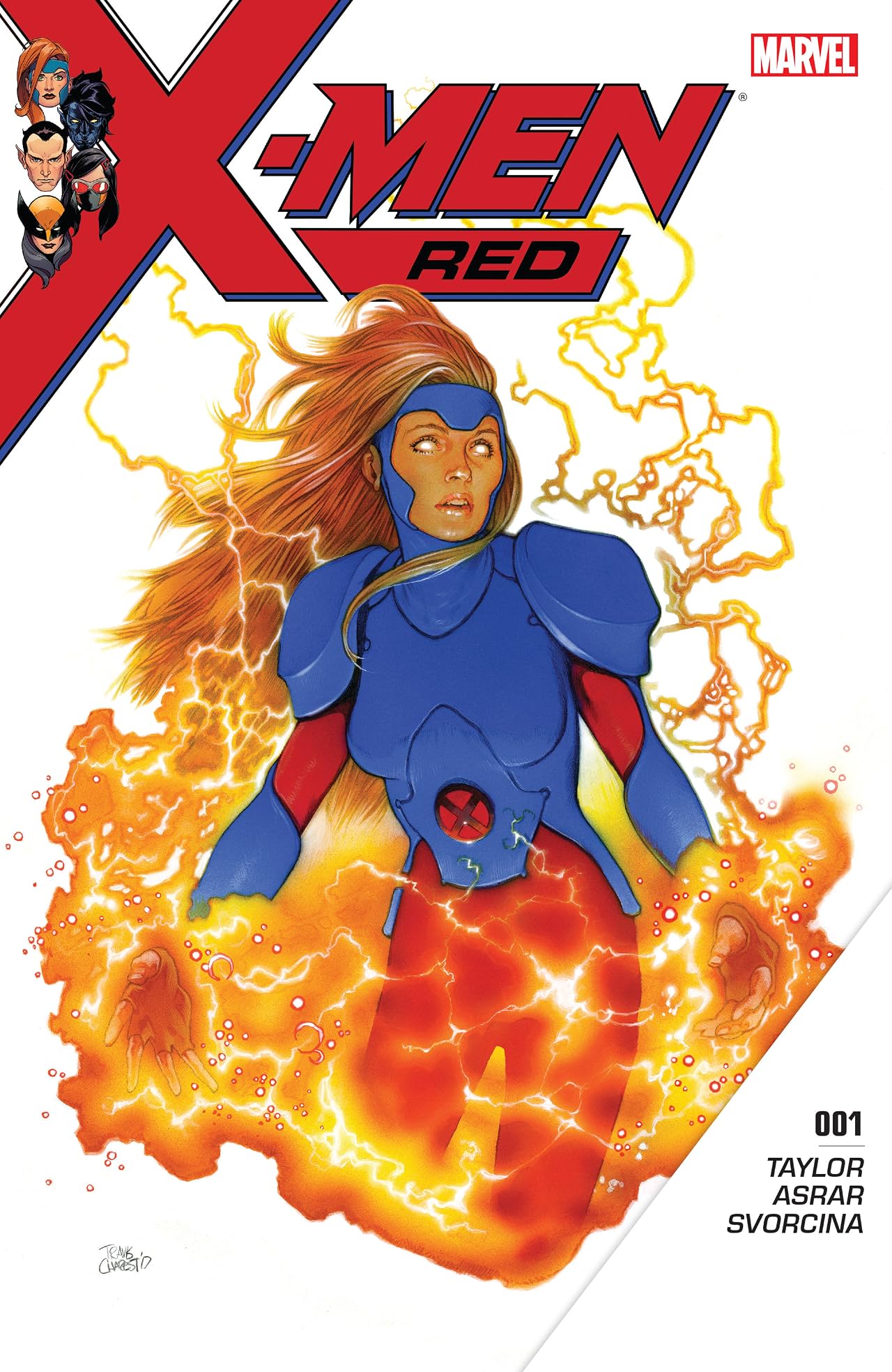
Heart, Rebirth, and Vision: X-men: Red #1

The following is my review of X-men: Red #1, which was posted on PopMatters.com.


When a hero dies and comes back to life, it tends to cause varying degrees of upheaval. For some characters, namely villains like the Joker or icons like Thor, the extent of that upheaval is limited because it's assumed rather than expected that they'll return. The only real upheaval involves how team lineups get reshuffled and how much it'll frustrate heroes like Batman. Heroes returning from the dead is so routine, at this point, that the dramatic impact is almost muted.

Routine or not, the return of Jean Grey after a 14-year death sentence warrants an exception. Few characters affect the entire X-men narrative with their presence or lack thereof. It's impossible to make sense of the major events surrounding the X-men over the past decade-and-a-half without understanding the influence of Jean Grey. Her death and subsequent absence affected the X-men in ways that went beyond any death, resurrection, clone, shape-shifting alien, or time traveler.

As such, her return carries with it the kind of upheaval that's rare in an era where everyone not named Uncle Ben is a candidate for resurrection. That upheaval is still unfolding. With the conclusion of Phoenix Resurrection, there are no more teases or jokes. Jean Grey is back and she's returning to a world that is so different from the one she left that it's difficult to imagine her finding a place in it. After 14 years of functioning without her, a couple superhero civil wars notwithstanding, Jean faces the prospect of finding a new place in this world.

X-men: Red #1 marks Jean's first steps into re-entering a world that has left her behind, but has still struggled in her absence. The state of the X-men is mixed at best and messy at worst, a common byproduct of having too many time travelers and clones. In a sense, the time is right for someone like Jean to come along and get the X-men back on track.

Tom Taylor and Mahmud Asrar set the stage for that effort, establishing a new narrative for her with a new team. The core mission of that narrative is pretty familiar for an X-men comic. It's very much a back-to-basics approach, focusing on the true underpinnings of Charles Xavier's dream of peaceful coexistence. That dream may seem even more remote these days with mutants fighting Inhumans and X-men fighting Avengers. However, that's exactly why Jean's approach is so refreshing.

She doesn't try to reinvent what it means to be an X-man. From the very beginning, she does what the X-men have been doing for 50 years, helping innocent mutants who victims of hate or injustice. Like Charles Xavier before her, she doesn't just stop at saving the day and humiliating anti-mutant lynch mobs. She actually goes out of her way to show compassion and understanding to both scared young mutants and their parents. It's the kind of love and heart that even Charles Xavier couldn't always convey, even when portrayed by Patrick Stewart's uncanny charm.


That personal touch, going out of her way to show an extra bit of compassion, is an element of Xavier's dream that has been notably lacking during Jean's 14-year absence. That's not to say it was completely gone, but there's only so much heart and compassion the X-men can manage when Emma Frost is the lead telepath. X-men Red #1 effectively reaffirms Jean's place as the heart and soul of the X-men. She plays that part well, but that's still only part of the underlying narrative.

In returning from the dead after such a long absence, Jean Grey is in a unique position to assess the X-men and their efforts at human/mutant peace. By not being around during M-Day, Avengers vs. X-men, or the conflict with the Inhumans, she can be more objective than most in judging the effectiveness of their efforts or lack thereof.

Beyond just saving a couple innocent mutants, Jean acknowledges the no-win situation that mutants often find themselves in when attempting to better their situation. When they ban together and create mutant havens like Utopia, they become bigger targets. When they try to live their lives as individuals, they just become easier targets for hate-fueled lynch mobs. In either situation, they're targets and there seems to be no way around it.

When she's not saving innocent mutants, Jean attempts to forge a new path that's somewhere in the middle. It's not enough to just help mutants one at a time. Like Cyclops and Charles Xavier before her, she attempts to give mutants a larger voice on the international stage. While that makes her a target too, it can't be any less nerve racking than being dead for 14 years so there's little doubt that Jean can handle it.

It's her ability to forge a new team of X-men who can help her pursue this vision that brings out the true strength of the narrative. In the same way she injects a little heart into saving innocent mutants, she does the same in recruiting other mutants like Nightcrawler and Namor to her cause. She doesn't approach it like a diplomat or the leader of a mutant army. She just presents her hopes and dreams for a better future for mutants, never talking down to them or acting as though she's right by default. That ends up being more effective, much to the chagrin of every Magneto fan.

That element of heart is a big part of what gives X-men Red #1 so much appeal. It's not just about Jean Grey being alive again and having a chance to contribute to the X-men. It's about infusing elements into the greater X-men narrative that have been missing during her long absence. Even though these are familiar elements to anyone who saw an X-men movie other than X-Men Origins: Wolverine, they still resonate on a personal level that gives the story dramatic weight.

That weight ends up being important, especially at the end when Jean's approach gets tested in a big, brutal way. Heart or no heart, X-men Red #1 still exists in a world of killer robots, evil clones, and potential Skrull agents. There will always be powerful forces looking to strain, wound, or even break the hearts of someone like Jean Grey. The end reveals a threat that is in a position to strain her more than most, but that only makes her efforts more critical.

X-men Red #1 presents a flawed world in which Jean Grey is in a unique position to help. More than anything else, it shows that she has plenty to contribute, despite her long absence. In fact, that same absence puts her in a better position than most. If there's a shortcoming to that concept, it's that the scope of the story too limited.

It feels like it skips some critical elements, like showing Jean adjusting to a world she hasn't been part of for over a decade. Her place in the over-arching narrative of X-men isn't really established and, with the exception of a couple characters, she doesn't get a chance to deepen her personal connections to her new team. Some just end up going along with her because she's Jean Grey. Granted, that's not a bad reason to follow her, given her history, but it can't be the only reason.

This doesn't detract from the core of the story, though. If the goal of X-men Red #1 is to re-establish Jean Grey's place in the X-men, then it succeeds. If part of that goal involves reminding everyone what the X-men stand for and why a little compassion goes a long way, even in the face of hate, then it succeeds in that effort too. Taylor and Asrar do plenty to forge a narrative that remind everybody why Jean Grey was so sorely missed. Hopefully, she gets a chance to explore to pursue that narrative without cosmic forces trying to kill her.

Final Score: 8 out of 10

Thursday, January 25, 2018

Transcending Time-Tested Tropes: X-men Blue #20

The following is my review of X-men Blue #20, which was posted on PopMatters.com.


Time travel stories are kind of like those needlessly loud stereo systems that some people put in their cars. From a purely functional standpoint, there's not much to gain by having the ability to project music at volumes that make most peoples' ears bleed. However, the functionality of such a system is hardly reflective of its value. There are other, less tangible reasons why someone would want those systems in their cars. More than anything else, such elaborate systems create equally elaborate spectacles.

Time travel plots are similar in that they rarely function as a means to simplify or clarify a story. Most of the time, they create additional complications that only get more complicated when time paradoxes enter the picture. Such stories may not be simple, but they can work even in light of those paradoxes, as multiple Back to the Future movies have proven. The X-men also have a better track record than most when it comes to compelling time travel stories, going all the way back to Days of Future Past from the Chris Claremont era. Cullen Bunn and R.B. Silva are making a concerted effort to channel Claremont's skills with Cross Time Capers in X-men Blue.

In some respects, this is a story that had to happen sooner or later. Going all the way back to the early days of All-New X-men, when the original five X-men first ventured into the future, those inescapable complications that come with time travel continue plaguing the young X-men. They can't avoid the fact that their presence in the future and their absence in the past is bound to have serious ramifications. Some of those ramifications play out over the course of their story, particularly in events like X-men: Battle of the Atom.

With Cross Time Capers, though, Bunn puts the time-displaced X-men in a position to confront the consequences of their time-traveling shenanigans. It may have taken longer for them to feel those consequences, but they finally get a sense of perspective throughout the arc. It's only in the concluding conflicts in X-men Blue #20 that they gain a better understanding of how they're affecting the space-time continuum.

If there's any lesson the original five X-men should learn from this, it's that when there's a gaping hole in the timeline, someone or something will come along to exploit it. Biff Tannen did it in Back to the Future. The future Brotherhood of Mutants, led by Charles Xavier Jr. and his omega-level daddy issues, do the same. While they're not quite as ambitious as Biff Tannen, they are every bit as devious. What they do to exploit the time-displaced X-men's absence is neither subtle nor minor. It leaves an impact, one that goes beyond the usual lessons learned by messing with time travel.

Bunn closely follows the traditions of Chris Claremont in that respect in that the sci-fi elements associated with time travel are secondary to the dramatic elements. The story is less about the original five X-men traveling through time to fix the past than it is about them confronting the consequences of their actions. Their continued presence in the future has consequences and these are the kinds of consequences that literally fight back.


It's that element of drama that helps subvert the usual complications and confusion often associated with time travel. Classic stories like Days of Future Past show that this is an effective way to give time travel stories a genuine impact without making every other conversation an existential crisis on time paradoxes. Those conversations still happen in X-men Blue #20, but the assorted techno-babble is kept to a minimum.

Instead, Bunn relies on converging the various elements seeded throughout the journey that unfolds in Cross Time Capers, throwing a many of them as possible in the final battle. It's a battle that Silva effectively turns into a colorful, vibrant spectacle that feels epic in both size and scope. While it unfolds quickly, it hits on all the necessary dramatic elements, from confronting Xavier Jr. to the original five X-men reuniting with their mentor. Each moment carries weight and without incurring more time paradoxes.

That's not to say the time travel elements don't also carry weight in this story. Given the circumstances and context of the original five X-men's time displacement, those aspects of the conflict are unavoidable. The story clearly establishes that their decisions in the future have an impact on the past. It also provides some ominous, albeit not too surprising, foreboding about the decisions they'll have to make at some point.

Like Battle of the Atom before it, Cross Time Capers makes clear that what the original five X-men are doing still has an impact on the overall timeline. The choices they make, the battles they fight, and the impact they have on the past and future all matter. It also puts the team in an awkward position because to some extent, they already know what they'll end up having to do. It's like reading an unwanted spoiler in that they can't unread it.

This is where X-men #20 stumbles a bit into the inevitable complications of time travel stories. Even with the drama, there are some details that don't get fleshed. There are moments that have the potential to become very emotional and impactful, but some of that potential is lost for the sake of keeping the story going. Certain elements from the early parts of the story don't really play a role in the final battle, but they aren't rendered meaningless by the final conclusion.

In terms of the most critical elements, X-men Blue #20 handles those very well. There's reason and purpose behind every decision. The motivations and emotions of each character is clear. The events of previous issues influence the outcome of the final battle. Even with the complications of time travel and the erratic pacing of that final battle, the end result is a concise, cohesive story that satisfies as much as any time travel story can without getting too caught up in paradoxes.

That's not just an accomplishment that honors the standards set by Chris Claremont. It's a testament to the unique challenges of time travel stories. They have so many moving parts and so many potential complications that may or may not result in someone like Biff Tannen messing up the timeline. Being able to tell that story and not lose track of all the frustrating time travel tropes that derail so many stories is quite a feat. While Cross Time Capers may not be in the same league as Back to the Future, it certainly makes the case that those stories are still worth telling.

Final Score: 8 out of 10

Tuesday, January 16, 2018

Personal Connections and Alien Invaders: X-men: Gold Annual #1

The following is my review of X-men: Gold Annual #1, which was posted on PopMatters.com.


The greatness of a character is often proportional to the amount of connections they make over the course of their history. No character ever becomes great just by hanging out with a handful of people and never really interacting with anyone else. Even The Three Stooges make an effort to connect with others in between slap-stick humor and casual violence. In the Marvel universe, connections are hard to keep up with, but some find ways to create their own elaborate web of friends, enemies, and frenemies over the course of their narrative.

While some, namely Wolverine and Spider-Man, end up sleeping with too large a portion of their connections, others manage to expand their web in a variety of ways. With respect to the X-men, few characters network better than Kitty Pryde. Even though she isn't among the original five X-men and had a lot of catching up to do after her debut during Chris Claremont's iconic run, she somehow finds a way to establish herself in every superhero social circle she's in.

Some of it comes from her natural charisma. Some of it comes from her tough, yet likable attitude. Having a pet dragon probably doesn't hurt either. Since taking on a leadership role in X-men: Gold, Kitty Pryde is often in a position to reconnect with old friends and forge new ones. It has already helped her rekindle things with Colossus, a relationship that is still a developing part of the narrative in X-men: Gold. It also gives her more opportunities to reach out to older connections, which she does in X-men: Gold Annual #1.

Marc Guggenheim and Leah Williams work together in an singular, extra-sized story that puts Kitty and her gold team back in touch with the likes of Captain Britain and the Braddock family. It's a connection that she hasn't explored in quite some time, but the story makes clear that the connection remains as strong as ever. Like old friends getting together after life gets in the way, the reunion feels real and genuine. The only difference with the X-men is that life getting in the way often takes the form of superhero civil wars.

The circumstances surrounding the reunion aren't elaborate or contrived. In fact, it adds to the overall realness of the reunion because it involves Brian and Meggan announcing that they've had a baby. Even though the circumstances with such major life events take on some twisted quirks, which is all too common with the X-men, it's still one of those unique moments that feels personal. It only becomes more fanciful when aliens attack.

While that may seem contrived in most other narratives, it's downright inane in an X-men comic. The only way to make it seem meaningful is to give an alien attack some context and that's what Guggenheim and Williams attempt to do in X-men: Gold Annual #1. The attack isn't entirely random, nor is it impersonal either. It actually involves the D'Bari, an alien race with strong, albeit antagonistic, personal connection with Rachel Grey and the entire Grey bloodline. Those familiar with the events of the original Phoenix Saga don't need much context as to why that animosity exists.


Even those unfamiliar with such classic moments in X-men lore won't be too lost because the story makes it a point to establish some emotional stakes, alongside the connections. The angry D'Bari involved, Starhammer, has a valid reason and an understandable motivation for dropping in on Rachel, the X-men, and the Braddock family. That motivation gives the conflict that unfolds some dramatic weight. It's not overly elaborate, but there are personal undertones, which is critical in making any generic alien attack more interesting.

While the connections and the context are there, the depth is somewhat lacking. There's actually more story built into Kitty Pryde, Rachel, and Nightcrawler catching up with Meggan and Brian than there is with the fight against Starhammer. This isn't necessarily a bad thing because those moments make for some of the most meaningful interactions in the story. They're cute, they're heartfelt, and they're even pretty funny at times, which is entirely appropriate when adults gush over a new baby.

However, those moments aren't necessarily balanced or complemented by the conflict that unfolds with Starhammer. If anything, it comes off as detached. It just interrupts Kitty, Rachel, and Nightcrawler's efforts to catch up with old friends and nothing more than that. Even with the personal connections there, the narrative does little to expand or enhance on them. It doesn't undermine them either, but that still results in a great deal of untapped potential.

Some of that lost potential is a byproduct of the pace. While there is plenty of time allotted to exploring the newly-expanded Braddock family, the battle against Starhammer comes off as rushed or condensed. It never gets a chance to be dramatic or epic. For conflict built around a very personal moment that spun out of a very iconic X-men story, it feels like a missed opportunity.

That doesn't stop the resolution from being fitting. Rushed or not, the way in which the X-men and the Braddock family resolve the conflict is very much in keeping with the traditions of both the X-men and Excalibur. The story doesn't try to reinvent or subvert these themes. It just doesn't provide enough depth to make the resolution more memorable.

Despite this, X-men: Gold Annual #1 never feels like an incomplete or empty story. True to the tradition of annuals, it offers a simple, self-contained narrative that leaves no loose ends or unanswered questions. It doesn't attempt to be bigger than it needs to be. It just offers a simple narrative built around strong personal connections. The fact that it somehow manages to squeeze in an alien attack is almost secondary.


Final Score: 6 out of 10

Thursday, November 30, 2017

Doubling (And Tripling) Down On Time Travel: X-men Blue #16

The following is my review of X-men Blue #16, which was posted on PopMatters.com.


There's a certain point in a narrative where a certain subplot either needs to be abandoned or shoved back into the spotlight. It's like that point in a poker game where pushing all the chips to the center of the table is the only sound tactic left. It's a major risk and one that potentially undermines the entire foundation of a story, but the payoff is significant. For the time-displaced X-men in X-men Blue, the time is right for that kind of gamble.

There's no getting around it. Since arriving from the past in the pages of All-New X-men, the mission of the original five X-men seems to change every other week. One week, they're trying to stop Cyclops from ushering in a full-blown mutant genocide. The next, they're joining Cyclops to become mutant revolutionaries. The week after that, they're working with Magneto, the same guy who tried to kill them on their first mission. While it's not uncommon for teenagers to have erratic priorities, time travel seems to exacerbate the situation for the time-displaced X-men.

Beyond these varying missions and allegiances, though, there remains one common, unresolved thread. These time-displaced X-men are, for reasons not yet explained, cannot go back to the future. The events of X-men: Battle of the Atom establish that there is something keeping these time traveling teenagers stuck in the future. The nature of that mechanism is vague and rarely hinted it. For the most part, it's like Spider-Man's marriage in that it's overtly ignored for the most part.

In X-men Blue #16, Cullen Bunn and Thony Silas finally revisit this issue in a way that requires them to push those proverbial chips to the center of the table. It all happens quickly and under the backdrop of some typical teenage melodrama that always seems to find its way into the pages of X-men Blue. The mixture and transitions aren't always seamless, but few things involving teenage melodrama are.

That melodrama is only a small part of a much more serious conflict that has roots that extent back to X-men: Battle of the Atom and beyond. Anyone who has seen Back To The Future more than once understands the erratic and chaotic nature of time travel. Mess with the timeline too much and eventually, it'll get impatient. Whatever patience kept the original five X-men intact in the future seems to have run out, albeit quite suddenly.


There's little build-up or foundation to the sudden fracturing of time. It just starts happening, forcing the time-displaced X-men to react on the spot. Part of that reaction involves them engaging in more time travel. On the surface, that seems like fighting fire with napalm. In this rare instance, though, it makes sense and it addresses an important issue that has remained vague since X-men: Battle of the Atom.

Even those who haven't seen Back To The Future understand on some levels that time travel, especially one that involves changing the past, tends to incur an unpredictable impact on the present. For the most part, the impact of the original five X-men being in the future hasn't been that significant. The final few issues of Dennis Hopeless' run on All-New X-men even imply that their presence may not affect the timeline at all, which undermines the entire premise of a time travel story to begin with.

Like the events of X-men: Battle of the Atom, the temporal details remain vague. However, X-men Blue #16 ditches much of those subtleties and makes one thing very clear. The original five X-men's presence is indeed having an impact on the timeline. They aren't just a bunch of clones or alternate versions of themselves from a dystopian future, of which the Marvel universe already has plenty. They are from the same timeline and what they do does effect the present. That reaction may have been delayed, but it's happening.

It's an important facet that Bunn and Silas belabor, which helps establish the premise and the stakes of the Cross Time Capers arc that begins in X-men Blue #16. It's an overdue dose of clarity for an issue that many recent stories involving the time-displaced X-men go out of their way to ignore. It's both refreshing and profound in that sense that it gives the story genuine stakes, but still doesn't forget that those involved are teenagers. That means that no matter how serious the story may be, there's going to be some entertaining awkwardness along the way.

There is some of that in X-men Blue #16, but not nearly enough. Much of the melodrama involves ongoing emotional entanglements between Cyclops and Jean Grey. While those kinds of entanglements are a major part of X-men drama, regardless of timeline, they seem somewhat forced. It's as though these two always have to have the same kind of drama thrown in, as though that's the only drama they know. Being teenagers, that's less believable than anyone shooting lasers from their eyes.

Even if the melodrama is forced and the pace is quick, the sheer intensity of X-men Blue #16 make it a solid beginning to what promises to be a chaotic arc involving time travel. Given how X-men Blue is coming off an event that involved Mojo, that's saying something. Bunn's concise storytelling and Silas' colorful lay a solid foundation that has the potential to incur more significant implications than anything the time-displaced X-men have experienced to date. Like Marty McFly though, they will likely have to learn about those implications the hard way.

Final Score 6 out of 10

Thursday, June 1, 2017

Timely Traditions: Cable #1

The following is my review of Cable #1, which was posted on PopMatters.com.


When it comes to time travel, there aren't many superheroes these days that can do it without making fans roll their eyes. As a concept, time travel is overdone, burned out, and utterly devoid of shock value. The days of "Back To The Future" and the lovable eccentricities of Doc Brown are long gone. Stories that involve time travel are about as inane as a stories that involve Superman telling kids to eat their vegetables.

However, there is still one character who can build their story around time travel and make it work. It's not Doc Brown either. It's Cable. He's part Terminator, part Marty McFly, and part Rocky Balboa. He's also friends with Deadpool and willingly works with him on a regular basis. That alone is a testament to his grit and determination.

With a major role in the next Deadpool movie, as well as the star power of Josh Brolin, the time traveling mutant has a lot going for him. With Cable #1, another title in Marvel's ongoing RessurXion effort, James Robinson and Carlos Pacheco try to put Cable on the same wave that Deadpool rode to a wave of popularity. He may never inspire as many Funko figures or cos-play costumes, but he still has so many factors going for him.

The story in Cable #1 takes the core of his character and runs with it. There's no elaborate exposition. There's no major build-up to the plot. It just puts Cable in the middle of a time travel plot and lets him do his thing. Anyone who knows anything about Cable won't be too surprised. They won't be disappointed either. There's time travel, there's big guns, and there's large-scale violence both on and off-panel. By every measure, this is a typical Tuesday for Cable.


In terms of getting back to the core of a particular character, Cable #1 checks the necessary boxes. It doesn't check every box, but it checks the ones that are most important to the core of Cable's character. Robinson doesn't try to reinvent Cable or twist his story in some elaborate way. He sticks to the basics of time travel and big guns, which are the meat and potatoes of every great Cable story.

In terms of the contents of that story, it itself doesn't try to be too iconic. It has Cable doing some time-hopping to find someone who has been sharing futuristic weapons with people and time periods that haven't even mastered indoor plumbing. Anyone who deals with Marvel's twisted timeline is right to be concerned about that sort of thing. Given the absence of the Fantastic Four and the ineptitude of those such as Hank McCoy, Cable is the only one qualified to handle this issue. The substance is there. It's only the portion size that's lacking.

The core concept is there in Cable #1. There's someone screwing with the timeline by giving high-tech guns and swords to cowboys and samurai. That makes for plenty of gun-fights and gratuitous violence, as only Cable can inspire, but there's little context to the story. There's no real clue as to who Cable is after. The only detail revealed is that they think giving people who still see bathing as a luxury is a good idea. Beyond that, there's little else to go on.

That doesn't make Cable's battles any less entertaining. Compared to the plots of a typical Terminator movie, Cable #1 is refreshingly straightforward. There's just too little drama and too little setup to intrigue those who aren't already fans of Cable's time-hopping narratives. Robinson doesn't try to push the envelope and that's understandable. At a time when many other X-men characters are returning to their roots in wake of Inhumans vs. X-men, his efforts in Cable #1 fit the larger narrative. It just doesn't try to push it any further.

For those who don't know much about Cable or his convoluted backstory, complete with clones and techno-organic viruses, they won't see anything too overwhelming. They won't see anything too shocking either. They'll just see a character that specializes in traveling through time, shooting big guns, and getting into big fights. That alone has plenty of entertainment value. However, in a world that still has Deadpool and multiple Wolverine knock-offs, that only goes so far.

There aren't many details of the story in Cable #1 that are clear from the beginning or even the end, for that matter. That's not to say the story is messy or convoluted, though. It is the beginning of a larger story. The ending teases a much larger conflict at hand, one that will require more time travel and more big guns.

That has plenty of appeal to long-time Cable fans, but new readers won't find anything that they can't find in other comics that deal with big guns and gratuitous violence. Given the number of characters that rely on big guns and gratuitous violence, Cable #1 doesn't do much to set itself apart. However, there is still something to be said about a story that can involve cowboys and samurais in the same story.


In the end, the greatest success of Cable #1 is how sticks to the basics and doesn't complicate the narrative. In any story that involves time travel, that in and of itself is an accomplishment. Robinson maintains the core of Cable's character and Pacheco's art ensures that it's visually appealing. The story has the necessary foundation on which to build upon Cable's story. There's nothing in that story that precludes a narrative that becomes an iconic moment in his history. It's a long way towards achieving that level of quality, but it's on the right path.

With a promising future in Deadpool 2, courtesy of Josh Brolin, Cable is one of those characters whose profile is on the rise. Cable #1 puts him at the front of the batting order and shows off the potential of what he can bring to the table. With big guns, a bad attitude, and a blatant disregard for time paradoxes, he has all the tools he needs to be a major player for the X-men. At a time when Hugh Jackman has retired and Deadpool is the new adamantium standard, the timing couldn't be better.

Final Score: 6 out of 10