Showing posts with label Deadpool comics. Show all posts

Saturday, June 16, 2018

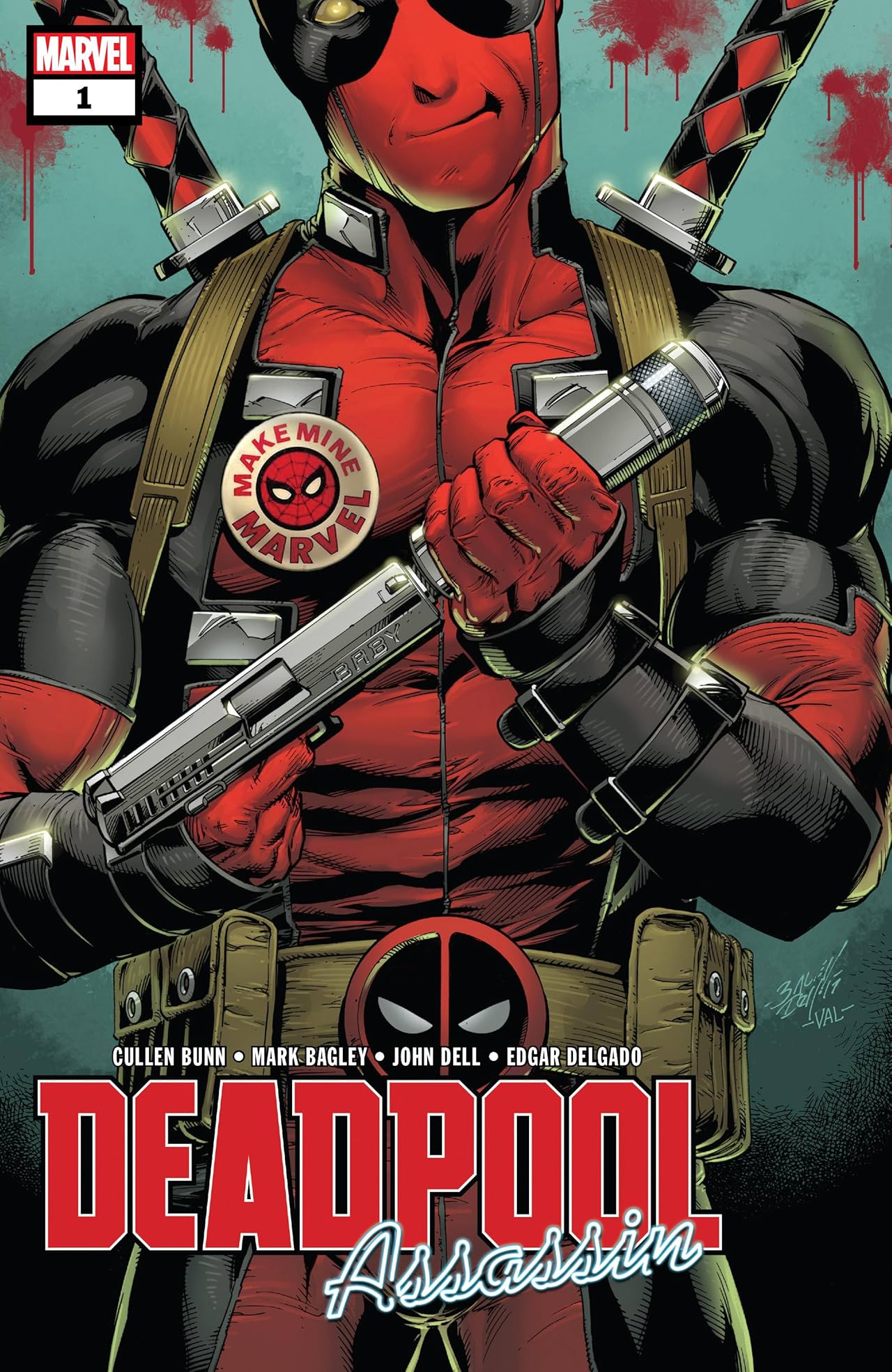
The Maturation of (Regenerating) Degenerates: Deadpool Assassin #1

The following is my review of Deadpool: Assassin #1, which was posted on PopMatters.com.


When it comes to gratuitous violence and genuine heart, Deadpool is in a class all his own. In fact, it's not unreasonable to say that Deadpool, as both a character and a concept, goes out of his way to stand out and isn't afraid to be obnoxious about it. Regardless of whether his name and design was derived from Deathstroke, he's someone who does more than most to stand out in a sea of Wolverine, Superman, and Batman rip-offs.

Thanks to two successful movies and the inherent likability of Ryan Reynolds, Deadpool's star has never burned brighter. It's safe to say that in his efforts to stand out, he has succeeded. His mask, his tumor-laden face, and his propensity to break the fourth wall are now every bit as iconic as Wolverine's claws or Captain America's shield. He has nothing left to prove. He's earned the right to brag and gorge on all the chimichangas he wants.

As much as he's achieved, Deadpool always finds ways to stay busy and entertain. Most of those ways still involve the kind of destruction and vulgarity that would get most characters fined by the FCC, but he never does it out of pure malice. He's not Sabretooth, Norman Osborn, or Dexter Morgan. He's crazier than a sack of ferrets, but he still maintains a code of conduct that sets him apart from less scrupulous mercenaries. Those who undermine that code are likely to be on the wrong end of Deadpool's guns, katanas, and toilet humor.

That's both the setup and the appeal of Deadpool: Assassin #1. Cullen Bunn and Mark Bagley put Deadpool in a position to further set himself apart by showing that there is merit to having a code of conduct as a mercenary. That process involves a hefty bit of bloodshed and mayhem, but anything other than that just wouldn't be true to Deadpool's increasingly powerful brand and he does plenty to maintain it in this story.

Bunn and Bagley don't try to reinvent the regenerating degenerate. They just put him in a situation where he can do what he does best, which means being in close proximity to far less ethical mercenaries and evil ninjas. For Deadpool, that's like mixing chocolate and peanut butter, but with several extra sides of carnage and bloodshed. It's every bit as potent as it tries to be.


These crude, but colorful basics give Deadpool: Assassin #1 plenty of entertainment value. However, there are some other side-plots thrown into the mix that keep it from being a generic story about a Deadpool-centric shooting spree. One involves Deadpool's old friend Weasel, whose life has taken a far more domestic turn. He still works with Deadpool and still provides him with plenty of opportunities to shoot things, but he's got other priorities. In revealing those, Deadpool himself reveals something striking and potentially profound.

Being so unhinged and eccentric, Deadpool never comes off as one of those guys who plans for a simpler future that doesn't involve as many explosions. Between his skills as a mercenary and his fourth-wall breaking awareness, he rarely shows interest in settling down, retiring, or taking up a hobby that doesn't require heavy firearms.

He operates on a moment-by-moment basis, going from one job and/or wisecrack to the next. While he may occasionally mix things up by joining the X-men or marrying a succubus, Deadpool still acts primarily on an impulse. Even with the limited ethical standards by which he operates, he's not known for his foresight any more than he's known for his choice of underwear. Wherever there's violence to be had, he tends to gravitate towards it. With an unstable mind and a body covered in tumors, that's kind of how he has to be.

That's what makes his admission that he's getting bored with mercenary work so striking. He still makes clear that he loves killing unscrupulous mercs and ninjas, but that's not enough for him anymore. He claims he's only doing a few more jobs before he moves onto something else. It's not clear how serious he is. It's like Peter Parker saying he doesn't want to be Spider-Man anymore, but that sentiment goes away the second he has an excuse to change his mind. Unlike Peter, though, Deadpool isn't known for responsible decision-making.

That makes the plot surrounding Deadpool's changing priorities seem tentative, at best. Nobody, fictional or otherwise, can buy that he wants to retire to his own tropical island and sip margaritas for as long as his healing factor allows him to live. He gets bored too easily, enjoys dangerous surroundings too much, and makes too many impulsive decisions. While that makes his antics fun to watch, it also makes any effort to settle down less believable.

To some extent, Weasel's situation reflects that. He's no longer a former Hydra agent who just happens to be friends with an unhinged mercenary. He's got a stable job, a wife, and an overall easier life that involves less killer ninjas and more credit card bills. It's less hectic, which Deadpool claims to want, but Weasel never gives the impression that it's very fulfilling.

If anything, he sends the message that settling down can make a man feel domesticated. This doesn't impact Deadpool's intentions or his ninja-fighting skills, but it does throw shade on the idea that seeking a less damaging occupation comes at a cost. It also establishes that if Deadpool really does attempt to hang up his katanas and guns, he'll end up changing his mind faster than Peter Parker ever did.

Long-term intentions aside, still provides plenty of value in terms of giving Deadpool fans what they want. Bagley's artwork makes it colorful while Bunn's dialog makes it witty. It checks all the necessary boxes for a fun, engaging Deadpool story. It tries to do more and while it lays a foundation, it doesn't offer much in terms of clues. He's still doing mercenary work, as only he can, but what does someone like Deadpool do when he wants to move onto a new endeavor?

That question goes unanswered in Deadpool: Assassin #1. More than anything, it puts Deadpool in a position to mix things up again. It probably won't result in him getting a job as a tax attorney or a janitor, but if it leads him to novel forms of violence, then it can only help the potty-mouthed merc in his never-ending struggle to overshadow Deathstroke.

Final Score: 7 out of 10

Tuesday, February 16, 2016

Overpriced, Chaotic, and Undeniably Entertaining: Deadpool #7

The following is my review of Deadpool #7, which was posted on PopMatters.com.


The comic book industry has come a long ways since the days of Saturday morning cartoons, Richard Donner movies, and campy TV shows starring Adam West. There have been periods of growth, thanks to the tireless efforts of Sam Raimi and Christopher Nolan. There have been periods of darkness, thanks to the more forgettable efforts of Joel Shumacher and Brett Ratner. In the era of billion-dollar blockbusters and post-credits teasers, there have been very few constants. One of them is the irreverent humor of Deadpool.

Spider-Man may grow up, get married, get unmarried, and run his own company. Superman may wear red underwear, marry Lois Lane, have his marriage to Lois Lane undone, and date Wonder Woman. Gwen Stacy might become relevant again, despite being dead since the disco era. Deadpool, however, remains committed to the same deranged, bombastic persona that has given Ryan Reynolds a chance to redeem himself after the Green Lantern movie. It's almost hard to imagine that Deadpool was once labeled a Deathstroke rip-off.

With a movie coming out and a growing to-do list in the comics, Deadpool #7 offers a giant-sized plate of chimichangas to those who have come to appreciate his not-so-unique brand of humor. Like Seth MacFarlane, Deadpool built his career on telling the kinds of jokes that got most kids sent to the principal's office in grade school. That humor might be labeled as immature by those who eat their chimichangas plain and with no guacamole on the side, but Deadpool always found a way to appeal to the inner 8-year-old in all of us.

Deadpool #7 does plenty to cater this appeal while offering plenty of bonus material in the process. Most of that bonus material is somewhat forgettable, but it doesn't take away from the overall entertainment value of the finished product. Deadpool is described by some of his own fellow mercs as "an unfocused, impatient, chaos monkey." In terms of an over-arching narrative, there couldn't be a more appropriate description of Deadpool without including taco meat and spent bullet casings.


There's no way around it. The story that unfolds in Deadpool #7 is chaotic and unfocused. For any other character in any other medium, this would seriously undermine the story. For Deadpool, however, it's entirely appropriate. In fact, it embodies the primary appeal about Deadpool. In the same way Michael Bay movies gratuitously exploit CGI and Megan Fox's sex appeal, Deadpool exploits the chaotic violence around him with an irreverent humor that has undeniable entertainment value.

Nobody is going to mistake the story that unfolds for Watchman or Saga. That said, there is an actual story within the circus-like chaos that is Deadpool's life. His profile is rising in the Marvel universe and not because of anything Ryan Reynolds is doing. He's expanded beyond being a one-man mercenary operation and assembled a team called the Merc for Money. On the surface, they look like cos-players who are the complete antithesis of Ocean's 11, but their colorful, cartoonish presence is entirely fitting for Deadpool.

Despite being the founder, leader, and visionary behind the Mercs for Money, Deadpool spends most of the main story in Deadpool #7 being distracted. It's not the kind of distraction caused by excessive sugar or a lack of Adderall either. Deadpool, like every other character that tried to leech off of Wolverine's popularity, has a fragmented memory. Unlike Wolverine though, Deadpool has a sense of humor about it and that sense of humor creates the bulk of the entertainment value.

Deadpool goes about his reckless and destructive business with a casual bravado that never feels arrogant or egotistical. He'll casually sit back in a car and chat about his issues while the Mercs for Money get into a gun fight with Hydra. He'll stop shooting his machine guns into an army of Hand ninjas in order to ask a few questions, even though he has an axe lodged in his skull. Such an overly casual approach to such violence might not win him any allies at local PTA meetings, but it will make for plenty of entertaining moments.

These moments aren't well-organized, nor should they be in a story that reflects the living chaos that is Deadpool. There are times when they're difficult to follow, even if they are appropriate within the context of a Deadpool story. There is still a cohesive theme in the end that helps tie the chaos together, albeit barely. It helps set up Deadpool's next mission in a way that promises more gratuitous violence. If that's the primary measure by which all Deadpool stories are judged, then this one certainly qualifies.


The main story in Deadpool #7 acts as a testament of sorts to the entertainment value of Deadpool's narrative. As a means of justifying the $9.99 price tag, it also comes with a number of bonus stories that explore stories from other members of the Mercs for Money. Some of these bonus stories are more entertaining than others. Most are fairly forgettable, but they do at least add some extra depth to Deadpool's team.

None of them are as colorfully deranged as Deadpool himself, but that might be for the best. The Marvel universe can barely contain one Deadpool and Ryan Reynolds can only capture the essence of one non-Van Wilder character at a time. These other characters certainly have potential and personality. They just aren't going to inspire the same level of creative cos-playing that Deadpool inspires at every comic con.

Deadpool's story is still the primary selling point in Deadpool #7 and that story checks all the necessary boxes. The forgettable bonus stories don't detract from this selling point in any way, but they aren't going to make anyone feel better about the bloated price. It's still an entertaining Deadpool story, complete with obscene violence and unrepentant immaturity. As the failure of Wolverine Origins definitively proved, we wouldn't have Deadpool any other way.

Final Score: 8 out of 10

Tuesday, September 21, 2010

Deadpool #27 - Returning to Awesome Form


I know it sounds like I cut some heavy slack to the comics I inherently love, but I can be a hardass when I have to. The last time I reviewed a Deadpool comic I didn't hide my disappointment. I made just as many poop jokes to lampoon it as if it were another shitty Ultimate book, albeit not nearly as severe. Deapool is usually one of those comics you can rely on being entertaining month in and month out. For one to slip up like Deadpool #26 did, someone was either drunk on the job or someone lost a shitload playing fantasy football at the Marvel offices. There's no way around it. The story with Deadpool and Ghost Rider in the last issue sucked ass. It was poorly done, poorly executed, and nowhere near as entertaining as a Deadpool comic should be. It deserved a shitty score and it earned readers the right to be a little skeptical with the next book.

Luckily, Deadpool is one of those comics that can easily redeem itself with a single issue. Since Deadpool is such a wacky and bat-shit crazy character, there's no need for it to flow or remain completely consistent. If it were then that would completely go against the purpose of Deadpool. So for that reason I didn't hesitate to give Deadpool #27 a chance. It promises to continue the strong of miniature crossovers that has been done to death in Deadpool comics. The last one involved Ghost Rider and it sucked. This one involves the Secret Avengers. So does it measure up?

Well it starts off simply enough. Deadpool is trying to buy a burrito with gold at a gas station. Really, if any part of that surprises you then you haven't been reading Deadpool comics for very long. The guy behind the counter looks like a stereotypical Arab the politically incorrect crowd would expect to find working at a gas station. While MoveOn.org sues Marvel and Michael Moore goes into crying fits, it does make for a fairly typical dilemma that Deadpool faces.


Beyond the burrito, it stands to reason that he'll face another typical dilemma at one point. It comes in the form of a robbery that for once he doesn't start. He doesn't seem to notice it at first, as is often the case when faced with the prospect of a burrito. But a bunch of masked men from the Department of Homeland Security showed up behind him and they're prepared to do some "enhanced interrogation" for whatever Bush-appointed crony the CIA and NSA happen to be blowing at the moment.


Guys with guns against Deadpool has only one inevitable outcome and that's a full blown gunfight. Now at this point it's not clear who these guys are and what they're after. They look like any thug the Department of Homeland Security would slap ski-masks on and call "Freedom Fighters," but remember this is a Deadpool comic. Shit has a way of making little to no sense at first. It's made all the more crazy when the soldiers in question show healing factors. That reveals they may be a bit more than typical Bush cronies and it also gives Deadpool an excuse to use high explosives (as if he ever needs one).


It doesn't take long for the gunfight to take another twist. During the fight, Deadpool slips into a secret passage that you wouldn't expect to find in a gas station. Usually a secret passage like that only leads to an oversized porno collection. Instead it leads to something else that will have the far left bitching endlessly. That cashier from earlier wasn't just your typical red-blooded American. He was an Arab selling weapons. Before I finish writing this sentence, Nancy Palosi is writing a letter to the ACLU.


The man tires to play the victim. He tries not to come off as the ruthless Arab terrorists that Fox News can't resist playing clips of every five seconds. Deadpool, assuming he's not a Fox News fan, gives him a chance to explain himself. He doesn't end up getting it because those American shock troopers from earlier find their way into the passage and confront them. The cashier plays coward and hides behind a heavy barrier, leaving Deadpool to do the explaining.

Now it's not too clear what is said, but most of the words come in the form of bullet wounds. Since both Deadpool and the masked soldiers regenerate, shooting each other is about as effective as throwing silly putty. Eventually they start talking with words. The guys in the mask claim to be patriots after the cashiers weapons. The cashier claims NOT to be a terrorist. Deadpool, not known for his reasoning skills, is understandably confused.


They go back and forth. The cashier claims he's the victim. The CIA gave him these weapons and wanted him to sell them in his country. He refused. He wanted to take them and sell them in America where they go for more, thus giving Uncle Sam a nice Cleveland Steamer in the process. The masked men don't buy it. They say he's just a thug selling to other thugs. Deadpool can't decide who is the terrorist. Then the guest stars enter the picture in another shameless crossover. This time it's Captain America and the Secret Avengers, who by most measures are a step up from Ghost Rider.


They take out the masked men and Steve Rogers gives Deadpool a hard slug as well. He doesn't seem to mind. In fact, it triggers some flashbacks to him as a kid idealizing Captain America. For him, it would be like a Star Trek fan getting punched by William Shatner. That fan will never wash his face again.

Since Deadpool is out, Captain America and his Secret Avengers make quick work of the soldiers. This is a guy who took on the freakin' Nazis in a way that Call of Duty fans can only masterbate to. It's not much of a fight to say the least.


Then comes another twist. This time it's the cashier. He finally comes clean. It turns out he's not the innocent victim of post 9/11 bigotry. For once the assholes at Fox News get what they want. The creepy store clerk at the gas station is a terrorist. And not just any terrorist either. He's a terrorist with a giant freakin' robot suit. In terrorist circles, that's like being the guy that had a three way with Hallie Berry and Jennifer Lopez.


It looks like he's setting the stage for an epic struggle against the Secret Avengers. Then in the span of a single panel it ends in a humiliating and somewhat appropriate manner for a Deadpool comic. Deadpool, now fully recovered from Captain America's punch, gets up and casually shoots the guy in the head. Apparently, the terrorists are still way behind the curve when it comes to robot armor suits. They don't understand that not protecting the head of the wearer makes these things about as vulnerable as a compact car in a monster truck show. All it took was one bullet and that was it. America is safe again. Fox News can keep gloating.


There's not much to resolve from here. Deadpool's little save earned him some brownie points with Steve Rogers. For him, shooting a terrorist earns you about two gold stars in the patriot handbook. Deadpool still swoons around him the way Lady Gaga swoons at a gay rights rally. He looks pretty goofy, but he's Deadpool. He does it in a way that's still awesome. Then Captain America does yet another twist and asks if Deadpool wants to work for him. That's like a heavy metal fan being asked to be lead guitar for Metallica. Deadpool's response is to be expected. He makes a total fool of himself, thereby making for the most fitting end to this book.


Going back to what I said earlier, it's easy for one Deadpool comic to make up for a shitty one. Compared to the last issue with Ghost Rider, this was like shit turning to gold. It was worlds better. It didn't let itself get bogged down by the events of the previous book. It didn't try to start some epic new arc. It just told a nice, crazy Deadpool story.

Granted, it was heavy on the twists and politically incorrect in so many areas. If this book was read by Sean Hannity or Glenn Beck, it would be covered in their semen by the end of the second reading. So long as you're not the politically sensitive type, you'll still enjoy this issue for what it offers. It shows Deadpool at his best, being badass and goofy in all the ways that make him so lovably awesome. It also sets the stage for some new stories that have him joining Steve Rogers for a bit. Now it certainly doesn't sound like a recipe for a very successful partnership. It'll be nothing short of a miracle if it lasts more than one issue. But it offers plenty more reasons to get the next issue compared to the last one.

Overall, this was a great rebound from the previous issue. Deadpool remains one of those special comics that readers should always give a chance because it has it's own style that stay entertainingly awesome even if it does make a few missteps. For improving mightily and reminding readers why they love this series, Deadpool #27 gets a 4.5 out of 5. If you love Deadpool, killing terrorists, or are generally a right-winger you'll love this book. Nuff said!

Wednesday, August 25, 2010

Deadpool #26 - Awesome or Filler?


Deadpool has always been one of those guilty pleasure comics. It's so obscene and off-the-wall that you feel dirty and are obligated to get on your knees and pray to whatever deity you know to forgive you for laughing your ass off at something so ridiculously awesome. There's never been a whole lot of depth to the Deadpool comics and that's by design. Deadpool is crazier than an army of horny rats on PCP and it's not possible to turn that into the fucking Iliad. In a ways that's a major limitation for his titles because if you can't tell a story of sizable depth you're left with novelties and novelties always wear off the same way a hangover inevitably follows a three day bender.

To the credit of Marvel and writer Daniel Way, they've made Deadpool's story plenty entertaining despite these limitations. Since the end of Dark Reign he's gone on his share of smaller adventures, occasionally mixing with other members of the Marvel universe like Spider-Man and the X-men. These stories have been a lot of fun in most respects, but lately Deadpool has been trying to stand on his own. The last arc had him go on a little adventure in Las Vegas that involved his old friend Weasel and giant killer robots. Now it's next to impossible to make a story with Deadpool and charming robots suck, but the ending was underwhelming. Deadpool #26 picks up after that issue and begins a new story and once again Daniel Way has to find a way (sorry, I couldn't resist) to keep Deadpool's story going.

The issue starts not with Deadpool, but with someone he's clashed with in the recent past, Johnny Blaze. Right off the bat some may be thinking "Really? Again? Is Marvel contractually obligated to team these two up once a year just to remind readers that Ghost Rider is still relevant?" It really does seem the only valuable screen time Ghost Rider gets is when he crosses paths with Deadpool. He's essentially David Spade to Deadpool's Chris Farley (minus the fat and cocaine overdose).


As with all Chris Farley movies, Deadpool gets the spotlight first. He picks up right where the end of the last arc left off, confronting the greedy Casino owners that foolishly hired him to ensure their proverbial and literal edge. You would think men as rich as these guys would know not to give a guy like Deadpool a giant killer robot suit. Unfortunately, money can't by common sense. Deadpool, still struggling with this ongoing theme of being a hero, decides working for a bunch of money grubbing Terry Benadicts is not very heroic so he quits. The casino big-wigs don't like that and try to stop him. Again, Deadpool is the one in the killer robot suit. That leads to a very unheroic resolution.


Once Deadpool is done taking out the Casino elite, the book goes through a classic non-transition with Ghost Rider showing up all decked out in his flaming skull and over supped motorcycle. There's no witty exchange this time as is so common and expected in a Deadpool comic. Ghost Rider just takes his changes, ropes up Deadpool like he's a bull at a rodeo, and drags him along the back of his motorcycle like he's deer that got tided up under a pickup truck. There's not much explanation here and not in the Lost kind of way. Ghost Rider just says he's here to make Deadpool face vengeance. It's about as original as the concept of giant robots, albeit with fifty percent less awesome.


Ghost Rider drags Deadpool the entire length of the Las Vegas strip and out into the desert. It isn't until Deadpool pulls one of his trademark nasty tricks and causes them both to pull an Evil Kinevil minus the lengthy hospital stay and annoying knock-off of a son with a far less awesome name. The two men go for a tumble and Deadpool blows up Ghost Rider's motorcycle for good measure. That tears his uniform and breaks a few bones, but does little to stop Ghost Rider from grabbing him by the throat and doing his signature (by signature I mean obscenely predictable) move in the form of his penance stare. Anybody who has seen the less than stellar Nicholas Cage movie (all six of you) knows that this stare reveals the past sins of anybody who gazes into it and anybody who knows Deadpool's history knows he has a long list second only to Dick Cheney.


Not to be completely unoriginal, but there is a slight hiccup in Ghost Rider's plan. When he tries to give Deadpool that proverbial look, something short circuits. He shifts right back to Johnny Blaze for some reason, but Deadpool is still in a daze looking like he just did a shot of Tequila mixed with GHB and horse tranquilizer (not as fun as it sounds). Blaze is understandably confused, but since he's been about as exciting as a mosquito bite to this point that's not too disappointing. The real show is going on inside Deadpool's fucked up mind.


So cue the flashbacks and we get an all too familiar glimpse into Deadpool's past. Now this seems a little redundant because only a few months ago, Marvel released a Deadpool Origins book that dealt with this exact same issue. The story is well-known to anybody who has access to wikipedia. Deadpool was dying in a hospital bed before he underwent an experimental procedure that saved his life, gave him a healing factor, and made him bat shit insane. There's nothing ground breaking about that story, but at least the Origins story did tie a bit into Deadpool's family. Here, we get none of that.

The first flashback is just Deadpool lying in a bed talking to some nameless guy in a suit. He says he's been in a coma for 21 days and was so fucked up they had a funeral for him, which nobody showed up for. So not only is he messing with his head, he's really hurting the guy's self-esteem. Is it any wonder he went crazy? It's pretty bland and reveals nothing that hasn't already been revealed before. How this is supposed to be part of Ghost Rider's penance stare is a mystery that Scooby and the gang couldn't solve.


This guy in a suit, of course, isn't just any guy. He's part of some clandestine cell for the CIA called Oscar Zero. It may very well be the least intimidating name in the history of black ops. It sounds more like a Sesame Street character than a cell of dangerous government agents. But this happens before Deadpool gets sick and undergoes the Weapon X treatment so there's no witty remark about it. He's just a kid whose looking to become a killer stooge for Uncle Sam. He's not given much choice in the matter. It's either join or go back to being dead, essentially the sales pitch of every government agency in the Marvel Universe. So he does one of the few logical things a young kid does and goes along with it.

More spotty transitions come next and without even a tiny narration quote, it shows young Wade Wilson getting along nicely with his fellow operatives. He has little problem killing and his fellow agents are understandably jealous. Then without much detail or spectacle, Wade gets sick and we're once again back in familiar territory. It feels like a wasted opportunity because this could have been a great time to show how Wade became so skilled. Instead, they spend one freakin' page on this point in his past and that's it. It's like the readers are expected to fill in the blanks. I'm sorry, but isn't that what we're paying the writers at Marvel to do?


The story plays out as expected. Wade wakes up in a hospital bed (again) and gets told he has cancer. His only hope is an experimental procedure that's extremely risky and extremely painful. Again, the guys in the suits don't give him much of a choice. Either he goes along with it or dies a terrible, agonizing death. There's no dilemma. There's no drama. It's basically all laid out for Wade Wilson and that's about it. Again, how the fuck is this supposed to relate to Ghost Rider's penance stare?


If anyone was expecting an explanation, go bury your head in a pile of blow because you won't get it. The flashback ends on the very next page and Deadpool wakes up from this half-hearted trip down memory lane. He's understandably a little pissed and slugs Johnny Blaze across the face. It's not clear on whether or not this is for the Penance stare or because his little display of power was so fucking weak it is an insult to Deadpool and the comic that bears his name. I'd like to believe the latter, but with Deadpool there could be any number of reasons (including zero).


Not much else happens after this. Ghost Rider and Deadpool are now stranded in the desert (remember, Deadpool shot up his motorcycle). They have a few witty exchanges. When Deadpool asks Blaze what he saw, he replies with a statement that best sums up this entire comic "Nothing I haven't seen before." Truer words were never spoken. Deadpool also asks Blaze if he things he deserves to die. Blaze said based on what he saw, he does. But you have to wonder, if all he saw was what was shown on panel earlier than how the fuck does that make him so deserving? Deadpool has done a shit ton of other crazy antics and that somehow makes him deserving a death? Either Johnny Blaze's standards are impossibly high or impossibly lame. Either way, it doesn't bother Deadpool one bit. A guy as crazy as him can't be bothered by it or make much of a story from it either.


That's basically it. There's not much else to say about this story other than it was pure filler to compliment the end of the previous arc. I'm not against using filler as I understand it's necessary between books, but there's a fine line between filler for arcs and the filler MacDonald's uses to make their food the chemical and nutritional equivalent of radioactive shit. This story wasn't just filler. It was painfully unimaginative. Deadpool and Ghost Rider crossed paths as recently as this year and here they do it again this time without a decent fight. Most of the comic is spent going through some flashbacks for Deadpool's past and since none of them are all that ground breaking, you could completely skip over it and not miss anything whatsoever. It's bland, it's lame, and completely unfit for a comic like Deadpool that has had such a rich tradition of awesome.

I'm normally very high on Deadpool comics and will cut them a lot of slack. But I can't give much credence to a book that's such a blatant filler issue that feels like an excuse to get Ghost Rider back into the mix. As cool as flaming skulls and motorcycles are, they don't stack up in a Deadpool comic without some substance. This is one of those issues you can completely omit from your collection and not miss a beat. For that reason I can only give this issue a 1.5 out of 5. It's still a Deadpool comic with a touch of Deadpool wit, but without any substance behind it there's not much to enjoy. Hopefully the beginning of the next arc bucks this trend. That's the good thing about filler. As disgusting as it may be, like a MacDonald's burger it's always consumed quickly to make way for something bigger.

Tuesday, July 20, 2010

Deadpool Corps #4 - Galactic Insanity and Awesome


For the past few months, everything has been so damn serious in the X-men comics. While everyone else is enjoying the lighter side of the Heroic Age, the doom and gloom lingered a bit longer around the X-crew thanks to Bastion and his army of genocide loving douche-bags. That meant if you wanted to read an X-men comic, you better make sure you had some prozac and weed handy because they weren't going to make you smile. Even though the crossover has ended, there still aren't a whole lot of lighter moments to enjoy for those who have even the slightest inkling of a sense of humor.

Enter the Deadpool Corps. This is a book that's entirely structured around the concept that it isn't serious. In fact, it's utterly insane. Like all Deadpool books, the plot is so outrageous it can only come from the twisted mind of someone doped up on enough LSD and DMT to melt Jimi Hendrix's guitar. And just like Jimi Hendrix it's been pretty awesome so far. So for those looking for a slight reprieve from Second Coming, how does Deadpool Corps #4 measure up? Well it definitely is crazier than a sack of ferrets as Deadpool has so often been described.

For those of you who haven't kept up with this iteration of Deadpool, he's gathered a few parallel versions of himself that include Lady Deadpool (just Deadpool with boobs), Kid Deadpool (Deadpool as a brat kid), Dogpool (see the name for the obvious), and floating Head zombie Deadpool (okay, they don't get points for originality). With this corps of Deadpools they're supposed to travel through the farthest reaches of space Star Wars style and save the universe from a dark threat. Now why Deadpool of all people is being enlisted is somewhat unclear, but his insanity and unconditional devotion to tacos could be a factor. Whatever the case, it's already led him and his crew to some pretty fucked up encounters of the nth kind and it continues in this book with an encounter against some dinosaur-like aliens (again, no points for originality).


The fight is pretty awesome and it's just a prelude to another fight. Deadpool and his crew are trying to fight their way to this alien creature they call The Eyeball who runs a smuggling ring. He (or it if we're going to be sensitive to the alien crowd) is supposed to point them in the right direction for their next mission. It's a little fucked up to comprehend, but it still makes about as much sense as any Deadpool comic (ie none at all). By the time they do fight their way to The Eyeball, they encounter one last alien thug and this one looks like something right out of a Mortal Kombat game. He fights like one too because Deadpool gets worked over pretty good by most Deadpool standards.

Lady Deadpool and Kidpool don't fare much better and it gets pretty ugly. The fight scene isn't as well-choreographed as the one with the alien velociraptors, but it does end in a twisted and fitting sort of way. Rather than man up and fight to the last breath in a heroic stand, the Deadpool takes this thing out in a way that is perfectly sane by their standards. That is to say Dogpool and Zombie Head Deadpool land the freakin' space ship on him. Yeah, it's about as awesome as it sounds. But hey, it works doesn't it?


With Goro-light out of their way, the Deadpool Corps finally confront The Eyeball and wouldn't you know it? The name is basically an accurate description of the character. He's one big eyeball with a bunch of tentacles. Is there zero room for originality in this comic? It turns out this eye is the kingpin of crime in this part of the galaxy. It's just like Wilson Fisk, only not as fat and not quite as awesome. It goes onto explain that it does control a huge smuggling ring, but there is one smuggler among all others that it has no control over. This smugger is known as the Broken Blade (finally some originality!) and he/she/it/whatever the fuck it is will be able to give them some answers.


The Deadpool Corps then venture to a space port known as Caligula Station. That sounds like a promising name, calling something after a batshit crazy Roman Emperor who made his horse a high ranking official. It sounds like home for a guy like Deadpool. When they enter the station it looks like the equivalent of a mall, except with aliens. It doesn't look like a very exciting mall though. That doesn't stop Lady Deadpool from getting all excited. Queue angry feminist protests because while Deadpool goes off to investigate, she and Kidpool go off to shop. Only in a Deadpool comic could that make a lick of sense.


Now alone with the zombie head and Dogpool, Deadpool begins his investigation for the Broken Blade. He doesn't have to look very far though. The first place he looks is a place called (and seriously, I'm running out of originality quips) the Broken Blade. It's this rough-looking alien bar that seems like a cheap knock-off of Mos Eisleys in Star Wars. Only Deadpool has to make a much bigger scene when he arrives. That includes him announcing to everybody that he is looking for the Broken Blade and will kick anyone's ass who stands in his way. It's not just crazy, it's insanely ballsy.


Something that stupid really shouldn't work, even in comics. But this is a Deadpool comic. Insanity gushes out here like a BP oil rig so when someone makes a pigheaded, foolhardy, insert whatever other depiction of sheer crazy act here it has a strange way of working itself out. And guess what? This is no exception. Not only does the Broken Blade show up, but the Broken Blade turns out to be a hot alien check with a striking resemblance to Domino. Yeah, there probably isn't a number for mathematicians to compute that properly calculates how fucked up and awesome that is.


Deadpool and the lucky lady fight only briefly. It isn't much of a fight. Not a whole lot of hitting and bruising. It's just some fancy acrobatics. Then when Deadpool starts discussing The Eyeball, things get a little more serious (at least as serious as they can get in a Deadpool comic). Miss Broken Blade invites Deadpool up to her bedroom to discuss these matters privately. I think it goes without saying just what that entails.

So while Deadpool is getting his rock off in an alien babe, Lady Deadpool and Kidpool are doing their shopping. It's a remarkably cute/disturbing moment between an insane kid and an insane woman with oversized boobs talking about aliens and shoes. It almost makes you want to coo. But while they're enjoying their little mall run, some alien guy in a trench coat that looks like he has a face entirely composed of horse piss shows up and makes an ominous call to his superiors. It seems someone is finally looking to hit the Deadpool Corps in a way that isn't painfully underwhelming.


Back with Deadpool and his lucky lady, they finish their intergalactic coitus and discuss their next move. Apparently, this Broken Blade character is an outcast from an assassins group known as the Black Daggers (very cool name for once). That apparently didn't do it for her so she decided to fight her way out. And for anyone who tries to leave the Black Daggers, they're labeled with the shame of being the Broken Blade, hence the name. It's a remarkably serious story for a remarkably un-serious comic.

Once the origins are explained, Deadpool tells her what he needs from her. She can not only provide him with information for his next move, but help him smuggle a cloaking device to make sure his ship can navigate silently into the shit he's sure to encounter. It sounds like a pretty sweet deal and he gets to see her naked if that isn't enough. Apparently insanity can still attract the ladies, even if they are alien.


So with Broken Dagger now on their crew, they follow her to her ship where she then flies them off to their next locale. While they are making their leave, the piss-faced alien from earlier shows up again and makes another long-winded command about exacting their vengeance on the Deadpool Corps. It's not as ominous as it could be though. Considering all the alien agendas Deadpool has faced thus far, there is nothing to set this one apart. It ends the book on a bit of a weak note, but the addition of the hot alien chick does help.


So where does that leave this book? I usually give pretty high marks to Deadpool comics because whoever is lucky enough to write them usually has a hard time making them anything less than awesome. Deadpool is one of those characters who doesn't need a certain writing style to be good. He just needs an insane plot with insane action and he's good to go. Victor Gischler has been pretty solid with the Deadpool Corps to this point, but this issue still suffers in a number of ways.

First off, the action is pretty weak. Most Deadpool comics are defined by how bloody and insane they are. This one had next to none of that and the fight scenes, what few there were, didn't distinguish themselves. Second, there's the lack of originality. While names like Broken Blade are cool, the Eyeball really just seems too lame even for a Deadpool comic. Plus there's the whole space mall scene with one too many Star Wars references. It's nowhere near as awesome as it could be and certainly not as awesome as it should be.

It's still awesome in other ways. A hot alien check with a decent back-story definitely adds some zest to an otherwise sour plot. It rescues this book from being too great a disappointment. It's still not one of the strongest when it comes to Deadpool titles and because of that I can only give it a 3 out of 5. I've enjoyed the Deadpool Corps books so far, but they still lack the more sincere insanity of the ongoing Deadpool title that has him playing a bigger part in the Marvel Universe. This series is almost over and it certainly has been memorable thus far. But it's starting to fade a bit. Luckily, Deadpool always has a way of making his titles entertaining so I'm definitely on board for the conclusion to the Deadpool Corps! Nuff said.

Monday, June 14, 2010

Deadpool: Wade Wilson's War #1 - Legally Awesome


Some have been so bold as to say that Deadpool has been over saturating Marvel comics lately. Those same people say he's falling into the same trap as Wolverine, having so many ongoings it's getting to be as ridiculous as the deranged mind behind the fourth-wall-breaking merc with a mouth. But for anyone who has a genuine appreciation for action, violence, and gut busting hilarity there's no such thing as over saturating. Unlike MacDonald's, it can't give you a heart condition. It can only put a smile on your face and the latest Deadpool manifestation, Wade Wilson's War, does just that.

Now the premise of this book is the same as any Deadpool title. That is to say it's a premise so fucked up it can only come from the mind of someone who watched too many Mel Gibson movies while high on smack. Wade Wilson is on trial before Congress, which given current events seems very appropriate. You need something that's pathologically fucked up to judge something else that's just as fucked up. He's being questioned about some war crime in the same style as "A Few Good Men" only Jack Nickelson wasn't nearly this hilarious and didn't have multiple voices streaming in his head (that we know of).


The politician grilling Deadpool is a congressman who looks eerily similar to the late Ted Kennedy (before he bloated up to the size of Jabba the Hut). The crime seems like a typical Tuesday for Deadpool. Hundreds are dead. Governments across the world are pissed off. People demand answers and for whatever reason, this wise-cracking merc knows and Congress assumes it has the power to get the truth from him. It's typical Washington bullshitting. They think they have the power when they're really just a bunch of old white guys in suits. At least they're portrayed accurately. If Congress was portrayed as being really competent then that would be messed up even for a Deadpool comic.


But enough political satire. There is a story to be told here. It involves a secret team that Deadpool was a part of. The team was so secret that it can only be referred to as "X." Considering this is technically an X-men comic about a guy with ties to Weapon X, that's not very subtle. But since it's Deadpool, it would be outrageous to expect anything less. Deadpool goes onto say that this team was part of an operation in Nicaragua during the whole Contra affair back in 83. Since most modern readers aren't up to speed with Reagan era scandals, Deadpool sums it up nicely. Both sides, the right and the left, were funding the other and lying their asses of trying to get away with it. It creates the kind of clusterfuck that just draws Deadpool into it like Pacman Jones to strip clubs. Needless to say the politicians are confused and keep scrambling for answers as they so often do (and look like idiots in the process).


Cut to the action, this whole "X" operation unfolds in the past and includes some familiar faces. Among them are Deadpool, Bullseye, Domino, and Silver Sable. Together they're waiting in the bushes to attack a Nicaraguan compound and they don't wait long. The bulk of the action that this comic offers happens next. There are a few nice montages to the skills of each character, just in case readers aren't too familiar with them (if they aren't then they must shame themselves at the next Comic Con). Then the attack begins. In traditional Deadpool fashion, it's full of blood, death, and explosions. It's everything one would expect in Deadpool comic and it more than satisfies the ridged standards of a comic starting someone as off-beat as Wade Wilson.


Action aside, there is a mission here. There is only a brief mention of having to recover some attache case. But that mission quickly gets lost in all the bloody combat that leaves a pile of dead bodies enough to give John Wayne Gayce a hard on. It only comes back into play when they begin their escape, which follows an old action cliche of somehow needing to cross a rickety wooden bridge. Seriously, why is it that all bridges have to be so frail in this sort of thing? Can't there be just one story where the bridge doesn't looked pieced together by scotch tape and hair pins? Frustration aside, this mysterious X group finds their case in the hands of a CIA operative. It looks like he's about to screw Deadpool and his crew over so they do the most logical thing possible. They shoot down the guy's escape plane and have it crash into the bridged. For Deadpool, that's not just standard. It's required!


This is all news to the politicians (as if they would know any better). Everyone around them keeps saying they're getting no information on this operation, yet there is clearly records as indicated in a few panels of a guy who doesn't happen to be present in the Capitol. How he got the data from the government is anybody's guess. The most likely is he's a lobbyist for the Illuminati and he's just clumsy with his briefcase. Seriously, there are any number of ways to get that kind of information from an incompetent government agency, but that's not the main focus here. What everybody wants to know is how Deadpool knows what he knows and who gave the orders. It seems to crazy even for him, but he is in front of Congress and they are constitutionally required to make a spectacle out of it.


So nobody believes him and Deadpool is offering only teasers at what this whole X operation entails. He claims it's big. He claims it's dangerous. Congress is understandably clueless and all the news cameras for once are in the same boat (it's comics, the impossible can happen). So how does he get his message across? How does he prove to them that he's serious in a way only Deadpool can? The response is understandable and full of potential hilarity that ends the comic on a note that will lure readers back for more issues. He takes off his mask and shows to the world what has been done to him and he makes it all seem like a big joke. It brings Deadpool full circle, ending the first issue with just the right tone to make this series seem awesome enough to keep following.


It's a wildly entertaining comic with all sorts of elements that culminate in a harmony of awesome. It can be a bit hard to follow at times. There's a lot of teasing about this whole X aspect of the story scenes involving Domino aren't really explained that well. But the overall premise and the way it comes together is just brilliant and writer Duane Swierczynski fits Deadpool into this bizarre yet appropriate role perfectly. The inclusion of other Marvel heavyweights like Bullseye and Domino only add to the appeal and the ominous hints are plenty enough to keep the readers following and hoping for more.

With only minimal faults this issue gets a 4.5 out of 5. It's an entertaining piece of comic book awesome that any Deadpool fan or any non-douchebag type person would find funny and entertaining. Taking this title along with Deadpool's ongoing and his emerging Deadpool Corps events and there's no reason for Deadpool fans to be dissatisfied. If so then they're just being difficult. This comic is awesome and adds a nice touch of humor to an otherwise overly serious Marvel universe. It doesn't just make Deadpool a nice change. It makes him damn near necessary.