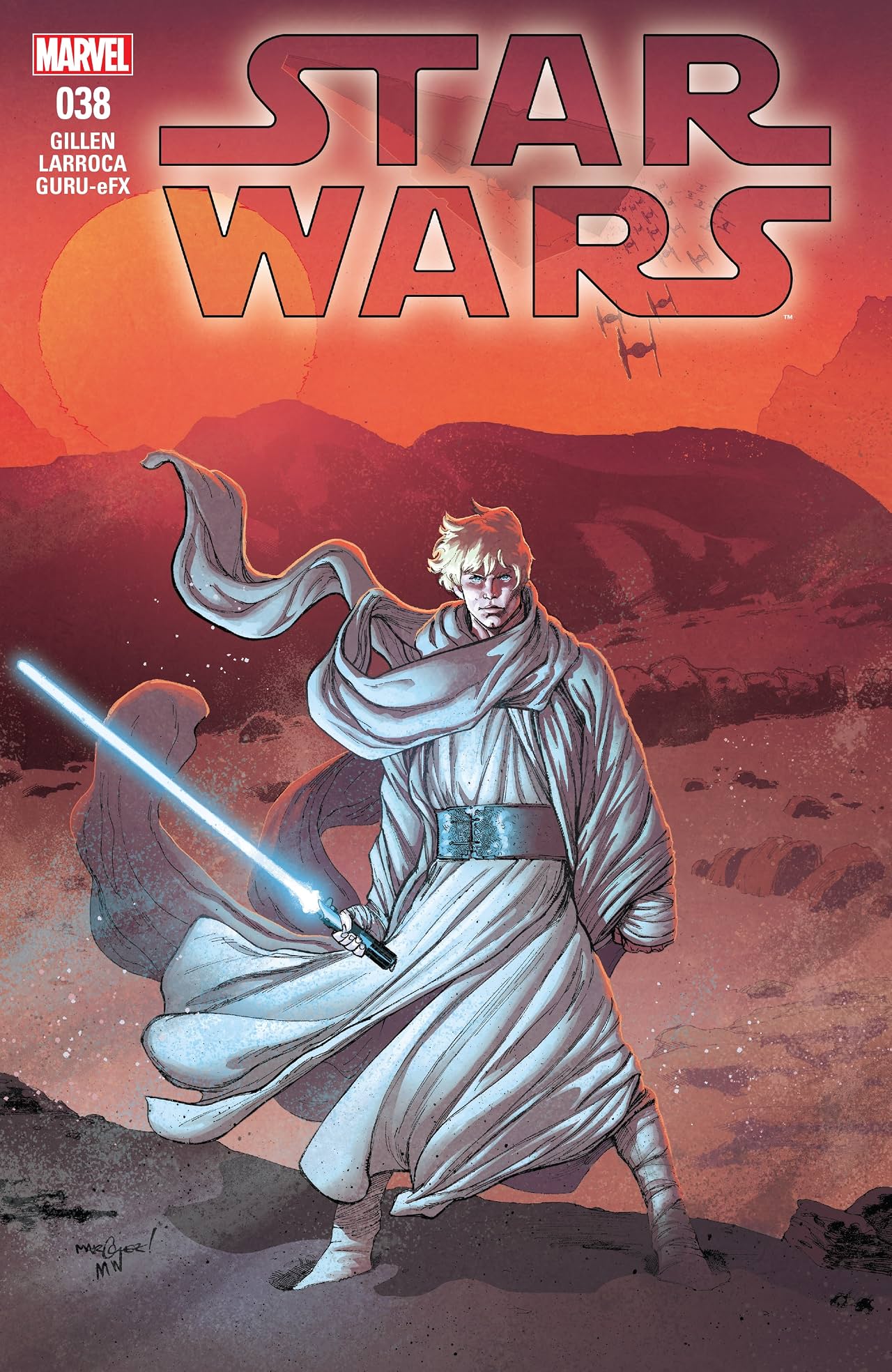
When it comes to evil empires, Star Wars sets the bar high and the scope even higher. It's one thing to subjugate a kingdom, continent, or planet. It's quite another to conquer an entire galaxy. Even someone as bad as King Joffrey from Game of Thrones can only inflict so much evil. It says a lot about Darth Vader, Emperor Palpatine, and the Empire, as a whole, when that evil is so far-reaching that blowing up a planet is no more ambitious than Joffrey cutting out someone's tongue.
At times, however, the evil of the Empire becomes an afterthought in order to focus on the story surrounding Luke Skywalker, Han Solo, and Princess Leia. While the original trilogy and the much-maligned prequels do plenty to explore the cruel nature of the Empire, few outside the ruins of Alderan can appreciate how bad it can get for those living under its thumb. It's important for the overall Star Wars mythos to belabor why the Empire is evil in the first place. That makes seeing the Death Star blow up all the more satisfying.
This is where Kieron Gillen and Salvador Larroca come in. Having made various contributions to Marvel's line of Star Wars comics, they enter a mythos far, far away that is rarely short of drama, dread, and droids. At times, the narrative lacks direction, but Gillen and Larroca have already made numerous contributions through Darth Vader and Dr. Aphra. Star Wars #38 offers them a chance to contribute to the bigger picture and leave a more indelible mark on the galaxy. Having to do that without the aid of another Death Star is always a challenge.
The Force is on Gillen's side, though, because the Empire's atrocities don't stop at just blowing up planets. Like many other evil empires, it also goes out of its way to plunder the places they've destroyed. While there are many real-world parallels of evil empires that plunder, going back to the days of the pyramids, not even the most blood-thirsty ruler could do so on the scale of the Empire.
That's what brings Luke, Han, Chewy, and Princess Leia to Jedha, a planet that the Empire partially destroyed, but not out of mercy. The planet happens to be a rich source of kyber crystals, a mineral that the Empire values. That means they can only partially destroy it, but that still means blowing a huge chunk of the planet away. For the Empire, that's the most mercy it'll ever show. This says a lot about how they operate and why blowing up multiple incarnations of the Death Star is so cathartic.
There's nothing that big for the Rebels to destroy in Star Wars #38, but there's still a chance to frustrate the Empire. That's an opportunity that Luke and his friends rarely pass up. That also involves teaming up with the residents of Jedha, which include someone named Chulco Gi, a name that sounds custom-made for the world of Star Wars. His story and the way it ties into that of the Rebels further expands on the evil of the Empire because that can never be too belabored.

It isn't enough that the Empire partially destroyed Jedha, just to get its resources. It also isn't enough that it displaced a huge chunk of its population and did so with the kind of overkill that's akin to swatting a fly with a bazooka. The people of Jedha have their own culture, customs, and religion. Gi is a pious adherent of that religion. However, the Empire just blows that up like they do everything else that gets in their way. Whether it's a planet, a people, or a culture, they deal with it by destroying it. When they have weapons that blow up planets, it's just easier than diplomacy.
This sort of callous approach leaves plenty of scars, even on Gi. He, like Luke to some extent, believes that all the suffering and loss has a greater destiny in mind. So much of the Star Wars mythos is built around fulfilling or fighting destiny. The atrocities of the Empire just raise the stakes even more, which helps give greater weight to the struggle in Star Wars #38.
That struggle has more moving parts than simply sending Storm Troopers and Imperial Droids to shoot things. Gillen also takes some time to explore the logistics of plundering a planet with the Empire. It doesn't just involve shooting giant lasers or Darth Vader force choking subordinates. Gillen actually taps some characters from the pages of the Darth Vader comic, namely Shu-Torun. While the Empire makes few allies that aren't easy to blow up, they tend to be pragmatic when it comes to allegiances. That shows that the Empire isn't just evil. It's competent, which only makes it scarier.
That added fear factor helps make Star Wars #38 feel like part of a larger picture, one that is actually impacted by events in other Star Wars comics. That's something many of the Star Wars comics have been missing since the Vader Down event, which Gillen also helped right. The fact that a story with those connections unfolds without creating a new Death Star makes the story that much more impressive.
It's still a story that only gets so much time to develop. Star Wars #38 does plenty to establish that the situation on Jedha is dire and its people are suffering. It also establishes the personal stakes for characters like Gi, who have more reason than most to fight the Empire. What isn't clear, at least from the outset, is the larger plan the Rebels have. When there's no Death Star to blow up or plans to steal, their tactics tend to be more subtle. They also tend to be vague, which makes it hard to evoke the same drama that comes with watching Luke hit a thermal exhaust port only two meters wide with nothing but the Force.
There are a number of blanks that need to be filled. Star Wars #38 creates a story that feels part of a larger narrative, but that story isn't quite as concise in terms of purpose and intent. It still marks an overdue improvement, of sorts, with Marvel's Star Wars comics. It's not just trying to fill the sizable gaps between iconic movies. It's trying to build bigger worlds in a story where worlds regularly get blown up. It's still a challenge, as is often the case with Evil Empires, but the payoff is worth its weight in destroyed Death Stars.
Final Score: 7 out of 10


