Showing posts with label Marvel. Show all posts

Thursday, September 13, 2018

Time (Inevitably) Runs Out: X-men Blue #35

The following is my review of X-men Blue #35, which was posted on PopMatters.com.


Certain time-displaced, alternate universe, or cloned characters never wear out their welcome. Time paradoxes aside, someone like Cable is here to stay. Josh Brolin's role in Deadpool 2 and Dafne Keen's role in Logan effectively cements that. Those are rare exceptions, though. For the most part, characters derived from others or a byproduct time travel have an expiration date. It's arguable when that date was for the original five X-men who first came to the future in All-New X-men, but most agree that date has long since passed.

Pretty much every circumstance that kept the time-displaced X-men in the future is moot at this point. Jean Grey is no longer dead. Cyclops never causes a mutant genocide. Iceman doesn't stay in the closet. Angel never loses his wings. At one point, there are legitimate barriers keeping them in the future, which play out in X-men: Battle of the Atom. However, most of those barriers crumble throughout Cullen Bunn's run on X-men Blue. They're now at a point where they not only have the ability to go back. They accept that they must go back.


While the logistics of that story play out in Extermination, there's room for reflections and reconciliations. X-men Blue #35 doesn't act as a prelude to Extermination as much as it does an epilogue to the journey that Brian Michael Bendis began in All-New X-men. These characters, despite the many myriad of complications incurred by time travel, are in a very different place than they were when they first arrived. Some improve their situations. Some see it become much worse. In any case, they're all painfully aware of the headaches generated by time travel.

No matter their status, these iconic characters are no longer the wide-eyed idealists that they were when Charles Xavier began training them. They've seen a future where ideals get tainted at every turn and spirits get broken almost as often. In doing so, these characters diverge considerably from the path they were on before. The structure of X-men Blue #35 is built around each member of the time-displaced X-men confronting their future selves, but affirming that they're not the same person.

The problem is they can't be the person they've become anymore. Beast makes clear that in order to avoid any further pitfalls relating to time travel, he and his fellow time-displaced X-men have to forget everything they've experienced during their time in the future. Going back with the knowledge they have, from who wins in every superhero civil war to who plays in every Super Bowl, has serious implications for the overall continuity of the Marvel universe. Given the many convolutions of that continuity, as it stands, the timeline just can't handle that.

This makes for a strange, but intriguing tension between the characters. In each conversation they have with their future selves, they try to affirm they're their own person. However, they also acknowledge that they can't separate themselves from who they're destined to become. If they do, they break reality and after the events of Secret Wars, the timeline just can't handle that.


Each member of the time-displaced X-men deals with their own existential crisis, of sorts. Jean comes off as having a full-blown identity crisis, lamenting at how she feels false in the presence of her older self. To some extent, she's right. She and her teammates aren't the "true" version of the original five X-men at this point in the timeline. They're anomalies that have to disappear completely in order to keep reality intact. To them, though, going back to their own time doesn't mean resolving a long-standing time travel plot. It means erasing themselves from existence.

It's actually Bobby who seems to understand this more than the others. For him, going back in time means going back to being closeted and that bothers him. It's one of those ideas that would bother anyone identifying as LGBT, having to go back to that isolated place and live a lie. Even though his older self is in a much better place in terms of accepting his identity, it doesn't make the underlying notion less distressing.

That's the overall sentiment of each time-displaced character in X-men Blue #35. They agonize over the idea that everything they've done in the present will only serve those in the present. They still have to go back and endure all the hardships, heartaches, and losses. Despite accepting that they must return to their own time, they establish that their preference is to stay. Existing is just inherently more appealing to oblivion.

While it's easy to sympathize with those feelings, Bunn belabors the consequences of following those feelings. Parallel to the interactions between the time-displaced X-men and their counterparts, there are brief flash-forwards that depict the future that unfolds if they don't go back. This side-story doesn't just link X-men Blue #35 with the events of Extermination. It reveals the extent of the existential crisis the X-men face.


Even if going back to their own time is overdue, there are still a lot of problems that these characters want to resolve. Angel is still going to lose his mind and become a horseman of Apocalypse. Cyclops is still going to end up dead and vilified for all the wrong reasons. Beast is still going to end up a blue, furry ape man who plays fast and loose with time machines. Despite the many harsh realizations they've endured, they still retain that youthful idealism that defines the original five X-men.

If that's the primary goal in X-men Blue #35, it definitely succeeds. In terms of furthering the various other plots that have been unfolding since X-men Blue began, it doesn't fail, but it comes up short. There's a lot of lamentation and frustration, but not much else. This being the penultimate issue of the series, there isn't time to tie up every loose end. However, that's the appeal/irony of time travel stories. If everything were resolved, then time travel wouldn't be necessary in the first place.

Final Score: 7 out of 10

Thursday, September 6, 2018

Heroes, Criminals, and Heroes Operating As Criminals: Astonishing X-men #15

The following is my review of Astonishing X-men #15, which was posted on PopMatters.com.


In principle, being a superhero is simple. You find criminals, you fight them, and you defeat them. If you can cooperate with the authorities along the way, then that's a nice bonus. When heroes have to operate as criminals, though, things aren't as simple. That doesn't just apply to vigilantes like Batman and the Punisher, who overtly operate outside the law. Sometimes, a superhero has to function in an environment where they're branded a criminal for the wrong reasons.

That is Alex Summers' situation in Astonishing X-men. Now that he's not inverted anymore from the events of AXIS, he's attempting to rebuild his superhero credibility. His timing is actually really good, in some respects. With both his brother, Cyclops, and Captain America also having to salvage their reputations due to events like Secret Empire and Avengers vs. X-men, he's following ongoing trend among heroes. With the way things play out, however, he's going in the wrong direction and it's not entirely his fault.

Matthew Rosenberg and Greg Land give Havok plenty of opportunities to channel his brother's leadership skills. He manages to assemble a new team of X-men to carry out heroics on their own terms. It's not exactly a team of A-list heavy hitters, though. Between Warpath's attitude in Weapon X and Colossus still recovering from his failed wedding in X-men Gold #30, Havok needs more than just leadership to get them on the same page.

The underlying plot of Astonishing X-men #15 starts off simple. The Reavers are on the loose again and the X-men usually don't have many qualms about fighting Reavers. However, some major complications emerge that would hinder Captain America on his best day. These aren't the traditional, mutant-hunting Reavers the X-men are used to. They're now directly sponsored by the government and operating under the guise of law enforcement. Given the government's tenuous history with policing mutants, it's only shocking that they didn't resort to killer cyborgs sooner.


This immediately puts Havok and his new team are already behind the curve. Their confrontation with these state-sanctioned Reavers goes so badly that even Kitty Pryde has dissociated the X-men from Alex's team. Logistically speaking, they can't even call themselves X-men. In the eyes of both the law and their friends, they're not superheroes operating as criminals. They're just criminals.

This isn't just bad press like the kind Spider-Man deals with every other day. Officially, Havok's team fight and evade government agents. That's both frustrating and jarring because it subverts the X-men's traditional approach to battles. Like Sentinels or evil clones crafted by Sinister, the Reavers are the kinds of enemies that X-men usually battle without a second thought. It's almost like a reflex akin to Captain America saluting the flag or Deadpool making a dirty joke.

The difference this time is that the Reavers are sanctioned by the government. It's not entirely a mutual partnership. The Reavers, led by Donald Pierce, make it abundantly clear that this partnership was imposed. They didn't cooperate with the government out of civic duty. They were essentially drafted into serving and Havok doesn't find that out until it's too late.


This creates an unusual, but interesting backdrop to the conflict. There's no mind control or inverted personalities at work here. The only alteration to the X-men/Reaver clash is that the Reavers are now operating under the whim of the authorities. Even if they do it unwillingly, they're still technically government operatives and Havok's team fought them. From a legal perspective, they assaulted agents of law enforcement. That's not what heroes do. That's what criminals do.

It's less about the ethics of heroism and more about the bureaucracy surrounding it. Any team of heroes, be they X-men or Avengers, can take down all the cyborg assassins they want. Both the public and those in government will gladly cheer them on. However, as soon as those same cyborg assassins start operating with the government's seal of approval, those cheers turned to outrage.

It puts Havok in an unusual predicament. He wants to redeem himself. Instead, he and his new team find themselves on the wrong end of the law and public opinion. The media doesn't frame the story as the X-men heroically defeating the Reavers before they can harm innocent mutants. They report it as a group of rogue mutant terrorists battling government forces.

Technically, that's not some misleading headline on the front page of the Daily Bugle. That actually happens, forcing Havok and his new team to lay low. That doesn't work either, though. The Reavers still find them, which means they have to defend themselves. Doing so means fighting back, but that only compounds the problem because they're still fighting government officials.

It's a no-win situation for Havok. Unlike his older brother, he doesn't have a boy scout reputation to fall back on. People may question a news story that claims Captain America sucker-punched a police officer, but they're less inclined to doubt that Cyclops' less capable brother did something awful, especially after being inverted for so long. He even acknowledges how bad it gets, escaping to a bar frequented by other colorful criminals. It seems every conceivable force is working against Havok's efforts to redeem himself and for once, that's not just brooding.


It's not completely hopeless. Rosenberg never lets the tone of the story get too bleak. Havok still gets a chance to do his brother proud, hatching a plan towards the end that requires him to embrace his new criminal connotations to some extent. It's bold, but fitting approach. Given how the plot is almost framed, it feels necessary.

That also feels like a flaw, of sorts, because neither Havok nor his team really have much choice along the way. There's never a sense that they have any agency in how they impact the plot. The same goes for the Reavers, as well. Having that government label really limits their agenda to serving whoever has the right emblems on their uniform.

Even with those limits, Astonishing X-men #15 succeeds in presenting Havok with a daunting, yet novel challenge on his path to redemption. Just forming a new team of X-men and following his brother's example isn't enough. He has to operate as a criminal in order to become the hero he wants to be. His brother would be proud, but probably just as frustrated.

Final Score: 7 out of 10

Thursday, August 23, 2018

Old, Gruff, and Gritty: Old Man Logan #46

The following is my review of Old Man Logan #46, which was posted on PopMatters.com.


It's never easy watching a beloved friend or family member succumb to the ravages of age. It's an inescapable fact of life, but if there's anyone who has a chance to escape, it's Wolverine. He's not supposed to age, decline, or lose his sex appeal. This is a man who survived having the adamantium ripped from his bones by Magneto, endured multiple battles with Apocalypse, and kept his dignity after the Punisher ran him over with a steamroller. However, it's because he's not supposed to get old that Old Man Logan has such unique appeal.

He's a version of Wolverine who is losing his battle against the ravages of time. He can still heal, but he can't be the same hero he's always been. Moreover, he can never be that hero again. His body and his spirit just won't allow it. That version of Wolverine is buried in the past. This version is looking less and less capable with each passing day.

Since taking over the series, Ed Brisson has been guiding Old Man Logan into the proverbial twilight of his story and there's a growing sense that the end is near for him. He can't heal like he used to. He can't fight with the same ferocity that once made him so dangerous. He's an old man and there's only so much he can heal from. On top of that, the adamantium in his bones is poisoning him so his clock is ticking faster than most.

It's a rare and difficult story to tell, an iconic hero getting older and less capable. Old Man Logan tells that story well and with Old Man Logan #46, Brisson takes him one step closer to the inevitable, but not before putting him in position to be the best there is at what he does. That also includes him teaming up with old allies, such as Alpha Flight. It's one of Wolverine's oldest affiliations that doesn't involve clones or other living weapons. It's somewhat fitting because Alpha Flight prepared him for the X-men. Now, they're helping him prepare for his final days.

The tone of the story is not as somber as it could've been. Old Man Logan is not necessarily broken up about his declining health. He's not dreading the dwindling time he has left or that the mainline version of Wolverine is coming back to take his space. Brisson presents Old Man Logan as a man resigned to his fate, but not in a way that feels grim. He's still Wolverine. He'll still throw himself into the middle of a battle and stab things, as only he can.


It does, however, create a unique backdrop for the part of the story that requires fighting and claws. It's a fairly generic situation by Alpha Flight standards. There's a small town in Canada that has been overrun by some purple alien plant monster. Not much is known or revealed about it, but it gives Old Man Logan and Alpha Flight a reason to team up. It has the common themes of an old school monster movie, complete with mysterious origins for the monster and brutal deaths for innocent townspeople.

By Wolverine standards, it's basically a typical Tuesday. However, a good chunk of the story is dedicated to reinforcing just how little time Old Man Logan has left. There's even one revealing scene between him and Puck where he reveals something that few versions of Wolverine would ever admit without the influence of powerful psychics.

It's not just that he can't heal and the adamantium in his body is killing him. He's tired. His exact words are, "I'm just so tired." He knows he's not the man he used to be. He also knows that if he keeps fighting like a young man version of Logan, people are going to get hurt, namely those cares about. He's at a point in his illustrious, brutal life where he's just ready to go. It's one of those things people expect old men to say, but not Logan.

Puck and the rest of Alpha Flight don't have a chance to respond, which is understandable when they're fighting an alien plant monster. Damian Couceiro manages to include some solemn reactions through a dark, but appropriate art style. There's a clear sense that Alpha Flight isn't just brushing Old Man Logan's dire condition off. They just don't get an opportunity to confront him about it and Old Man Logan makes clear that he doesn't want to talk about it.


This does have a meaningful impact on the battle against the alien plant monster. If a younger, less tired version of Wolverine were involved, then the drama just isn't there. Old Man Logan #46 isn't just Wolverine fighting another space monster with his fellow Canadian heroes. Brisson creates a predicament where every growl, slash, and grunt is pushing Old Man Logan closer to the brink. He can't win they day by just going into a berserker rage and stabbing everything with a feral grin on his face. He has to fight knowing that he's not going to heal from the wounds he incurs like he used to.

That makes Old Man Logan #46 and every subsequent issue more dramatic beyond the alien plant monsters. This isn't just another tease about a major hero dying and setting up a subsequent resurrection story. This is a character who is ready to die and doesn't want to come back. He wants to fight whatever battles he can before walking off into the light to rejoin his family. It's sad on some levels, but refreshingly real in a way that is atypical of superhero comics, especially those involving Wolverine.

There are many times in Logan's vast, convoluted history where his healing factor has been damaged and his ability to survive any battle is in question. However, Old Man Logan sets himself apart by conceding to his vulnerabilities to some extent. There's no certainty that he'll heal from his condition because it has less to do with his powers and more to do with juts being an old man. It's solemn, but it's not tragic in the sense that Old Man Logan is ready to die. He's just not done stabbing things yet.

Final Score: 7 out of 10

Thursday, August 16, 2018

Tenuous Temporal Deconstruction: Extermination #1

The following is my review of Extermination #1, which was posted on PopMatters.com.


There comes a point in every time travel story where the damage to the timeline become untenable. Sometimes, it takes too long to get to that point and when functional time machines are involved, that's saying something. It's debatable whether the original five X-men that, as ripped from the earliest issues of Uncanny X-men, have gotten to that point, but the circumstances surrounding Extermination #1 make a pretty convincing case that their time has come.

The details are unavoidable. The reasons why the time-displaced X-men came to the future and stayed there are obsolete. Cyclops never causes a mutant genocide. Jean Grey doesn't stay dead. Angel doesn't permanently lose his mind. Iceman doesn't stay in the closet. Everything that once horrified them about the future no longer applies. It makes their continued presence both superfluous and confusing. Ed Brisson and Pepe Larraz promise to resolve that with Extermination.

That necessarily requires more time travel and all the timeline-twisting machinations that come with it. As Back to the Future so eloquently demonstrates in 1985, the source of the temporal disruption must also be the solution to some extent. The events of Extermination #1 just add more urgency, as well as a new threat that promises to step up the time tables, literally and figuratively.


The nature of that threat is vague, but it involves familiar names. Things happen fast and suddenly. Big messy battles unfold, giving Larraz plenty of chances to create stunning visuals. There are also multiple casualties, each of which have weighty implications. However, since casualties in a time travel story are often tenuous at best, the drama is limited. Despite this temporal barrier, Brisson and Larraz find plenty of ways to inject it into the plot.

The stakes go beyond the integrity of the timeline. They get personal very quickly and hit the time-displaced X-men right in the proverbial heart. Some get hit harder than others and the emotions from characters like Cyclops and Jean Grey are palpable. For a time travel story, which often relies heavily on sub-plots laden with sci-fi technobabble, this kind of heartfelt anguish is refreshing. It makes Extermination #1 feel like something other than a time travel story, of which the X-men have many.

However, some of that melodrama comes off as forced. In between the destructive battles, the personal dimensions of the conflict emerge from outstanding side-plots that have been unfolding among the time-displaced X-men in recent years. The overall structure of Extermination #1 doesn't rely too heavily on it, but it doesn't complement it, either. There are even moments that don't entirely mesh with recent developments in the books that precede it.


The moments between Teen Cyclops and Bloodstorm don't really match with what has been going on with them in X-men Blue. There's an implied connection between them, but one that comes off as contrived for the sake of increasing the impact. The moments between Teen Jean, Rachel, and Cable also assume a lot about the relationship they have. While past issues of All-New X-men and X-men Gold establish that they are aware of one another, there's little indication that they've fleshed it out to any meaningful extent.

This doesn't make the events in Extermination #1 less coherent, but for anyone who has been following the journey of the time-displaced X-men, it feels disconnected from their over-arching story. To some extent, this keeps the story from getting bogged down by continuity. At the same time, it also overlooks the larger implications of the original five X-men's presence in the future. 

That's not a requirement to making the plot work, though. The time-displaced X-men don't need to have a deep, well-developed relationship with every character involved. Just knowing who Rachel and Cable are is enough to understand why the events that unfold are a big deal, both for original five X-men and the integrity timeline. It effectively shoves the cold, hard truth in their face in a way they can no longer ignore. Their presence in the future cannot continue. This is the end of the line for them and there's no scenario in which they can stay without incurring greater losses.

That's the underlying message of the story and Brisson effectively belabors that. Some characters, namely Teen Cyclops, openly acknowledge that they have to go back to their own time at some point. They even understand that has to happen soon, but there are a lot of factors keeping them in the future, including the unpleasant fact that one of their future selves is still dead. Like any approaching time paradox, though, they don't get much say in the matter.

When the past, present, and future finally catches up to the time-displaced X-men, it feels abrupt, yet necessary. There's a sense that there has to be consequences to them being in the future for as long as they have. Some characters suffer more than others and it weighs heavily on the time-displaced X-men. It also sets the stage for a much bigger, much more personal confrontation with two familiar characters who have a tendency to show up in dystopian futures.

Even with all these personal and temporal connections, there isn't a sense that what happens in Extermination #1 is a culmination of everything the time-displaced X-men have done. There's no critical mistake that puts them past the point of no return. Forces they neither control nor know about simply catch up to them and make them pay for daring to have personal attachments in the future. It's a common consequence of time travelers, but one that has just enough depth to work.

Extermination #1 certainly succeeds in firing the first shots in the conflict that will ultimately send the original five X-men back to the past. There's little mystery as to who is behind it. Brisson doesn't drag anything out and still leaves room for plenty of intrigue. The situation is dire, but it isn't hopeless and since the X-men are always one misstep away from creating another dystopian future, that counts for a lot.

Final Score: 6 out of 10

Thursday, August 9, 2018

Unforgettably Unforgotten: Fantastic Four #1

The following is my review of Fantastic Four #1, which was posted on PopMatters.com.


What is the Marvel universe without the Fantastic Four? That's a difficult question that many fans have had to answer since the conclusion of Secret Wars in 2015. Since then, Marvel's First Family has been absent, scattered, or a solemn combination of both. The reasons for their limited status are many and prone to speculation, ranging from bitter disputes over movie rights to simply not having a place in Marvel's ever-evolving landscape. Whatever the reason, there's one inescapable truth. The Marvel universe just isn't whole without the Fantastic Four.

Their absence is a glaring flaw in a world that was built on a foundation that Reed, Sue, Johnny, and Ben helped forge during the golden age of the Stan Lee/Jack Kirby partnership. While many other Marvel heroes have seen their star rise, the Fantastic Four only ever seem to decline. Regardless of which hot new superhero emerges or who gets an overdue overhaul, it's never a matter of whether the First Family will ascend once more. It's just a matter of time, opportunity, and vision.

With Fantastic Four #1, that moment is here. Dan Slott and Sara Pichelli are poised to reaffirm the Fantastic Four's importance to the Marvel universe. Overall, they succeed in almost every meaningful way. The most important thing they do is demonstrate how much the Richards family is still missed. It's not just Ben and Johnny who miss them, either. Many of their close associates, including Medusa, Crystal, and Luke Cage, all get a chance to say how they feel about a world without the Fantastic Four. They don't need Reed's vast vocabulary to make clear how much that world is lacking.


That sentiment starts as simple longing on Ben and Johnny's part. There's this underlying sense of solemn, but uplifting kind nostalgia. They both handle it very differently, though. Throughout the story, Ben is more resigned to the idea that Reed, Sue, and their kids are gone for good. It still hurts, but he's trying to move forward with his life. He even has a chance to make an important life decision with Alicia. From Ben's perspective, the best way to deal with the lost of his old family is to build a new one.

That's not Johnny's approach, though. In fact, he's downright offended by Ben's methods. Johnny, being the literal and figurative hot-head of the bunch, isn't inclined to move forward. He resists any inclination to just accept that the Fantastic Four are gone for good. He clings to the idea that Reed and Sue will find a way, as they often do. Considering that these two can outwit Galactus, navigate the negative zone, and resist Namor's efforts to undermine their marriage, his faith in them is not entirely misguided.

That doesn't make it any less frustrating for him, though. To some extent, Johnny's anger towards anyone who accepts that Reed, Sue, and their kids are never coming back reflects that of every other Marvel fan who misses them. It goes beyond the comics themselves. The marginalization of the Fantastic Four is hard to miss, even for those who don't follow news about mismanaged movie rights. Given their importance to the history of Marvel and the way the landscape of Marvel has unfolded without them, a little frustration is more than warranted.

It culminates in a powerful moment where Slott captures that feeling perfectly through Johnny. Rather than celebrate the progress Ben makes in his personal life, he lashes out at the stars where he and the First Family got their powers. He says what so many others have thought, felt, and articulated in fan mail. Reed Richards is one of the smartest beings in the Marvel universe. No secret war, incursion, or Disney lawyer can keep him and the Fantastic Four apart. He shouldn't need a reminder, but Johnny gives him one anyways.

He does it in a way that almost makes you want to shout with him. This isn't just another superhero team that can form, dissolve, and join a super-powered civil war within the same week. The Fantastic Four are a family. No matter how many planet eaters there are, family finds one another. That's something that no Avenger, X-men, or Champion can match. In the end, both Johnny and those who share his frustration get a welcome and overdue answer. It's both a sign and a gesture of reassurance. The Richards family is coming home. The Fantastic Four will be whole once more.

That sentiment, built around the affirmation that the First Family is coming together again, is Slott and Pichelli's most important achievement with Fantastic Four #1. This isn't just a team reforming after a dramatic schism. This is a family finding itself after being torn apart by forces that literally ripped apart the multiverse. Regardless of how much or how little you missed the Fantastic Four during their prolonged absence, it's easy to appreciate that longing these characters feel to be whole once more.

Slott and Pichelli evoke the right emotions throughout Fantastic Four #1, but the story isn't without shortcomings. As a whole, it comes off as more of a prelude rather than the first issue of a larger story. Even though Reed and Sue make an appearance, there are times when the story feels more like a movie trailer than the start of a new chapter for the First Family. The inclusion of a flashback sequence didn't seem to contribute much to the plot, either.

That doesn't make the emotional weight of Fantastic Four #1 any less impactful. It still sends the message that Fantastic Four fans have been waiting to hear for years. The First Family of the Marvel universe is coming back and they've been sorely missed. While they probably won't solve every lingering problem with superhero civil wars and pushes for diversity, they'll still be together. For any family, that's the most important part of any challenge.

Final Score: 7 out of 10

Thursday, August 2, 2018

Summer Camp Snoozer: X-men Gold Annual #2

The following is my review of X-men Gold Annual #2, which was posted on PopMatters.com.


Every great character goes through phases that don't put them in a very positive light. Some even become downright infamous, marking a dark period in their overall arc. In certain cases, those moments are best left forgotten in the same tradition as the original Clone Saga, Wolverine's relationship with Squirrel Girl, and that time time Juggernaut hooked up with She-Hulk.

Unfortunately, the recent events surrounding Kitty Pryde cannot be easily brushed aside. The events surrounding her wedding to Colossus in X-men Gold #30 are just too heavy to overlook. To say that she comes out of that ordeal looking less than heroic is like saying Mole Man needs a shower. She does herself a huge disservice, being the one to propose to Colossus and the one to break it off. In terms of superhero credibility, Kitty is near the bottom with Magneto.

That's not to say her character is beyond repair. X-men Gold #30 certainly adds complications, but not to the point of irreparable harm on the level of Hank Pym beating his wife. Kitty Pryde still stands out as once of those characters who undergoes the most growth over the course of her time with the X-men. She joins the team as a scared, uncertain teenager who just got thrust into this world of mutants, killer robots, and living weapons. X-men Gold Annual #2 takes a step back form her current melodrama and explores this critical side of Kitty Pryde, recounting less heartbreaking parts of her journey.

Seanan McGuire and Marco Failla don't try to reinvent Kitty Pryde. They simply attempt to reinforce the kind of person she already is and they don't even rely on killer robots to achieve this. Instead, X-men Gold Annual #2 recounts a younger Kitty Pryde taking a break from the Xavier Institute to go to summer camp. It's not exactly a journey through the Savage Land, but it's fitting in that it allows Kitty to feel normal for a while.

That ends up being a pretty significant theme, the act of being normal when unavoidable circumstances say otherwise. Kitty Pryde knows and acknowledges that she isn't normal. She can pretend to be normal and for a good chunk of the story, that's what she does. For the most part, it makes her happy. It gives her a chance to reconnect with old friends, enjoy traditional summer activities, and not worry about Magneto attacking every other week. For a young Kitty Pryde who has yet to get trapped in a giant space bullet, this should be cathartic.


That's not how things play out, though. Kitty learns fairly quickly that there's no use being normal. She's just not the same person she was before she found out she was a mutant. It shows in subtle ways at first. Her friends can't keep up with her anymore, she feels more restless at night, and she's a bit more willing to break the rules, which feels kind of like Wolverine's influence on her. It makes for powerful moments of self-awareness that put Kitty ahead of the curve for most teenagers. However, when mutant issues enter the picture, both the personal insight and the overall story start to falter.

Things devolve quickly for Kitty once she decides to stop being normal and exercise her inner X-men. She finds out that these friends who she gets along so well with for half the story actually harbor anti-mutant sentiments. It further shatters the notion that she can just be normal for a while. Her reaction is somewhat predictable. Her sentiments aren't much different from most expect of a teenager girl who just learns a hard lesson about the real world. She doesn't come off as Kitty Pryde, a future leader of the X-men with a thing for guys named Peter. She's just another upset teenager.

That's understandable, given her age in this story. It still hinders the overall drama. There's an effort to build more by having her cross paths with another young mutant who has to overhear the anti-mutant diatribes. It makes for a few nice moments, including Kitty's first kiss, but there's nothing iconic about it. There's no Spider-Man kissing Mary Jane on top of the Empire State Building. It's just two people who bear the brunt end of mutant hatred and help each other.

It's sweet, but contrived way to salvage Kitty's summer. Not much comes from it, though. There's some basic bullying on the part of their fellow campers. There's no nuance or depth to it. At times, it comes off as being copied from any teen drama movie made after 1987. Kitty doesn't even do anything to confront it. She doesn't change hearts or minds. She doesn't do anything to change anyone else's notion of normal. Granted, she's still young and inexperienced at this point, but the lack of ambition she shows seems out of character for an aspiring X-men.

As a result, there's no real resolution in X-men Gold Annual #2. Kitty meets up with her friends and they just apologize to her for how they reacted. It happens randomly and without any real incentive. They feel bad about how they acted and that's it. There's no greater story behind it and that limits the overall impact. Kitty doesn't even get an opportunity to be heroic or show them the error of their ways. It just happens and everyone shrugs it off. That's as interesting as it gets in the end.

That's not to say X-men Gold Annual #2 doesn't have merit. It's still a refreshing reprieve for Kitty Pryde, exploring another part of her past at a time when her present is such a mess. It even has a relevant message about being normal in a world that isn't always kind to the abnormal. Kitty tries to just fit in and ignore the things that make her weird. That's something plenty of teenagers and adults can relate to. There's a story there, but it's incomplete and downright bland at times.

Kitty Pryde still has a lot of room to grow. She's one of those characters whose journey reflects the struggles of the X-men and mutants, as a whole. It's part of what makes her endearing and likable. X-men Gold Annual #2 does nothing to undercut that, but it does little to enhance it. In the past, she's still a young woman who's destined to become a member of the X-men. In the present, she's still the one who leaves Colossus at the altar. For her, growth isn't just inevitable. It's necessary.

Final Score: 4 out of 10

Thursday, July 26, 2018

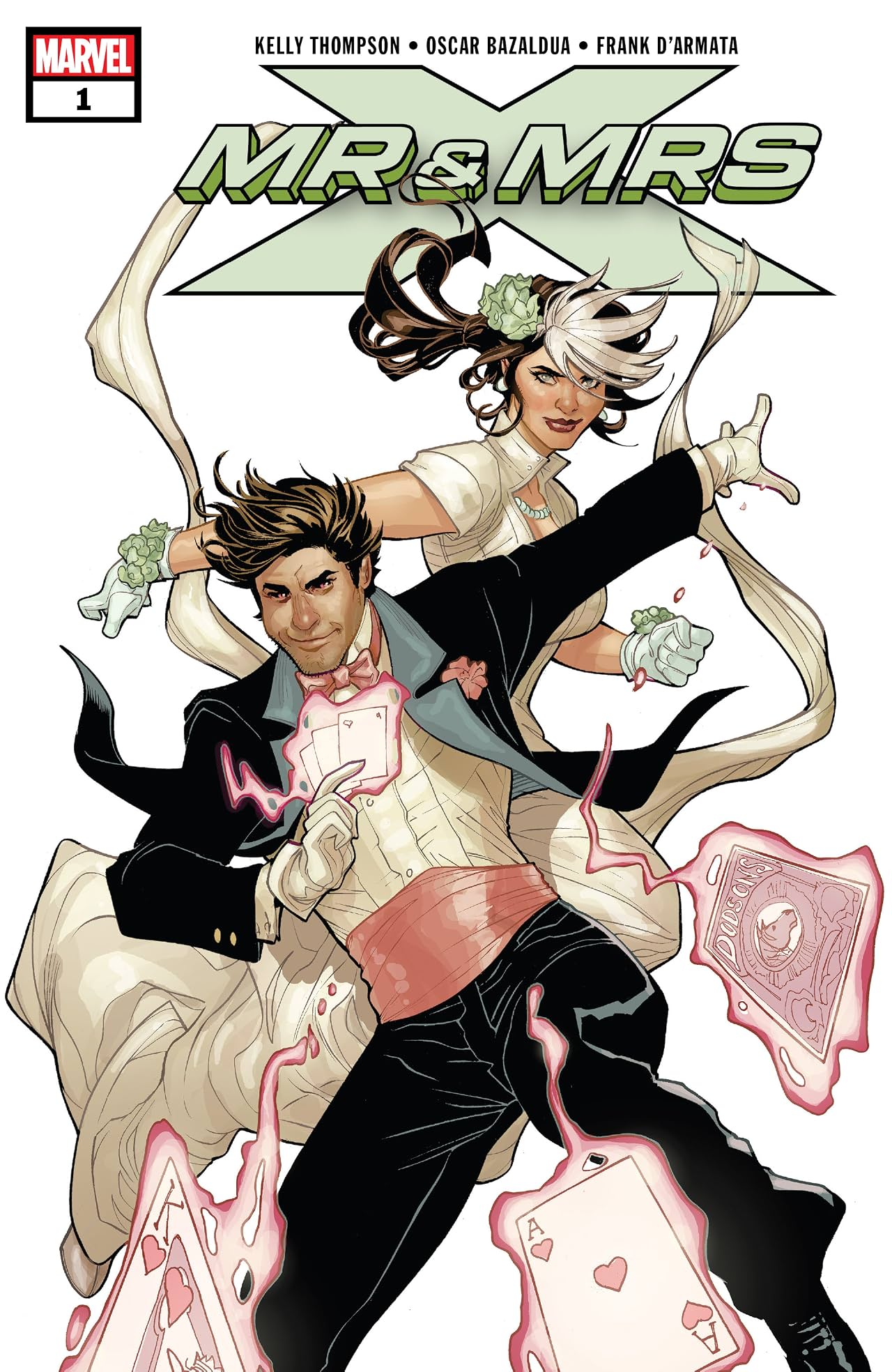
Righting the Romance and Loving the Love: Mr. and Mrs. X #1

The following is my review of Mr. and Mrs. X #1, which was posted on PopMatters.com.


These are difficult times in the history of superhero romance and for a history that includes marrying clones, spousal abuse, and deals with Mephisto, that's saying something. The summer of 2018 will go down as the summer of failed weddings. Marvel spent months hyping up the marriage of Kitty Pryde and Colossus in X-men Gold #30. DC also got into the spirit by promising to finally tie the knot with Batman and Catwoman in Batman #50. In both cases, though, the ceremonies don't go as planned and not because Magneto or the Joker crashed the party.

There is, however, one sliver of hope. Through the broken hearts and wasted wedding cake, one notable romance did manage to make their relationship official, tax benefits and all. Rogue and Gambit, a love story that will never be mistaken for a classic fairy tale, is now among the few superhero romances to make through the wedding.

Their journey to this point is somewhat sudden in how quickly it unfolded. Rogue and Gambit's romantic history is full of drama, complete with moments where they part ways, hook up with others, and generally avoid each other. Then, comics writer Kelly Thompson gets them back on track with Rogue and Gambit. Almost overnight, in the context of comic book time, their relationship is serious and now it's venturing into territory that few outside Reed and Sue Richards have ever gone.


As the one who brought them together, it's fitting that Thompson is the one to continue the story of Rogue and Gambit's unique love story in Mr. and Mrs. X #1. Having come so far so fast, it's easy to forget how much emotional baggage these two still have. Thompson doesn't avoid that baggage. If anything, she confronts it head-on before the happy couple get to the sexier parts of married life. By doing so, it doesn't just make the wedding seem like some reckless impulse on which every Las Vegas wedding chapel is built upon. It feels like a genuine evolution of a convoluted, but genuine romance.

The most important thing Mr. and Mrs. X #1 does is expand on disappointing outcome of X-men Gold #30. This ends up being critical because without that added context, Rogue and Gambit's wedding comes off as something they just do on a whim and don't really think about. While good impulse control have never been a defining trait for Rogue or Gambit, a little extra effort goes a long way towards giving weight to their wedding.

The fact that Thompson dedicates so much of the story to setting up the ceremony that already plays out in another issue shows that this marriage is serious. This isn't something that's going to get undone or overridden by time travelers or Mephisto, at least not yet. The fruits of that effort show in some of the sincere moments that Rogue has with Magik and Mystique, who makes a surprise appearance and doesn't attempt to shoot or seduce anyone for a change. It provides further proof that the Marvel universe is willing to give this marriage a chance.

Rogue and Gambit's is allowed to happen without something blowing up. They're also allowed to go on their honeymoon without someone getting abducted. They're even allowed to get frisky in bed, making for some sexy scenes that give Oscar Bazaldua a chance to craft some R-rated content. There's nothing subtle about it, but it never gets too crude either. It makes for a solid balance of sincerity and sex appeal, a rare combination in any comic book romance that doesn't involve Catwoman.

The majority of Mr. and Mrs. X #1 is lacking in typical X-men conflict. From the beginning, Thompson and Bazaldua make clear that the purpose of the issue is to establish how serious the Rogue/Gambit marriage is. This isn't a gimmick. It's the next step for these two characters and the quirky romance that they've had since the mid-1990s. Eventually, a more standard X-men style conflict does enter the picture, but by that point, the romance is already easy to root for.

The particulars of the conflict that interrupts the honeymoon, though, are somewhat generic. It involves the Shi'ar and requires that Rogue and Gambit squeeze a space battle in between their romantic sexy time. It's understandable that they're reluctant, but their willingness to accept the mission reveals something else that's important for any robust superhero marriage. Even after the wedding, they're still committed to being superheroes.

That is probably the most important take-away from Mr. and Mrs. X #1. The heroism doesn't have to end once a couple ties the knot. Their status among heroes isn't diminished. The potential for new and intriguing conflicts isn't undercut, either. Contrary to many bad sitcoms, marriage doesn't have to be an endpoint. It can just as easily be a catalyst for something new.

Mr. and Mrs. X #1 only offers a hint about what that something can be. With so much of the content dedicated to solidifying Rogue and Gambit's status as married superheroes, there's not much room for them forward in this issue. That's not a flaw, though. That's just a byproduct of insufficient ink and not enough pages. Even though the conflict with the Shi'ar isn't fleshed out, it does plenty to build intrigue for the rest of the series. The arrival of another unexpected, but relevant character in Rogue's life at the end only adds to it.

Mr. and Mrs. X #1 isn't just a comic about Rogue and Gambit getting married. There is a ceremony and it's plenty romantic, but that's only a small part of a much larger story that has been unfolding under Thompson since her Rogue and Gambit series. She dares to take a long-running romance that has never quite attained the iconic status of a Superman/Lois Lane and makes it more than just a colorful a sub-plot.

The idea of putting a romance at the forefront of a plot is not new. Doing it in a way that doesn't feel like a gimmick or forced melodrama is something that superhero comics, and even superhero movies to some extent, have been struggling with for years. Mr. and Mrs. X #1 may not start a trend, but it definitively proves that it can be done and the results can be both romantic and sexy.

Final Score: 8 out of 10

Thursday, July 19, 2018

Conflicts, Musings, and Marvelous Insights: The Life of Captain Marvel #1

The following is my review of The Life of Captain Marvel #1, which was posted on PopMatters.com.


No character becomes iconic without going through a process. Sometimes, it happens unexpectedly. It's hard to imagine that Stan Lee knew Spider-Man's when he first introduced him in the pages of Amazing Fantasy #15. Most heroes only gain that status through a combination of luck, appeal, and growth. In the case of Carol Danvers, these factors aren't always present. In fact, throughout her history, she makes due with limited opportunities. In a world that contains the likes of Spider-Man, Captain America, and Wolverine, that's understandable.

Then, Kelly Sue DeConnick comes along and takes Carol Danvers to new heights with her run on Captain Marvel in 2012. After years as a supporting character stuck in niche roles, Carol finally establishes herself as someone worthy of being in the upper levels of Marvel's pantheon of icons. By shedding her former title and embracing that of Captain Marvel, she becomes someone who can hold her own in landscape crowded with notable names. That ascension isn't always smooth and even stalls somewhat due to the events of Civil War II, but it brings out the complexities of a character that finally has a chance to realize her full potential.

With an elevated role and an upcoming movie starting Brie Larson on the way, there's a greater sense of urgency for Marvel to maximize the appeal of Captain Marvel. Margaret Stohl, who has been doing most of the heavy lifting on Carol's story after DeConnick's departure, has an opportunity to add new layers to Captain Marvel's ongoing growth through The Life of Captain Marvel #1. It's not so much a re-telling of Carol's origins as it is an expansion.

It's a new bridge between the present and the past of a character whose story isn't as well-known as the Peter Parkers and Steve Rogers of the world. That gives Stohl an opportunity to build on the non-alien portion of Carol's story and she really runs with it. There aren't any epic space battles, Hydra agents, or Hulk-like monsters. Most of the story takes place in Harpswell, Maine. It's not the Kree home world, but just being there ends up hitting Carol harder than a fleet of Kree warships.

She doesn't go there for the sake of nostalgia, though. What prompts this homecoming is actually something more personal. It has nothing to do with a high school bully or a childhood crush. It has everything to do with it being Father's Day, which makes Carol relieve some very unpleasant memories. However, these are not the kinds of daddy issues that make for one too many John Hughes movies. It serves as the basis for one of the biggest upheavals in Carol Danvers' life and it doesn't even involve aliens.

It's a stark contrast to the standard narrative surrounding Carol since she took the mantle of Captain Marvel. Part of embracing that title means flying higher and looking forward, something Carol rarely hesitates to do when there are aliens and Hydra soldiers to punch. She's a tough, driven woman who just happens to have the kind of power and grit to go farther than most people imagine. The idea of her still being anchored by unresolved issues in the past seems antithetical to the arc she's been on for the past several years. However, that's exactly what her character needs.

That's not just because she has a movie coming out in March 2019. Carol eagerness to lead the charge into a fight makes her one of Marvel's most prominent superheroes, as well as an inspiration and a leader. It also rarely puts her in a position to confront old scars, of which she has a few. For years, the most notable issue she deals with was alcoholism. Stohl doesn't try to revisit that. Instead, she establishes a new issue that links the past and the present.

That past is largely driven by her father and his not-so-heroic temper. The present deals in the consequences he left in his wake, the most painful of which is felt by Carol's brother, Joe Junior. What happens to him as he reconnects with Carol puts her in a situation where she can't just fight her way out it like Captain Marvel. She can't just fly away, either. She has to stick around in this place that brings up so many unpleasant memories. For someone who works with the likes of Tony Stark, Hulk, and skilled sorcerers, that's saying something.

As a result, Stohl provides some overdue, but welcome insight into Carol Danvers. Her experiences with her family and her reaction to the tragedies that unfold do more to humanize her. It's not just that she interacts with her family and espouses her love of donuts. She willingly opens old wounds and reveals that, for all her power and bravado, she still struggles to cope. It provides a new context for who she is as a person rather than an accomplished superhero. The fact she is so annoyed by Harpswell using her history there to promote tourism reveals that there's a disconnect between Carol Danvers and Captain Marvel.

It's a struggle that affects Peter Parker every other day as Spider-Man. It's also a struggle that Kamala Khan, Carol's biggest fan, is just starting to learn as Ms. Marvel. Carol may give the impression that she's beyond those issues of less experienced heroes, but The Life of Captain Marvel #1 shows that's not the case. It also hints that there are other complications she doesn't know about that may deepen those wounds. There's even a hint that aliens are involved, which is in keeping with Carol's tendency to attract other worldly trouble.

It also provides another potential link between the present and the past. It even promises to expand on the issues with her father, which is critical if he's going to be more than just a generic abuser with the depth of a Hydra foot soldier. The potential for major revelations, as well as space battles mixed with personal upheaval, is certainly there. The details are somewhat vague, almost to an excessive degree. However, it does more than enough to set up a more nuanced battle for Carol that can't be blown up or attributed to alcoholism.

There are some narratives that work in any time or place in a character's development. Sometimes, though, having it unfold at a certain time within a certain context makes it even more effective. The Life of Captain Marvel #1 gets the timing, the context, and everything in between just right for Carol Danvers. It feels like one of those defining stories that needs to be told before a character can be elevated to the same level of a Captain America or Iron Man. Carol is already ascending and with Brie Larson set to bring her to life in the Marvel Cinematic Universe, it's safe to say she's almost there.

Final Score: 9 out of 10

Thursday, July 12, 2018

Back To Brutal Basics: X-23 #1

The following is my review of X-23 #1, which was posted on PopMatters.com.


On paper, the arc of a superhero is supposed to move forward with progress and growth occurring along the way. In practice, however, there are a lot of setbacks, regression, and pitfalls, but not all of them involve dying and coming back to life every once in a while. Certain characters have an iconic status built on decades of evolution, eventually settling into a particular status quo that best reflects who they are and the breadth of their appeal. To that extent, Laura "X-23" Kinney is still evolving.

Her story can't be considered new anymore, having played a part in a major X-men movie and held down multiple solo runs from the likes of Marjorie Liu and Tom Taylor. She also can't be classified as old, either. Her growth has been rapid since her debut in the X-men: Evolution cartoon, but her story tends to undergo more shifts than most.

There are times when Laura seeks to avoid the violent conditioning she endured under her creators, seeking to build a normal life, to the extent that anyone related to Wolverine can have one. She also goes through periods where she attempts to channel those violent skills for heroic purposes, just like Wolverine has. After taking the mantle of Wolverine for a time under Tom Taylor, Laura is at a point where she no longer hides from her bloody past or her violent skills. However, she still has some growing to do and not just because she has a little sister and a pet wolverine.

This is the situation that Mariko Tamaki and Juan Cabal inherit in X-23 #1. Laura's past is still chasing her and her future is still in flux. She has more to lose now than she did before with Gabby in her life. Even though she's still a teenager, she can't afford to be as irresponsible as most teenagers, as the Peter Parkers and Kamala Khans of the world can attest. Between having the baggage of Logan's legacy and dealing with an overly-energetic sister with a pet wolverine, Laura has her work cut out for her.

Tamaki and Cabal still have her pushing forward. The stakes are pretty standard for any clone/daughter of Wolverine. There are still people in the Marvel universe who think it's a good idea to clone Logan and make living weapons. How anyone can still believe that will lead to anything other than a brutal death is laughable, if not absurd at this point. Nobody even tries to make excuses. They're just willing fodder for Laura's continued evolution.


While the setup is basic, involving a generic threat with ties to Alchemax, Tamaki doesn't focus too much on the slashing and stabbing that's standard for any X-23 series. Those moments are there. There's even a hulking lizard man thrown into the mix, which helps mix things up from the standard hired goons that Laura is known for decimating. However, the real meat of the story is in Laura's personal journey.

As she's navigating the standard Wolverine-styled action sequences with Gabby, she reflects on her upcoming birthday. Being a clone, that brings complications that have little to do with cake frosting. Laura starts out with mixed, but ambivalent feelings on the matter. She initially gives the impression that it's not a big deal. Gabby, as she's been doing since she showed up in All-New Wolverine, gets her to reconsider and is lovably adorable every step of the way.

It also helps that Laura and Gabby aren't the only clones dealing with identity issues and birthday drama. After meeting up with Beast at the Xavier Institute, they cross paths with the Stepford Cuckoos. As it just so happens, they're celebrating their birthday. That helps make birthdays, in general, a bigger issue and one that acts as a catalyst for the story, albeit indirectly.

As is often the case with plots involving clones and living weapons, there's a larger agenda unfolding behind the scenes, even before the stabbing starts. It involves Alchemax, but it also involves the Stepford Cuckoos as well. Tamaki even digs a bit into the Cuckoos' history, some of which hasn't been referenced since the latter end of Grant Morrison's run on New X-men. It helps raise the stakes and complicates Laura's new mission. Unlike lizard men throwing trucks, this isn't an issue she can resolve with her claws.

While the connection between Laura's mission and the Cuckoos is established, things don't get violent that quickly. Things even diverge somewhat as Laura debates the merits of birthdays while the Cuckoos reveal some affiliations that would probably not sit well with any former living weapon. There's a distinct sense of inevitability that emerges once the agenda of the Cuckoos emerge. Even though part of it still involves celebrating a birthday, it seems unavoidable that they're going to clash with Laura and Gabby.

That conflict doesn't manifest initially and that's not necessarily a bad thing. X-23 #1 spends more time exploring how Laura sees herself as she continues to navigate a world where she's technically an escaped lab experiment. Her reservations about making a big deal about her birthday reveal that she still struggles with an identity crisis on some levels. She keeps trying to forge her own path, but can't escape the fact that she's a clone. The Stepford Cuckoos are in the same boat, although their efforts don't come off nearly as healthy.

It's a struggle that has been plaguing Laura since her creation, but the fact that she's at a point where she's uncertain about the merits of birthdays still counts as progress on some levels. While the details surrounding the plot are still fairly standard, X-23 #1 still succeeds in sending the message that Laura is still evolving and she's even making progress. Having a quirky little sister with a pet wolverine actually helps more than it complicates things.

Some of that progress still comes off as only partial, though. While X-23 #1 does plenty to create new conflicts, it leaves a lot of unanswered questions. There's no explanation as to why Laura is going by X-23 instead of Wolverine. There's also little in terms of connections to the larger X-men continuity. Even though Laura and Gabby are current members of X-men Red, this affiliation has no real impact.

The story still succeeds enough in terms of putting Laura on a new path, one that will likely affect how she approaches future birthdays. Her growth, as a character, is beyond dispute at this point. She is every bit as entrenched in the X-men comics as Logan, Deadpool, and Doop. She still has plenty of room to grow and if she can just start seeing the world the same way Gabby sees snack food, then she'll be just fine.

Final Score: 7 out of 10

Thursday, June 28, 2018

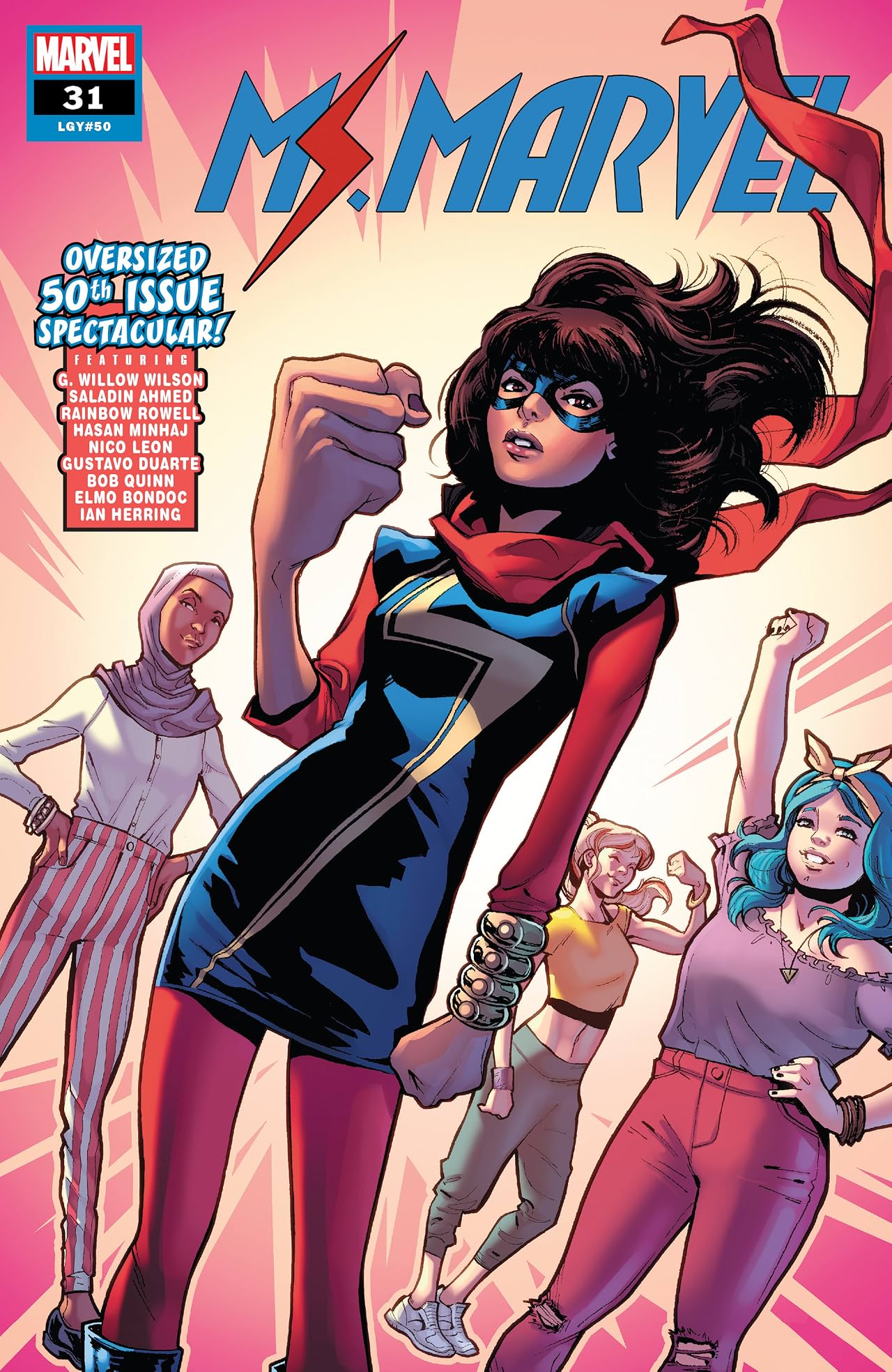
Milestones, Achievements, and Slumber Parties: Ms. Marvel #31

The following is my review of Ms. Marvel #31, which was posted on PopMatters.com.


Every now and then, a popular character comes along who reveals more about the audience than the world they inhabit. Over the past five years, few characters have proved more revealing than Kamala Khan and it's not just because she takes a moniker once held by Carol Danvers. A big part of her appeal comes from her being a self-proclaimed superhero fan. Before she gets her powers, she carries herself the same way many fans in the real world do, writing fan fiction and participating in debates on message boards over who can lift Thor's hammer.

Another part of her appeal comes from her reflecting the growing diversity of the real world. She's the daughter of Pakistani immigrants, a practicing Muslim, and resides in a community where she is both a minority and an outsider. She deals with all that on top of being a teenager. Even before she gets her powers, Kamala deals with her share of struggles. Even with all the controversies surrounding diversity in media, Kamala stands out as someone people of all backgrounds can relate to and cheer for.

This sets a celebratory tone for Ms. Marvel #31, which marks the 50th overall issue of the series since its debut in 2015. While fairly recent in the context of the Marvel Universe, which spans five decades and multiple Secret Wars, Kamala Khan's impact still stands out more than most. To celebrate that achievement, G. Willow Wilson gathers a sizable cast of writers that include Saladin Ahmed and Rainbow Rowell to tell a story befitting of that growth. The fact it happens in the context of both a slumber party among teenage girls and a milestone issue only seems too fitting.

In the context of a milestone issue for a teenage superhero, a slumber party is a fitting setup. It gives Kamala a chance to be Kamala instead of Ms. Marvel for a while. She assembles several female friends who have become important supporting characters to her story over the course of 50 issues. Nakia, Mike, and Zoe may not be on the same level as a Bucky Barns, Harry Osborn, or Pepper Potts, but they bring something important to Kamala's persona and not just because they also happen to be teenage girls.


Every superhero, especially the ones still in high school, goes through their share of hardship and melodrama. Being a teenager is hard enough, but being a hero on top of that just compounds every issue. The weight of that stress gets to Kamala more than once over the course of 50 issues. The past several issues really add to the strain by including romantic issues with her long-time friend turned love interest, Bruno. That gives a non-superhero gathering with her female friends a sense of urgency.

Beyond simply enjoying some sense of normalcy, it gives Kamala a moment to reflect and even lament a little. Wilson conveys the impression that Kamala needs that cathartic moment and she needs the support of her friends. Many heroes either struggle to make that effort with their allies or just never get the opportunity. It has the potential to be therapeutic for Kamala. Unfortunately, complications emerge, but in a way that's both entertaining and reflective of why Ms. Marvel is such an endearing story.

Even in the comfort of her own home, surrounded by friends and her mother's cooking, Kamala ends up having to be Ms. Marvel for multiple conflicts over the course of the night. These conflicts range from dealing with an angry Inhuman to teaming up with Miles Morales to chasing two teleporting animals through an alien planet. It never gets too dire. Some of the plots are downright cartoonish, but they maintain an appropriate undertone.

Kamala makes clear from the beginning that she wants to have one night where she doesn't have to be a hero, but she keeps getting pulled back into it due to forces beyond her control. The responsibilities of being a hero don't leave her, no matter how much she tries to catch her breath. She still never hesitates to act heroic, either. She doesn't even whine about it, which already makes her more mature than Peter Parker ever was at her age.

While some of these heroic efforts frustrate her, they also result in moments that demonstrate why Ms. Marvel is a lovable character who's worth rooting for. She's not just the kind of hero who fights villains and occasionally crosses paths with giant teleporting dogs. She's someone who tries to overcome a struggle with tactics that don't just involve punching things with an oversized fist. They don't involve comedic wisecracks, either. Again, she several steps ahead of Peter Parker in that respect.

Like Superman and other heroes that embody an ideal, Kamala will actually sit down with someone and talk to them before they descend into villainy on par with the Red Skull. She'll try to connect with them on a personal level. She'll make a genuine effort to help them and it always comes off as sincere. Kamala isn't the kind of person who just tells people what they want to hear so they'll stop smashing things. She genuinely cares. At a time when every other superhero seems jaded after one too many battles with Hydra, it helps her stand out.

These moments do plenty to derail Kamala's efforts to have a simple slumber party with her friends, but they never complicate the overall story. It remains remarkably concise, creating an over-arching theme around the current state of Kamala's struggle. She's a hero and a teenage girl. Her efforts to balance that have a lot of room for improvement. Throughout the story, there's a sense that she doesn't improve as she could have, but she still does more than most superheroes and teenagers, for that matter.

It culminates in a moment where Kamala decides to throw another complication into her superhero/teenage life. She takes a chance that most teenage heroes avoid in hopes of regaining some semblance of balance. The results aren't too surprising, given the strength and competence of Kamala's cast, but they're still satisfying. There's a sense that this is another defining moment for a young hero.

Ms. Marvel #31 doesn't attempt to reinvent Kamala Khan or redefine her identity as a hero. She's still the same lovable character she was before she got her powers. She's still growing and has plenty of room evolve, but her accomplishments over the course of 50 issues are still astonishing on multiple levels. That kind of achievement is certainly worth celebrating. A single slumber party may not entirely do it justice, but it's a good start.

Final Score: 8 out of 10

Thursday, June 21, 2018

Misguided Matrimonial Bait-and-Switch: X-men Gold #30

The following is my review of X-men Gold #30, which was posted on PopMatters.com.


A superhero wedding is only as successful as the journey that leads to it. For some iconic romances, that fateful walk down the aisle is a matter of inevitability. Couples like Cyclops and Jean Grey, Reed Richards and Sue Storm, and Superman and Lois Lane reflect the ideals of star-crossed lovers. No matter what comes between them, be it death, retcons, or reboots, they always find a way back to one another. Their love may as well be as constant as the rising sun or Dr. Doom's ego.

For that reason, though, the wedding of Kitty Pryde and Colossus brings something unique to the trope of superhero nuptials. Theirs is a romance that didn't rely on destiny. They have to put effort into making their relationship work, by default. They overcome their share of obstacles without the luxury of being one of those comic book power couples. Those obstacles include death, being trapped in a giant space bullet, and multiple romantic entanglements. To say Kitty and Colossus have a lot of forces working against them is like saying the Hulk gets moody ever now and then.

Despite all those forces, Kitty and Colossus attempt to achieve the same romantic pinnacle as other iconic couples. Since X-men Gold began under Marc Guggenheim, the complications that frequently drive these two apart are steadily mended through an emotional, but compelling journey. In X-men Gold #30, they're finally set to complete that journey.

At least, that's how this big event is presented, both with the cover of the issue and the various issues that led up to it. The actual substance of this momentous affair is unexpected in its results and not necessarily in a good way. In fact, the events that play out are downright damaging. Even though a well-known X-men couple does get married, the moment ultimately comes off as empty and dispassionate.

That outcome is pretty jarring. Guggenheim borrows greatly from past weddings, going so far as to mention how close the ceremony is to the location of Cyclops and Jean Grey's wedding. Kitty and Colossus have everyone in the team supporting them. There aren't any ominous warnings about how their marriage will lead to a dystopian future. There aren't even any clones, Skrull agents, Legacy Virus outbreaks, or Sentinel attacks to disrupt the affair. There is nothing preventing this long-time couple from tying the knot.

It still doesn't happen, though. After all the love, support, and encouragement the X-men give the long-time lovers, Kitty gets cold feet and at the last possible second, no less. It's one thing for a bride to call the wedding off on the ride to the ceremony. Kitty actually waits until she's wearing her dress, down the aisle, in front of all her friends, and about to receive her wedding ring from Colossus.

Beyond turning a joyous occasion into a public spectacle of heartbreak, it paints Kitty Pryde as callous, indecisive, and emotionally inept. Considering that she's also the leader of the X-men, those kinds of deficiencies just don't make sense. Kitty's actions completely upend the over-arching story that has been unfolding between her and Colossus since the beginning of X-men Gold. It gives the impression that all the heartfelt moments they shared, all the drama that led up the proposal, and all the challenges they overcame to make it to this point carried little emotional weight.

It's one thing for a romance to go too fast and burn out. Kitty and Colossus aren't that kind of romance, though. They have a rich history together that leaves little ambiguity to the sincerity of their feelings for one another. They don't have the same excuses as most couples, superhero or otherwise. They didn't go too fast and their love never comes off as shallow. However, Kitty still finds an excuse to call it off and it's not a good one.

The reasons she gives Colossus are crass and impersonal. They are the kinds of musings that can easily be repeated by any bride that ever got cold feet and it would make just as much sense. Nothing about her decision for stopping the nuptials is specific to her and Colossus' relationship. Considering that she's the one who proposed to Colossus in the first place, it just makes Kitty out to be even more callous, if not downright dishonest.

It's not just a weak excuse to stop a wedding and irreparably undermine a long-standing relationship within the X-men mythos. It sends a message that every romance, even those involving superheroes, is too hard for anyone to make work and isn't worth trying. It's not enough to love someone. Even wanting to marry them to the point of planning a wedding isn't sufficient. There are just too many forces working against a couple seeking marriage and it just isn't worth risking, as though love and commitment are somehow more dangerous than an attack by Apocalypse.

If X-men Gold #30 had ended on that solemn note, it may still work because it reflects the precious rarity of iconic romances that make it to the altar. It's a depressing message, but one that carries enough weight to have an impact. However, given all the build-up and festivities surrounding this wedding, there's a sense that someone has to get married to salvage the moment. That's where Rogue and Gambit come in.

It's quite possibly the greatest bait-and-switch in the history of comics, turning the marriage of Kitty Pryde and Colossus into the marriage of Rogue and Gambit. While Rogue and Gambit are another one of those iconic X-men romances that overcome a great many obstacles, theirs is a romance that just began rebuilding itself in the pages of Kelly Thompson's Rogue and Gambit series. Instead of continuing that process, like Kitty and Colossus attempted in X-men Gold, they just skip right to the part where they get married.

While that may overjoy fans of the couple, this twist undermines that relationship almost as much. One couple can't go through with the wedding, despite all the planning and effort that went into it. Another, however, just randomly decides to do it on the spot, as though one couple is interchangeable with the other. It's like romances are TV dinners bought in bulk. If one doesn't turn out well, then another one is just as good.

There's no denying that superhero romances are wrought with melodrama and very few end in a successful marriage. That's exactly what makes them so noteworthy, though. X-men Gold #30 initially sends that message to some extent, but undercuts it by treating it as something any couple can do on a whim. It turns romance into a gimmick rather than a part of the ongoing story between characters and it's hard to have any emotional stakes in a gimmick.

Final Score: 3 out of 10

Saturday, June 16, 2018

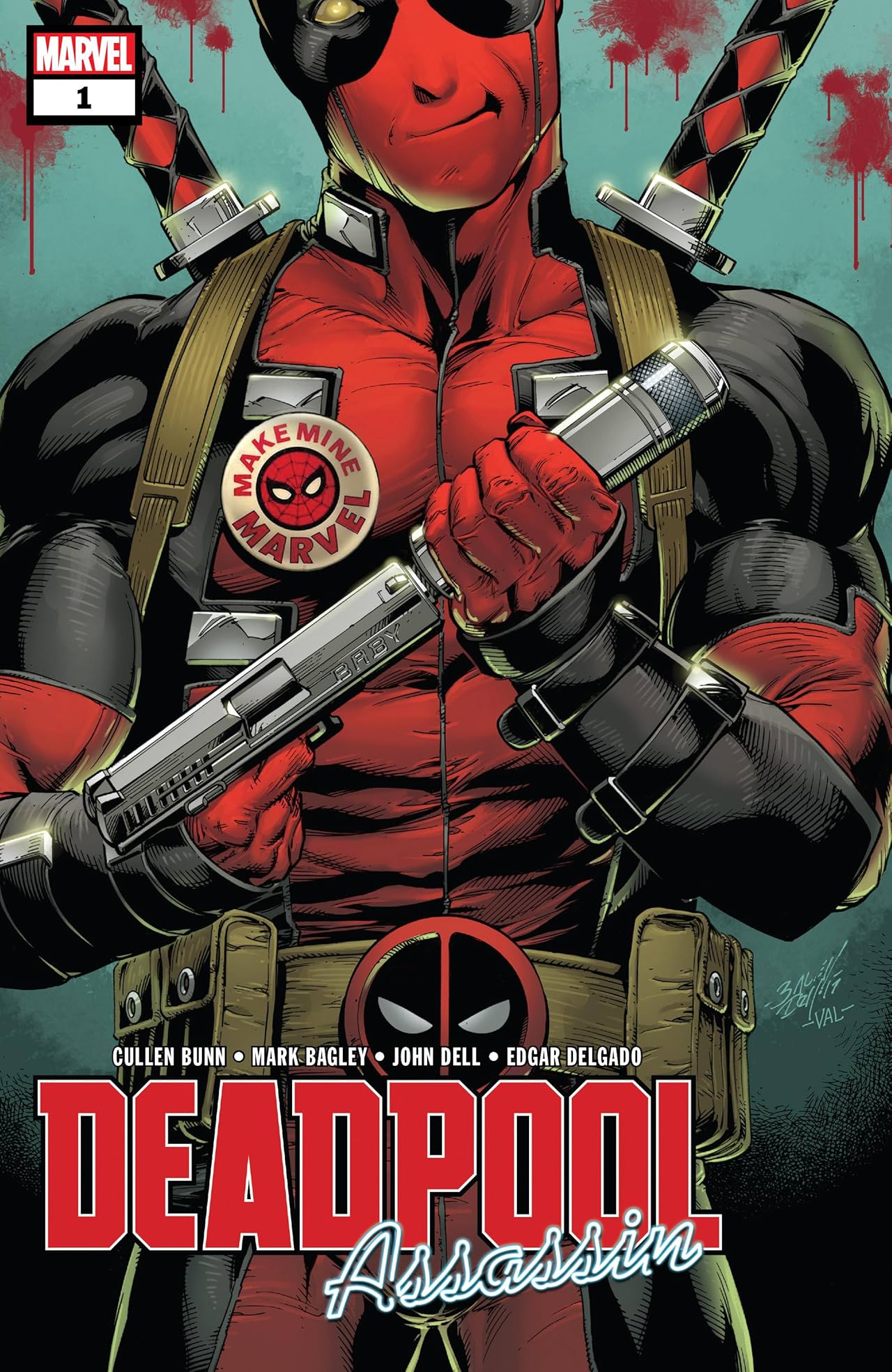
The Maturation of (Regenerating) Degenerates: Deadpool Assassin #1

The following is my review of Deadpool: Assassin #1, which was posted on PopMatters.com.


When it comes to gratuitous violence and genuine heart, Deadpool is in a class all his own. In fact, it's not unreasonable to say that Deadpool, as both a character and a concept, goes out of his way to stand out and isn't afraid to be obnoxious about it. Regardless of whether his name and design was derived from Deathstroke, he's someone who does more than most to stand out in a sea of Wolverine, Superman, and Batman rip-offs.

Thanks to two successful movies and the inherent likability of Ryan Reynolds, Deadpool's star has never burned brighter. It's safe to say that in his efforts to stand out, he has succeeded. His mask, his tumor-laden face, and his propensity to break the fourth wall are now every bit as iconic as Wolverine's claws or Captain America's shield. He has nothing left to prove. He's earned the right to brag and gorge on all the chimichangas he wants.

As much as he's achieved, Deadpool always finds ways to stay busy and entertain. Most of those ways still involve the kind of destruction and vulgarity that would get most characters fined by the FCC, but he never does it out of pure malice. He's not Sabretooth, Norman Osborn, or Dexter Morgan. He's crazier than a sack of ferrets, but he still maintains a code of conduct that sets him apart from less scrupulous mercenaries. Those who undermine that code are likely to be on the wrong end of Deadpool's guns, katanas, and toilet humor.

That's both the setup and the appeal of Deadpool: Assassin #1. Cullen Bunn and Mark Bagley put Deadpool in a position to further set himself apart by showing that there is merit to having a code of conduct as a mercenary. That process involves a hefty bit of bloodshed and mayhem, but anything other than that just wouldn't be true to Deadpool's increasingly powerful brand and he does plenty to maintain it in this story.

Bunn and Bagley don't try to reinvent the regenerating degenerate. They just put him in a situation where he can do what he does best, which means being in close proximity to far less ethical mercenaries and evil ninjas. For Deadpool, that's like mixing chocolate and peanut butter, but with several extra sides of carnage and bloodshed. It's every bit as potent as it tries to be.


These crude, but colorful basics give Deadpool: Assassin #1 plenty of entertainment value. However, there are some other side-plots thrown into the mix that keep it from being a generic story about a Deadpool-centric shooting spree. One involves Deadpool's old friend Weasel, whose life has taken a far more domestic turn. He still works with Deadpool and still provides him with plenty of opportunities to shoot things, but he's got other priorities. In revealing those, Deadpool himself reveals something striking and potentially profound.

Being so unhinged and eccentric, Deadpool never comes off as one of those guys who plans for a simpler future that doesn't involve as many explosions. Between his skills as a mercenary and his fourth-wall breaking awareness, he rarely shows interest in settling down, retiring, or taking up a hobby that doesn't require heavy firearms.

He operates on a moment-by-moment basis, going from one job and/or wisecrack to the next. While he may occasionally mix things up by joining the X-men or marrying a succubus, Deadpool still acts primarily on an impulse. Even with the limited ethical standards by which he operates, he's not known for his foresight any more than he's known for his choice of underwear. Wherever there's violence to be had, he tends to gravitate towards it. With an unstable mind and a body covered in tumors, that's kind of how he has to be.

That's what makes his admission that he's getting bored with mercenary work so striking. He still makes clear that he loves killing unscrupulous mercs and ninjas, but that's not enough for him anymore. He claims he's only doing a few more jobs before he moves onto something else. It's not clear how serious he is. It's like Peter Parker saying he doesn't want to be Spider-Man anymore, but that sentiment goes away the second he has an excuse to change his mind. Unlike Peter, though, Deadpool isn't known for responsible decision-making.

That makes the plot surrounding Deadpool's changing priorities seem tentative, at best. Nobody, fictional or otherwise, can buy that he wants to retire to his own tropical island and sip margaritas for as long as his healing factor allows him to live. He gets bored too easily, enjoys dangerous surroundings too much, and makes too many impulsive decisions. While that makes his antics fun to watch, it also makes any effort to settle down less believable.

To some extent, Weasel's situation reflects that. He's no longer a former Hydra agent who just happens to be friends with an unhinged mercenary. He's got a stable job, a wife, and an overall easier life that involves less killer ninjas and more credit card bills. It's less hectic, which Deadpool claims to want, but Weasel never gives the impression that it's very fulfilling.

If anything, he sends the message that settling down can make a man feel domesticated. This doesn't impact Deadpool's intentions or his ninja-fighting skills, but it does throw shade on the idea that seeking a less damaging occupation comes at a cost. It also establishes that if Deadpool really does attempt to hang up his katanas and guns, he'll end up changing his mind faster than Peter Parker ever did.

Long-term intentions aside, still provides plenty of value in terms of giving Deadpool fans what they want. Bagley's artwork makes it colorful while Bunn's dialog makes it witty. It checks all the necessary boxes for a fun, engaging Deadpool story. It tries to do more and while it lays a foundation, it doesn't offer much in terms of clues. He's still doing mercenary work, as only he can, but what does someone like Deadpool do when he wants to move onto a new endeavor?

That question goes unanswered in Deadpool: Assassin #1. More than anything, it puts Deadpool in a position to mix things up again. It probably won't result in him getting a job as a tax attorney or a janitor, but if it leads him to novel forms of violence, then it can only help the potty-mouthed merc in his never-ending struggle to overshadow Deathstroke.

Final Score: 7 out of 10

Friday, June 1, 2018

Overdue Resurrections and Heartfelt Reflections: X-men Red Annual #1

The following is my review of X-men Red Annual #1, which was posted on PopMatters.com.


When death and resurrection are so common that it becomes indistinguishable from an extended hiatus, it’s difficult for either to have much impact. Even if the death remains a powerful moment within a larger narrative and the resurrection finds a evoke the necessary drama, it’s not always possible to explore the more personal effect it has on a character. That’s why the resurrection of a non-time traveler, non-alternate universe Jean Grey presents such a rare opportunity.

Her return in the pages of Phoenix Resurrection succeeds in ways few resurrection stories achieve in an era of never-ending death and rebirth. It doesn’t just bring back a character whose death had a far-reaching impact and whose rebirth has equally profound implications. It takes a character who hasn’t experienced or influenced the course of the X-men or Marvel universe for over a decade and puts her in a setting that may as well be an alternate universe. In the world she knew, Spider-Man is still married, the Maximoff twins are mutants, and Nick Fury looks more like David Hasselhoff instead of Samuel L. Jackson.

A character that dies and comes back after just a few years is bound to experience some culture shock, but it’s rarely jarring to the point where clones start to make sense. For Jean Grey, so many world-changing events have transpired, including the deaths of some loved ones and the resurrection of others, that she may as well be in another universe. It’s not possible or even in character for her to just brush off how much the world has changed, especially for those close to her.

X-men Red Annual #1 gives her some time to take in this world. It also gives Tom Taylor and Pascal Alice a chance explore the emotional depth of a character whose passions have a long reach. In doing so, they capture some of the most important elements of Jean Grey's character, a few of which may have been overlooked or forgotten during her prolong absence. However, the story that unfolds is much more than a refresher course on a beloved X-woman.

The narrative pics up almost exactly where Phoenix Resurrection left off. Jean Grey is alive again, having severed ties with the Phoenix Force and had a heart-wrenching goodbye with her dead husband, Cyclops. She's surrounded by the friends, family, and teammates who mourned her for so much over the years. It's one of those situations that can be either intensely emotional or incredibly awkward, but Taylor pursues the former over the latter. For Jean Grey, who is defined by her passions and the predicaments in which she expresses them, it's very fitting.

Naturally, Jean has a lot to catch up on. Being dead for a couple years is hard enough. Alien invasions, Hydra-led uprisings, and deaths of other characters can occur within that time and still have room for holiday specials. Being dead for nearly two decades means Jean has to catch up on schisms, extinction plots, and even an upcoming wedding between Kitty Pryde and Colossus. There's a lot to take in, if not too much for a cohesive story.

Taylor isn't tedious with all these revelations, but he doesn't gloss over them either. There isn't a word-for-word retelling of major events, which would've made the plot as interesting as a physics lecture by Reed Richards. Instead, the primary focus is on Jean's inner musings. Her thoughts and feelings emerge through a series of well-designed thought-bubbles, a feature that Chris Claremont utilized to give characters like Jean Grey so much depth in the past. It proves just as effective in this instance and helps set Jean on a new course for the future.

This also helps provide some connections to her role in X-men Red, another one of Taylor's books. However, X-men Red Annual #1 doesn't attempt to be a prequel. It's not an extended epilogue of Phoenix Resurrection either. More than anything else, it bridges the gap between the past that Jean missed and the future she hopes to build now that she's back. In doing so, it also provides some needed closure to one of the most jarring details of Jean's return.

That has to do with Cyclops, namely the adult non-time traveling version, being dead due to the events of Death of X. It's something that evokes an especially powerful reaction in Jean, one that prompts her to confront Black Bolt and the Inhumans, who are indirectly responsible for his death. It helps inject some conflict and action into an otherwise emotional journey. It's one of those situations where it could easily devolve into another Punisher-style vengeance plot. However, that just isn't Jean Grey's style.

At her core, Jean is a woman of great power and compassion. She has the power to make those who hurt others suffer for their transgressions, more so than Ghost Rider or all the Batman rip-offs ever made. That's not her preferred recourse, though. True to the teachings of Charles Xavier, which she has championed since the Kennedy Administration, Jean opts for understanding and forgiveness. If someone is willing to apologize, then Jean Grey is willing to forgive.

At a time when heroes and villains alike define themselves by seeking revenge, Jean brings something different to the table. The rift between mutants and the Inhumans after the events of Inhumans vs. X-men cannot be understated. This conflict is what kills the man who held Jean in his arms when she last died. For her to confront those responsible and not seek retribution doesn't just establish the breadth of Jean's heart. It shows that is possible to mend these wounds.

It also indirectly establishes just how much the world needs Jean Grey. At a time when Captain America can be a secret Hydra agent and Spider-Man can have his mind swapped with his greatest enemy, there needs to be a voice that conveys a message of forgiveness. Since Jean's voice carries more weight than most, the impact of her return feels that much more relevant.

X-men Red Annual #1 has Jean do plenty more besides reminding others that it's okay to accept a heartfelt apology every now and then. She gets to spend time with characters who've missed her dearly. She also gets to meet others who she have a chance to interact with before she died. These moments are brief and leave plenty to be desired. The issue itself is extra long, but Taylor and Alice could've made it several hundred pages and it still wouldn't have been enough to fully explore every aspect of Jean Grey's resurrection.

As such, the plot does come off as rushed in a few areas. There are plenty of other characters with which Jean could've had a moment. There are also other unresolved details surrounding her death and absence, namely those involving Emma Frost and Magneto, that are never addressed either. Even with these oversights, Taylor gets the underlying message across. Jean Grey is back. The world didn't just miss her. It missed everything she stood for.

Final Score: 8 out of 10

Wednesday, May 30, 2018

Hunting Party: Hunt For Wolverine: Mystery In Madripoor #1

The following is my review of Hunt For Wolverine: Mystery In Madripoor #1, which was posted on PopMatters.com.


In the same way there are some characters whose death will always stick to a significant degree, there are others for whom resurrection is pretty much assumed before the funeral even concludes. In the same way Uncle Ben's death has to stick for Spider-Man, the death of Wolverine can't possibly stick for the X-men. No matter how his death occurs, be it callous, tragic, or heartfelt, he's still one of the X-men's most popular characters. Him remaining dead is about as likely as Marvel and Disney growing tired of money.

While Charles Soule did a commendable job making Wolverine's death feel meaningful in Death of Wolverine, the X-men comics never try to function without him for too long, as evidenced by the continued presence of fill-in characters like Old Man Logan and Jimmy Hudson. The X-men need Wolverine just as much as Captain America needs his shield. He doesn't have the luxury of staying dead for over a decade like Jean Grey. At a time when time travelers and alternate reality versions of other characters are running around, the time for Wolverine's inevitable return has never been better.

To that end, it's only fitting that Soule set the stage for Wolverine's full return in the Hunt For Wolverine #1. However, that only acts as the start of a much larger story. Jim Zub and Thony Silas are set to build on that story with Hunt For Wolverine: Mystery In Madripoor #1. It's not enough to just get Wolverine out of his grave so his healing factor can do the rest. Given his colorful history, involving ninjas, clones, cyborgs, and living weapons, there's plenty of resources to work with.

Zub and Silas are targeted with those resources, specifically those involving Wolverine's time in Madripoor as bartender/operative/eye-patch enthusiast, Patch. It's a part of Wolverine's history that isn't as prominent as those involving adamantium bonding or blood feuds with Sabretooth, but it still reflects some important insights about the man and not just the claws. When he's not a raging, snarling death dealer, he's a man who has lived a more colorful life than most.

In that sense, it's somewhat fitting that those hoping to track him down after learning of his return are X-men with which he's had a close personal connection. The fact that those X-men all happen to be prominent female characters as well is a nice bonus and also revealing, in and of itself. It shows that when Wolverine isn't lusting after married women or on the wrong end of a love triangle, he's capable of forging close personal connections.

Kitty Pryde, Storm, Rogue, Psylocke, Domino, and Jubilee are among the most prominent personal connections that Wolverine has forged over the years. They are a dream team of sorts, one uniquely talented and motivated to find their friend and learn what happened to him. These are some of the most resourceful, resilient, and loyal friends that Logan has ever had. The fact he only ever got romantically involved with one of them, namely Storm, says a lot about his character.

This is a team that's capable of tearing Madripoor apart, digging deep into Wolverine's past to find out where he is. However, they don't get many opportunities to do so and not just because Magneto is currently a prominent presence in Madripoor, as has been documented in X-men Blue. They're still on the runway of the airport when they encounter who they think is Magneto and from there, this team of prominent female X-men are basically stuck reacting to everything from that point forward.

That makes the sequence of events in Hunt For Wolverine: Mystery In Madripoor #1 somewhat predictable. Whenever the X-men, or any superhero team for that matter, are stuck reacting to a situation, it tends to limit the impact of the story. Whether it's ninjas attacking, killer robots attacking, or Hydra agents suddenly entering the picture, it follows a similar script. The team walks into a trap, the fighting begins, and the situation becomes inherently more dire.

That narrative in Hunt For Wolverine: Mystery In Madripoor #1 follows that script fairly closely, but that's not to say there aren't dramatic elements that add a little complexity to the mix. Before that situation devolves, though, there are some quiet moments among Wolverine's closest friends. Storm, Kitty Pryde, Rogue, and Psylocke all have an opportunity to remember and reflect why Wolverine matters so much to them.

Granted, he can be a violent, cynical, beer-loving brute, but he can also be insightful and sincere. Those reflections help establish why these characters care so much about Wolverine in the first place and why they're willing to risk a messy trip to Madripoor to help him. That helps make Hunt For Wolverine: Mystery In Madripoor #1 feel less like a generic rescue mission and more like a team of loyal friends seeking to help someone they really care about. Superheroes rescue people all the time. This is personal and that's an important theme throughout Hunt For Wolverine, as a whole.

Those quiet moments among the all-female cast make for some engaging insights that establish the emotional stakes. However, it doesn't end up having much impact when the chaotic violence erupts, as is often expected in any story relating to both Wolverine and Madripoor. While the source of that chaotic violence also has a personal connection with Wolverine, there's not much insight into the how or why they get involved. Even though Wolverine has a list of enemies that'll always be longer than his list of friends, those enemies usually don't just attack for the fun of it.

It still moves the plot forward and puts the cast of female X-men into a difficult spot. It's not yet clear whether that spot will have any bearing on events unfolding in related Hunt For Wolverine titles, but the personal connections to Wolverine are still there and are on full display, at least for those trying to find him. Those connections just don't do much to complement the chaos that they inevitably encounter along the way. They just walk into a trap, get caught by surprise, and try to manage from there.

There's still plenty of room for more insights that further reveal the reach of Wolverine's impact. For such a prominent character with such prominent friends, there's more potential than most with respect to connections and conflict, especially in a place like Madripoor. Hunt For Wolverine: Mystery In Madripoor #1 does plenty to give Wolverine's closest female allies a chance to show their strength while helping a friend. For someone who claims to be the best there is at what he does, though, there's still room for improvement.

Final Score: 6 out of 10