Showing posts with label Avengers. Show all posts

Thursday, July 19, 2018

Conflicts, Musings, and Marvelous Insights: The Life of Captain Marvel #1

The following is my review of The Life of Captain Marvel #1, which was posted on PopMatters.com.


No character becomes iconic without going through a process. Sometimes, it happens unexpectedly. It's hard to imagine that Stan Lee knew Spider-Man's when he first introduced him in the pages of Amazing Fantasy #15. Most heroes only gain that status through a combination of luck, appeal, and growth. In the case of Carol Danvers, these factors aren't always present. In fact, throughout her history, she makes due with limited opportunities. In a world that contains the likes of Spider-Man, Captain America, and Wolverine, that's understandable.

Then, Kelly Sue DeConnick comes along and takes Carol Danvers to new heights with her run on Captain Marvel in 2012. After years as a supporting character stuck in niche roles, Carol finally establishes herself as someone worthy of being in the upper levels of Marvel's pantheon of icons. By shedding her former title and embracing that of Captain Marvel, she becomes someone who can hold her own in landscape crowded with notable names. That ascension isn't always smooth and even stalls somewhat due to the events of Civil War II, but it brings out the complexities of a character that finally has a chance to realize her full potential.

With an elevated role and an upcoming movie starting Brie Larson on the way, there's a greater sense of urgency for Marvel to maximize the appeal of Captain Marvel. Margaret Stohl, who has been doing most of the heavy lifting on Carol's story after DeConnick's departure, has an opportunity to add new layers to Captain Marvel's ongoing growth through The Life of Captain Marvel #1. It's not so much a re-telling of Carol's origins as it is an expansion.

It's a new bridge between the present and the past of a character whose story isn't as well-known as the Peter Parkers and Steve Rogers of the world. That gives Stohl an opportunity to build on the non-alien portion of Carol's story and she really runs with it. There aren't any epic space battles, Hydra agents, or Hulk-like monsters. Most of the story takes place in Harpswell, Maine. It's not the Kree home world, but just being there ends up hitting Carol harder than a fleet of Kree warships.

She doesn't go there for the sake of nostalgia, though. What prompts this homecoming is actually something more personal. It has nothing to do with a high school bully or a childhood crush. It has everything to do with it being Father's Day, which makes Carol relieve some very unpleasant memories. However, these are not the kinds of daddy issues that make for one too many John Hughes movies. It serves as the basis for one of the biggest upheavals in Carol Danvers' life and it doesn't even involve aliens.

It's a stark contrast to the standard narrative surrounding Carol since she took the mantle of Captain Marvel. Part of embracing that title means flying higher and looking forward, something Carol rarely hesitates to do when there are aliens and Hydra soldiers to punch. She's a tough, driven woman who just happens to have the kind of power and grit to go farther than most people imagine. The idea of her still being anchored by unresolved issues in the past seems antithetical to the arc she's been on for the past several years. However, that's exactly what her character needs.

That's not just because she has a movie coming out in March 2019. Carol eagerness to lead the charge into a fight makes her one of Marvel's most prominent superheroes, as well as an inspiration and a leader. It also rarely puts her in a position to confront old scars, of which she has a few. For years, the most notable issue she deals with was alcoholism. Stohl doesn't try to revisit that. Instead, she establishes a new issue that links the past and the present.

That past is largely driven by her father and his not-so-heroic temper. The present deals in the consequences he left in his wake, the most painful of which is felt by Carol's brother, Joe Junior. What happens to him as he reconnects with Carol puts her in a situation where she can't just fight her way out it like Captain Marvel. She can't just fly away, either. She has to stick around in this place that brings up so many unpleasant memories. For someone who works with the likes of Tony Stark, Hulk, and skilled sorcerers, that's saying something.

As a result, Stohl provides some overdue, but welcome insight into Carol Danvers. Her experiences with her family and her reaction to the tragedies that unfold do more to humanize her. It's not just that she interacts with her family and espouses her love of donuts. She willingly opens old wounds and reveals that, for all her power and bravado, she still struggles to cope. It provides a new context for who she is as a person rather than an accomplished superhero. The fact she is so annoyed by Harpswell using her history there to promote tourism reveals that there's a disconnect between Carol Danvers and Captain Marvel.

It's a struggle that affects Peter Parker every other day as Spider-Man. It's also a struggle that Kamala Khan, Carol's biggest fan, is just starting to learn as Ms. Marvel. Carol may give the impression that she's beyond those issues of less experienced heroes, but The Life of Captain Marvel #1 shows that's not the case. It also hints that there are other complications she doesn't know about that may deepen those wounds. There's even a hint that aliens are involved, which is in keeping with Carol's tendency to attract other worldly trouble.

It also provides another potential link between the present and the past. It even promises to expand on the issues with her father, which is critical if he's going to be more than just a generic abuser with the depth of a Hydra foot soldier. The potential for major revelations, as well as space battles mixed with personal upheaval, is certainly there. The details are somewhat vague, almost to an excessive degree. However, it does more than enough to set up a more nuanced battle for Carol that can't be blown up or attributed to alcoholism.

There are some narratives that work in any time or place in a character's development. Sometimes, though, having it unfold at a certain time within a certain context makes it even more effective. The Life of Captain Marvel #1 gets the timing, the context, and everything in between just right for Carol Danvers. It feels like one of those defining stories that needs to be told before a character can be elevated to the same level of a Captain America or Iron Man. Carol is already ascending and with Brie Larson set to bring her to life in the Marvel Cinematic Universe, it's safe to say she's almost there.

Final Score: 9 out of 10

Thursday, June 28, 2018

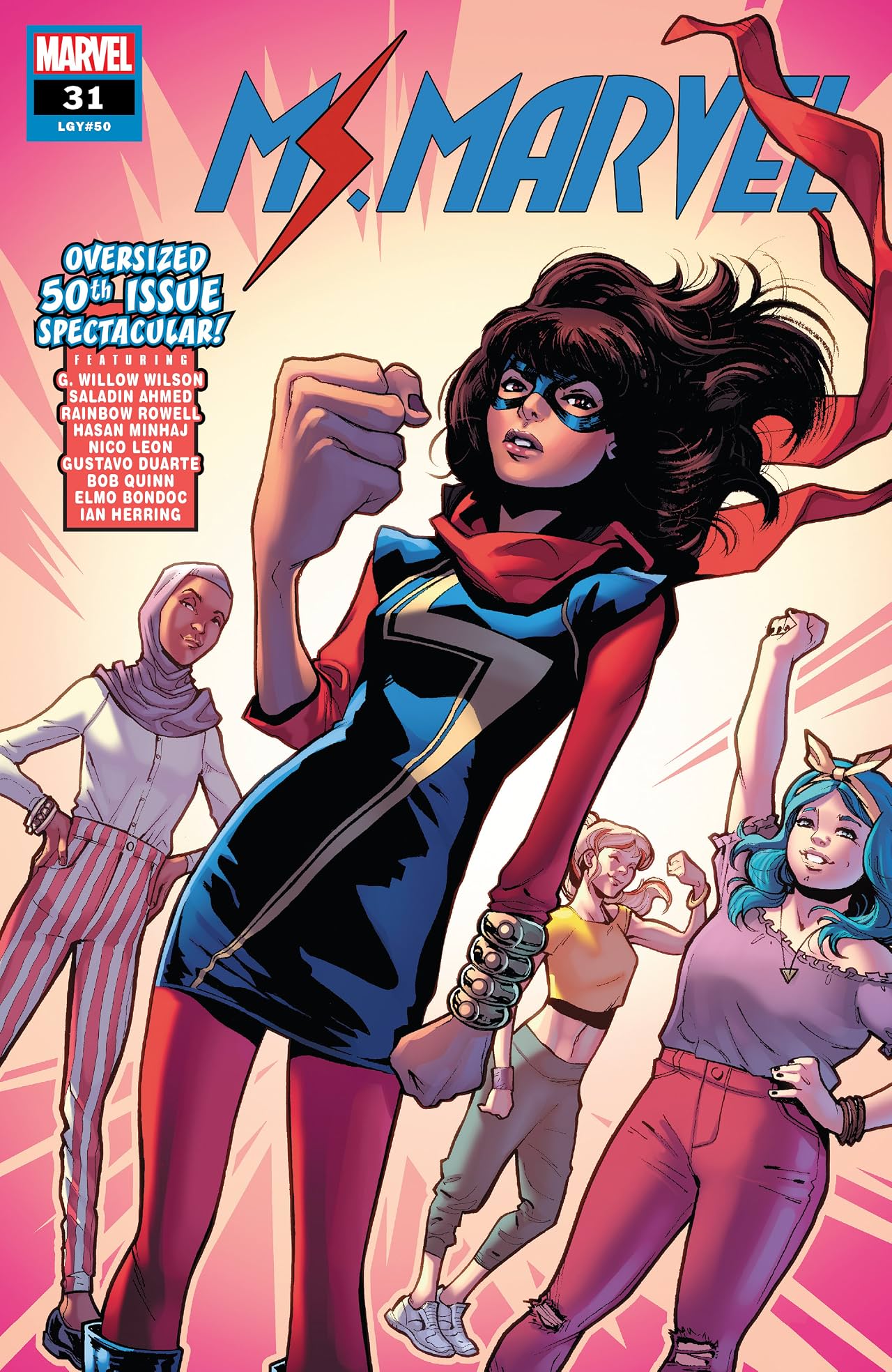
Milestones, Achievements, and Slumber Parties: Ms. Marvel #31

The following is my review of Ms. Marvel #31, which was posted on PopMatters.com.


Every now and then, a popular character comes along who reveals more about the audience than the world they inhabit. Over the past five years, few characters have proved more revealing than Kamala Khan and it's not just because she takes a moniker once held by Carol Danvers. A big part of her appeal comes from her being a self-proclaimed superhero fan. Before she gets her powers, she carries herself the same way many fans in the real world do, writing fan fiction and participating in debates on message boards over who can lift Thor's hammer.

Another part of her appeal comes from her reflecting the growing diversity of the real world. She's the daughter of Pakistani immigrants, a practicing Muslim, and resides in a community where she is both a minority and an outsider. She deals with all that on top of being a teenager. Even before she gets her powers, Kamala deals with her share of struggles. Even with all the controversies surrounding diversity in media, Kamala stands out as someone people of all backgrounds can relate to and cheer for.

This sets a celebratory tone for Ms. Marvel #31, which marks the 50th overall issue of the series since its debut in 2015. While fairly recent in the context of the Marvel Universe, which spans five decades and multiple Secret Wars, Kamala Khan's impact still stands out more than most. To celebrate that achievement, G. Willow Wilson gathers a sizable cast of writers that include Saladin Ahmed and Rainbow Rowell to tell a story befitting of that growth. The fact it happens in the context of both a slumber party among teenage girls and a milestone issue only seems too fitting.

In the context of a milestone issue for a teenage superhero, a slumber party is a fitting setup. It gives Kamala a chance to be Kamala instead of Ms. Marvel for a while. She assembles several female friends who have become important supporting characters to her story over the course of 50 issues. Nakia, Mike, and Zoe may not be on the same level as a Bucky Barns, Harry Osborn, or Pepper Potts, but they bring something important to Kamala's persona and not just because they also happen to be teenage girls.


Every superhero, especially the ones still in high school, goes through their share of hardship and melodrama. Being a teenager is hard enough, but being a hero on top of that just compounds every issue. The weight of that stress gets to Kamala more than once over the course of 50 issues. The past several issues really add to the strain by including romantic issues with her long-time friend turned love interest, Bruno. That gives a non-superhero gathering with her female friends a sense of urgency.

Beyond simply enjoying some sense of normalcy, it gives Kamala a moment to reflect and even lament a little. Wilson conveys the impression that Kamala needs that cathartic moment and she needs the support of her friends. Many heroes either struggle to make that effort with their allies or just never get the opportunity. It has the potential to be therapeutic for Kamala. Unfortunately, complications emerge, but in a way that's both entertaining and reflective of why Ms. Marvel is such an endearing story.

Even in the comfort of her own home, surrounded by friends and her mother's cooking, Kamala ends up having to be Ms. Marvel for multiple conflicts over the course of the night. These conflicts range from dealing with an angry Inhuman to teaming up with Miles Morales to chasing two teleporting animals through an alien planet. It never gets too dire. Some of the plots are downright cartoonish, but they maintain an appropriate undertone.

Kamala makes clear from the beginning that she wants to have one night where she doesn't have to be a hero, but she keeps getting pulled back into it due to forces beyond her control. The responsibilities of being a hero don't leave her, no matter how much she tries to catch her breath. She still never hesitates to act heroic, either. She doesn't even whine about it, which already makes her more mature than Peter Parker ever was at her age.

While some of these heroic efforts frustrate her, they also result in moments that demonstrate why Ms. Marvel is a lovable character who's worth rooting for. She's not just the kind of hero who fights villains and occasionally crosses paths with giant teleporting dogs. She's someone who tries to overcome a struggle with tactics that don't just involve punching things with an oversized fist. They don't involve comedic wisecracks, either. Again, she several steps ahead of Peter Parker in that respect.

Like Superman and other heroes that embody an ideal, Kamala will actually sit down with someone and talk to them before they descend into villainy on par with the Red Skull. She'll try to connect with them on a personal level. She'll make a genuine effort to help them and it always comes off as sincere. Kamala isn't the kind of person who just tells people what they want to hear so they'll stop smashing things. She genuinely cares. At a time when every other superhero seems jaded after one too many battles with Hydra, it helps her stand out.

These moments do plenty to derail Kamala's efforts to have a simple slumber party with her friends, but they never complicate the overall story. It remains remarkably concise, creating an over-arching theme around the current state of Kamala's struggle. She's a hero and a teenage girl. Her efforts to balance that have a lot of room for improvement. Throughout the story, there's a sense that she doesn't improve as she could have, but she still does more than most superheroes and teenagers, for that matter.

It culminates in a moment where Kamala decides to throw another complication into her superhero/teenage life. She takes a chance that most teenage heroes avoid in hopes of regaining some semblance of balance. The results aren't too surprising, given the strength and competence of Kamala's cast, but they're still satisfying. There's a sense that this is another defining moment for a young hero.

Ms. Marvel #31 doesn't attempt to reinvent Kamala Khan or redefine her identity as a hero. She's still the same lovable character she was before she got her powers. She's still growing and has plenty of room evolve, but her accomplishments over the course of 50 issues are still astonishing on multiple levels. That kind of achievement is certainly worth celebrating. A single slumber party may not entirely do it justice, but it's a good start.

Final Score: 8 out of 10

Saturday, June 16, 2018

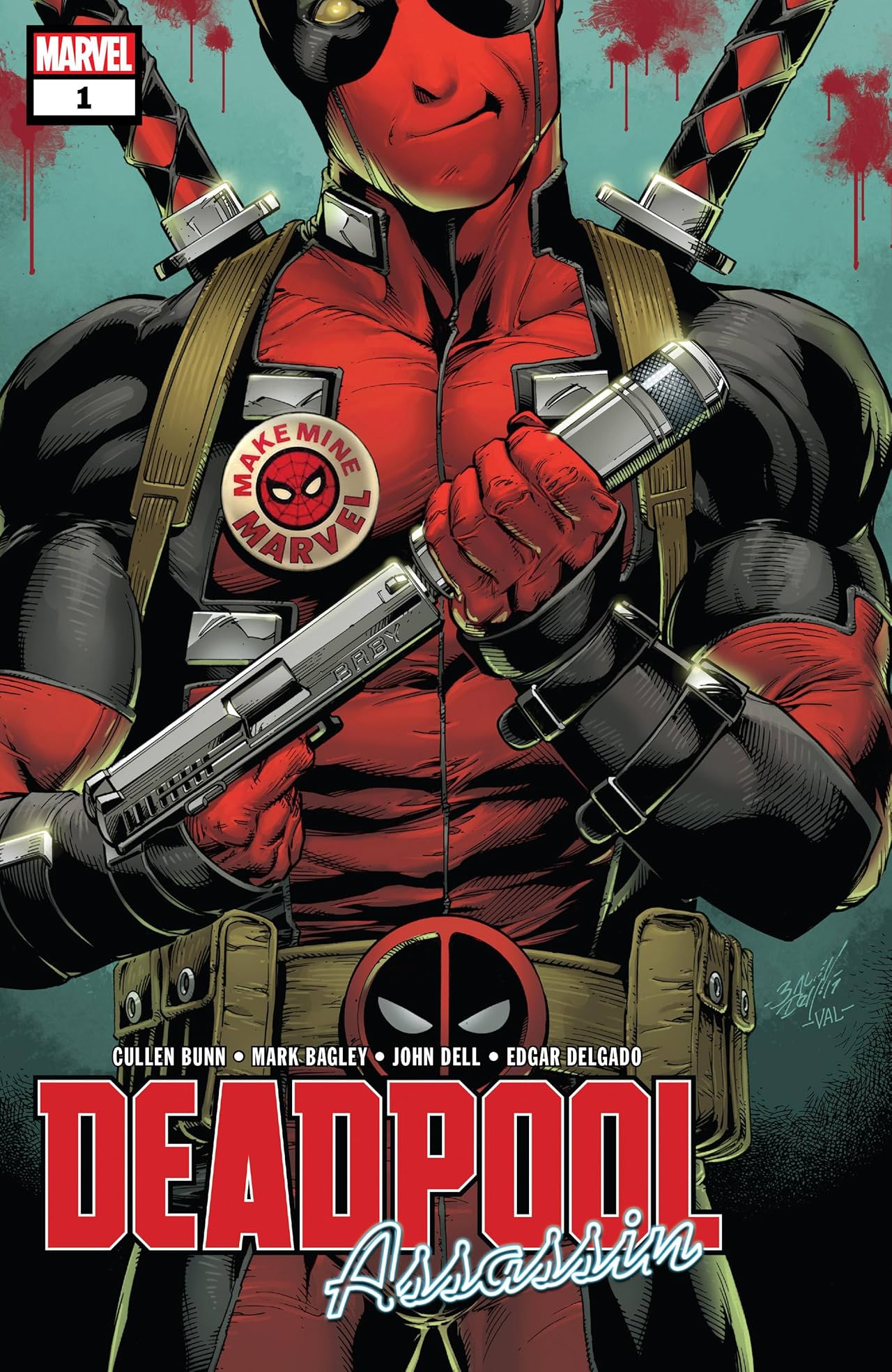
The Maturation of (Regenerating) Degenerates: Deadpool Assassin #1

The following is my review of Deadpool: Assassin #1, which was posted on PopMatters.com.


When it comes to gratuitous violence and genuine heart, Deadpool is in a class all his own. In fact, it's not unreasonable to say that Deadpool, as both a character and a concept, goes out of his way to stand out and isn't afraid to be obnoxious about it. Regardless of whether his name and design was derived from Deathstroke, he's someone who does more than most to stand out in a sea of Wolverine, Superman, and Batman rip-offs.

Thanks to two successful movies and the inherent likability of Ryan Reynolds, Deadpool's star has never burned brighter. It's safe to say that in his efforts to stand out, he has succeeded. His mask, his tumor-laden face, and his propensity to break the fourth wall are now every bit as iconic as Wolverine's claws or Captain America's shield. He has nothing left to prove. He's earned the right to brag and gorge on all the chimichangas he wants.

As much as he's achieved, Deadpool always finds ways to stay busy and entertain. Most of those ways still involve the kind of destruction and vulgarity that would get most characters fined by the FCC, but he never does it out of pure malice. He's not Sabretooth, Norman Osborn, or Dexter Morgan. He's crazier than a sack of ferrets, but he still maintains a code of conduct that sets him apart from less scrupulous mercenaries. Those who undermine that code are likely to be on the wrong end of Deadpool's guns, katanas, and toilet humor.

That's both the setup and the appeal of Deadpool: Assassin #1. Cullen Bunn and Mark Bagley put Deadpool in a position to further set himself apart by showing that there is merit to having a code of conduct as a mercenary. That process involves a hefty bit of bloodshed and mayhem, but anything other than that just wouldn't be true to Deadpool's increasingly powerful brand and he does plenty to maintain it in this story.

Bunn and Bagley don't try to reinvent the regenerating degenerate. They just put him in a situation where he can do what he does best, which means being in close proximity to far less ethical mercenaries and evil ninjas. For Deadpool, that's like mixing chocolate and peanut butter, but with several extra sides of carnage and bloodshed. It's every bit as potent as it tries to be.


These crude, but colorful basics give Deadpool: Assassin #1 plenty of entertainment value. However, there are some other side-plots thrown into the mix that keep it from being a generic story about a Deadpool-centric shooting spree. One involves Deadpool's old friend Weasel, whose life has taken a far more domestic turn. He still works with Deadpool and still provides him with plenty of opportunities to shoot things, but he's got other priorities. In revealing those, Deadpool himself reveals something striking and potentially profound.

Being so unhinged and eccentric, Deadpool never comes off as one of those guys who plans for a simpler future that doesn't involve as many explosions. Between his skills as a mercenary and his fourth-wall breaking awareness, he rarely shows interest in settling down, retiring, or taking up a hobby that doesn't require heavy firearms.

He operates on a moment-by-moment basis, going from one job and/or wisecrack to the next. While he may occasionally mix things up by joining the X-men or marrying a succubus, Deadpool still acts primarily on an impulse. Even with the limited ethical standards by which he operates, he's not known for his foresight any more than he's known for his choice of underwear. Wherever there's violence to be had, he tends to gravitate towards it. With an unstable mind and a body covered in tumors, that's kind of how he has to be.

That's what makes his admission that he's getting bored with mercenary work so striking. He still makes clear that he loves killing unscrupulous mercs and ninjas, but that's not enough for him anymore. He claims he's only doing a few more jobs before he moves onto something else. It's not clear how serious he is. It's like Peter Parker saying he doesn't want to be Spider-Man anymore, but that sentiment goes away the second he has an excuse to change his mind. Unlike Peter, though, Deadpool isn't known for responsible decision-making.

That makes the plot surrounding Deadpool's changing priorities seem tentative, at best. Nobody, fictional or otherwise, can buy that he wants to retire to his own tropical island and sip margaritas for as long as his healing factor allows him to live. He gets bored too easily, enjoys dangerous surroundings too much, and makes too many impulsive decisions. While that makes his antics fun to watch, it also makes any effort to settle down less believable.

To some extent, Weasel's situation reflects that. He's no longer a former Hydra agent who just happens to be friends with an unhinged mercenary. He's got a stable job, a wife, and an overall easier life that involves less killer ninjas and more credit card bills. It's less hectic, which Deadpool claims to want, but Weasel never gives the impression that it's very fulfilling.

If anything, he sends the message that settling down can make a man feel domesticated. This doesn't impact Deadpool's intentions or his ninja-fighting skills, but it does throw shade on the idea that seeking a less damaging occupation comes at a cost. It also establishes that if Deadpool really does attempt to hang up his katanas and guns, he'll end up changing his mind faster than Peter Parker ever did.

Long-term intentions aside, still provides plenty of value in terms of giving Deadpool fans what they want. Bagley's artwork makes it colorful while Bunn's dialog makes it witty. It checks all the necessary boxes for a fun, engaging Deadpool story. It tries to do more and while it lays a foundation, it doesn't offer much in terms of clues. He's still doing mercenary work, as only he can, but what does someone like Deadpool do when he wants to move onto a new endeavor?

That question goes unanswered in Deadpool: Assassin #1. More than anything, it puts Deadpool in a position to mix things up again. It probably won't result in him getting a job as a tax attorney or a janitor, but if it leads him to novel forms of violence, then it can only help the potty-mouthed merc in his never-ending struggle to overshadow Deathstroke.

Final Score: 7 out of 10

Thursday, May 3, 2018

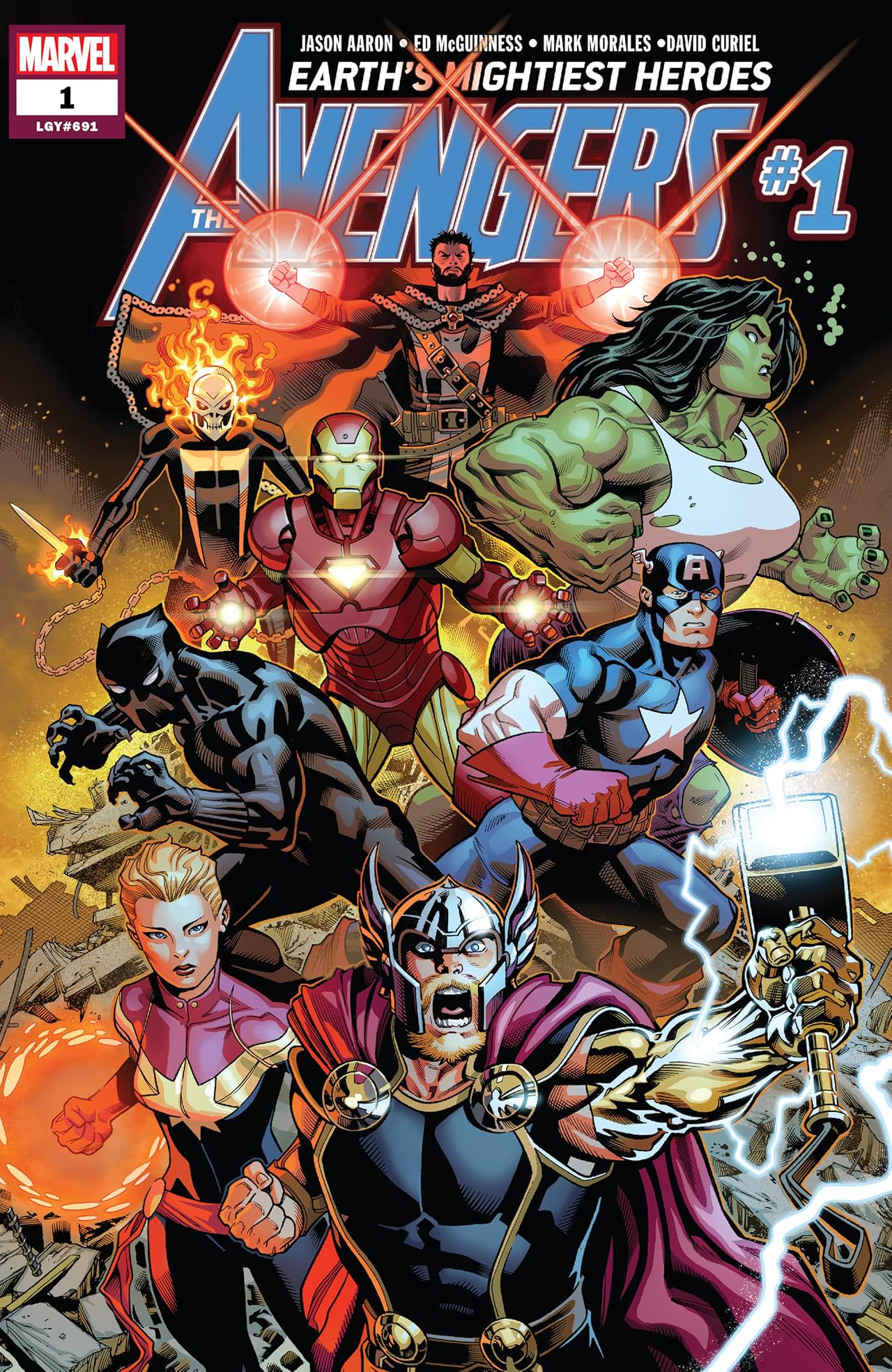
Defending Old School Avenging: Avengers #1

The following is my review of Avengers #1, which was posted on PopMatters.com.


Superhero comics often go through cycles upheavals. There's an accepted status quo that acts as a baseline, of sorts. Then, every once in a while there will be some upheavals that try to shake up the system and introduce new reforms. Some of those reforms stick. Some fail spectacularly. Most just fade into the background. Eventually, though, that familiar status quo returns to maintain the core appeal of a series.

For the Avengers, the traditions established by Thor, Captain America, and Iron Man act as the pillars of Marvel's top-tier heroes. The membership of the team may fluctuate every other week with Wolverine showing up one day while Squirrel Girl shows up another, but the core identity of the Avengers emerges from these three heroes. Every now and then, there's an effort to shake things up by bringing in new characters. No matter who shows up, though, be it a time traveler, a teen prodigy, or a Skrull agent, the Avengers are still built around these three iconic heroes.

In recent years, this core underwent plenty of upheaval with Thor becoming unworthy of Mjolnir, Captain America becoming a Hydra agent, and Tony Stark languishing in a coma. Some of those plots are still controversial and not necessarily for the right reasons. Whatever the controversy, though, it's only ever a matter of time before the Steve Rogers, Tony Stark, and Thor Odinson regain their roles as the Avengers' trinity of heroes.

Jason Aaron, who was behind some of the upheavals, and Ed McGuiness are now tasked with bringing that core back together and moving them forward in Avengers #1. At a time when the Avengers: Infinity War is topping the box office, the stakes are higher than usual for a new Avengers series. There are still lingering scars from the events of Secret Empire and Civil War II. There are also some extenuating circumstances that bring the Avengers together once more.

Despite these strained particulars, though, the stage for is set for the classic core of Avengers to return and Aaron makes good use of it. The events that kept Steve, Tony, and Thor apart aren't ignored. They even acknowledge the sentiment that the world around them is changing, both in terms of world-destroying threats and with respect to the growing diversity among the superhero community. However, even in musing over such changes, this classic trio finds a way to reaffirm that there's still a place for them.

It certainly helps when new threats emerge in the form of dead Celestials falling out of the sky. It's a threat that's not quite as random at it initially seems. This sudden catalyst for such a classic reunion has a basis in the events from Marvel Legacy #1, which introduced the Avengers of 1,000,000 BC. It's a concept that, even within that single issue, hasn't had much impact on anything in the present time to date. Those connections begin to emerge as the Avengers, new and old, begin to assemble.

While it's a refreshing scene, especially to those still recovering from the end of "Avengers: Infinity War," the spectacle is somewhat scattered. Captain America, Iron Man, and Thor are the driving force of the story, but there's also a supporting cast that's caught up in the same plot. That cast includes Black Panther, Dr. Strange, Captain Marvel, She-Hulk, and Ghost Rider. It's a potent mix of heavy hitters and a few emerging stars, but there aren't many opportunities for then to contribute.

They're still in a position to assemble, as Avengers do. Their part in the story, though, is somewhat disconnected from the personal drama going on among Iron Man, Captain America, and Thor. They don't do much to influence the uncertainties that Tony expresses about the future of the Avengers. Those uncertainties are almost as important as the threat of Celestials falling out of the sky, if only because it keeps the story from becoming another generic excuse to get the Avengers to unite.

Avengers #1 doesn't present itself as a simple reunion. Aaron dedicates just as much time discussing the place of the Avengers' old guard in an era where they're shortcomings and vulnerabilities catch up to them more and more. To some extent, their legacy works against them. New threats learn from old threats, adapting and evolving their attacks. They're now at the point where they can make Thor unworthy, turn Captain America into an agent of Hydra, and render Tony Stark comatose.

None of this is lost on the team. At one point, Tony even expresses doubt that he, Steve, and Thor should be the ones to re-assemble the Avengers. That doubt reflects the sentiment that old heroes need to step aside in order for new ones to emerge. It's a sentiment that has fueled a lot of the controversies surrounding these characters, going all the way back to the events of Original Sin.

While the events of Avengers #1 acknowledge that sentiment, it does little to actually address it. Some of that is due to the unavoidable distraction that comes with Celestials showing up out of nowhere, but it still leaves some questions unanswered. The assorted side-plots that put other Avengers in a position to assemble later on do little to help find those answers. One minute, Tony is pondering some important questions that have real implications for the future of the Avengers. The next, he just jumps back into his old role with his fellow Avengers to confront a new threat.

That threat is still intriguing in its own right, thanks to the tie-in with the 1,000,000 BC story line. It also helps that McGuinness' artwork makes it the kind of cosmic spectacle that warrants having these classic heroes take on their iconic poses once more. There are layers to the story and Aaron does plenty to establish the potential for this latest round of upheaval. It even says something about the extent of recent upheavals when it's just refreshing to see classic heroes reunite and feel relatively confident that it's not due to Skrull agents.

Overall, Avengers #1 does plenty to get the Avengers back on track, but doesn't do much to address why they got off track in the first place. There are important conversations to go along with the major events, both in the present and in the distant past. Most of those discussions remain incomplete, but there's still plenty of opportunities to have those discussions, preferably when there aren't dead Celestials lying in in the middle of major cities.

Final Score: 6 out of 10

Thursday, January 18, 2018

Strength In Numbers With Youthful Idealism: Champions #16

The following is my review of Champions #16, which was posted on PopMatters.com.


Any gambler not named Remy Lebeau knows there's a time to fold, a time to double down, and a time to re-evaluate one's bluffing skills. So long as they're not down to their last penny, it's usually wise to know when the odds just aren't favorable anymore. Young superheroes, especially those still in their teenage years, face greater odds than most. At the same time, however, they have the benefit of not being too jaded to throw away their ideals the same way Peter Parker claims to give up being Spider-Man every now and then.

Youth may inspire the kind of wide-eyed optimism that makes most jaded adults roll their eyes. However, that's exactly what makes teams like Champions so endearing. They live in a world where adult superhero teams have waged a civil war on one another twice. They regularly see established heroes like Captain America fall prey to sinister influences like Hydra while villains like Magneto somehow manage to operate with some semblance of credibility. These are some pretty mixed messages, especially for impressionable youth.

Mark Waid and Hamberto Ramos don't shield the members of the Champions from those messages. In fact, confronting those heroic inconsistencies of the modern Marvel universe is a major theme of Champions, as well as a major appeal. This cast of younger, less jaded heroes want to cling to those superhero ideals that seemed to go out of style since the Frank Miller era. The world around them isn't making that easy. If anything, that world keeps upping its bets and skewing the odds.  

Champions #16 has these idealistic young heroes respond by having them go on a recruitment run. Considering the events of previous issues, which included crossovers and clashes with the far less idealistic adult Avengers, it comes off as strange, if not too soon. From the perspective of young, teenage heroes who cling ardently to their idealism, though, it makes perfect sense. Tragedy and drama may hit adults and teenagers equally hard, but teenagers will often find more creative ways of dealing with it. Those ways aren't always healthy or rational, but that's exactly what makes them endearing.

The tragedy and drama in this case has to do with the recent upheavals surrounding Viv Vision. Even by advanced android standards, she's in a strange position. After the Champions and Avengers' recent clash with the High Evolutionary, there are now two versions of her, one human and one android. It's an identity crisis that's unprecedented, even in a world full of clones and shape-shifting aliens. Neither version is able to make sense of the situation. Viv's teammates don't fare much better.

There's now a sense in Champions that the team is more vulnerable than it was when it began. It's not just because one of their members is a time traveler who could trigger a paradox with one bad decision. The events surrounding Viv painfully demonstrate that there are times when the team becomes fractured. There are moments when personal dramas hinder the team's ability to function. It's a problem adults face too, but adults are more inclined to stick with what works and preserve the past. Teenagers, not having much of a past to begin with, look to the future.


That's the underlying theme of the narrative that Waid crafts in Champions #16 and Ramos' colorful visuals make it feel optimistic, despite the dramatic circumstances. Despite the seriousness of these circumstances, Waid preserves the light-hearted, upbeat tone that gives Champions much of its appeal. Throughout the story, the fact that these are still teenagers never becomes lost. They see what happens to their friend. They don't make light of it, but they still move forward.

That part of the story works to the extent that it lays the foundation for more interactions between the Champions and other young heroes. While Viv heals, their recruiting run leads them to cross paths with the likes of Moon Girl, Red Locust, Iron Heart, and Patriot. Some of these characters have crossed paths with the Champions before. Like the Champions, though, they respond to the message because they too lack the jaded mentality that plagues older heroes.

It's a golden opportunity for young heroes to come together and remind older heroes that there's still room for the kind of wide-eyed idealism that most superheroes lose in their first year. Unfortunately, little of that opportunity is realized in Champions #16. The recruitment run does get off to a good start, but there's not much depth beyond just interacting with other young heroes. Some, like those with Moon Girl, fit the spirit and character of the story. Others, like the moments with Iron Heart, don't really contribute much.

That lack of depth is partially due to the unfolding side-plot surrounding Viv. In many respects, this plot carries with it much heavier drama. Viv's identity crisis and sense of self are in flux. There's a lot of internal conflict that plays out in between interactions with her android self and Vision. Some of it still echoes with the kind of teenage melodrama that is so distinct of Champions. Most of it, though, comes off as detached narration.

The intent is clear throughout the story, both with Viv Vision and the Champions' recruitment drive. It's the execution that leaves much to be desired. Both elements of the story have the right dynamics, but both end up feeling incomplete. It gives the impression that the story needed to be at least twice as longer for the necessary elements to play out. It makes Champions #16 feel somewhat truncated, even if the potential is still there.

The idealism and appeal of Champions never wanes, even in light of major upheavals, both personal and circumstantial. That remains one of the greatest strengths of the series. It's realizing the potential of the various plots and sub-plots that keep it from having the kind of impact that teenagers and adults alike can appreciate. Even if both are destined to end up jaded, the appeal of the idealism espoused by young heroes remains as strong as ever.

Final Score: 5 out of 10

Monday, December 25, 2017

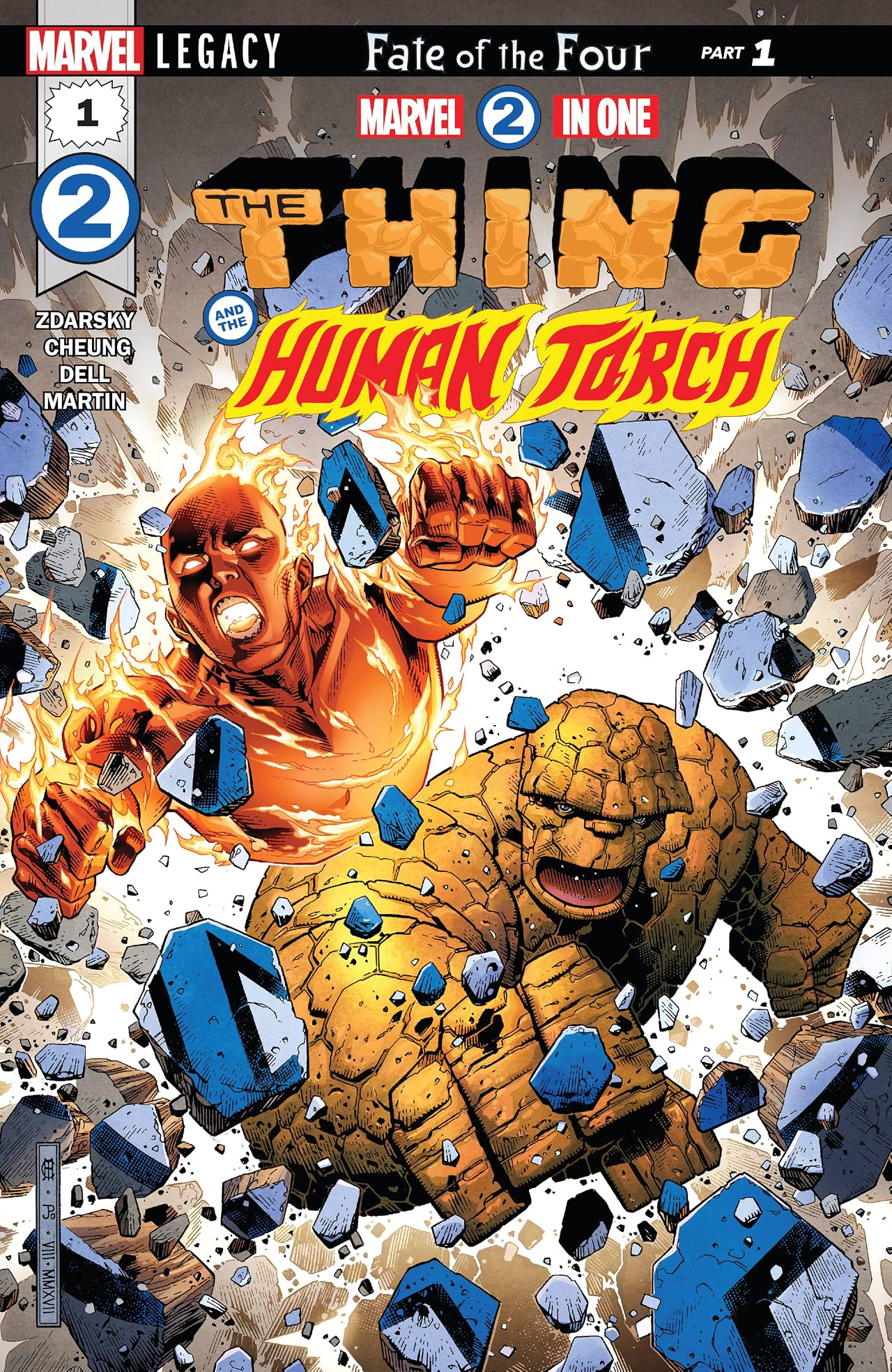
Half-Fantastic and Full Heart: Marvel Two-In-One #1

The following is my review of Marvel Two-In-One #1, which was posted on PopMatters.com.


Like most ordinary people, every superhero has bad days. Some of those bad days are worse than others. Some of those bad days make for iconic stories, as well. Events like The Phoenix Saga, Secret Wars, Civil War, and House of M often start with a particularly bad day that spirals out of control, sometimes leading to retcons, wars, and clone armies. Short of being trapped in a cage with Deadpool and an unlimited supply of tacos, a bad day for a superhero often becomes the cornerstone for a major upheaval in Marvel's over-arching mythos.

While every major superhero and their assorted teams have bad days, few have had more or worse days than the members of the Fantastic Four. No matter how much Peter Parker complains about not catching a break or how much the X-men complain about people hating mutants, they can't deny that the Fantastic Four have it much worse.

It's not just that they've been victimized by horrible movies, so much so that Pixar's The Incredibles is often cited as the best Fantastic Four movie. Despite being Marvel's first family and one of the most pivotal creations of Stan Lee and Jack Kirby, the influence and prestige of the Fantastic Four has never been lower.

The events of Secret Wars effectively shoved a wedge the size of an entire multiverse between the team. Reed, Sue, and their children are no longer playing an active role in the Marvel universe. Ben and Johnny, conversely, find themselves relegated to weak supporting roles in books like Inhumans and Guardians of the Galaxy. Their struggles are often a punchline within Marvel, but Chip Zdarsky and Jim Cheung look to get serious with what remains of the Fantastic Four in Marvel Two-In-One #1. While Marvel's first family may still be split, Ben and Johnny keep the spirit alive in a story that's as compelling as it is heart-felt.

This is one of those stories that reflects a particular sentiment at a particular time in the history of a franchise. It's not unreasonable to say that, in wake of the failure of Josh Trank's Fantastic Four movie and the subsequent cancellation of the Fantastic Four comics in 2015, these are the darkest of times for Marvel's first family. Reed, Sue, and their children are gone. The Baxter Building is gone. On top of all that, Dr. Doom isn't even acting like Dr. Doom anymore. It's as though everything that makes the Fantastic Four endearing has been lost.

Marvel Two-In-One #1 acts as the first beacon of light within the darkness that has shrouded Fantastic Four for years. The first family is still not whole, but Zdarsky and Cheung make it a point to show that the heart and soul of the Fantastic Four is still there. Not only that, they make the case that there's still a place for them in the Marvel universe and by nearly every measure, they make that case well.

The foundation of the story is basically the remnants of the first family being at rock bottom. Neither is in a particularly good place with Johnny being especially broken. Ben, true to his rocky nature, acts as the last remaining anchor of the team. He carries himself as the only one with the strength and fortitude to carry on the legacy that the Richards family left behind. He doesn't have much to begin with, but he gains a lot over the course of the story.


What he gains and how he gains it doesn't feel cheap or contrived. In fact, it makes for one of the most heart-felt moments the Fantastic Four have had since the events of Secret Wars. Zdarsky and Cheung don't discount the events that tore the first family apart, nor do they make light of just how much those events hurt Johnny and Ben.

Part of what makes the Fantastic Four so compelling is that they're not just heroes. They're family. When one of them is lost or gone, it hurts. That pain in Marvel Two-In-One #1 is undeniable. By the end, though, there's a sense that the time for healing has arrived. Even though the memories of bad movie adaptations still linger, the darkest hours of the Fantastic Four are behind them. Now, they're ready to move forward.

Moving forward, however, still means confronting the less-than-ideal situation in the present. That involves Johnny revealing a distressing secret about his powers and Ben having a productive, but messy conversation with Dr. Doom. It's dramatic and overdue, but the fact they're finally confronting the situation is probably the biggest sign of progress that Marvel Two-In-One #1 can have. Overdue or not, it's still refreshing.

More than anything else, Marvel Two-In-One #1 is a clear, yet poignant reminder of what the Fantastic Four stand for. They're not just a family with superpowers. They're not just heroes either. They look beyond the horizon and dare to go farther. They seek to explore, learn, and grow together. That's how they often end up encountering beings who ride cosmic surf boards, giant world-eating beings, and shape-shifting aliens. The heroics are often secondary, but still just as important.

There's a lot to be said about the current state of the Fantastic Four, how they got there, and why they've struggled to remain relevant at a time when every superhero seems to reinvent/reboot themselves every other week. There are still plenty of ongoing issues with that state that can't be easily resolved over the course of a single issue, let alone several. However, Zdarsky and Cheung take the biggest, and arguably most important, step in that process.

Marvel Two-In-One #1 is one of those books that will give a certain segment of fans a genuine emotional uplift. It's as though someone finally comes to their front door, gives them a reassuring hug, and lets them know they haven't forgotten about the Fantastic Four and everything they stand for. It may have taken a while. It may not undo all the damage that the first family have suffered over the past several years. It's still a first step, but one that feels like a giant leap in the right direction.


Final Score: 9 out of 10

Friday, October 20, 2017

Sexy Side-Project "The Red Queen Chronicles: The Divine" is LIVE!


If there’s one thing I’ve learned since I started writing sexy side-projects, it’s that fans want their favorite characters to hook up with all sorts of characters. It doesn’t matter that it’s ridiculously non-canon. It doesn’t matter that it would never happen in the books either. Fans just love seeing certain characters get sexier than they’re allowed to be.

Since I started my “New Red Queen” series, I’ve gotten all sorts of suggestions for sexy hook-ups. Given that Mary Jane Watson, with all her amazing sex appeal, is at the center of the story, I expected to get plenty lurid requests for her. However, I didn’t expect to get so many for another fiery redhead, namely Jean Grey.

Perhaps I shouldn’t be too surprised, given all the uncut scenes I’ve done with her in my X-men Supreme series. After the events of “The Red Queen Chronicles: The Phoenix,” though, I’ve opened the proverbial floodgates. I’ve effectively unshackled Jean Grey-Summers from the traditional confines that has kept her fully clothed for too damn long. Apparently, there are a lot of Jean Grey fans who have been waiting for this sort of thing. Surprised or not, I’m going to run with it.

That’s why I’m proud to announce another sexy side-project of the most uncanny kind. It involves Jean Grey hooking up with someone she rarely encounters in the comics and being unapologetically sexy about it. She married Cyclops and flirted with Wolverine, but now that she’s the Black Queen of the Hellfire Club, she’s going to set her sights higher. By that, I mean she’s looking for some truly divine sexiness from someone who just happens to have a big movie coming out.

Yes, I’m referring to the God of Thunder himself, Thor. He and Jean Grey have rarely shared a scene together in the comics, but that doesn’t matter in the world of the Red Queen Chronicles. Through this ambitious, but straightforward one-shot, these two characters you didn’t know you wanted to see hook up are going to get frisky. If this doesn’t get you excited for both the “Thor: Ragnarok” movie or “X-men: Dark Phoenix,” I don’t know what will.


As always, I encourage everyone to provide feedback and leave comments. I can’t promise I’ll pursue every sexy suggestion, whether it involves Jean Grey, Mary Jane Watson, or Squirrel Girl. I’m always open to new ideas, though, especially the sexy kind.

Thursday, October 19, 2017

A Most Worthy Milestone: The Mighty Thor #700

The following is my review of The Mighty Thor #700, which was posted on PopMatters.com.


Whenever a comic reaches a major milestone, it seems obligated to do something big, flashy, and groundbreaking. More often than not, that can be more obstacle than opportunity. Obligation or not, these kinds of upheavals in a story cannot and should not be forced. That doesn't stop some from trying, but that also ensures the results will be mixed. That's exactly what makes The Mighty Thor #700 one of the most intriguing milestone issues of the past decade.

There's no need to force anything here. Jason Aaron has all the necessary pieces in place. What began several years ago in the final issue of Original Sin is set to culminate in The Mighty Thor #700. The concept of worthiness is now far beyond tired arguments of whether the Hulk, Superman, or Squirrel Girl can lift Mjolnir. It isn't just some mystical McGuffin meant to frustrate Thor, Odin, and all of Asgard, although it can come off as such.

Aaron often walks a fine line with Thor, one side being controversy and the other being contrivances. Jane Foster being Thor and wielding Mjolnir blurs that line to an extent that still bothers a certain segment of fans. However, even those fans can't deny the dramatic overtones that The Mighty Thor has conjured since Original Sin. It isn't just about a god struggling with unworthiness. It's about a dying mortal woman wielding the power of a god, knowing she's got little time left.

That time is exceedingly limited and The Mighty Thor #700 adds even more urgency for Jane Foster to make every swing of Mjolnir count. She's not the only one either. For a 50-page milestone issue, Aaron goes for broke by getting every corner of Thor's world involved and does so with an all-star cast of artists that includes the likes of Russell Dauterman, Walter Simonson, Oliver Copiel, and many more. That includes the past, present, and potential future of Asgard, Midgard, and everything in between. It's ambitious, but a worthy ambition befitting of any magic hammer.

There's a glut of material that touches on nearly every major player in Thor's world, from another major clash with Malekith to destructive fight with She-Hulk to a brief interlude with Frog Thor. All cards, including a few that haven't been played in a while, are on the table. They're all part of the same gamble to link every part of Thor's world into a singular conflict. That gamble doesn't necessarily hit the jackpot, but it does pay out in a lot of ways.

Despite all the many elements that find their way into The Mighty Thor #700, there are a few major connections to tie them together, some more so than others. Aaron digs deeper into the mythological foundations of Norse Mythology, literally to some extent, by setting the stage in Nornkeep. It gets even more literal as actual threads of fate start weaving various Thor-centered stories across the realms and across time.

These broad, diverse stories give a chance for every artist employed in this milestone issue to maximize their talent. Some utilize different themes, touching on the future of Thor and what lays in store for all those whose lives revolve around magic hammers. Others unfold in the present, which build on threads from previous issues leading up to The Mighty Thor #700. Some are colorful asides that don't add much to the overall plot, but belabor all things Thor in a way that feels necessary in an oversized issue.


This is where some of the ambition ends up overplaying the plot. Even though the connection of each plot has ties to the events in Nornkeep, those connections aren't always clear or concise. Some are so loose that it's hard to make sense of the role they play in the larger narrative. In addition, the scale of that narrative covers so many times, places, and hammer-centered battles that some end up feeling rushed. Even Jane Foster's battle against She-Hulk doesn't get the kind of elaborate smashing that most battles involving Hulk and Thor require.

Even with connections that are weak and rushed, at times, the direction of the story never gets derailed. Even after Frog Thor provides a little comic relief, the destination of each plot becomes clear. The conflict that begins in Nornkeep is set to spread through every realm, involving the likes of Maliketh, Loki, War Thor, and any number of divine forces that have been hit by Mjolnir one time too many. In that sense, the ambition serves to make The Mighty Thor #700 feel as epic as it needs to.

The worth of any milestone issue is measured in its ability to encompass the past, present, and future of a story. Given the size and scope of the story Aaron tells, The Mighty Thor #700 checks all the necessary boxes. There's a general sense, as well as a major teaser at one point, that the future of Thor is poised for upheaval. Jane Foster's battle with Hulks, gods, monsters, and cancer is about to culminate. Odinson is about to confront his agonizing unworthiness. Frog Thor is going to wade through some puddles. Everyone in Thor's world is poised to have their moment.

Ultimately, that's the most important aspect of any milestone issue. It should act like a catalyst and not an endpoint. It doesn't have to be a full-blown movie trailer, complete with heavy voice-overs and messy editing. It just has to make the journey thus far feel meaningful while making the journey ahead that much more appealing.

It may not have the loud explosions, coupled with heavy metal music, but The Mighty Thor #700 is plenty appealing in all the right ways. Worthiness may still be a hopelessly esoteric concept that fans will be arguing over on message boards for another 700 issues, but this one proves its worth, as only a Thor comic can.

Final Score: 8 out of 10

Thursday, September 28, 2017

Past, Present, and Perspective: Marvel Legacy #1

The following is my review of Marvel Legacy #1, which was posted on PopMatters.com.


Building a legacy is a long, tedious process that usually involves twice as many mistakes than it does successes. In some cases, a half-century of world-building is hardly enough to forge the kind of legacy that stands the test of time, changing writers, and retcons. For Marvel and the extensive world that continues to unfold after over 50 years of continuity, it's safe to say that its legacy has proven its worth. The world that Stan Lee and Jack Kirby created decades ago is worth an entire workshop of Mjolnirs.

The legacy of the Marvel universe is often in flux with the times. There are all sorts of eras that vacillate from grim and dark to upbeat and optimistic. Events like Onslaught, Age of Apocalypse, and Civil War define and redefine what the world of Marvel stands for. Sometimes it takes years to appreciate way in which these events shaped Marvel's legacy. That will likely be the case with Marvel's latest legacy-shaping event, Secret Empire.

Being an event so controversial, coming at a time when all things related to fascism inspire Hulk-level outrage, the current legacy of Marvel is in a tenuous position. It's at one of those forks where it can either go down a dark, dire path or re-invent itself in a new, more positive light. These are uncertain times for Marvel and Marvel Legacy #1 is in a position to shape a new path, provide a sense of certainty, and showcase the strengths of top-level writing and artistic talent.

Jason Aaron, one of Marvel's top writers, and an all-star team of artists that include Esad Ribic, Russell Dauterman, Stuart Immonen, Ed McGuinness, and many more, have a chance to use Marvel Legacy #1 as a gateway towards the future of the Marvel universe. With so much talent to work with, the scope and scale of the story can be nothing short of awe-inspiring. While that bar may be impossibly high, Aaron and his all-star cast of artists come very close to matching and exciting it.

The structure of Marvel Legacy #1 is both fitting and overdue in that it revisits elements from Secret Wars that have been absent for years, namely those of the Richard family. In a sense, their presence acts as a reminder regarding what the greater Marvel universe is missing. To date, Marvel operates in a world where the Fantastic Four are no more, Thor is unworthy, the X-men's leadership is dead or time-displaced, and Steve Rogers is a secret Hydra agent. To say that legacy is on shaky ground is like saying the Hulk is moody.

Aaron doesn't try to fix all that in the span of a single issue. However, the story in Marvel Legacy #1 does establish links to the past, present, and future. It doesn't just provide hope that the missing elements of Marvel's legacy will return. It provides a potential mechanism. It doesn't just offer promises. It offers solutions that don't involve time machines, retcons, or deals with Mephisto.

The links to the past offer the most intriguing and complete part of the plot in that it establishes a period in the history of the Marvel universe that has major implications for the present. It takes familiar faces and forces like the Phoenix Force, the Iron Fist, and the spirit of the Black Panther and personifies them in a battle against a Celestial. That added personality gives greater weight to the events that unfold in the present.


Those events are a little less cohesive, though. Marvel Legacy #1 is understandably ambitious, attempting to jump around into multiple areas and explore a wide variety of elements throughout the greater Marvel universe. It touches on the Avengers, the X-men, the Guardians of the Galaxy, and the remaining members of the Fantastic Four. It even tries to deal with the lingering aftermath of Secret Empire, from Steve Rogers' efforts to rebuild his credibility to the disillusion of SHIELD. There are so many elements to explore that the narrative gets downright erratic at times.


There's only so much Marvel Legacy #1 can address, but it manages to avoid Deadpool-level eccentricity. While the transitions from setting to setting aren't all that seamless, they never feel totally random or out-of-place. If anything, they feel like a succession of teaser trailers that offer glimpses into the near and distant future of the Marvel universe. Some are more subtle than others. Others, namely the ones involving Norman Osborn and Loki, offer a more overt hint. Certain characters, despite being actual gods, just aren't capable of such subtlety.

Beyond just the teaser elements, though, Marvel Legacy #1 adds some significant upheavals to the mix, namely by revealing the return of a certain grumpy Canadian that helped make Hugh Jackman a star. His appearance comes off as sudden, but it also comes with purpose. It feels like part of a larger story that's just beginning to unfold. In many respects, that's the core theme of the entire story. It doesn't just lay the foundation. It provides some very specific, very compelling building materials.

That's not to say every element is equally compelling. Some are underdeveloped and overlooked. Some aren't effectively linked to the larger narrative, but they still have a place in the greater legacy of Marvel so their presence never feels too random. That, in many respects, is the most revealing accomplishment of Marvel Legacy #1. It crafts a story in which everything feels connected on some level. While some connections are stronger than others, it still conveys the sense that Marvel has a vision and that vision is worth exploring.

While the Marvel universe seems to get redefined at least once a month, it's rare for a story to feel as large in scope as it's trying to be. Marvel Legacy #1 succeeds in conveying that feeling. From those disillusioned by Marvel's recent direction and enamored by its past, it offers something to latch onto. The fact it does all that without a time machine, clones, or magic spells makes it all the more astounding.

Final Score: 8 out of 10

Thursday, September 21, 2017

Idols, Ideals, and Reminders: Generations: Captain Marvel and Ms. Marvel #1

The following is my review of Generations: Captain Marvel and Ms. Marvel #1, which was posted on PopMatters.com.


Whenever a fan meets their icon, there's usually an unpleasant moment when the fan makes a stunning realization. Their idol, for all the hopes and dreams they embody, is still human. They make mistakes, they get hurt, and they become corrupted by a situation. For overly passionate fans, it can be pretty devastating, finding out that an idol has those flaws. It's often a harsh lesson in the real world, which tends to crush idealism the same way the Hulk crushes compact cars.

Since her inception, one Kamala Khan's biggest appeals is that she's an unapologetic superhero fangirl. She sees superheroes through the same rosy prism as kids and fans. To her, they are icons who embody certain ideals. Before she gets her powers and dons the title of Ms. Marvel, that perspective is pure and untainted by the harsh circumstances of life. Then, she gets her powers and Civil War II happens. Suddenly, her idol isn't very heroic anymore. If anything, she's too human to wield that title.

Kamala's world is shaken, but not broken. She still calls herself Ms. Marvel. She still tries to be the kind of hero she idolizes. In both her solo series and books like Champions, those efforts tends to yield mixed results most of the time. It seems every battle she faces brings her that much closer to losing that sense of idealism that defines her character.

That's what makes Generations: Captain Marvel and Ms. Marvel #1 so timely and relevant. It gives G. Willow Wilson a chance to reconnect Kamala with a younger, less compromised version of Carol Danvers. She gets to interact with a version of her idol that is not compromised by the events of Civil War II. It's her chance to re-learn and possibly re-define her understanding of a hero.

Wilson puts her in a position to do that and then some. Kamala, whose perspective acts as both necessary narration and witty banter, finds herself in a similar position as other characters who taken part in Marvel Generations. Through the Vanishing Point, she ends up in the past during a time when Carol Danvers is on nobody's list to headline a major crossover event. She's still Ms. Marvel, a hero who is still trying to prove that she belongs on the same level as Captain America, Thor, Iron Man, and everyone else who goes onto be part of a billion-dollar movie franchise.

Whether by chance or McGuffin-style workings of the Vanishing Point, Kamala finds herself joining Carol in this effort and not just in terms of fighting alien invaders. Through a setup that doesn't entirely make sense, but still works, she becomes an intern at Woman Magazine where Carol works. It's a unique period in Carol's story it's a time when she tries to build more of a civilian life, like the Peter Parkers of the world. While it may be a doomed effort to anyone with alien DNA, it's an important context for both Kamala and the story of Ms. Marvel, as a whole.

In a sense, it shows Carol trying to do what female superheroes and real women alike struggle to do. She's trying to have it all, being both Ms. Marvel and Carol Danvers. It's a struggle Kamala herself deals with every other issue and Wilson rarely lets her catch her breath. It's also a struggle that Carol doesn't really deal with as Captain Marvel, but that struggle still shapes her story. Making Kamala, the future Ms. Marvel, a part of that story gives it even greater meaning.

Unlike some of the other stories that unfold in Marvel Generations, Wilson takes a more personal approach to Generations: Captain Marvel and Ms. Marvel #1. It's not just about Kamala Khan and Carol Danvers fighting alien invaders and working with J. Jonah Jameson without going insane. The story of Kamala sharing her perspective with Carol and seeing her idol outside the context of Civil War II makes the story feel personal. It effectively circumvents the tension between the two characters in the present and shows that they both share a legacy.

In terms of Kamala's personal story, it's a critical insight. It doesn't necessarily re-define her understanding of what it means to be Ms. Marvel as it does remind her of why that title matters to her. Throughout the story, her thoughts reveal her various sentiments towards Carol Danvers. She's still an icon in her eyes, but she doesn't ignore how she has been functioning without her idol since Civil War II. That doesn't stop her from joining her struggle.

Being part of that struggle helps Kamala overlook some of the things that shattered her idealistic view of Carol Danvers. In a sense, that's a major oversight and a missed opportunity. By not digging deeper into the reasons why Kamala distances herself from her idol, the story in Generations: Captain Marvel and Ms. Marvel #1 doesn't accomplish as much as it could have. It also mutes the potential drama that helped make other iterations of Marvel Generations so meaningful.

In addition, it doesn't help that the flow of the narrative is a bit messy at times. There's a couple instances where there are no obvious transitions from one scene to another. On one panel, Kamala walking the streets of Midtown Manhattan. The next, she's at the Daily Bugle being yelled at by J. Jonah Jameson. Granted, Jameson rarely needs a transition to yell at someone, but it makes the story feel choppy at times. Even with Paolo Villanelli's vibrant art that highlights Ms. Marvel's distinct style, the story never comes off as very concise.

It still manages to accomplish something important for Kamala Khan and Carol Danvers' story. It effectively ties their ongoing struggles with one another. Carol is trying to have it all as both Carol Danvers and Ms. Marvel. Kamala is doing the same thing in her time. It's an ongoing struggle for both, but working together in Generations: Captain Marvel and Ms. Marvel #1 gives them both some needed perspective. They even earn praise from J. Jonah Jameson along the way and in the context of the greater Marvel universe, such an accomplishment ranks right up there with beating Thanos.


Final Score: 6 out of 10

Thursday, September 14, 2017

Titles, Legacies, and Basics: Generations: Captain Marvel & Captain Mar-Vell #1

The following is my review of Generations: Captain Marvel and Captain Mar-Vell #1, which was posted on PopMatters.com.


The story of one hero taking on the mantle of another is one of the most controversial stories that can be told, albeit for all the wrong reasons. No matter how great or terrible that story actually is, there will always be a certain contingent of fans who are ardent traditionalist. To them, Batman must always be Bruce Wayne. Steve Rogers must always be Captain America. Peter Parker must always be Spider-Man, preferably a version not foolish enough to make deals with Mephisto.

There's nothing anyone can do to placate those fans, short of ending the story permanently and letting them fume in their own little world of utopian nostalgia. Since that's not a very interesting story, Marvel Generations is doing the next best thing by adding depth and connections between the heroes of the past and the heroes of the present. The titles may be the same, but the characters, context, and narrative are very different. The only thing that doesn't change is the incessant whining by the ardent traditionalists still arguing why Gwen Stacy should come back.

Regardless of how ardent certain fans may be, most tend to agree that certain characters can benefit from that added depth more than others. At the moment, few characters are need of that depth more than Carol Danvers. Through the masterful efforts of writers like Kelly Sue DeConnick, Carol ascends to a level of prominence that makes her the closest thing Marvel has to Wonder Woman. The fact she takes the title of Captain Marvel in the process is almost secondary. Then, Civil War II happens and suddenly, she's the most controversial non-clone character in all of Marvel.

That makes the stakes in Generations: Captain Marvel and Captain Mar-Vell #1 that much higher. Margaret Stohl already has a daunting task as the writer of Mighty Captain Marvel, which attempts to rebuild Carol's status as Marvel's premier female hero after Civil War II. The events of Secret Empire and Marvel Legacy put her in a position to recapture some of those elements that make Captain Marvel a title that anyone of any gender would be proud to have.


Part of that effort involves taking Captain Marvel back to basics, none of which involve superhero politics, visions of the future, or arguments about how long Carol's hair should be. Instead, Carol finds herself in the middle of an war in the Negative Zone that involves an unfamiliar race of aliens, a familiar threat in Annihilus, and her old mentor, the original Captain Mar-Vell. It has all the ingredients to bring out the best in Carol Danvers. It won't settle debates her hair, but even Captain Marvel's power can only go so far.

That power is enough for her and Mar-Vell to carry out the feats for anyone wielding that title. As with previous issues of Marvel Generations, there's not a whole lot of context surrounding the Vanishing Point. There really doesn't have to be. Generations: Captain Marvel and Captain Mar-Vell #1 is a bit more concise in that it establishes a clear connection between the events in this story and those of Secret Empire #10. That approach allows Carol to hit the ground running within a chaotic, sci-fi heavy alien war that maximizes Brent Schoonover's colorful art style. Compared to the bleak circumstances of Secret Empire, it's pretty refreshing.

The same can be said about Carol's interactions with Mar-Vell. Much of it is built around over-the-top sci-fi action, but that's fairly in line with their history. Whatever their titles, both characters define themselves by their alien connections. It's a big part of how the connection they forge. The events of Generations: Captain Marvel and Captain Mar-Vell #1 occur before that connection really blossoms, but it establishes that these two characters share more than a title.

In between battles against aliens and arguing with a race that isn't used to these kinds of battles, there's a fair amount of drama between the two characters. They both have different styles. Carol is more hot-headed and impulsive. Mar-Vell is more cunning and diplomatic. There are times Carol's approach proves effective. There are times when Mar-Vell's approach works as well. It creates tensions, but it's the productive kind of tension. That may seem shocking in an era where tensions between superheroes serve as the basis for every other major event at Marvel, but Stohl shows how it can work.

Carol Danvers and Mar-Vell wield the same title, but are effective at honoring that title in their own unique way. They both say they work alone, but it's only when they use those ways together that they prove most effective. It comes off as a lesson that both characters need to learn. In Carol's case, it's a lesson that's worth re-learning, given her recent missteps among her fellow superheroes. It gives the impression that Generations: Captain Marvel and Captain Mar-Vell #1 leaves Carol in a better place, as a character.

In that sense, the overall story has both the basics and a sense of purpose. It feels complete in the sense that it has a relevant impact on both Carol Danvers and Mar-Vell. There are some shortcomings, in terms of details. The story does drag, somewhat, in a few areas. Even with sci-fi settings and a major threat like Annihilus, it never feels as epic as other memorable space battles. Some of that may be due to the restrictions of the Vanishing Point. Like other issues of Marvel Generations, it can only do so much before the timeline snaps back into position.

Whatever limitations there are on the premise of Generations: Captain Marvel and Captain Mar-Vell #1, Stohl and Schoonover get the most out of it for the characters involved. By getting back to basics for anyone bearing the title of Captain Marvel, it demonstrates that there is a legacy to that title and one that's worth upholding. Whether or not Carol uses that legacy to improve her standing within the Marvel pantheon remains to be seen, but between gaining a better perspective and taking her frustrations out on Annihilus, she's in a much better place now.

Final Score: 7 out of 10

Thursday, September 7, 2017

Building (and Tinkering with) a Legacy: Generations: Iron Man and Ironheart #1

The following is my review of Generations: Iron Man and Ironheart #1, which was posted on PopMatters.com.


When a new character takes on the legacy of an older one, the greatest challenge is making that transition seem fitting and meaningful. It helps when the older character has a sizable network of friends, family, and side-kicks in the wings, ready to carry on that legacy in a way that feels like a true extension of the story. This is how Batman's legacy can continue whenever Bruce Wayne is MIA, whether it's through Dick Grayson, Terry McGuinness, or the occasional robot.

Unfortunately for the legacy of Iron Man, Tony Stark isn't as keen on side-kicks and family. Throughout his history, he tends to monopolize all things Iron Man. At times, he gives the impression that he only tolerates War Machine because he doesn't use a title or color scheme that undermines his brand. He's akin to a musician who doesn't mind people doing goofy parodies of his music. That may be an effective way to control a legacy, but it does create issues once Tony is unavailable. With no Robin or even a Bucky Barnes waiting in the wings, Iron Man's legacy is especially vulnerable.

That makes the task Brian Michael Bendis undertook in creating Riri Williams all the more daunting. He doesn't have the time or capacity to create the kind of built-in legacy that Batman has. He has to put Riri in this role of filling in for Tony Stark with next to no build-up or dramatic underpinnings. Riri just happens to be in the right place at the right time when Tony Stark goes down in Civil War II. It's the kind of happenstance that can only come at Marvel where Cosmic Cubes, deals with Mephisto, and the Scarlet Witch going crazy constantly skew the odds.

With Generations: Iron Man and Ironheart #1, Bendis has a chance to forge a greater personal connection between Tony Stark and Riri Williams. In a sense, that sort of connection is overdue because even in his AI form, Tony acts more as a guide than a mentor to Riri. The lack of any deeper undertones still creates the impression that Riri's role is forced and contrived. Creating a more personal connection can help mitigate that impression.

Bendis makes that effort and even tries a different approach, compared to previous iterations of Marvel Generations. Whereas the other stories have taken characters to the past, he takes Riri to the future. That's somewhat more practical, given the inherent themes of futurism in Iron Man. However, pragmatics only go so far. When it comes to actual substance, the story falters and only ends up highlighting the reasons certain fans complain about Riri in the first place.

By taking the story to the future instead of the past, she ends up in a very different world, compared to the one she comes from. This is inherently an issue for her character because so much of her story is tied to her situation in the present. Her family, being from Chicago, and stumbling through the growing pains of being a hero are part of what makes Riri's story compelling. None of that is present in Generations: Iron Man and Ironheart #1. That leaves Riri isolated and only highlights some of her less flattering traits.

From the moment she arrives in the future, Riri basically acts as her own narrator. It tries to come off as cute and awkward, as is often the nature of teenagers, but it just comes off as annoying and self-centered. She doesn't say or ponder anything that isn't depicted by Marco Rudy's skilled art. When she encounters familiar-looking heroes from the future, including a next-generation Avengers team and a 126-year-old Tony Stark, who also happens to be the Sorcerer Supreme, the moment falls flat. For overly-emotional teenagers, that just goes against the laws of physics.

That's not to say Riri is cold in the story. She does make it a point to hug Tony when she gets the chance. However, that's pretty much the extent of the connection they forge. It's also the extent of the drama in the story. There's no epic battle. There's no shared struggle. One is teased, but goes absolutely nowhere. There's no point where Riri really works with Tony, thereby gaining a better understanding of what it means to be Ironheart. She basically just sits back, watches, and gets a crash course in how great the future is.

While that sort of techno-utopian ideology is a key component to Iron Man, Generations: Iron Man and Ironheart #1 doesn't present it in a very compelling way. It's mostly done through Tony Stark talking, Riri Williams reacting, and everyone else just shrugging their shoulders. It's as compelling as it sounds. There aren't any moments of real struggle with Riri. She's basically just a guest passing through and not much else. Her passing out when she first arrives is the most she does to move the story forward.

That's not to say there's no overall impact for Riri. Seeing the future and all the beauty that Rudy's art can depict leaves an important impression. It shows that the future she, Tony, and all things Iron Man are trying to build is worth building. That's a meaningful impression, but one that doesn't need to be belabored in an Iron Man comic, which is built on the very premise that a better future can be built. Riri's story already involves plenty of future-building so the impression comes off as redundant.

Bendis has many opportunities to craft a more meaningful connection between Riri and Tony in Generations: Iron Man and Ironheart #1. Few, if any, of those opportunities pan out. Riri still comes off as an annoying teenager who basically stumbles to success at every turn as Ironheart and Tony comes off as overly coy with his ego. The story succeeds at capturing the futurism themes inherent of most Iron Man stories, but that's all it succeeds with. For someone as capable as Riri Williams and Tony Stark, that's just too low a bar.


Final Score: 4 out of 10

Thursday, August 31, 2017

Rising, Falling, and Rebuilding: Secret Empire #10

The following is my review of Secret Empire #10, which was posted on PopMatters.com.


The dramatic rise and spectacular fall of an empire is one of those rare narratives that can be just as dramatic in real life as it is in fiction. From the Ancient Rome to Star Wars, the story behind an empire has an undeniable impact on the human psyche, as well as the annuls of history. Every empire is unique in how it rises, grows, prospers, and falls. Sometimes it plays out over the course of centuries. Sometimes it happens over the course of a few decades. Marvel, with its ever-changing landscape, tries to squeeze that story into ten comic books.

Given the scope of empires, as a concept, that's pretty daunting for anyone not equipped with Reed Richards' mind or Tony Stark's gadgets. Nick Spencer and Steve McNieven may not have such resources, but they've made every moment count in Secret Empire. It's a story that taps into real world fears about powerful individuals seizing power and imposing tyranny under the guise of order. It evokes all sorts of passions, reservations, and arguments on message boards. That alone is a testament to the scope and scale that empires carry, as a story.

Secret Empire is not just about Hydra taking over the world. It's not just about Captain America betraying the Avengers either, although that is the emotional gut punch that makes it so controversial. These elements feed into that larger narrative of an empire coming to power, taking advantage of a vulnerable moment in time and trying to shape the course of history. The ascension of Hydra and Captain America into this position is established. Now, the downfall is underway.

For nine issues, the story sets up various plot-lines that lead to numerous skirmishes. It's not an exhibition game anymore. Both sides are carrying themselves like a couple prize fighters entering the last round. They each bear the scars of all the blows they've taken. They make clear that there will be no judges decision. One of them is going to get knocked out. It's just a matter of who can land the finishing blow. In Secret Empire #10, that blow finally lands with an impact that has both huge reverberations and major implications.

The rise of Hydra and the Hydra-affiliated Steve Rogers centers around reality-warping power capable of making good into evil, right into wrong, and making Deadpool less annoying. Any story that builds itself around that kind of power risks going too far and needing more reality-warping power to fix. It goes beyond resorting to another Deus Ex Machina, especially when that same device is used to set everything up in the first place.

Spencer sets up from the beginning of Secret Empire that a certain amount of warping will be necessary to resolve the story. There's just no way an empire as large as Hydra's can rise, fall, and leave a meaningful impact within ten issues of a series. The biggest risk any story takes in attempting to tell a story within these constraints is rendering reality a messy ball of mud that gets molded and remolded on a whim.

For the most part, the story strikes an appropriate balance between confronting the reality-warping forces behind the story and using them to defeat Hydra. Those involved in delivering that final blow even throw in some Loki-level cunning. It isn't just a matter of all the heroes gathering in one place and collectively beating up an over-powered villain. The Hydra-affiliated Steve Rogers is not Onslaught, Thanos, or some cosmic space god. He's someone with which every hero in the Marvel universe has an emotional connection.

It's that connection that makes the very concept of Steve Rogers becoming a fascist feel so untenable to begin with. That's like making Frank Castle the Kingin or Emma Frost a nun. It's so utterly antithetical to the core of the character that it just feels wrong for everyone involved. In a sense, both the characters in the story and those who know Captain America as the ultimate enemy of fascism are on the same page, in terms of emotional overtones. Nobody reading or participating in the story can accept a reality where Steve Rogers is, and always has been, a fascist.

By the end of Secret Empire #10, that untenable feeling is still there, to some extent. While the story does end up having to warp and re-warp reality to some extent, it stops short of completely undoing everything the Cosmic Cube changed. Certain characters stay dead. Certain places remain destroyed. Steve Rogers isn't the ultimate fascist anymore. A good chunk of the story, along with the best aspects of McNieven's art, is spent giving Rogers a chance to literally attack the fascist monster that Hydra created. While it's as satisfying as it often is when a fascist gets defeated, some of those feelings still linger.

Even though Secret Empire #10 crafts as concise a conclusion it can, given the cosmic forces involved, it still carries a distressing sentiment that may plague Captain America fans the same way the Clone Saga plagues Spider-Man fans. Regardless of the details, it's impossible to get around that Steve Rogers became a fascist. It doesn't matter that cosmic forces were involved. The very concept that such a story is even possible and a character must move forward with that kind of burden just evokes too many conflicting feelings.

The overall structure of the story still works with respect to showing the rise and fall of Hydra's empire. Secret Empire #10 even helps streamline some of the confusing, disjointed elements that are scattered throughout the previous nine issues. However, the manner in which it ends, the feelings surrounding it, and the prospect of moving forward from such a reality-shattering event are still mixed. It doesn't help that too much is narrated and too little is said in the end. It also doesn't help that some of the side-plots in the story don't connect as strongly to others and don't add to the overall impact.

These details, however, don't take too much away from the bigger picture surrounding Secret Empire. Spencer still succeeds at striking the necessary balance that's so hard to achieve when crafting a story that requires a complete deconstruction and subsequent reconstruction of the space-time continuum. That, in and of itself, is an accomplishment.

That accomplishment, however, will be forever lost in the stigma that Secret Empire will inevitably carry. While it might not be on the same level as the original Clone Saga, it will still be the story in which Marvel makes Captain America a fascist. It doesn't matter if someone makes a deal with Mephisto to ensure everyone in the Marvel universe forgets about it entirely. The fact it's still a story that got told in the first place, striking all the wrong emotional chords in the process, will plague it for the foreseeable future. If every fallen empire seeks to leave its mark, then Hydra definitely leaves theirs, albeit not for the reasons they probably intended.

Final Score: 7 out of 10

Thursday, August 24, 2017

Hammering Hard With Worthy Themes: Generations Unworthy Thor & The Mighty Thor #1

The following is my review of Generations: Unworthy Thor and The Mighty Thor #1, which was posted on PopMatters.com.


The concept of who is truly worthy is Marvel's ultimate philosophical McGuffin. It's one of those ideas that can be endlessly debated, argued, twisted, and misconstrued in any number of ways. It's also a major driving force for Thor in nearly every era. From Walter Simonson to Jason Aaron, his struggle to be worthy, stay worthy, and understand what makes him worthy is part of what makes Thor's story compelling.

In terms of major turning points in that story, few are as pivotal as the events that played out in Original Sin. In that story, Thor becomes unworthy with just three words whispered by Nick Fury. It doesn't just upend Thor's idea of worthiness and the story around it. It opens the door for a new Thor with a new understanding of what it means to be worthy.

This is where Jane Foster's story enters the picture and that story is built on a very different foundation. She is not a god, a demigod, or anyone who would ever be mistaken as one. She is a moral woman who also happens to be suffering from one of the most debilitating diseases any mortal can endure. Her ascension to the title of Thor is one of the most significant shifts in Thor's story in decades. There are times when it breathes new life into the world of Thor. There are other times when it triggers incessant whining about identity politics. The fact that Jason Aaron manages to balance that narrative in any capacity is nothing short of astounding.

Now, through Generations: Unworthy Thor and The Mighty Thor #1, Aaron has a chance to build bridges between that vast philosophical gulf between one era of worthiness and another. It may not end the constant whining about female heroes taking on the mantle of male heroes, but it does flesh out the core elements of the Thor mythos that are as relevant today as they are in the ancient times before angry arguments on internet message boards.

Unlike some of the previous narratives in Marvel Generations, there are clearer connections between the events in Generations: Unworthy Thor and The Mighty Thor #1 and the conclusion of Secret Empire. Those connections are few and somewhat vague, but their presence helps create an important context between the past and present. Jane Foster isn't so much the catalyst as she is the unexpected guest, who helps bring clarity to the hopelessly unclear concept of worthiness.

While her role in the story cannot change the path of Odinson, it can provide guidance. Granted, it's a guidance he will undermine with his arrogance on many occasions in the future, but it still offers clarity to the narrative while giving Odinson fewer excuses. In a sense, what happens in the story gives the impression that he was destined to lose Mjolnir at some point, even without any devious whispers of Nick Fury. It's just an inevitable consequence of the arrogance that comes with being Thor and with being a god, in general.

The substance of that story isn't very novel in that it builds on a story that has been explored before in the pages of Uncanny Avengers. Once again, the son of Odin clashes with Apocalypse in an era before the Avengers can assemble and before the X-men can astonish. It's basic and crude, but it provides the necessary setting for the arrogant young Asgardian to learn a lesson or two about divinity and mortality.

The fact he learns it from a mortal woman wielding the hammer he craves provides both personality and entertainment value. It'll also provide more fodder for internet debates, but that doesn't derail the main thrust of the story. It's the setting that's vital here in that it takes place in a time before Odinson first lifted Mjolnir or taken the title of Thor. In this time, he's still the divine equivalent of a teenager who hasn't gotten his driver's license yet, but still wants to take his father's car out for a joyride.

While it annoys Odin to no end, it puts the future Thor in a position to ditch some boring formal gathering of gods to pick a fight on Midgard between Vikings and Apocalypse's Clan Akkaba. Given that formal gathering prohibits mead and mostly involves Odin bellowing orders, it's hard to blame a juvenile Odinson for ditching it.

It's only when he meets a time-displaced Jane Foster that his casual deviance becomes an important learning experience for both of them. The fact that experience also involves an elaborate, violent, lightning-filled battle against Apocalypse that brings out the best in Mahmud Asrar's art is a nice bonus. It just isn't a very memorable experience for any generation of Thor if there isn't some epic battle to fight.


That fight, as entertaining as it is, remains secondary for the most part. The primary struggle still revolves around Odinson's desire to be worthy and Jane Foster's lingering uncertainty about her future. It's a struggle that both characters have a stake in, but one that has limited influence on both characters. While Generations: Unworthy Thor and The Mighty Thor #1 makes the necessary effort to explore those classic themes of worthiness that is so critical to Thor's mythos, the extent to which it impacts the characters involved is somewhat minor.

This is an issue that shows up in previous issues of Marvel Generations, but a limited impact doesn't mean there can't be heavy drama. The potential for that drama is there in Generations: Unworthy Thor and The Mighty Thor #1, but not much of it is realized. Jane Foster and the future Thor do get a moment to interact outside of a major battle, but little comes of it. Both still gain critical insight, though. Both are in a better position to make decisions about the course of their immortal and mortal lives alike. It's not dramatic, but it does make the overall story feel complete.

That story even includes a few bonus parts that make Generations: Unworthy Thor and The Mighty Thor #1 a prelude to other critical events in the past and future. It offers intrigue beyond the basic lessons in worthiness, which is something that previous issues of Marvel Generations has not done. It adds value to a story that can only offer so much before it undermines the hopelessly convoluted, ever-evolving timeline that is the Marvel universe. That value may not make anyone inherently worthy of lifting Mjolnir, but it will put them on the right track.

Final Score: 7 out of 10