Showing posts with label Ryan Reynolds. Show all posts

Saturday, June 16, 2018

The Maturation of (Regenerating) Degenerates: Deadpool Assassin #1

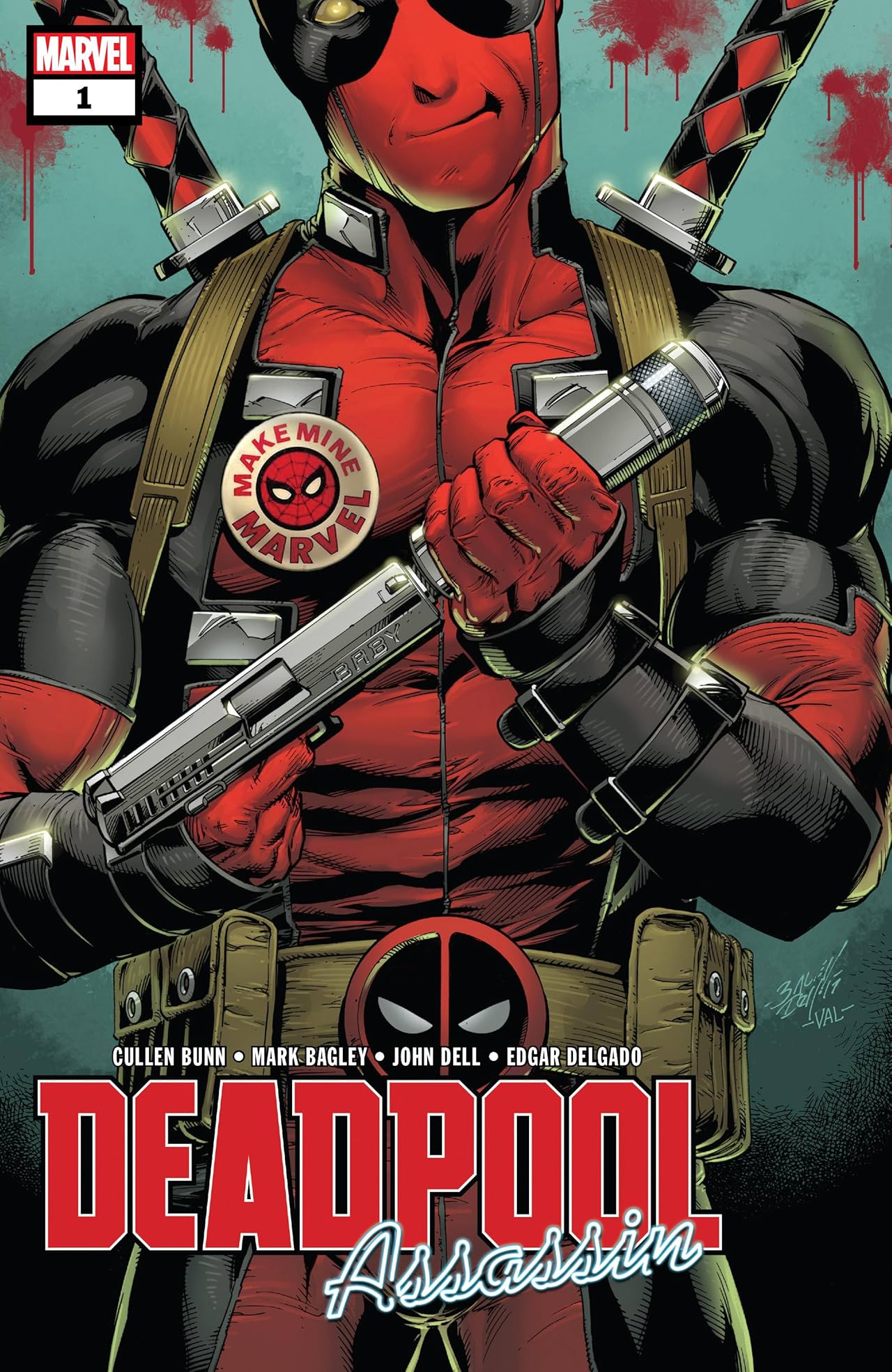
The following is my review of Deadpool: Assassin #1, which was posted on PopMatters.com.


When it comes to gratuitous violence and genuine heart, Deadpool is in a class all his own. In fact, it's not unreasonable to say that Deadpool, as both a character and a concept, goes out of his way to stand out and isn't afraid to be obnoxious about it. Regardless of whether his name and design was derived from Deathstroke, he's someone who does more than most to stand out in a sea of Wolverine, Superman, and Batman rip-offs.

Thanks to two successful movies and the inherent likability of Ryan Reynolds, Deadpool's star has never burned brighter. It's safe to say that in his efforts to stand out, he has succeeded. His mask, his tumor-laden face, and his propensity to break the fourth wall are now every bit as iconic as Wolverine's claws or Captain America's shield. He has nothing left to prove. He's earned the right to brag and gorge on all the chimichangas he wants.

As much as he's achieved, Deadpool always finds ways to stay busy and entertain. Most of those ways still involve the kind of destruction and vulgarity that would get most characters fined by the FCC, but he never does it out of pure malice. He's not Sabretooth, Norman Osborn, or Dexter Morgan. He's crazier than a sack of ferrets, but he still maintains a code of conduct that sets him apart from less scrupulous mercenaries. Those who undermine that code are likely to be on the wrong end of Deadpool's guns, katanas, and toilet humor.

That's both the setup and the appeal of Deadpool: Assassin #1. Cullen Bunn and Mark Bagley put Deadpool in a position to further set himself apart by showing that there is merit to having a code of conduct as a mercenary. That process involves a hefty bit of bloodshed and mayhem, but anything other than that just wouldn't be true to Deadpool's increasingly powerful brand and he does plenty to maintain it in this story.

Bunn and Bagley don't try to reinvent the regenerating degenerate. They just put him in a situation where he can do what he does best, which means being in close proximity to far less ethical mercenaries and evil ninjas. For Deadpool, that's like mixing chocolate and peanut butter, but with several extra sides of carnage and bloodshed. It's every bit as potent as it tries to be.


These crude, but colorful basics give Deadpool: Assassin #1 plenty of entertainment value. However, there are some other side-plots thrown into the mix that keep it from being a generic story about a Deadpool-centric shooting spree. One involves Deadpool's old friend Weasel, whose life has taken a far more domestic turn. He still works with Deadpool and still provides him with plenty of opportunities to shoot things, but he's got other priorities. In revealing those, Deadpool himself reveals something striking and potentially profound.

Being so unhinged and eccentric, Deadpool never comes off as one of those guys who plans for a simpler future that doesn't involve as many explosions. Between his skills as a mercenary and his fourth-wall breaking awareness, he rarely shows interest in settling down, retiring, or taking up a hobby that doesn't require heavy firearms.

He operates on a moment-by-moment basis, going from one job and/or wisecrack to the next. While he may occasionally mix things up by joining the X-men or marrying a succubus, Deadpool still acts primarily on an impulse. Even with the limited ethical standards by which he operates, he's not known for his foresight any more than he's known for his choice of underwear. Wherever there's violence to be had, he tends to gravitate towards it. With an unstable mind and a body covered in tumors, that's kind of how he has to be.

That's what makes his admission that he's getting bored with mercenary work so striking. He still makes clear that he loves killing unscrupulous mercs and ninjas, but that's not enough for him anymore. He claims he's only doing a few more jobs before he moves onto something else. It's not clear how serious he is. It's like Peter Parker saying he doesn't want to be Spider-Man anymore, but that sentiment goes away the second he has an excuse to change his mind. Unlike Peter, though, Deadpool isn't known for responsible decision-making.

That makes the plot surrounding Deadpool's changing priorities seem tentative, at best. Nobody, fictional or otherwise, can buy that he wants to retire to his own tropical island and sip margaritas for as long as his healing factor allows him to live. He gets bored too easily, enjoys dangerous surroundings too much, and makes too many impulsive decisions. While that makes his antics fun to watch, it also makes any effort to settle down less believable.

To some extent, Weasel's situation reflects that. He's no longer a former Hydra agent who just happens to be friends with an unhinged mercenary. He's got a stable job, a wife, and an overall easier life that involves less killer ninjas and more credit card bills. It's less hectic, which Deadpool claims to want, but Weasel never gives the impression that it's very fulfilling.

If anything, he sends the message that settling down can make a man feel domesticated. This doesn't impact Deadpool's intentions or his ninja-fighting skills, but it does throw shade on the idea that seeking a less damaging occupation comes at a cost. It also establishes that if Deadpool really does attempt to hang up his katanas and guns, he'll end up changing his mind faster than Peter Parker ever did.

Long-term intentions aside, still provides plenty of value in terms of giving Deadpool fans what they want. Bagley's artwork makes it colorful while Bunn's dialog makes it witty. It checks all the necessary boxes for a fun, engaging Deadpool story. It tries to do more and while it lays a foundation, it doesn't offer much in terms of clues. He's still doing mercenary work, as only he can, but what does someone like Deadpool do when he wants to move onto a new endeavor?

That question goes unanswered in Deadpool: Assassin #1. More than anything, it puts Deadpool in a position to mix things up again. It probably won't result in him getting a job as a tax attorney or a janitor, but if it leads him to novel forms of violence, then it can only help the potty-mouthed merc in his never-ending struggle to overshadow Deathstroke.

Final Score: 7 out of 10

Tuesday, February 16, 2016

Overpriced, Chaotic, and Undeniably Entertaining: Deadpool #7

The following is my review of Deadpool #7, which was posted on PopMatters.com.


The comic book industry has come a long ways since the days of Saturday morning cartoons, Richard Donner movies, and campy TV shows starring Adam West. There have been periods of growth, thanks to the tireless efforts of Sam Raimi and Christopher Nolan. There have been periods of darkness, thanks to the more forgettable efforts of Joel Shumacher and Brett Ratner. In the era of billion-dollar blockbusters and post-credits teasers, there have been very few constants. One of them is the irreverent humor of Deadpool.

Spider-Man may grow up, get married, get unmarried, and run his own company. Superman may wear red underwear, marry Lois Lane, have his marriage to Lois Lane undone, and date Wonder Woman. Gwen Stacy might become relevant again, despite being dead since the disco era. Deadpool, however, remains committed to the same deranged, bombastic persona that has given Ryan Reynolds a chance to redeem himself after the Green Lantern movie. It's almost hard to imagine that Deadpool was once labeled a Deathstroke rip-off.

With a movie coming out and a growing to-do list in the comics, Deadpool #7 offers a giant-sized plate of chimichangas to those who have come to appreciate his not-so-unique brand of humor. Like Seth MacFarlane, Deadpool built his career on telling the kinds of jokes that got most kids sent to the principal's office in grade school. That humor might be labeled as immature by those who eat their chimichangas plain and with no guacamole on the side, but Deadpool always found a way to appeal to the inner 8-year-old in all of us.

Deadpool #7 does plenty to cater this appeal while offering plenty of bonus material in the process. Most of that bonus material is somewhat forgettable, but it doesn't take away from the overall entertainment value of the finished product. Deadpool is described by some of his own fellow mercs as "an unfocused, impatient, chaos monkey." In terms of an over-arching narrative, there couldn't be a more appropriate description of Deadpool without including taco meat and spent bullet casings.


There's no way around it. The story that unfolds in Deadpool #7 is chaotic and unfocused. For any other character in any other medium, this would seriously undermine the story. For Deadpool, however, it's entirely appropriate. In fact, it embodies the primary appeal about Deadpool. In the same way Michael Bay movies gratuitously exploit CGI and Megan Fox's sex appeal, Deadpool exploits the chaotic violence around him with an irreverent humor that has undeniable entertainment value.

Nobody is going to mistake the story that unfolds for Watchman or Saga. That said, there is an actual story within the circus-like chaos that is Deadpool's life. His profile is rising in the Marvel universe and not because of anything Ryan Reynolds is doing. He's expanded beyond being a one-man mercenary operation and assembled a team called the Merc for Money. On the surface, they look like cos-players who are the complete antithesis of Ocean's 11, but their colorful, cartoonish presence is entirely fitting for Deadpool.

Despite being the founder, leader, and visionary behind the Mercs for Money, Deadpool spends most of the main story in Deadpool #7 being distracted. It's not the kind of distraction caused by excessive sugar or a lack of Adderall either. Deadpool, like every other character that tried to leech off of Wolverine's popularity, has a fragmented memory. Unlike Wolverine though, Deadpool has a sense of humor about it and that sense of humor creates the bulk of the entertainment value.

Deadpool goes about his reckless and destructive business with a casual bravado that never feels arrogant or egotistical. He'll casually sit back in a car and chat about his issues while the Mercs for Money get into a gun fight with Hydra. He'll stop shooting his machine guns into an army of Hand ninjas in order to ask a few questions, even though he has an axe lodged in his skull. Such an overly casual approach to such violence might not win him any allies at local PTA meetings, but it will make for plenty of entertaining moments.

These moments aren't well-organized, nor should they be in a story that reflects the living chaos that is Deadpool. There are times when they're difficult to follow, even if they are appropriate within the context of a Deadpool story. There is still a cohesive theme in the end that helps tie the chaos together, albeit barely. It helps set up Deadpool's next mission in a way that promises more gratuitous violence. If that's the primary measure by which all Deadpool stories are judged, then this one certainly qualifies.


The main story in Deadpool #7 acts as a testament of sorts to the entertainment value of Deadpool's narrative. As a means of justifying the $9.99 price tag, it also comes with a number of bonus stories that explore stories from other members of the Mercs for Money. Some of these bonus stories are more entertaining than others. Most are fairly forgettable, but they do at least add some extra depth to Deadpool's team.

None of them are as colorfully deranged as Deadpool himself, but that might be for the best. The Marvel universe can barely contain one Deadpool and Ryan Reynolds can only capture the essence of one non-Van Wilder character at a time. These other characters certainly have potential and personality. They just aren't going to inspire the same level of creative cos-playing that Deadpool inspires at every comic con.

Deadpool's story is still the primary selling point in Deadpool #7 and that story checks all the necessary boxes. The forgettable bonus stories don't detract from this selling point in any way, but they aren't going to make anyone feel better about the bloated price. It's still an entertaining Deadpool story, complete with obscene violence and unrepentant immaturity. As the failure of Wolverine Origins definitively proved, we wouldn't have Deadpool any other way.

Final Score: 8 out of 10

Friday, December 25, 2015

Deadpool | Red Band Trailer 2 [HD] | 20th Century FOX

Merry Christmas, everybody! For just one second, put down the eggnog and stop thinking about how you're going to return your shitty gifts and celebrate with something truly festive. By that, I mean Deadpool. I mean come on! He's wearing red. That's a Christmasy color, isn't it?

Because we're mindless consumers, we buy into all the shit that Hollywood sells us when it comes to superheroes. However, this is Deadpool. He's NOT a typical superhero and this shit ain't rated PG-13. I could explain more, but I'd rather let the wonderfully charismatic, former Mr. Scarlett Johannsen explain it. Enjoy!

Monday, August 3, 2015

Deadpool Official Sneak Peek #1 (2016) - Ryan Reynolds Movie HD

Ryan Reynolds was once on top of the world. He was an A-list star, a Hollywood hot guy, and married to Scarlett Johanssan. Then, shit just started going wrong in so many ways. And I'm not just talking about the Green Lantern movie. Reynolds has a lot of crap in his career that he may never live down. Barakapool will be one of those things is one of them. But with an R-rated Deadpool movie set to come out in 2016, I like to think he's on the road to recovery. Today, that road begins with the teaser trailer to the Deadpool movie that we've all wanted, but Wolverine Origins denied us.


Will it make Wolverine Origins suck any less? No. But will it help make up for it? If it's awesome, fuck yes. Nuff said!