Showing posts with label Psylocke. Show all posts

Wednesday, May 30, 2018

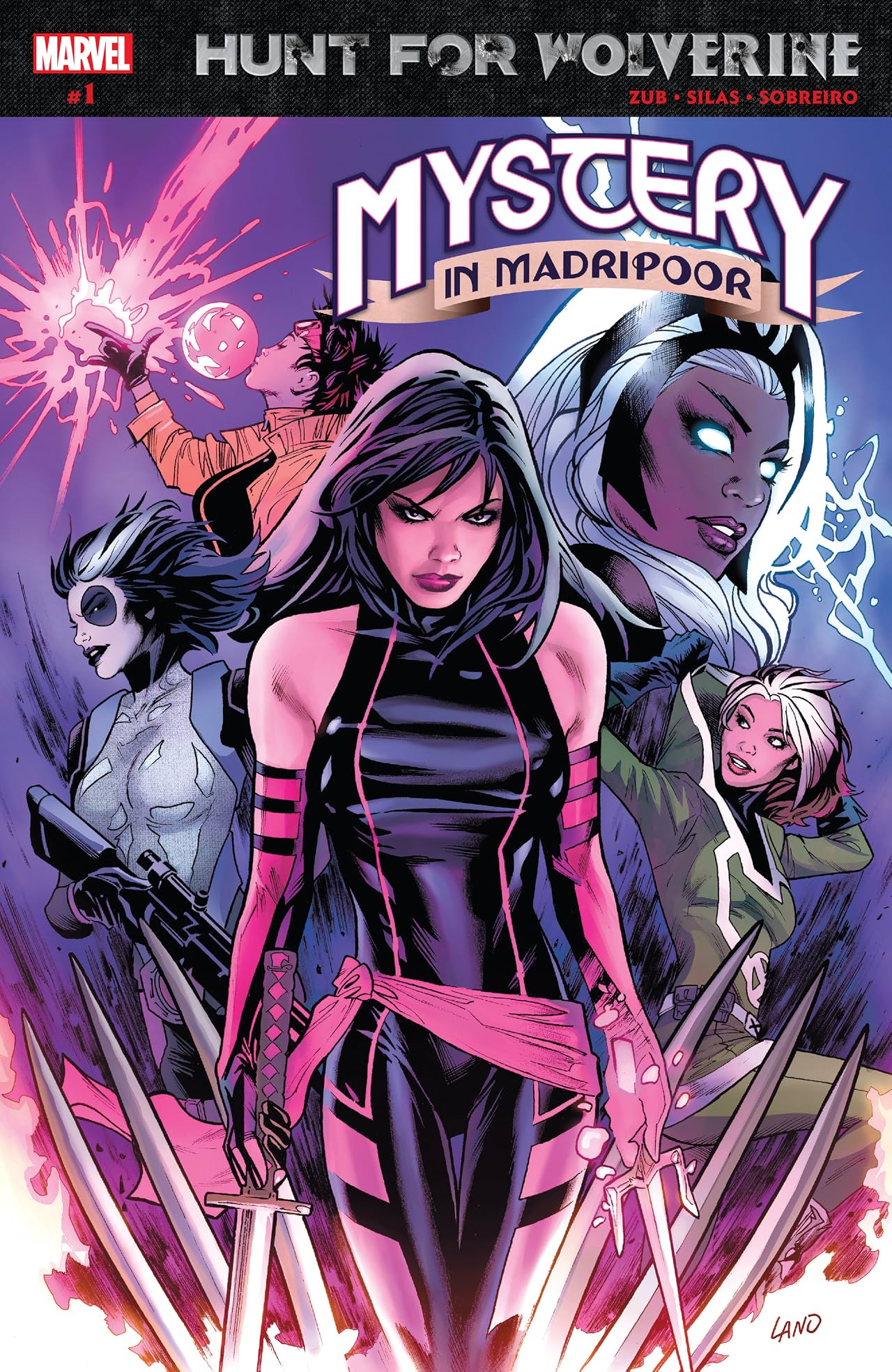
Hunting Party: Hunt For Wolverine: Mystery In Madripoor #1

The following is my review of Hunt For Wolverine: Mystery In Madripoor #1, which was posted on PopMatters.com.


In the same way there are some characters whose death will always stick to a significant degree, there are others for whom resurrection is pretty much assumed before the funeral even concludes. In the same way Uncle Ben's death has to stick for Spider-Man, the death of Wolverine can't possibly stick for the X-men. No matter how his death occurs, be it callous, tragic, or heartfelt, he's still one of the X-men's most popular characters. Him remaining dead is about as likely as Marvel and Disney growing tired of money.

While Charles Soule did a commendable job making Wolverine's death feel meaningful in Death of Wolverine, the X-men comics never try to function without him for too long, as evidenced by the continued presence of fill-in characters like Old Man Logan and Jimmy Hudson. The X-men need Wolverine just as much as Captain America needs his shield. He doesn't have the luxury of staying dead for over a decade like Jean Grey. At a time when time travelers and alternate reality versions of other characters are running around, the time for Wolverine's inevitable return has never been better.

To that end, it's only fitting that Soule set the stage for Wolverine's full return in the Hunt For Wolverine #1. However, that only acts as the start of a much larger story. Jim Zub and Thony Silas are set to build on that story with Hunt For Wolverine: Mystery In Madripoor #1. It's not enough to just get Wolverine out of his grave so his healing factor can do the rest. Given his colorful history, involving ninjas, clones, cyborgs, and living weapons, there's plenty of resources to work with.

Zub and Silas are targeted with those resources, specifically those involving Wolverine's time in Madripoor as bartender/operative/eye-patch enthusiast, Patch. It's a part of Wolverine's history that isn't as prominent as those involving adamantium bonding or blood feuds with Sabretooth, but it still reflects some important insights about the man and not just the claws. When he's not a raging, snarling death dealer, he's a man who has lived a more colorful life than most.

In that sense, it's somewhat fitting that those hoping to track him down after learning of his return are X-men with which he's had a close personal connection. The fact that those X-men all happen to be prominent female characters as well is a nice bonus and also revealing, in and of itself. It shows that when Wolverine isn't lusting after married women or on the wrong end of a love triangle, he's capable of forging close personal connections.

Kitty Pryde, Storm, Rogue, Psylocke, Domino, and Jubilee are among the most prominent personal connections that Wolverine has forged over the years. They are a dream team of sorts, one uniquely talented and motivated to find their friend and learn what happened to him. These are some of the most resourceful, resilient, and loyal friends that Logan has ever had. The fact he only ever got romantically involved with one of them, namely Storm, says a lot about his character.

This is a team that's capable of tearing Madripoor apart, digging deep into Wolverine's past to find out where he is. However, they don't get many opportunities to do so and not just because Magneto is currently a prominent presence in Madripoor, as has been documented in X-men Blue. They're still on the runway of the airport when they encounter who they think is Magneto and from there, this team of prominent female X-men are basically stuck reacting to everything from that point forward.

That makes the sequence of events in Hunt For Wolverine: Mystery In Madripoor #1 somewhat predictable. Whenever the X-men, or any superhero team for that matter, are stuck reacting to a situation, it tends to limit the impact of the story. Whether it's ninjas attacking, killer robots attacking, or Hydra agents suddenly entering the picture, it follows a similar script. The team walks into a trap, the fighting begins, and the situation becomes inherently more dire.

That narrative in Hunt For Wolverine: Mystery In Madripoor #1 follows that script fairly closely, but that's not to say there aren't dramatic elements that add a little complexity to the mix. Before that situation devolves, though, there are some quiet moments among Wolverine's closest friends. Storm, Kitty Pryde, Rogue, and Psylocke all have an opportunity to remember and reflect why Wolverine matters so much to them.

Granted, he can be a violent, cynical, beer-loving brute, but he can also be insightful and sincere. Those reflections help establish why these characters care so much about Wolverine in the first place and why they're willing to risk a messy trip to Madripoor to help him. That helps make Hunt For Wolverine: Mystery In Madripoor #1 feel less like a generic rescue mission and more like a team of loyal friends seeking to help someone they really care about. Superheroes rescue people all the time. This is personal and that's an important theme throughout Hunt For Wolverine, as a whole.

Those quiet moments among the all-female cast make for some engaging insights that establish the emotional stakes. However, it doesn't end up having much impact when the chaotic violence erupts, as is often expected in any story relating to both Wolverine and Madripoor. While the source of that chaotic violence also has a personal connection with Wolverine, there's not much insight into the how or why they get involved. Even though Wolverine has a list of enemies that'll always be longer than his list of friends, those enemies usually don't just attack for the fun of it.

It still moves the plot forward and puts the cast of female X-men into a difficult spot. It's not yet clear whether that spot will have any bearing on events unfolding in related Hunt For Wolverine titles, but the personal connections to Wolverine are still there and are on full display, at least for those trying to find him. Those connections just don't do much to complement the chaos that they inevitably encounter along the way. They just walk into a trap, get caught by surprise, and try to manage from there.

There's still plenty of room for more insights that further reveal the reach of Wolverine's impact. For such a prominent character with such prominent friends, there's more potential than most with respect to connections and conflict, especially in a place like Madripoor. Hunt For Wolverine: Mystery In Madripoor #1 does plenty to give Wolverine's closest female allies a chance to show their strength while helping a friend. For someone who claims to be the best there is at what he does, though, there's still room for improvement.

Final Score: 6 out of 10

Thursday, December 7, 2017

The Pressing Pitfalls of Powerful Minds: Astonishing X-men #6

The following is my review of Astonishing X-men #6, which was posted on PopMatters.com.


While death tends to be a revolving door with well-oiled gears in comics, there are many ways in which characters cheat it. Some are more compelling than others. By and large, clones and time travel are akin to overused cheat codes. They essentially circumvent the agency of a character and all those around them by forcing that character into a situation. It's akin to Photoshopping wherein the contrivances can be cropped, but not removed entirely.

That's why when a character cheats death in a way that doesn't involve time travel or clones, there's a greater sense of intrigue. It's more akin to watching an escape artist survive a death-defying stunt in broad daylight. If they can do it without the aid of cosmic power or a deal with Mephisto, that makes it all the more impressive. In that context, it says a lot about Charles Soule and his work on Astonishing X-men in that he's resisted the temptation.

The death of Charles Xavier at the hands of Cyclops in Avengers vs. X-men remains one of the most impactful moments for the X-men that doesn't involve movie rights. That death is what shaped the course of the X-men for the past several years, from the arrival of the original five X-men from the past to the mutant/Inhuman war. His return to the world of the living is not unexpected since he has come back from the dead before, but his presence is such a powerful force in the overall X-men mythos that it's bound to have an impact.

Soule and Michael Del Mundo are laying the foundation for that impact and Astonishing X-men #6 acts as the final layer of bedrock. The substance of that bedrock is build around another epic psychic battle between Charles Xavier and the Shadowking. While it's a battle that has played out many times before, it's still more compelling than one involve clones or time travelers. For this particular battle, though, the stakes feel even higher than usual.

Every psionic attack, psychic illusion, and telepathic trash talk counts in this battle. It doesn't just play out on the astral plane either. Some of it manifests in the non-psychic world as well, with Shadowking taking over the likes of Gambit and Old Man Logan. It creates battles on multiple fronts, which also creates multiple opportunities for Del Mundo to craft brutal, visceral struggles that take on a very psychedelic ambience. In terms of psychic battles, it's the perfect combination.

Even though a psychic battle between Charles Xavier and Shadowking is something that has played out many times before with the X-men, as a rivalry on par with that of Wolverine and Sabretooth, Soule finds a way to make this one feel more meaningful. It isn't billed as the final psychic showdown between two bitter rivals. It doesn't even try to be some sort of over-hyped, pay-per-view style event either. What makes it and the story around it work so well is how it brings out the more cunning aspects of Charles Xavier.


From the first issue of Astonishing X-men, Soule establishes the battle between Xavier and Shadowking as one driven by wit as much as psychic prowess. In a sense, Xavier dying at the hands of Cyclops finally levels the playing field between him and Shadowking. They're both disembodied spirits now. They're both stuck in a state of limbo, having limited influence on the physical world. Like having Iron Man fight without his armor, both powerful minds must now rely on other skills.

As a result, Xavier ends up relying on tactics that Shadowking has a history of exploiting. He  has to fight for the hearts and minds of his X-men in a very literal sense. He can't just flash his "world's most powerful mind" card and win the battle by default. He has to reduce himself to his enemy's level, which usually gives someone like Shadowking the edge. Up until Astonishing X-men #6, he seemed to have that edge every step of the way.

This is where the true extent of Charles Xavier's cunning reveals itself. It's also what makes Astonishing X-men #6 a major addition to Xavier's resume as Marvel's most powerful mind. Even when he's stuck playing by Shadowking's rules, having next to no advantages from the beginning of the battle, he finds a way to one-up him. He's able to blend his tactics with that of his enemy to win the day in a way that never feels cheap or contrived. Soule makes it clear that Xavier earns this triumph over his greatest psychic rival and Del Mundo helps make it a sight to behold.

It's the kind of triumph that Charles Xavier hasn't had in quite some time, going back to the Grant Morrison era in New X-men. For years, it seems, Xavier's greatest enemy is his declining credibility in the eyes of his fellow X-men. From keeping secrets to battling his own students, he's had few opportunities to be the mind and the mentor that only the likes of Patrick Stewart can hope to embody.

Xavier's inglorious death in Avengers vs. X-men further limits his ability to be the character that the X-men need him to be. Like the charm of Patrick Stewart, though, certain characters have traits that give them the ability to forge new opportunities out of rough situations. Between Shadowking and dying at the hands of his first student, the situation is pretty bad for Charles Xavier. That only makes watching him and his assortment of A-list X-men beat the odds feel that much more satisfying.

That satisfying victory, along with the profound implications revealed at the end, helps put Astonishing X-men #6 in a special category in terms of quality. From the first issue of the series, this latest psychic clash between Xavier and Shadowking carries the risk of being another generic battle with stakes no higher than that of an arm-wrestling match between the Hulk and Squirrel Girl. That's the challenge of any rivalry. Everyone knows that Captain America will beat the Red Skull, Batman will defeat the Joker, and Deadpool will make a dirty joke. It's giving those battles real stakes and nuanced circumstances that give them impact.

Soule and Del Mundo put in the necessary time, effort, and psychic mind games to make Round 616 of Charles Xavier versus Shadowking feel like the telepathic equivalent of a heavyweight prize fight. Each round feels brutal and bloody, but the style and substance behind it make it more than just a spectacle. It's a testament to mind and will of Charles Xavier. There's a reason why he's the visionary behind the X-men, as well as the perfect medium for Patrick Stewart's charm.

Final Score: 9 out of 10

Friday, July 21, 2017

Alpha and Omega Mutant Narrative: Astonishing X-men #1

The following is my review of Astonishing X-men #1, which was posted on PopMatters.com.


Even in a mythos as vast and diverse as the X-men, there's still a place for a definitive A-team of sorts. The makeup and purpose of that team may change over time, but its presence still carries a special impact. Whatever happens to them or whatever path they chart tends to affect the X-men mythos as a whole. Like a major summer blockbuster or the premier of a new Vince Gilligan show, it's an event that sets the bar for others to achieve.

Astonishing X-men has an established history of being that A-team. Under Joss Whedon and John Cassaday, it acts as the gold standard by which all other X-men comics were measured. In other eras, Chris Clarmeont's work on Uncanny X-men or or Scott Lobdell's work on X-men carry the same weight. Creating a series with such an impact is difficult to achieve, but the ingredients are fairly simple. It needs only a cast of top-tier, well-known characters. If they've been played by major actors in an X-men movie or get fans talking about more than who can lift Thor's hammer, they're a candidate.

After the latest round of relaunches that spun out of Marvel's ResurrXion effort, the X-men comics still lack that definitive A-list book. X-men Blue and X-men Gold contain major characters and prominent stories for the greater X-men narrative. However, they still lack a lead blocker of sorts to pave the way for the future of X-men.

Now, Charles Soule and Jim Chung, two of Marvel's most prominent talents, attempt to create that book with Astonishing X-men #1. They have all the ingredients, namely a strong cast full of familiar and prominent faces. They even have major stakes already in play with Marvel Legacy just on the horizon. It's not unreasonable to say that Astonishing X-men is the most critical X-men comic to come along since Secret Wars. The stakes are high and the margin for error is low, but Astonishing X-men #1 really rises to the occasion.


The story hits the ground running like a summer blockbuster movie, complete with a monster attack, random explosions, and snarky remarks from beautiful women. Short of including transforming robots, it's hard to imagine a series beginning with more style. That's not to say it's lacking of substance though. Soule and Chung don't rely too much on spectacle. The structure of the story is built on establishing the stakes and that's where Astonishing X-men #1 shines brightest.

The story doesn't try too hard to build off the events of another book. It does mention some recent events in the X-men comics, but it doesn't try too hard to act as a connecting point. If anything, it avoids the kinds of complicated tie-ins that tend to make some books too confusing. It's presented as a story that anyone can pick up, not be too lost, and be entertained. It's a simple formula, but one that proves potent.

Even those who haven't kept up with X-men comics in recent years won't be too confused. So long as they know that attacks by Shadowking are bad and giant psychic monsters in the middle of London are dangerous, they'll be able to follow the story. So long as they also like fast-paced action, high stakes, and Chung's colorful art, they'll enjoy that story as well.

On the surface, the plot isn't very groundbreaking. Shadowking, a well-known X-men enemy who has been while the mutant race overcame their latest extinction plot, is back in action and attacking psychics. With Charles Xavier dead, he doesn't go for the biggest, most powerful mind first. Instead, he attacks psychics who are isolated and ill-prepared, using them as preseason games, of sorts, to get himself ready for prime time. Then, he gets a little bolder and attacks Psylocke. The spectacle only escalates from there.

It's the kind of plot that can easily fall flat. With Chung's artwork, the visual appeal alone is usually enough to give it value. Soule, however, never lets the story become too devoid of substance. From the first few pages, he uses every opportunity to provide context and depth. He does this primarily through a mystery narrator who provides insight early on, helping to establish the setting and identify the characters involved. The identity of that narrator isn't revealed until the end, but he still serves an important purpose that helps make Astonishing X-men #1 feel like more than just a generic summer blockbuster.

Despite all the action, explosions, and snooty remarks made by Fantomex and Gambit, there's a sense that there's a larger vision for the story and the series. It's not just throwing together all these A-list X-men characters and expecting it to sell itself. That's a tempting trap that many X-men comics have fallen into over the years. Soule makes a clear effort to avoid that by setting up a larger conflict for the characters to take on.

That's not to say those efforts are entirely seamless. There's not a lot of rhyme or reason as to how and why these particular X-men characters are where they are when explosions start going off. There are some small connections between characters here and there. However, the story never tries to overthink certain details. It provides just enough to make the more explosive, action-oriented elements more meaningful than a typical Sentinel attack on a Tuesday afternoon.


Soule and Chung have an rich batch of ingredients to work with in Astonishing X-men #1. They have plenty of chances to overuse one at the cost of the other, but they don't. They still manage to take each element, mold it into a story, and let it cook until it has the look, taste, and feel of an A-list blockbuster. The final result couldn't be more potent without casting Hugh Jackman and Patrick Stewart.

Even in an age where superhero blockbusters capture a huge chunk of the pop culture market, there's still a place for Astonishing X-men. The story is still unfolding, but if the final page is any indication, there's plenty of potential for astonishment.

Final Score: 9 out of 10

Friday, September 23, 2016

Uncanny X-men #13: Nuff Said!

When villains become heroes and heroes become villains, it doesn't always mean the Scarlet Witch got drunk on chaos magic again and inverted everybody. It can also mean that a situation is now so utterly fucked that we can't help but cheer for villains to some extent. For the X-men, who rely heavily on sterilization, time travel, and alternate universes to hold themselves together, I'd say they're fifteen steps past fucked.

That's why I think people are ready to actually root for the Hellfire Club. For once, it won't just be the pro-orgy, pro-corruption, pro-Victorian fashion enthusiasts who will be cheering. The world is basically giving a big middle finger to the mutant race. The Hellfire Club is poised to do the same and get laid in the process. Who wouldn't respect that? They've been operating behind the scenes since Uncanny X-men began under Cullen Bunn. In Uncanny X-men #13, he's finally getting around to digging a little deeper. I'm expecting plenty of orgy and wine to be mixed in. Bet you're not going to get that shit on New Attilan.


Other than orgies and wine, the X-men do show that they can work with the Hellfire Club when corrupt companies and Racist Xenophobic Slave-Owners are involved. Together, they launch an attack on an oil rig run by the Someday Corporation, the overly shady motherfuckers from the first arc of this series that claimed to help mutants by letting them sleep through this latest shit storm. They suspect that a company that puts mutants in comas may have a less noble agenda. That's like saying Mel Gibson may have an anger management problem.

In the least surprising development since Adam Sandler failed to get nominated for an Oscar, the X-men and their orgy-loving allies are attacked on the rig by a team of weaponized mutants. This makes for some heavy action, complete with some nice little insight from Psylocke, who is basically the one getting most pissed off by this team-up. Seeing that she's on a team with Sabretooth, that's saying something.


It's a fun, gritty battle that's perfectly in line with the battles Magneto's team has fought throughout this series. With the Hellfire Club involved, it becomes even more appropriate. However, they all do keep their clothes on during the fight so maybe there's still room for improvement.

It's not just mindless slap-fighting either. There is a strategy involved here. That strategy involves Mystique doing some sneaky shit behind the scene and being sexy as hell while doing it. That's a damn good strategy by default. It involves singling out one weaponized mutant, sedating him, and letting Arcangel carry him off. I don't know the merit of that strategy, but Mystique is involved so I'm giving her the benefit of the doubt. Well, that and my penis won't let me do otherwise.


The battle intensifies. The X-men and their new orgy-loving buddies are surrounded. Shit is going south faster than a constipated horse with food poisoning. Then, one of the weaponized mutants gets a psychic message and they leave. It's ominous and vague as fuck, but that's what happens. They just up and leave.

Is it a somewhat disappointing way to end a gritty, visceral clash between X-men and weaponized mutants? Yes, to some degree it is. However, it doesn't come off as completely meaningless because Mystique still succeeds with her strategy. Either the Someday Corporation is just trolling them or they have a strategy of their own. If it leads to Mystique being sneaky and sexy as hell, then I'm all for it.


Once all the weaponized mutants are gone, they enter the belly of the rig and find the same disturbing shit they've found before with Someday. They have mutants in statis tubes, hoping they'll wake up in a future where mutants aren't sterilized, heroes aren't fighting one another, and every hooker looks like Emma Frost. That's probably hoping for way too fucking much, but I can't say I blame them for wanting to sit this shit out.

Again, there's no big surprises here. These people weaponize mutants. Anyone who thinks they're being entirely honest with their business probably buys diet pills from Dr. Oz. Psylocke finds out there's some mind-fucking going on with these mutants and not the fun kind that the Hellfire Club probably enjoys every other Tuesday. Nobody looks surprised, nor should they be. They just know for certain now that more people need to have their heads bashed in.


They return to the Hellfire Club, which also happens to have a research lab that may or may not also act as a porno set. There's more curious insight from Psylocke, whose attitudes towards the Hellfire Club are skeptical at best. I'm sure she doesn't trust any organization that thinks lingerie is a suitable uniform. Then again, she has been on teams with Emma Frost so maybe she's not one to talk.

She remains less focused on those who enjoy one too many orgies and more on the mind-fucking that the Someday Corporation is pulling. She dips into the mind of the mutant they captured from the rig. She finds out he's from Mongolia and his life as a mutant really sucks donkey balls, which is fairly typical in any world where Racist Xenophobic Slave-Owners get preferential treatment. He jumps at the chance to find sanctuary with Someday for reasons that are entirely understandable. Even so, he had to know on some levels that they were going to screw him over. It's like getting a loan from Tony Soprano. Somebody is going to break some bones at some point.

It leads to a flashy psychic journey into the mind of an ordinary mutant who doesn't want to be an X-man or live in a world where it sucks this much for mutants. It's a rare insight into the mutant population that gets glossed over/screwed over in X-men comics too often. Having Psylocke enter a mind, wielding her classic costume, and uncovering a painful psychic presence is just a nice bonus that moves the story forward.


Mystique may not share Psylocke's psychic gifts, but she's every bit as good at doing her job and looking sexy as hell in the process. She still has her own strategy and it involves doing what she does best, infiltrating a shady organization and finding ways to screw them over in ways they won't enjoy. It's a beautiful thing. It helped make Jennifer Lawrence's career. I always get a little emotional seeing it.

She's not nearly as charming as Jennifer Lawrence this time around. She gets in, she fights a few guards, and snaps a few necks. That's pretty much Mystique on a Monday. Once she's in, she takes the form of one of the mutant weapons and does a little digging. She ends up finding a surgery center that probably isn't just doing cheap boob jobs. Historically, surgery and mutants are like napalm and meth labs. It's bad combination.


It's also usually a bad combination to have a powerful telepath in the mind of a disturbed mutant. It only helps when one of those telepaths is sexy as hell. The sexiness, however, doesn't protect Psylocke from a little psychic trap. While in the mind of the hapless mutant who just wanted to sleep through this shit storm, she finds out the mind-fucking began shortly after they put him into stasis. That's right. Someday didn't even let him dream about a future where Jean Grey is President, Charles Xavier is the Pope, and Wolverine is Secretary of Whiskey. They just go right to mind-fucking him. Even the folks at Halliburton would say that's cold.


It's painful. It's disturbing. It's also flashy as hell, as are most psychic battles. As Psylocke is trying to dig through this unlucky mutant's mind, Mystique is snapping more necks. She doesn't like being left behind of course she's going to overcompensate. It's part of what makes her so skilled and sexy. She tries fighting off the asshats in the surgery room while Psylocke tries to find the source of the mind-fucking. It gets a little chaotic and a little confusing, as do most things that involve mind battles and shape shifters. Again, it helps when the characters involved are sexy as hell so at least there's entertainment value.


In the end, it's Mystique who uncovers the source of the mind-fucking. She's competitive. She's not going to let a purple-haired ninja beat her to the punch. That's what makes her so damn good at her job. However, she may regret being so damn good because the source of the mind-fucking isn't someone whose neck is easily snapped. It's Exodus.

Remember this asshole? He's powerful. He's mean. He looks like he lost one too many fights with a tanning both. He's also a powerful psychic and someone who actively looks for excuses to piss off the X-men. His presence is intriguing in that it exposes some secrets about the Someday Corporation. It also hints that there may be another battle between X-men and Exodus. I guess it beats the hell out of them fighting other heroes for once.


So...is it awesome?

I guess that depends on how intrigued you are on any story that involves Exodus mind-fucking people. Personally, I find that shit pretty damn intriguing. Magneto is no boy scout, but Exodus is right up there with tobacco lobbyists and traffic cops in terms of being an asshole. Cullen Bunn has been weaving all sorts of vague mysteries surrounding the Someday Corporation since Uncanny X-men began. I took 13 issues, but we finally have some answers and I can now say it was worth the wait.

Like a slow-burning candle that fills a room with the scent of peppermint and chocolate, Uncanny X-men #13 took a while to get noticeably awesome. It drags at times and gets a little disorganized. However, it still finds a way to make your asshole clench for all the right reasons. It also gives you a damn good reason to pick up the next issue. For the good of the series and the good of Disney's accountants, that's a win in my book.

Final Score: 7 out of 10

Wednesday, September 7, 2016

Uncanny X-men #12: Nuff Said!

It's a basic law of physics. When people become rich and power, they tend to use both to enjoy fancy dinners, decadent orgies, and dresses that cost more than a typical mortgage. The Michael Moores of the world may see this as obscene, but admit it. If you had that kind of power and wealth, you'd be inclined to do the same thing.

That's why I have a certain level of respect for the Hellfire Club. They don't hide from this. Hell, they embrace it and they rarely do it fully clothed. For a long time, Emma Frost embodied this decadent, horny, don't-give-a-fuck spirit. Now that she's missing, thanks to the big fart cloud unleashed by the racist xenophobic slave-owners, there's room for a new order in the Hellfire Club. We've already seen hints of that order since Cullen Bunn began his run on Uncanny X-men. We finally get some insight into that order in Uncanny X-men #12. Sadly, this insight is very SFW, but it's still the Hellfire Club. It's safe to assume there's a gang-bang going on in between every panel.


Before they get to the gang-bangs though, we get a brief glimpse into how Magneto set things up before throwing in with a bunch of orgy-loving deviants. We venture to that magical period that Marvel used to fuck the X-men over worse than any bondage club ever could. During that period, Magneto seeks Psylocke out before he seeks help from the Hellfire Club. Considering she'd be more focused on helping mutants than trying on overpriced lingerie, it's probably smart.

They have a pretty meaningful conversation here. Psylocke is not all that enthusiastic about joining Magneto's new team. He does kind of have a history of turning into a selfish, murderous prick so she's right to be skeptical. Then again, this is a time when Racist Xenophobic Slave-Owners get preferential treatment so maybe a selfish, murdering prick is just what they need. She seems to agree that there's really no way that they can't make this shit worse and sadly, she's probably right.


Psylocke agrees to join Magneto's team, as was kind of already spoiled in the first fucking issue of the series. Flash forward to this issue where Psylocke meets the new Hellfire Club for the first time and she's probably questioning how sober she was when she made that decision. She's about as happy about this revelation as someone who just found out they have a malignant tumor festering inside their asshole.

For their part, the new Inner Circle, of which Magneto is a part of, doesn't immediately try to tie Psylocke up and whip her into submission. That's the kind of shit Emma Frost does on a Sunday. Instead, they're remarkably cordial, offering wine and friendship with orgies just being a nice side-benefit. They may be asshole deviants, but at least they have manners. That goes a long ways for some people. Plus, Pyslocke is British. That should make her hesitate at least somewhat before resorting to stabbing them with a psionic blade.


She's still not all that happy with Magneto keeping these kinds of secrets from her. Then again, even she has to concede this isn't the worst secret he could've kept. It's not like he's been eating live puppies on the side or anything. Psylocke bitches and moans for a good long while as Magneto introduces this new Hellfire Club. Unlike the club's previous incarnation, it doesn't involve any per-pubescent kids. That alone is a big fucking upgrade.

Instead, we see a lot of familiar faces. It's not just Sebastian Shaw as the Black King that's familiar either. We have Black Tom Cassidy as the White King, a C-list X-men villain who hasn't had a chance at many orgies I imagine. We have Monet as the White Queen. Granted, she doesn't look as awesome as Emma Frost does in white lingerie, but then again very few people do. We even have Briar, who was one of the best parts of Cullen Bunn's Magneto solo series. If you don't know why her presence is awesome, then you need to read Magneto's latest solo series. It's so good I actually read it sober. That alone should tell you all you need to know.

It's a nice balance. The new club has some familiar deviants and a few new faces like Black Tom and Monet. That doesn't stop Psylocke from bitching and moaning even more, but even she has to admit there may be some benefits to teaming up with orgy-loving deviants. They aren't heroes, but they can get shit done and they can do it with or without their pants on.


They prove this first by offering Psylocke a new role as the Black Queen, a role that traditionally belongs to immortal mutant vampires with a knack for both giving and killing boners, among other things. Knowing she's inclined to bitch and moan even more, Briar offers her something more tangible in the form of a sample of brain matter. Why does this matter? Well, this is where Bunn shows that he puts more effort into his stories than most of us put into lattes.

It turns out this brain matter is from the Someday Corporation. Remember those assholes? In the first arc of this series, they offered mutants a chance to sleep through the latest shit storm caused by the Racist Xenophobic Slave Owners. Turns out desperate mutants don't read the fine print of the user agreement. They're the only organization that might actually have bigger assholes than the Hellfire Club and that goes a long ways with Psylocke. This still doesn't stop her from bitching and moaning to Magneto, but he still finds a way to make their conversation meaningful. It means that before she embraces wine and orgies, they have an actual mission.


We finally move away from wine, lingerie, and orgies and onto less kinky conflicts, relatively speaking. Knowing that the Someday Corporation is probably doing much worse than the Hellfire Club, minus the orgies, Psylocke and Magneto lead their team to a research station in the middle of the Atlantic Ocean. Because I guess if you have something to hide, you just have to do it on an ominous base in the middle of the ocean. Maybe there's something tactical to the Hellfire Club's use of orgies and parties.


Not surprisingly, they get attacked shortly after they arrive. It essentially confirms what Psylocke surmised from the Hellfire Club's little clue. Someday Corporation is up to more shit and they don't even give the courtesy of a good orgy. Even Psylocke has to admit that these assholes deserve stabbing more than anyone in the Hellfire Club.

A fight breaks out and Greg Land shows he can draw more than just sexy women in lingerie. This time, Someday doesn't just throw thugs with guns at them. Turns out those mutants they put in stasis really should've read the fine print after all. Now, they've been weaponized and turned into meat puppets. Because I guess nothing bad ever happened to anyone who tried to turn mutants into living weapons. I'm pretty sure Wolverine is rolling his eyes in his adamantium grave.


The action is quick, flashy, and intense. It's not rushed, but it's not overly epic either. Fighting mutants that were turned into living weapons doesn't happen as often as fighting killer robots, but it's still regular enough to seem inane at times. It's still entertaining. It also has some important details thrown into the mix, giving it the kind of refinement that sets it above a typical Street Fighter game.

Part of that refinement involves teasing the ongoing conflict between Monet and her brother, who is now inside her. No, I'm not talking about Game of Thrones style incest here. She merged with Emplate during the last arc and she's still struggling to control it. She still has the urge to feed on mutants the same way I feed on bacon. She doesn't fight that urge all that well. Then again, she's part of the Hellfire Club now. Fighting urges isn't their style.


There battle against the Someday Corporation is escalating quickly. That makes it a lousy time for another flashback, but it also gives the story a chance to gain further refinement. Once again, we go back to that magical 8-month gap where mutants got shafted by Fox's lawyers and the Racist Xenophobic Slave-Owners who benefit as a result. Magneto just made his pitch to Psylocke. Now, he's looking for new allies. This leads him to the steps of the Hellfire Club.

This is where Briar Raleigh comes back into the picture. Again, her presence only helps Magneto and this series. She may be human, but she proved during Magneto's solo series that she can kick more ass than most and do it after having lost part of her leg. She can also do it while looking sexy as hell and that goes a long ways in a place like the Hellfire Club. Magneto knows this and needs her help. Plus, it never hurts to have someone who's sexy as hell on your side.


The introductions go about as well as they can hope. By that, I mean everybody keeps their pants on and nobody gets gagged, although I'm sure that's part of the negotiations. Along the way, Magneto makes an important point. At a time when Racist Xenophobic Slave-Owners are getting preferential treatment left and right, mutants can't be petty anymore. They can't be divided. As far as he's concerned, every mutant is an X-man now. They have to be if they're to survive and sadly, he's probably right.


So...is it awesome?

It's kinky, deceptive, and ethically questionable on all fronts. In other words, it's perfectly in line with who the Hellfire Club is and how they operate. Cullen Bunn did not turn them into a charity for botched breast implants or to teach bondage to former nuns. He makes them allies of the X-men while still maintaining the spirit of decadence, bondage, and excessive cleavage. That alone is an accomplishment that sets Uncanny X-men #12 apart.

As a story that just happens to have a bunch of kinky, bondage-loving sadists, there's plenty of intrigue. Granted, some of that intrigue gets lost by having Psylocke bitch and moan for a good chunk of the story. While she's well within her right to be skeptical about a team-up with the Hellfire Club, she overdoes it somewhat at times. It still leads to a well-developed plot that connects with previous arcs and even Bunn's previous Magneto series. Those kinds of cohesive connections go a long ways towards showing that he gives a damn about making Uncanny X-men #12 awesome. In an era where relaunches and reboots happen more often than annoying car insurance commercials, that means something.

Final Score: 7 out of 10

Wednesday, August 3, 2016

Uncanny X-men #11: Nuff Said!

Some things never get old. A cold beer, chocolate donuts, and masturbation come to mind. On the other side of that coin though, there are some ideas that are never good ideas, yet people still keep trying to make them work. I'm not talking about Fantastic Four movies or Comcast customer service either. I'm talking about the kind of shit that never ends well, but people still can't take the fucking hint. That's the best way to describe any idea that involves turning mutants into weapons.

Apocalypse Wars is over. Cullen Bunn, still intent on proving that he deserves to have his shoes licked clean by Emma Frost, is intent on turning Magneto's team of fuck-this-sterilization-shit X-men into a pack of winners. He steps up to the plate again in Uncanny X-men #11, already with a lead and the bases loaded. So why not use that bat to beat down at the pile of shit concept of making mutants into weapons? Yeah, it gave us X-23, Deadpool, and Wolverine, but sometimes awesome requires that things get messy/bloody as hell.


Bunn decides to skip a couple steps to get to the messy/bloody as hell part and Odin bless him for it. The target is some faceless research facility in Utah that's probably funded by Mormons, corrupt casino owners, and Texas republicans. That makes me feel a lot better when the guards get attacked with one of them being turned into mindless ape who bludgeons his co-worker to death. Still less mindless than a typical Trump supporter though.

I want to have sympathy for guards in the Marvel universe, but these guards aren't military. That means they have a choice in the companies to which they lend their services. If they even suspect that the company is making living weapons, I can't have too much sympathy. How many guards have to die before they realize that living weapons fucking hate guards.


More messy/bloody as hell action follows. A group of mutants who look nothing like Wolverine or Deadpool lead the charge. They're not as brutal or hairy or annoying as other living weapons, but they're still pretty damn efficient. Along the way, one of them offers some nice telepathic insight that highlights a lesser known detail of the current Marvel universe, one that makes the Lewis Black in me want to yell at the nearest small animal.

Mutants are already going extinct. They've been sterilized, exiled, and marginalized to such a degree that shooting a mutant in the street probably qualifies as a tax write-off in some parts of the world. Even so, people are STILL making weapons to fight mutants? That's like the Pentagon spending a billion dollars to develop weapons to kill endangered condors.


It's the kind of obscene logic that only those who deal with Fox's lawyers probably understand. This mysterious team of mutants don't bother trying to understand that logic. They find what they're looking for, namely a tank created from Sentinel technology. More messy/bloody as hell action follows and one of the mutants gets cold feet, which means he gets fucking killed on the spot.

That's another problem with living weapons that too many overlook. When they start to fuck up, they tend to die brutally. You either have to be that stupid or have that strong a stomach to get into that business. It's sad, but then again we live in a world where Fox keeps trying to make Fantastic Four movies.


We already know how shit involving living weapons tends to pan out. We don't know what happens when someone has to merge with their flesh-eating twin brother from another dimension. I'm honestly curious about that sort of thing. Smoking a lot of pot makes you think about that shit. Now, Monet is in that exact situation, having absorbed Emplate during Apocalypse Wars. She's stuck with her brother, who is now part of her mind and body. Not only does she give the most terrifying hand jobs ever, she's got to deal with this while the X-men deal with other sterilization shit.

It's a nice demonstration of inner conflict, something Cullen Bunn does very well. He did this with Angel during Apocalypse Wars. Now Monet has to deal with it in a fairly seamless transition of shit storms. At a time when deaths happen off-panel and entire schools move to Limbo, those seamless transitions are pretty damn valuable.


Another precious resource in this let's-fuck-mutants-over-off-panel era is trust. That's something Magneto kind of pissed away during Apocalypse Wars when he revealed he had been working with Mystique and Fantomex on the side. Psylocke, who has multiple reasons to stab anyone who works with Fantomex in any capacity, is not pleased. Being a sexy psychic who can earn trust by telepathy or flashing her tits, she's probably not used to that.

It leads to a tense, but meaningful conversation while Psylocke is wearing sexy workout clothes. So it's both productive for the plot and sexy as hell. That's a damn good combination in my book. Psylocke reveals that despite his lies, they did save Angel. However, he still lied to her and teamed up with Fantomex and Mystique of all people. She doesn't say it outright, but I think she lets him know he better put an adamantium lock on his balls for the foreseeable future.

On top of that, Psylocke is convinced he's still lying to her. Since one lie is rarely the only lie with a guy like Magneto, she has every reason to do more than just take her frustration out on his balls. That's where Monet comes in. Sure, she has secrets of her own, but what better way to distract from her crazy shit than to expose the crazy shit of someone else? It's perfect logic.


You know what's also a perfect combination? I mean besides Psylocke in sexy workout clothes? Sabretooth living in the Savage Land. This place is to him what living in a brewer is to me. It's a perfect environment that maximizes every one of his violent instincts. There are cute adorable animals that will make it into a Disney movie in this place. There are only angry, blood-thirsty dinosaurs and giant bugs. We don't necessarily need a nice montage of Greg Land artwork to reinforce that concept, but it definitely helps.


It's bloody. It's brutal. It's visceral. It's also completely in line with Sabretooth as a character and living weapons like him. It may not do much to move the story forward, but it does give Sabretooth some overdue insight. Since Uncanny X-men began, he's basically just been a Wolverine place-holder, playing the part of the gruff, burley asshole who stabs things that need stabbing. This gives him a chance to channel his more primal traits, something that Wolverine usually resists unless a cold beer or a cute redhead are involved. It's refreshing and it gives Greg Land an excuse to draw more visceral scenes and we can never have too many of those.


It isn't just visceral hunting that probably makes PETA supporters queasy though. Eventually, Sabretooth's therapeutic bloodlust is interrupted by a renewed and more talkative Arcangel. It's another moment that builds on the aftermath of Apocalypse Wars, as opposed to letting all that shit happen off-panel. He finally has more personality than a toaster oven, but still clearly fucked up by being split in two and not in a sexy sort of way. He comments on how his current state and Sabretooth's are similar. Ominous? Yeah. Vague? Fuck yeah. It's still meaningful enough to keep a non-sober mind interested.

He also lets Sabretooth know that they have a mission. On a team where the leader keeps secrets and one of them is possessed by an inter-dimensional sibling, that may even be relaxing in a strange sort of way. It still means stabbing may be necessary so of course Sabretooth is going to play a part.


This mission takes them away from the savage jungles into a domain that may as well be the exact opposite. I'm talking about the Hellfire Club, an organization where the silverware is actually silver, the clothes are made from endangered animals, and the orgies are always refined. Psylocke decides that since Magneto has too much experience keeping secrets from powerful telepaths, she needs to confront him directly. That means going to the Hellfire Club with Sabretooth and stabbing the truth out of someone, even if that means making blood stains on clothes that probably cost a mortgage just to dry clean.

It's not the first time the Hellfire Club has shown up in this series. Their involvement in Uncanny X-men has been hinted at for a while now. Again, Bunn shows an uncanny commitment to cohesion and connections, something that has been seriously lacking at Marvel since they discovered the benefits of letting shit happen off-panel. So this little visit feels both overdue and right.


It does, however, lead to another awkward revelation that will probably prompt Psylocke into stabbing more than Sabretooth. She makes her way to the Inner Circle, only to find out that it has more familiar faces than she thought. Sure, Magneto is there. That she already suspected, but Monet? The same Monet that encouraged her to look into this in the first place? I'm sure that surprises/pisses her off in one too many ways. She claims they want to talk business, but I'm pretty sure Psylocke is ready to do as much stabbing as Sabretooth after this shit.


So...is it awesome?

There's gratuitous bloodshed alongside meaningful plot developments, two ingredients as essential to an awesome comic as beer and porn is to a successful frat party. It's easy, and sometimes necessary, for the aftermath of a major arc to get ignored in favor of something that'll blow more shit up. Cullen Bunn continues to exercise admirable restraint in that respect, focusing more on exploring the fucked up peculiarities of having Magneto lead a team of killer X-men. It's a restraint that even a drunk can admire.

That said, this issue has some of the same flaws that dragged Apocalypse Wars down somewhat. There's a lot of shit going on here, but the connections between the shit isn't all that clear. Don't get me wrong. I like a story about the Hellfire Club and living weapons trashing a military base as much as the next guy, but when you don't read comics sober, it can be more confusing than a non-sober mind can manage. No matter what your mindset though, there's still plenty of fun in gratuitous violence, meaningful plot development, and orgy-loving secret societies. Uncanny X-men #11 has all that and Psylocke in sexy workout clothes. You get your money's worth.

Final Score: 7 out of 10

Friday, July 22, 2016

A Personal Apocalypse: Uncanny X-men #10

The following is my review of Uncanny X-men #10, which was posted on PopMatters.com.


For a species that is constantly on the brink of extinction, apocalyptic themes can be downright inane at times. These days, apocalyptic scenarios are a twisted kind of normal for the X-men. If they're not confronting the extinction of the mutant race, they're recovering from it or preparing for the next extinction. Apocalyptic themes are so interwoven with the narrative of the X-men that any story that doesn't involve an extinction-level threat is an aberration.

By these dire standards, Apocalypse Wars is certainly not an aberration. That's not to say it follows the same apocalyptic formula though. The narrative Cullen Bunn crafts in Uncanny X-men focuses less on extinction, sterilization, or marginalization and more on a personal apocalypse. Granted, the world faces a serious threat in Genocide, one of Apocalypse's overly dedicated minions. However, the threat isn't as important as the turmoil it creates within the characters. It is basically the antithesis of a typical battle against Onslaught or Thanos.

This gives Apocalypse Wars a unique impact, one that is rarely explored in apocalyptic stories that don't involve time travel or evil clones. That impact unfolds gradually over the course of this series and in Uncanny X-men #10, the scope and scale of that impact finally sets in. It doesn't hit with the same weight as a traditional apocalyptic plot, but given the glut of such plots with the X-men, that may be a good thing.

There's no deception, mystery, or twist at this point in the story. Bunn opts for a more simplistic approach in wrapping up Apocalypse Wars and this ends up being the most prudent. Genocide does more than enough to garner no sympathy whatsoever. He tries to honor Apocalypse's legacy a little too closely, manipulating Angel and subduing Magneto in ways that only make the X-men angrier. Unlike the Hulk, however, the X-men are more focused with their anger.

Genocide's plan to manipulate Angel comes off as one of those plans that was never going to work out and not just because one of Angel's former lovers is a psychic ninja. He's not Apocalypse, nor does he ever make the case that he can be Apocalypse. He is essentially a decaffeinated version of Apocalypse who is capable of manipulation, but horribly lacking in cunning and strength. While he does have a menacing presence, he lacks the charisma that Oscar Isaac so masterfully captured in X-men: Apocalypse.

That lack of charisma, combined with the shallowest of motivations, may offer limited depth, but it makes the X-men's defeat of Genocide that much more satisfying. It also gives Greg Land abundant opportunities to craft stunning, apocalyptic visuals. It meshes well with the themes and tone of the narrative. With characters like Genocide, it's easy to get too cartoonish with the style. While Genocide has the personality of a Saturday morning cartoon character, Land and Bunn make sure it feels more refined.


While Genocide's personality is a poor selling point in Uncanny X-men #10, it's the personal impact of the story that makes it work. Most of that impact comes from Psylocke, who spends a good chunk of this story trying to get through to her former lover. The emotions don't run high or become melodramatic, but they are there. Bunn makes it a point to highlight's Psylocke's determination to save her former lover. This creates the kind of personal stake that gives greater weight to what would otherwise be a generic apocalyptic scenario.

However, this isn't the only personal impact guiding the narrative. Alongside this apocalyptic clash with Genocide, Bunn caps off another sub-plot involving Monet, Sabretooth, and Monet's demonic brother, Emplate. The personal impact here is different in that it involves two siblings trying to help each other. The problem is that one sibling's concept of help involving feeding on mutants, a species that just got sterilized for the second time. It makes for another conflicted clash where Land's art shines once more.

There's nothing wrong with this sub-plot. Bunn develops it nicely. The personal impact with Monet is not unlike the impact with Psylocke. What undermines this plot and the one involving Genocide is how disconnected they are. One does not affect the other in any way. They might as well be plots from two different comics. It's possible to cut, paste, and reorganize in a way where it's impossible to tell that they're from the same comic. This lack of cohesion undermines and disrupts the overall narrative.

The presence of two, well-developed sub-plots doesn't negate the impact of either plot. However, they do cut into one another like ill-timed commercial breaks. It gives the impression that both plots have to be rushed to tie up the necessary loose ends. To Bunn's credit, he's able to do this with both plots, but there's only so much polish he can manage with two utterly disconnected stories.


Even without the polish, Uncanny X-men #10 does manage to capture the same underlying theme in Apocalypse Wars that also plays out in All-New X-men and Extraordinary X-men. Each plot and sub-plot, regardless of how disconnected they are, tie into concepts of destiny and inner nature. Genocide doesn't even try to avoid either whereas Angel tries desperately to do the opposite. One succeeds through the aid and support of his telepathic girlfriend. The other ends up on the wrong end of Magneto and Mystique's wrath. There's no ambiguity in terms of which effort is more worthwhile.

In many respects, the theme of Apocalypse Wars is a fitting metaphor of sorts for the X-men and mutants in general, ongoing sterilization plots notwithstanding. It's easy to accept apocalyptic doom and gloom when that sort of thing seems to happen every other week, but it is possible to reconnect with a less dire outlook. It won't make a second round of sterility feel less apocalyptic, but it will rally the likes of Magneto, Mystique, and Sabretooth on a cohesive team. In facing any apocalypse, it's hard to imagine a team more equipped.

Final Score: 6 out of 10

Thursday, July 21, 2016

Uncanny X-men #10: Nuff Said!

What makes an Apocalypse story apocalyptic, but in a good way? It's not enough to just pay Oscar Isaac to make an appearance. Fox only recently learned that lesson. It's a matter of taking Apocalyptic themes, injecting apocalyptic threats, and creating an apocalyptic mood that gives every character an apocalyptic kick in the balls. By that standard, Cullen Bunn is succeeding where Fox failed and he does it without Oscar Isaac's sex appeal. Hell, he does it without Apocalypse actually showing up in Uncanny X-men, whereas he has a strong presence in Extraordinary and All-New. That's like preparing a steak dinner with a butter knife. It's a testament to his craft.

Now, Uncanny X-men #10 is here. With the way this story has been going, it can act either as a cherry on top or a fresh ball of shit on top of a chocolate pie. Apocalypse's asshole son, Genocide, is set to succeed where he failed. However, he has to succeed over a pissed off Magneto and a Psylocke who just fought a bitter ex-lover. It's like he uses the exact opposite of cheat codes, but maybe that's just his way of waving his dick in the face of Apocalypse. I've got a cold beer and a joint that says he's going to fuck up in some ways and I'm here to take it all in for your reading pleasure.


I imagine the fine folks in Green Ridge, Colorado are going to need more than a beer and a joint after this. After Genocide got a little too rough with Angel's lover, who happens to also be a sexy psychic ninja, he invites yet another method for which to screw himself. I guess pissing off Mystique and Magneto just wasn't enough. He has to make sure he's completely fucked himself beyond repair. There are overly depressed emos in high school that would say he's overdoing it at this point.

The fight is no longer fair because now there are an army of Archangels reining unholy hell on Genocide's quint little hideout. Psylocke finally decided it was time to ensue Genocide gets the ass-kicking he seems to so desperately want at this point. She has shown in this series that she has an uncanny ability to channel Arcangel's apocalyptic rage boners for good and she doesn't even have to flash her tits. That's power even Genocide has to respect.


That's not to say that this tactic is completely without risk. There's always a risk associated with unleashing a pissed off horseman of Apocalypse. Psylocke is the only one able to temper that risk. She's psychic. She's a ninja. She and Angel used to bang. She has every possible mechanism to reach him and ensure that he doesn't fall back into his Apocalyptic habits. I imagine the thoughts and memories of a naked Psylocke are far more powerful than any influence Apocalypse can conjure.

Psylocke puts that influence to use by going into Angel's mind. She even takes on her classic Psylocke costume, something that Greg Land does an excellent job of recapturing for this moment. The psychic setting of a church with dead bodies is creepy as shit, but still very appropriate. It sets the stage for Psylocke reconnecting with Angel again, something that nicely reflects their history together. At a time when Marvel seems too eager to ditch established romances so Spider-Man can hook up with Mockingbird, it's a refreshing moment.


It's almost as refreshing as seeing Magneto and Mystique kick Genocides ass. Almost. He pissed them off. He attempts to finish what Apocalypse started, minus Oscar Isaac's charisma and sex appeal, and fails miserably. No plan can succeed when it involves pissing off Mystique and Magneto.

It's a concise, brutal, understandably lopsided battle. This time, Magneto and Mystique have the edge and not just because they're pissed off. They have an army of Archangels as backup and Genocide has a town of brainwashed civilians too terrified to throw a punch. It's like a sick kitten fighting John Cena. It's not a fair fight. He does throw around some classic Apocalypse rhetoric, but without Oscar Isaac's influence, it's only too satisfying when Magneto and Mystique shut his ass up.


Genocide isn't the only one someone needs to shut up. As the plot with Genocide has been developing, another entirely different plot has been unfolding in the Morlock sewers. This one involves Sabretooth, Monet, and Monet's much less sexy twin brother, Emplate. Emplate, for reasons that only make sense after a joint or two, needs to psychically feed on mutants to remain anchored to this world. Monet and Sabretooth had to fight through a lot of mutant zombie types to get to him. However, Monet isn't as inclined to be as ruthless or efficient as Mystique and Magneto.

That sucks for her because the only way to save her hideous, mutant-murdering brother is to let him feed on her. It's not nearly as incestish as it sounds and Monet is hardly thrilled with the idea. Not wanting to set feminism back another couple decades, she doesn't completely stick to her promise to help her brother stop feeding. She channels her inner Hillary Clinton and flexes a little dishonesty, albeit in a way even Trump supporters might approve of.


She kicks Emplate's ass. She also makes clear that, siblings aside, she thinks he's a real piece of shit for tormenting mutants and using her to keep himself tied to this world. It's basically all the shit women want to say to internet trolls and ex-boyfriends. Yes, it is satisfying on some levels. Yes, it does end with Monet subduing Emplate and neutralizing him in a way that allows her to not completely break her promise, which is more than Hillary Clinton can claim. It's just not as dramatic or as emotional as it needs to be.

Why is this? Well, one might think this plot with Emplate has something to do with Genocide and Apocalypse Wars. One would be dead wrong, despite being perfectly logical. Outside arguments against creationists, that sort of thing shouldn't be par for the course. Cullen Bunn is usually so adept at tying in parallel plots into the same story. This time, they might as well be two separate comics in two separate arcs. Granted, both are pretty damn awesome by most measures, but their inability to gel makes it feel like a poorly constructed sandwich. It's still palatable, just not nearly as satisfying.


There's still plenty to digest with the battle against Genocide. In this battle, Psylocke holds her own and looks dead sexy while doing it. That's basically Tuesday for her. At some point, Fantomex has a chance to be an even bigger douche, but for once, he doesn't take advantage of it. After his douche-baggery in previous issues, that's a good thing. There's only so much douche-baggery a character can take on before they enter Hope fucking Summers territory. Even Fantomex doesn't dare take it that far.

Between Genocide's attack and Arcangel's minions, it's a hell of a spectacle and one Greg Land renders beautifully. People can say he uses too many Playboy centerfolds as tracing material. My eyes and my penis don't care. He helps bring scale and spectacle to this battle. Once Psylocke meets up with Magneto and Mystique, the results are a sight to behold.


However, the fight does not end when Magneto and his team run out of asses to kick. It only ends once Angel is subdued and Genocide's influence is purged from his mind. With Psylocke's help, she's able to figure out how Genocide fucked Angel up so thoroughly. It turns out that the wannabe cult leader version of Angel is actually a part of Arcangel that Genocide separated. That's why Arcangel is basically a blunt instrument now who has the personality of Kristen Stewart on valium. The only way they can balance out the bluntness and make Arcangel less likely to be Apocalypse's personal meat puppet is to re-merge.

It's not as sexy as it sounds, but it offers a certain level of drama. Angel makes it clear he doesn't want to be one bad hangover away from French kissing Apocalypse again. However, he's willing to re-merge with his Apocalyptic self if it will undo Genocide's shit storm. He does it because that's what a hero is supposed to do, especially in the presence of a woman who he used to sleep with. It makes Arcangel, by far, more likable than Fantomex will ever be.


Genocide is defeated. The innocent people of Green Ridge, Colorado will have to find another deranged cult leader now. Maybe they can call in Tom Cruise or something. On the plus side, the X-men have a fully coherent Arcangel back. So overall, it's a solid win on their part. There's still some awkwardness between Magneto and Psylocke. She isn't exactly thrilled with the revelation that he's been working with Mystique and her ex, but let's face it. That's not the worst secret Magneto could've kept from her. It's not like he had Gambit record her taking a shower or something.

This newfound mistrust comes at a time when Monet is now harboring her vampire-loving twin brother. Sure, he's not feeding on innocent mutants in the Morlock tunnels anymore, but now he's stuck inside her. She avoided becoming her brother's pet, but he's still pissing her off. So I guess that's another complication that's bound to screw the X-men over at some point, as if they can ever have too many.


Complications aside, Cullen Bunn does try to cap off his share of Apocalypse Wars on a high note. We get to see Psylocke and Angel share a moment again in Angel's mind. It's a moment that contains a wonderfully fitting message for any X-men story. Arcangel may be one of Apocalypse's many bitches, but now Angel is determined to forge a different path that doesn't involve being someone's bitch. He's not a blunt instrument anymore. He doesn't know what he is, but he's not going to let anyone who isn't a sexy psychic ninja influence that. It's the kind of empowered, understanding sentiment you just can't get out of an Inhuman comic.


So...is it awesome?

There's some wonderfully poetic undertones to the conclusion of this arc. It lines up nicely with classic themes of X-men, none of which involve sterility or Inhuman fart clouds. It has plenty of bloody, brutal moments that are to be expected in any clash involving Magneto, Mystique, and Fantomex.

That said, Uncanny X-men #10 just doesn't hit with the full impact that Cullen Bunn so masterfully set up in previous issues. The ending hit on the right themes, but feels rushed. That's not to say it's flawed. It's like a brownie without frosting. It's still good, just not as delicious as it could've been. Given the bar set by All-New X-men with its Apocalypse Wars tie-in, Uncanny X-men just doesn't measure up. It does set up some juicy plots moving forward, but the promise of a good brownie is never as satisfying as actually eating a brownie.

Final Score: 6 out of 10