Showing posts with label Storm. Show all posts

Thursday, August 2, 2018

Summer Camp Snoozer: X-men Gold Annual #2

The following is my review of X-men Gold Annual #2, which was posted on PopMatters.com.


Every great character goes through phases that don't put them in a very positive light. Some even become downright infamous, marking a dark period in their overall arc. In certain cases, those moments are best left forgotten in the same tradition as the original Clone Saga, Wolverine's relationship with Squirrel Girl, and that time time Juggernaut hooked up with She-Hulk.

Unfortunately, the recent events surrounding Kitty Pryde cannot be easily brushed aside. The events surrounding her wedding to Colossus in X-men Gold #30 are just too heavy to overlook. To say that she comes out of that ordeal looking less than heroic is like saying Mole Man needs a shower. She does herself a huge disservice, being the one to propose to Colossus and the one to break it off. In terms of superhero credibility, Kitty is near the bottom with Magneto.

That's not to say her character is beyond repair. X-men Gold #30 certainly adds complications, but not to the point of irreparable harm on the level of Hank Pym beating his wife. Kitty Pryde still stands out as once of those characters who undergoes the most growth over the course of her time with the X-men. She joins the team as a scared, uncertain teenager who just got thrust into this world of mutants, killer robots, and living weapons. X-men Gold Annual #2 takes a step back form her current melodrama and explores this critical side of Kitty Pryde, recounting less heartbreaking parts of her journey.

Seanan McGuire and Marco Failla don't try to reinvent Kitty Pryde. They simply attempt to reinforce the kind of person she already is and they don't even rely on killer robots to achieve this. Instead, X-men Gold Annual #2 recounts a younger Kitty Pryde taking a break from the Xavier Institute to go to summer camp. It's not exactly a journey through the Savage Land, but it's fitting in that it allows Kitty to feel normal for a while.

That ends up being a pretty significant theme, the act of being normal when unavoidable circumstances say otherwise. Kitty Pryde knows and acknowledges that she isn't normal. She can pretend to be normal and for a good chunk of the story, that's what she does. For the most part, it makes her happy. It gives her a chance to reconnect with old friends, enjoy traditional summer activities, and not worry about Magneto attacking every other week. For a young Kitty Pryde who has yet to get trapped in a giant space bullet, this should be cathartic.


That's not how things play out, though. Kitty learns fairly quickly that there's no use being normal. She's just not the same person she was before she found out she was a mutant. It shows in subtle ways at first. Her friends can't keep up with her anymore, she feels more restless at night, and she's a bit more willing to break the rules, which feels kind of like Wolverine's influence on her. It makes for powerful moments of self-awareness that put Kitty ahead of the curve for most teenagers. However, when mutant issues enter the picture, both the personal insight and the overall story start to falter.

Things devolve quickly for Kitty once she decides to stop being normal and exercise her inner X-men. She finds out that these friends who she gets along so well with for half the story actually harbor anti-mutant sentiments. It further shatters the notion that she can just be normal for a while. Her reaction is somewhat predictable. Her sentiments aren't much different from most expect of a teenager girl who just learns a hard lesson about the real world. She doesn't come off as Kitty Pryde, a future leader of the X-men with a thing for guys named Peter. She's just another upset teenager.

That's understandable, given her age in this story. It still hinders the overall drama. There's an effort to build more by having her cross paths with another young mutant who has to overhear the anti-mutant diatribes. It makes for a few nice moments, including Kitty's first kiss, but there's nothing iconic about it. There's no Spider-Man kissing Mary Jane on top of the Empire State Building. It's just two people who bear the brunt end of mutant hatred and help each other.

It's sweet, but contrived way to salvage Kitty's summer. Not much comes from it, though. There's some basic bullying on the part of their fellow campers. There's no nuance or depth to it. At times, it comes off as being copied from any teen drama movie made after 1987. Kitty doesn't even do anything to confront it. She doesn't change hearts or minds. She doesn't do anything to change anyone else's notion of normal. Granted, she's still young and inexperienced at this point, but the lack of ambition she shows seems out of character for an aspiring X-men.

As a result, there's no real resolution in X-men Gold Annual #2. Kitty meets up with her friends and they just apologize to her for how they reacted. It happens randomly and without any real incentive. They feel bad about how they acted and that's it. There's no greater story behind it and that limits the overall impact. Kitty doesn't even get an opportunity to be heroic or show them the error of their ways. It just happens and everyone shrugs it off. That's as interesting as it gets in the end.

That's not to say X-men Gold Annual #2 doesn't have merit. It's still a refreshing reprieve for Kitty Pryde, exploring another part of her past at a time when her present is such a mess. It even has a relevant message about being normal in a world that isn't always kind to the abnormal. Kitty tries to just fit in and ignore the things that make her weird. That's something plenty of teenagers and adults can relate to. There's a story there, but it's incomplete and downright bland at times.

Kitty Pryde still has a lot of room to grow. She's one of those characters whose journey reflects the struggles of the X-men and mutants, as a whole. It's part of what makes her endearing and likable. X-men Gold Annual #2 does nothing to undercut that, but it does little to enhance it. In the past, she's still a young woman who's destined to become a member of the X-men. In the present, she's still the one who leaves Colossus at the altar. For her, growth isn't just inevitable. It's necessary.

Final Score: 4 out of 10

Wednesday, May 30, 2018

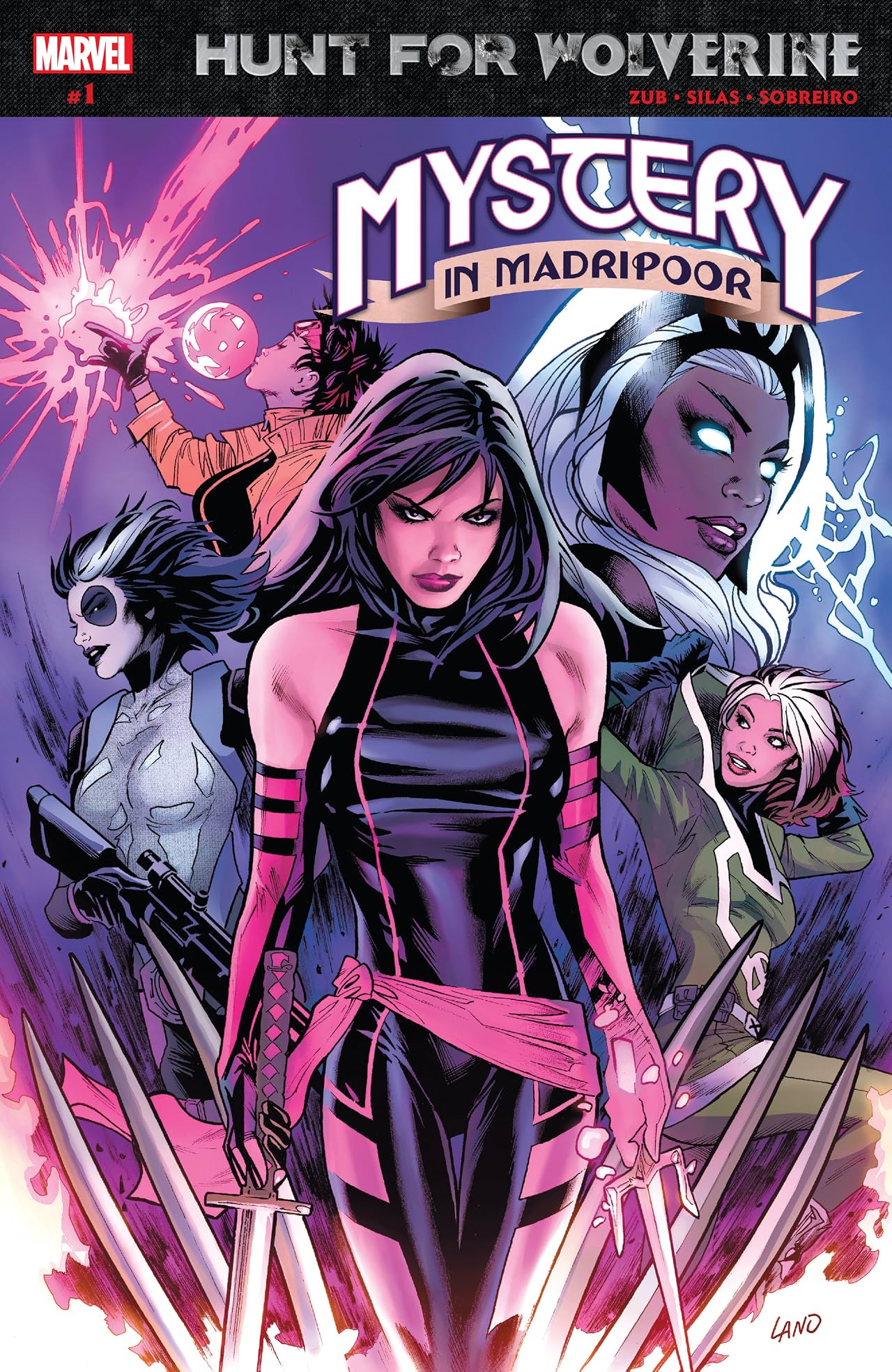
Hunting Party: Hunt For Wolverine: Mystery In Madripoor #1

The following is my review of Hunt For Wolverine: Mystery In Madripoor #1, which was posted on PopMatters.com.


In the same way there are some characters whose death will always stick to a significant degree, there are others for whom resurrection is pretty much assumed before the funeral even concludes. In the same way Uncle Ben's death has to stick for Spider-Man, the death of Wolverine can't possibly stick for the X-men. No matter how his death occurs, be it callous, tragic, or heartfelt, he's still one of the X-men's most popular characters. Him remaining dead is about as likely as Marvel and Disney growing tired of money.

While Charles Soule did a commendable job making Wolverine's death feel meaningful in Death of Wolverine, the X-men comics never try to function without him for too long, as evidenced by the continued presence of fill-in characters like Old Man Logan and Jimmy Hudson. The X-men need Wolverine just as much as Captain America needs his shield. He doesn't have the luxury of staying dead for over a decade like Jean Grey. At a time when time travelers and alternate reality versions of other characters are running around, the time for Wolverine's inevitable return has never been better.

To that end, it's only fitting that Soule set the stage for Wolverine's full return in the Hunt For Wolverine #1. However, that only acts as the start of a much larger story. Jim Zub and Thony Silas are set to build on that story with Hunt For Wolverine: Mystery In Madripoor #1. It's not enough to just get Wolverine out of his grave so his healing factor can do the rest. Given his colorful history, involving ninjas, clones, cyborgs, and living weapons, there's plenty of resources to work with.

Zub and Silas are targeted with those resources, specifically those involving Wolverine's time in Madripoor as bartender/operative/eye-patch enthusiast, Patch. It's a part of Wolverine's history that isn't as prominent as those involving adamantium bonding or blood feuds with Sabretooth, but it still reflects some important insights about the man and not just the claws. When he's not a raging, snarling death dealer, he's a man who has lived a more colorful life than most.

In that sense, it's somewhat fitting that those hoping to track him down after learning of his return are X-men with which he's had a close personal connection. The fact that those X-men all happen to be prominent female characters as well is a nice bonus and also revealing, in and of itself. It shows that when Wolverine isn't lusting after married women or on the wrong end of a love triangle, he's capable of forging close personal connections.

Kitty Pryde, Storm, Rogue, Psylocke, Domino, and Jubilee are among the most prominent personal connections that Wolverine has forged over the years. They are a dream team of sorts, one uniquely talented and motivated to find their friend and learn what happened to him. These are some of the most resourceful, resilient, and loyal friends that Logan has ever had. The fact he only ever got romantically involved with one of them, namely Storm, says a lot about his character.

This is a team that's capable of tearing Madripoor apart, digging deep into Wolverine's past to find out where he is. However, they don't get many opportunities to do so and not just because Magneto is currently a prominent presence in Madripoor, as has been documented in X-men Blue. They're still on the runway of the airport when they encounter who they think is Magneto and from there, this team of prominent female X-men are basically stuck reacting to everything from that point forward.

That makes the sequence of events in Hunt For Wolverine: Mystery In Madripoor #1 somewhat predictable. Whenever the X-men, or any superhero team for that matter, are stuck reacting to a situation, it tends to limit the impact of the story. Whether it's ninjas attacking, killer robots attacking, or Hydra agents suddenly entering the picture, it follows a similar script. The team walks into a trap, the fighting begins, and the situation becomes inherently more dire.

That narrative in Hunt For Wolverine: Mystery In Madripoor #1 follows that script fairly closely, but that's not to say there aren't dramatic elements that add a little complexity to the mix. Before that situation devolves, though, there are some quiet moments among Wolverine's closest friends. Storm, Kitty Pryde, Rogue, and Psylocke all have an opportunity to remember and reflect why Wolverine matters so much to them.

Granted, he can be a violent, cynical, beer-loving brute, but he can also be insightful and sincere. Those reflections help establish why these characters care so much about Wolverine in the first place and why they're willing to risk a messy trip to Madripoor to help him. That helps make Hunt For Wolverine: Mystery In Madripoor #1 feel less like a generic rescue mission and more like a team of loyal friends seeking to help someone they really care about. Superheroes rescue people all the time. This is personal and that's an important theme throughout Hunt For Wolverine, as a whole.

Those quiet moments among the all-female cast make for some engaging insights that establish the emotional stakes. However, it doesn't end up having much impact when the chaotic violence erupts, as is often expected in any story relating to both Wolverine and Madripoor. While the source of that chaotic violence also has a personal connection with Wolverine, there's not much insight into the how or why they get involved. Even though Wolverine has a list of enemies that'll always be longer than his list of friends, those enemies usually don't just attack for the fun of it.

It still moves the plot forward and puts the cast of female X-men into a difficult spot. It's not yet clear whether that spot will have any bearing on events unfolding in related Hunt For Wolverine titles, but the personal connections to Wolverine are still there and are on full display, at least for those trying to find him. Those connections just don't do much to complement the chaos that they inevitably encounter along the way. They just walk into a trap, get caught by surprise, and try to manage from there.

There's still plenty of room for more insights that further reveal the reach of Wolverine's impact. For such a prominent character with such prominent friends, there's more potential than most with respect to connections and conflict, especially in a place like Madripoor. Hunt For Wolverine: Mystery In Madripoor #1 does plenty to give Wolverine's closest female allies a chance to show their strength while helping a friend. For someone who claims to be the best there is at what he does, though, there's still room for improvement.

Final Score: 6 out of 10

Thursday, April 6, 2017

A (Badly Needed) Golden Touch: X-men Gold #1

The following is my review of X-men Gold #1, which was posted on PopMatters.com.


Every era of X-men is defined by an eclectic mix of situational quirks, new uniforms, and re-shuffled lineups. Sometimes the Xavier Mansion, or whatever base of operations the X-men happen to be operating out of at the time, blows up along the way. In any case, these eras usually have definitive traits that set them apart. More than any other franchise, the X-men find unique ways to make certain eras distinct.

The '70s had the All-New, All-Different lineup with fresh faces, new threats, and Chris Claremont's knack for creating over-powered, reality-warping threats. The '80s had X-Factor and Uncanny X-men, the original five X-men and an emerging generation of X-men that would one day make Hugh Jackman a super star. The '90s had the Jim Lee-inspired costumes, two main X-men teams, and an uncanny tendency to make any and all issues in the Marvel universe a mutant issue by default.

These generations stand out in their own unique way, some more than others thanks to iconic art, iconic stories, or whatever non-so-iconic gimmicks slipped through the cracks. By these standards, it's hard to assess the current generation of X-men comics because a great many of those not-so-iconic gimmicks came to define the series. From sterilization plots to a glut of time travelers, it's hard to define this era as all that iconic.

This is why X-men Gold #1 is so vital to current and future generations of X-men. Marc Guggenheim and Adrian Syaf have a golden opportunity, if that's not too loaded a word, to redefine the X-men for a new era, hopefully one that relies less on sterilization, time travelers, and clones. That opportunity never feels wasted as the story that unfolds forges multiple paths into a new era.

The X-men enter this era with a more tarnished reputation than usual. It's not enough that they're mutants, a loaded word that generates the kind of reaction usually reserved for internet trolls and spam email. They're mutants who recently went to war with the Inhumans and didn't exactly conduct themselves in a respectable manner.


They can blame Cyclops, Emma Frost, and fake news all they want. It doesn't change the fact that the X-men come into X-men Gold #1 as those mutants who have gone to war with two separate superhero teams already and didn't exactly come out looking like polished adamantium. That's not a good foundation for peace and understanding. At this point, the public is more inclined to give Victor Von Doom a chance than the X-men.

Kitty Pryde, the X-men's new leader and arbiter of this new era, goes out of her way to acknowledge this in the X-men's battle against Terrax. She rightly points out that if another superhero team had fought this battle, they would be getting smiles, cheers, and positive hashtags. Unfortunately, they're mutants. They're still associated with starting wars, screwing with timelines, and one too many clones. In a city that already deals with Spider-Man's clones, the public is right to be someone muted.

It's the most important feature to the story in X-men Gold #1, as well as the overall theme of the X-men comics moving forward. For years now, they've given the public way too many reasons not to trust them the same way they do other superhero teams. Beyond warring with other superhero teams, mutants are a constant source of chaotic. Regardless of whether or not they put on costumes and try to be superheroes, their powers and their conflicts are like the weather. Sometimes it can be a simple gust of wind. Sometimes it can be a full-blown hurricane.

It's one of those understated, but inescapable aspects about the X-men that sets them apart from other superhero teams. No matter how much good they try to do, the X-men are still mutants and mutants are a chaotic force of nature. People fear that chaos for the same reason that they fear hurricanes.

Guggenheim doesn't hide from this distinction that keeps the X-men from being adored like the Avengers, the Guardians of the Galaxy, or whatever other superhero team doesn't have its movie rights tied up by another studio. By acknowledging it, the new host of challenges the X-men face feel genuine.

X-men Gold #1 throws multiple challenges at the X-men from the get-go. Some are of the personal kind. Some are of the kind that require Kitty Pryde to phase a collapsing building through another. The mix of personal issues and public spectacles is very much the gold standard, so to speak, of what gives the X-men their appeal. After so much of their stories have been mired by extinction and sterilization plots, it's a welcome reprieve.


While the themes are refreshing for any jaded X-men fan, the structure of the story is somewhat choppy. The narrative jumps around from moment to moment, rushing through various scenes without taking the time to tie them together in a cohesive way. This makes the story feel rushed. There are many moments, especially the personal moments for Kitty Pryde, that don't get as much depth as they need. It makes X-men Gold #1 feel like one of those comics that needs to be at least 10 pages longer to really work.

Despite the inconsistencies in the story's progression, it's still a satisfying story that offers overdue promise to cast of characters that badly needs it. There's no more fending off extinction, avoiding poison gas clouds, or getting mixed up with one too many cosmic forces. This is just the X-men fighting for peace and understanding in a world that has plenty of legitimate reasons not to give them another chance.

It's the same fight that Charles Xavier led the X-men into back in the days before civil rights was more than just a hashtag. Kitty Pryde and her revamped, revitalized team of X-men, one of which is her ex-boyfriend, carry on that fight in X-men Gold #1 after one too many interludes. It gives hope that the X-men are back to doing what they do best, provided nobody gets sterilized again.

Final Score: 7 out of 10

Thursday, March 30, 2017

Priming A New Future: X-men Prime #1

The following is my review of X-men Prime #1, which was posted on PopMatters.com.


Victory in every conflict comes at a price, but sometimes the price is secondary to the situation. For the X-men, the situation tends to be convoluted in detail, but simple in substance. Either they achieve victory or they go extinct. There's very little gray area in between. Those are the stakes that play out in Inhumans vs. X-men. Those are the stakes that drive the X-men's overall narrative as a series.

Now, with the conclusion of Inhumans vs. X-men, the situation is ready to evolve. The X-men once again have a chance to do more than just fight for their right to exist, which has been at the heart of nearly every major conflict since House of M. It's a chance they can't afford to squander. Stories involving sterilization and extinction are rapidly losing their ability to generate dramatic weight. More than any other ongoing series, the X-men need a new conflict with new stakes.

That's exactly what X-men Prime #1 sets out to do. Under the pen of Marc Guggenheim, Greg Pak, and Cullen Bunn, and a couple other top-tier artists, the X-men's story finally moves forward from yet another extinction/sterilization plot. It is, effectively, a bridge from one era to another. It helps settle the dust of one conflict while preparing the X-men for another.

The conflict itself is still secondary compared to the situation. Compared to the X-men's situation after Secret Wars, it doesn't take much to improve their predicament. In essence, this is one situation where over-achievement is necessary to elicit the necessary impact. It's a challenge and not just because impacting the X-men usually requires killer robots. He is tasked with essentially molding a new situation for the X-men to navigate. What he ends up crafting is as polished as it is compelling.

There are no killer robots. There are no poison gas clouds, time-traveling assassins, or clone army. X-men Prime #1 isn't structured for those kinds of fireworks. It's very much an epilogue and a prelude for the X-men as a whole. It unfolds primarily through the eyes of Kitty Pryde, who was lucky enough to have avoided the whole sterilization/poison gas cloud/war with the Inhumans. In many respects, that makes her uniquely qualified to take in this new status quo.


Kitty, having spent much of her time guarding the galaxy with her ex-fiance and a talking raccoon, returns to the world of X-men that wants to change. From Storm to the time-displaced X-men, Guggenheim, Pak, and Bunn create this prevailing sentiment that the way they're doing things has to change. Their current way put them at war with the Inhumans and forced them to live in a demon-infested realm. With or without mutant powers, any system that puts anyone into close proximity with demons is definitely a system in need of revision.

This makes for some very personal moments between Kitty Pryde and several characters who have been deeply affected by recent events, some of which don't even involve demons. Most of those moments involve Storm, who presents herself as a relic of the old system, in a sense.

She accepts responsibility for the decisions that led to the X-men's war with the Inhumans. She makes clear and gives some fairly understandable reasons why she doesn't feel inclined to lead anymore. Again, the X-men ended up living in a demon-infested realm under her leadership. She realizes on some levels that there's room for improvement.

Not every moment is as personal, though. Kitty does get a chance to meet up with Colossus, which is understandably awkward, but promptly avoided. She also gets a chance to meet up with the time-displaced X-men, albeit indirectly. These moments aren't quite as dramatic, but they do serve a purpose in that they show how portions of the X-men are going in different directions. Kitty can only do so much to influence them, but she's in a position to do more for the X-men than most. At this point, any direction that doesn't involve close proximity to demons counts as an upgrade.

X-men Prime #1 doesn't just succeed in using these personal moments with Kitty to move the X-men forward. It succeeds in making it feel dramatic and sincere. Being able to do this without killer robots or sterilization plots counts as an accomplishment these days. Through Kitty Pryde, he's able to convey a sense of hope and determination, two of the most important elements in any era of X-men.


As good as these moments are, there are a few that don't feel quite as dramatic. Kitty's interaction with Colossus is relatively minor and doesn't get too personal. A side-plot involving Lady Deathstrike and Weapon X feels disconnected and unnecessary to the overall story. While the moment with the time-displaced X-men offers a nice twist, it doesn't have many specifics. Some elements are left a bit vague, but it never feels too convoluted. In a series with clones and time-displaced characters, that still counts for something.

In terms of setting the stage for a new era of X-men, X-men Prime #1 checks nearly every box. Guggenheim, Pak, and Bunn establish a direction for the team. He takes the X-men out of the demon-infested and into a more promising situation. Considering how grim and dire the X-men's condition has been since the conclusion of Secret Wars, it's downright refreshing.

Sure, there are bound to be more attacks by killer robots. Sure, it's very likely that more clones and time travelers will enter the mix and frustrate the X-men. Like Wolverine and beer, certain elements are inescapably linked. The challenge is making the narrative behind these links compelling. In that sense, X-men Prime #1 rises to the challenge. For now, there's hope for the world of the X-men and, provided nobody ends up sterilized, that hope holds a great deal of promise and potential.

Final Score: 8 out of 10

Thursday, March 23, 2017

Capping Off A (Somewhat) Extraordinary Journey: Extraordinary X-men #20

The following is my review of Extraordinary X-men #20, which was posted on PopMatters.com.


For certain eras, there are characters who become symbolic of the conflicts. Sometimes they are the catalyst for the conflict. Sometimes they are the reaction to it. In either case, these characters embody a certain mentality and perspective of a period in time. When the history is written about the post-Secret Wars, pre-Inhumans vs. X-men era of the X-men comics, no one character will be singled out as the sole symbol of the conflict. However, Storm and the time-displaced Jean Grey are likely  in the top five.

When Extraordinary X-men began under Jeff Lemire, Storm went out of her way to identify Jean Grey as the heart of the X-men. That alone says a lot about the state of the X-men, singling out a time-displaced version of a character that has been dead for over a decade. Oddly enough, it's entirely warranted. Jean Grey is very much an embodiment of the X-men's highest ideals, if only because time travel allows her to skip the many eras of setbacks, retcons, and evil clones.

When the story of Extraordinary X-men begins, both Storm and Jean Grey are reluctant, if not downright hostile, to the idea that they're now the greatest hope for the X-men. Jean is a time-displaced teenager. She has enough on her plate as it stands and not just because of acne. Storm is a reluctant leader who ended up in her role because the world believed, thanks to Emma Frost, that Cyclops is the worst thing to happen to the world since poor wi-fi.

Then, as Extraordinary X-men progresses, they both settle into their roles. They confront the challenges that come with being an inspiration for every generation of X-men. Now, in wake of Inhumans vs. X-men, Storm, Jean Grey, and the rest of their teammates faces a whole new challenge and a whole new era for the X-men as a whole.


Extraordinary X-men #20 acts as a bridge between these eras. The Inhumans/X-men war is over. The entire mutant race doesn't need to hide in a demon-infested realm anymore. Naturally, most in X-Haven are eager to leave for a home where killer robots are more likely than demon attacks. For Storm, however, there's a lingering sense of uncertainty that bothers her. Having lived in a demon realm, being bothered by anything is quite an accomplishment.

It's through Storm's point of view that the uncertainty unfolds. It's through a time-displaced Jean Grey that the X-men confront it. In many ways, it's fitting that that these two characters are the ones tasked with tying up the loose ends of Extraordinary X-men. They are still the main catalyst for the story. They bore most of the burdens throughout the series. Lemire acknowledges the extent of those burdens. However, the story itself doesn't do much to give them greater weight.

The primary plot in Extraordinary X-men #20 actually deals with some unresolved aftermath from Inhumans vs. X-men. In a sense, Lemire addresses a practical issues regarding Emma Frost's hidden agenda, which most of the X-men only recently uncovered. In world where magic and time travel are often used to cover plot holes, this is somewhat refreshing.

It also makes use of some lingering side-plots that have fallen to the wayside in Extraordinary X-men, namely those involving Cerebra and No Girl. Again, these are usually the kinds of side-plots that are first to get overlooked. Lemire's efforts to address them give the story an attention to detail that the X-men comics have lacked, due largely to the constant doom and gloom caused by other characters whose movie rights aren't owned by a rival studio.

Between Jean's efforts and Storm's inner musings, the story in Extraordinary X-men #20 helps make this transition from one era of X-men comics to another feel personal. It tries to do more than just shove the X-men into the next extinction-level plot. It tries to step back and take in the situation. In some respects, they don't step back far enough because they end up fighting killer robots. However, compared to demons, Inhumans, and sterilization, it still counts as an improvement of sorts.

It still makes for a very simple, very basic kind of story. The X-men fighting a host of killer robots, be they Sentinels or discarded Sentinel prototypes, is as classic a plot as any extinction story. This one isn't all that memorable or epic, nor does it try to be. However, it's not the kind of battle that is there just to give the X-men something to blow up. There is a purpose do it. It's a minor purpose, but a purpose none-the-less.

The battle in Extraordinary X-men #20 may be somewhat forgettable, but it doesn't change the underlying situation facing the X-men. They don't have to hide in a demon realm anymore. They're not facing imminent extinction anymore. Given how rare these moments are for the X-men these days, it's an important situation to take in. Storm offers the perspective. Jean Grey offers the catalyst. In the grand scheme of things, it uses all the right ingredients, even if there's not enough of them to make a cake.


What makes the outcome of Extraordinary X-men #20 most satisfying is that, while it does attempt to tie up loose ends, it tries to give the series closure without dropping one too many ominous hints about the next extinction plot the X-men will face. Lemire makes a genuine effort to end the series on an upbeat note. For a series that began with off-panel deaths, sterilization, mutant-hunting death squads, that's quite an undertaking.

Taken as a whole, the end of Extraordinary X-men #20 doesn't give the sense of a complete, satisfying journey. Given the exceedingly bleak circumstances of its beginning, it's hard to go from one extreme to another. To go from the brink of extinction to a friendly baseball game is a journey that requires a lot more than 20 issues and a crossover event. Even if details are lacking, the primary spirit of the X-men narrative is still there. The fact that a series like Extraordinary X-men can end in a friendly baseball game is a testament to the strength of that spirit.

Final Score: 7 out of 10

Thursday, March 9, 2017

A (Not So) Bittersweet End: Inhumans vs. X-men #6

The following is my review of Inhumans vs. X-men #6, which was posted on PopMatters.com.


Most epic battles are epic because of the skirmishes that led up to it. Ideally, the tension grows and the stakes rise to set up a final showdown wherein both sides think they're Mario and neither side believes they're Bowser. This is what makes battles like Batman vs. Joker, Superman vs. Doomsday, and Deadpool vs. Short-Sighted Fox Producers so meaningful. It's also why the final showdown in Inhumans vs. X-men has everything working against it.

In the case of this latest clash between two superhero teams, the skirmishes are forgettable and the stakes as unbalanced as fight between Juggernaut and a sick puppy. From the events leading up to it, to the tie-in issues that try to add badly-needed depth, Inhumans vs. X-men fights an uphill battle that may as well be upside down. It tries to be epic. It tries to be balanced. It just doesn't have the style, substance, or setup to make it work. To be epic, at this point, would require Onslaught-level power and/or a deal with Mephisto.

Charles Soule and Jeff Lemire may not be willing to call Mephisto, but they still try to make the most of what they've got to work with, which isn't much. Through five issues, the tension is there. The drama is there. There's a genuine effort to mold the conflict into something that feels balanced on both sides.

With Inhumans vs. X-men #6, the proverbial shot clock is running out. The drama, tension, and every other concept that's lacking has to pay off. However, that payoff never arrives in full. It's not a total bust, but it doesn't feel like a worth-while investment either. It's an investment that the Tony Starks and Warren Buffetts of the world would never make in the first place, but it's not one of those investments that bankrupts either side.

The most that can be said about Inhumans vs. X-men #6 is that it ends the conflict. It ends in a way that doesn't make either side looks good. In fact, both sides come off as woefully inept. There are any number of opportunities to avoid or mitigate the conflict. These opportunities are either ignored, glossed over, or fumbled with comic ineptitude. It's an inherent flaw that has plagued the X-men/Inhuman conflict since before the event started and the final showdown that unfolds in this issue does little to resolve that.


That's not to say the conflict is completely without drama. Lemire and Soule do make a concerted effort to make Inhumans vs. X-men #6 feel personal for the characters. This is most apparent with Emma Frost and Medusa. These two characters are, arguably, the primary driving force of the conflict. What they do and the decisions they make help give the struggle the depth it needs to feel like more than just another superhero clash. At a time when superheroes are more likely to fight each other than aliens, killer robots, or Thanos, that's very important.

Medusa vs. Emma Frost doesn't have the same epic undertones elicited by Batman vs. Superman, Captain America vs. Iron Man, or even Wolverine vs. anybody who steals his beer. However, it still feels very personal. Emma Frost makes it personal. She blames the entire Inhuman race for killing Cyclops. She takes it upon herself to exact the kind of vengeance usually reserved for Wolverine. There's no doubting her dedication. At the same time, however, there's no denying the inherent flaw this creates.

In the end, it's also Emma Frost who makes the conflict feel so forced. The main driving force of the Inhuman/mutant clash is supposed to be the Terrigen Mists, which is poisoning mutants all over the world. That issue gets resolved with a level of ease that feels downright inane and not just because Moon Girl succeeds where Beast, Forge, and every genius mind in New Attilan fail. It ends up feeling like a secondary concern, a formality has to happen before Emma Frost can fight Medusa.

By making the Terrigen Mists so trivial, it underscores everything motivating the X-men in this conflict. On top of that, they don't even get to make the decision that eliminates the threat of the mists once and for all. The Inhumans are the ones that do that. As soon as Medusa finds out that the mists will make the world uninhabitable to mutants, she doesn't even hesitate. She jumps at the chance to remove the mists from the atmosphere.

There's no argument with Storm. There's no fight with Emma Frost. Old Man Logan doesn't even need to insult her. She just learns something that the X-men could've easily told her in a simple text message and does the right thing. It makes the entire Inhuman/mutant conflict seem hallow. The fact that all anyone had to do was tell Medusa that the mists were about to exterminate an entire species makes every struggle in Inhumans vs. X-men #6, personal or otherwise, seem unnecessary.


In the grand scheme of things, neither the Inhumans nor the X-men come off as winners in Inhumans vs. X-men. They don't come off as losers either. The X-men do achieve their goal. The Terrigen Mists are gone. Mutants no longer have to worry about being gassed to death. They don't even need the Scarlet Witch to lose her mind again or cast some fancy spell to make it happen. That means they don't have to live in demon realms anymore for their own safety.

The Inhumans don't come off as losers either. Thanks to Medusa's hard choices, they come off as heroic and understanding. They make a sacrifice to prevent genocide. It does come at a cost, but New Attilan is still intact. No Inhumans died or suffered horribly. There's nothing stopping them from thriving again, albeit under different circumstances. Compared to being gassed to death, those circumstances aren't too bad. In that sense, it's still abundantly clear which side has its movie rights owned by Disney and which side does not.

With respect to creating a meaningful superhero clash, Lemire and Soule just don't have the ingredients to make Inhumans vs. X-men as epic as others before it. The circumstances, drama, and character motivations just aren't there. They are still able to make the most of it. Some of the flaws are inescapable. Others are just ignored. In the end, the resolution just can't be as epic as it needs to be. No amount of psychic manipulation from Emma Frost can change that.

Final Score: 5 out of 10

Friday, January 27, 2017

Underwhelmingly Misguided Underdogs: Inhumans vs. X-men #3

The following is my review of Inhumans vs. X-men #3, which was posted on PopMatters.com.


In sports, people love cheering for the underdog. In nearly every major sports movie, this underdog spirit is as common as the elaborate training montage that everyone since Rocky Balboa tries to emulate. It's not that hard to set up an underdog in a fight. They usually face harsh, unforgiving circumstances that puts them at a clear disadvantage. Having them overcome these disadvantages is a powerful narrative that often plays out in superhero comics as well, including those that involve superheroes end up fighting each other.

With Inhumans vs. X-men, it's not quite as easy for one side of the conflict. One side is fighting to prevent an entire species from suffering a horrible, painful death. The other is fighting to protect the big green cloud that is spreading this death. It's easy to make the former the underdog, as this is the position they've been in many times since their inception. For the latter, however, it's akin to making Emma Frost seem modest.

The circumstances of Inhumans vs. X-men are exceedingly unbalanced and have played out as such since before the conflict began. The clock is now ticking for the X-men. If they don't do something about the Inhumans' sacred cloud, every mutant on the planet will die a terrible death. If the Inhumans were agents of Hydra or just some ordinary villains who got tired of using killer robots, this doesn't even need to be an underdog story. It can just be a typical X-men story.

Unfortunately, the other side's movie rights aren't owned by Fox and Marvel has a vested interest in making them underdogs. Inhumans vs. X-men #3 tries to accomplish this as the conflict reaches a critical turning point. It doesn't fail miserably, but it certainly doesn't succeed either. The plot moves forward. The conflict gains new complications. From a narrative standpoint, however, that's about all this issue accomplishes.

Charles Soule and Jeff Lemire already have an impossible task on their hands. They're attempting to tell a story about a conflict where one side is fighting for survival and one side is fighting to preserve their current situation. This isn't a passionate disagreement on the merits of proactive justice. This is one side trying to survive while one tries to preserve the status quo. There's simply no way for that conflict to carry the same drama as Civil War, Avengers vs. X-men, or even the infamous Clone Saga.


With Inhumans vs. X-men #3, though, the story avoids any effort at creating meaningful drama around the conflict. There seems to be this unspoken acceptance that such drama is impossible. That may be a byproduct of the messy circumstances surrounding the story, but it doesn't change the outcome. There's no emotional weight to give impact of the story. It tries to roar like the Hulk, but hits with the intensity of a feather duster.

The action won't get anyone's heart racing. It won't get anyone to stand up and cheer for one side over the other. The only thing Inhumans vs. X-men #3 accomplishes is moving the plot forward. Even in this context, however, that progress is limited because it requires the story to ignore many of those messy circumstances surrounding the conflict.

At this stage, the Inhuman royal family is down for the count. The X-men have them contained in Limbo, thereby giving them the time they need to destroy the Terrigen Mist that's poisoning their species. Them having the advantage and the most to lose creates this strange situation where seeing the younger Inhumans rally against them doesn't generate the sentiment that most would associate with underdogs. There's no iconic training montage or Captain America speech to inspire them. They just call up some of their allies on a cell phone and go from there.

That's really the extent of the Inhumans' recourse. With the royal family neutralized, they turn to the other younger Inhumans like Ms. Marvel, Moon Girl, and Quake for help. There's no depth or drama to enlisting them. They literally just call them up, they acknowledge the situation, and they start making preparations. They put as much effort into crafting a counter-strike as most people put into ordering a pizza. They call each other up and just like that, they're a team ready to strike back against the X-men.

In addition to this being extremely bland, there's no effort on the part of the younger Inhumans to understand the conflict. They just see that the X-men attacked New Attilan and that's it. There's no heated debate on what to do, how to do it, or even why they're doing it in the first place. They react the same way they would if Hydra attacked New Attilan and that just compounds the underlying problem with the Inhumans vs. X-men conflict.


There's no getting around the implications. These young, inexperienced Inhumans are not just fighting the X-men, some of which are close friends with characters like Ms. Marvel. They're fighting against a desperate group of people trying to save their species from extinction. If the young Inhumans succeed, that means that countless innocent mutants suffer and die. If they fail and the X-men succeed, then no one dies. The Inhumans will face some difficult new challenges, but again, it wouldn't require that anyone die. There's just no way to be underdogs in that situation.

If there is an effort on the part of Soule and Lemire in Inhumans vs. X-men #3, it falls short by a wide margin. That's not to say there isn't substance within the story. It does succeed in adding new complications to both sides. The Inhumans do manage to hinder the X-men's efforts to destroy the Terrigen Mist and are able to buy time for their side to recover from the initial attack. Again, unless someone is a die-hard Inhuman fan, it's hard to root for them.

The Inhumans still try to carry themselves as though they're the underdogs and have just taken a few devastating punches to the jaw. On the surface, and only on the surface, it works just enough to keep the sequence of events going. Dig just a little bit deeper and the unpleasant truth is still there. The Inhumans are still trying to stop another species from saving itself. If the most they have to lose is not being able to create new Inhumans in a way that murders innocent mutants, then they can't be underdogs. Carrying themselves as such is just dishonest, misguided, and downright insipid.

Final Score: 4 out of 10

Thursday, December 15, 2016

First Shots and Fatal Flaws: Inhumans vs. X-men #1

The following is my review of Inhumans vs. X-men #1, which was posted on PopMatters.com.


What does it take for a clash between two superhero teams to be interesting these days? That's an increasingly relevant question because modern comics, as well as the movies they inspire, have gotten to a point where heroes fight each other more often than they fight actual villains. It seems an entire generation of comic book fans and creators have read Mark Millar's Civil War and desperately want to recreate that success, much to Mr. Millar's chagrin.

Those efforts, and the desperation behind them, don't often yield results. In fact, in the decade since Civil War, it seems as though that one stunning success was lightning in a bottle and trying to capture it again is like keep up with a race between Flash and Quicksilver. It's a losing battle, but one that still inspires more superhero clashes.

Avengers vs. X-men went to great lengths to match the scope of Civil War, leading to mixed results at best. Inhumans vs. X-men, the latest attempt to make heroes fighting heroes compelling once more, can't go to those lengths or match that scope. In some ways, this is a good thing because it means that Charles Soule and Jeff Lemire, the writers who have been developing the Inhumans and X-men respectively, can't follow the same formula.

The ingredients this time are very different. This is not about proactive justice or superhero legislation. Inhumans vs. X-men is set up with the simplest of circumstances. One team's very existence threatens to destroy another. Now, it's no longer possible for both teams to occupy the same world and not just because of clashes involving movie rights. This clash finally manifests in Inhumans vs. X-men #1 and while there's a lot of plotting, there isn't much drama or impact. Mark Millar can probably sleep easy for now.

The story doesn't hit the ground running. It doesn't drag either. Lemire and Soule are very careful, if not too careful, to set up the internal politics guiding the X-men. Unlike the Inhumans royal family, they must deal with the grim prospect of either going to war, leaving the planet, or being gassed to death. The most the Inhumans have to worry about is being mildly inconvenienced by the prospect that they'll be responsible for purging the whole planet of mutants. That may upset those who work at Sentinel factories, the stakes for them aren't quite as high.


This is the inherent flaw of the underlying conflict in Inhumans vs. X-men and this flaw has plagued every story leading up to this one to some extent. The conflict tries to frame the situation as balanced. For one side, the Terrigen Mist is life. For the other, the mist is death. In principle, it makes for a balanced conflict. In practice, however, it highlights a disparity that undermines any drama this conflict tries to inspire.

This is where the mentality of Inhumans vs. X-men clashes with the actual mechanics of the conflict. Beast makes it clear to his fellow X-men that the mutant will die if they stay remain on a planet where the Terrigen Mist roams unencumbered. It's not a matter of preserving their culture or their way of life. It's a matter of avoiding a horrible, painful death and the extinction of an entire species.

For the Inhumans, the particulars of the conflict can't be less similar. They're not facing extinction. They're not facing the death of their people. At most, they're facing a major inconvenience in that the future of their species will face uncertainty. However, uncertainty is a far cry from dying a horrible death at the hands of a poison cloud. Given that there are mutants like Magneto, who have direct experience with the horrors of a minority being gassed to death, it ensures this conflict remains utterly unbalanced.

Now that's not to say that the Inhumans make no effort to aid the X-men. They do show that when they detect a mutant in the path of the Terrigen Mist, they will go out of their way to get that mutant to safety. The X-men even use this policy against them in instigating the conflict. However, their unwillingness to let anyone taint this cloud that is bringing so much death to a minority that has subject to one too many Sentinel attacks still makes the conflict feel unbalanced.

To their credit, Jeff Lemire and Charles Soule still make an effort to navigate the conflict in a way that demonstrates a certain level of substance. Leinil Yu's art skills also add a distinct style as well. They highlight the high emotions of certain characters, especially Emma Frost and Beast. It gives the sense that Inhumans Vs. X-men #1 is a seamless extension from the story that has been unfolding since Death of X.

Along with these emotions, there's a distinct attention to detail that other superhero clashes like Avengers vs. X-men lacked. There isn't just some elaborate rallying cry ripped from the Braveheart movie. The X-men don't just blindly attack the Inhumans. They actually employ some strategy, which is kind of important in any conflict that is likely to involve explosions. They single out powerful Inhumans like Black Bolt and Karnak. They find ways to neutralize them. There's no magic to it. There are no cosmic forces disrupting the story. It actually feels like a substantive conflict.


Inhumans vs. X-men #1 has all the basics of a superhero clash. It even has a few refinements here and there. However, it doesn't have enough to make the conflict feel balanced. The biggest flaw in the story has to do with the larger circumstances surrounding it. In following this story, it's still painfully obvious which franchise's movie rights aren't wholly owned by Marvel and Disney. This limits the impact. Nobody's heart will be racing here because it's too obvious which side has the most to gain.

Some flaws are inescapable. Whether or not these flaws will undermine the conflict remains to be seen. Lemire and Soule have an uphill battle ahead of them and they may only be able to go so far up that hill. At the end of the day, the conflict between the Inhumans and the X-men still comes off as uneven and petty. At the very least, it also means that Mark Millar's title as the last writer to craft a decent superhero clash is safe for now.

Final Score: 6 out of 10

Thursday, December 1, 2016

Setting Up An Ominous (And Overdue) Conflict: Inhumans vs. X-men #0

The following is my review of Inhumans vs. X-men #0, which was posted on PopMatters.com.


Some epic struggles need no setup or backstory. If the story involves a knight and a dragon, then it's usually fairly clear who must be slayed and who is doing the slaying. There is certainly a need to establish the setting for such a struggle. Sometimes that setting is as big a part of the story as the proverbial dragon-slaying. When it comes to the X-men and the Inhumans, the setting for a conflict is basically a formality at this point.

This is a setup that doesn't need to be belabored. The events of Death of X, as well as the various events that unfolded in the pages of Extraordinary X-men and Uncanny X-men, make it abundantly clear that these two teams are going to try and kill each other at some point. It's just a matter of when, where, in what circumstances, and how unbalanced it's going to be.

Since the conclusion of Secret Wars, the tension between the X-men and Inhumans is anything but balanced. Once side has the benefit of movie rights and an ongoing TV show. The other side's movie rights are being held hostage by a rival company who managed to help Josh Trank ruin his directing career. Logistically speaking, there's no way this conflict can ever be balanced.

Jeff Lemire and Charles Soule have an impossible task with the Inhumans vs. X-men event. With Inhumans vs. X-men #0, they can at least put the pieces in place on the proverbial chessboard. The first shot isn't fired. The first ultimatum isn't issued. Nobody from the X-men or Inhumans even starts trash talking one another on social media. However, the story makes clear that these two teams are on a collision course and Emma Frost has her foot on the gas petal.

In essence, Inhumans vs. X-men #0 is both a setup issue for a larger conflict and an Emma Frost story. It acts as a continuation of the events that unfolded in Death of X. In wake of Cyclops' death, she is the one who carries on the fight that he began. However, this is not one of those conflicts where a few extra hours in the Danger Room and a few team-ups with Deadpool can will equip the X-men for the coming battle.


Emma Frost doesn't try to be Cyclops in this story. She's going to fight his battles, but she's going to do it her way. That means using her wit, her cunning, and her willingness to do immoral things for moral reasons. It's what makes her the White Queen. It's what makes her a dangerous enemy and a questionable ally. Most importantly, though, it helps add some level of balance to the coming conflict.

It's still not balanced by any objective measure, but Emma Frost navigates this narrative in a manner that makes clear this won't be a simple shouting match between Storm and Medusa. This won't be a battle that Black Bolt can end just by whispering either. She gathers allies, makes deals with shady characters, and even trains herself to be ready in case her cunning and deceit just isn't enough. In the grand scheme of things, Emma Frost is the only one in the X-men who is actually prepared for a battle with the Inhumans.

Her story in Inhumans vs. X-men #0 carries the bulk of the dramatic weight and provides most of the substance. The role of the other characters involved, however, aren't quite as engaging. If anything, they reinforce the ongoing imbalance between the X-men and the Inhumans. It gives the ominous impression that one side still has way too many advantages for this to be a fair fight.

Throughout the narrative, the Inhumans carry themselves with an aura of selfish arrogance. They seem less concerned about helping an entire population of innocent mutants and more concerned about the possibility that they might have to fight a larger war with the X-men. They give the impression that they're more worried about being inconvenienced than saving lives. Even without the inherent imbalance between the two sides, it's hard to root for the Inhumans, given how they conduct themselves.

That's not to say the X-men are any easier to root for. Other than Emma Frost, Beast plays a major role in setting up the conflict, albeit indirectly. He's the only other character besides Emma who contributes to the drama, but his story is far less effective. His efforts to work with the Inhumans to resolve this conflict without violence are entirely noble in terms of intentions. Those intentions, however, clash with the unforgiving imbalance between the two sides. He's not the only one realizes that either.


Medusa, the current ruler of the Inhumans, goes so far as to adopt some of Emma Frost's tactics. She also understands that a conflict between the Inhumans and X-men is inevitable and that concerns her far more than any suffering the Terrigen Mists are inflicting. Even if her intentions are ethically suspect, her understanding of the situation is every bit as pragmatic as Emma's. Whether or not she can be as cunning as the former White Queen remains to be seen, but it definitely adds some intrigue to the coming conflict.

Inhumans vs. X-men #0 does succeed, albeit in a limited capacity, in creating some compelling stakes for the coming conflict. Both sides are preparing. Neither side wants to be caught off-guard. However, the issues that manifested in Death of X remain.

There are still inconsistencies between the events surrounding this conflict and the events that have unfolded in other X-books since Secret Wars. The strange and unwarranted hatred of Cyclops that seemed to fuel the X-men's narrative remains unexplained, which makes the conflict and the setup surrounding it feel incomplete and lacking in context.

In addition, characters not named Emma Frost do little to stand out. As a result, the impact of Inhumans vs. X-men #0 doesn't offer anything novel or groundbreaking. It just reinforces the inevitability and imbalance of a clash between the X-men and the Inhumans. One is poised to thrive. One is poised to die. One has Marvel's unconditional support with movie rights. One remains stuck under the thumb of Rupert Murdoch. At this point, it a sentiment that need not be reinforced.

Final Score: 6 out of 10

Wednesday, October 26, 2016

The Problem With Inhumans vs. X-men (via ComicsVerse)

The following is an article I wrote for ComicsVerse. Just thought I'd share it here. Enjoy!


Did you hear? Marvel is pitching another hero-versus-hero event for this winter. Again.

We shouldn’t be too surprised. Ever since 2005, when the first CIVIL WAR sold like tacos at a Deadpool convention, this has been the go-to story for big Marvel events. It’s not enough to see Captain America punch the Red Skull in the jaw anymore. We need to see him knock Tony Stark’s teeth out. It may be overplayed, but it sells and we can’t blame Marvel for giving the people what they want.

There’s just one big problem with this upcoming event: It involves the X-Men and the Inhumans. On paper, this looks like a diet version of AVENGERS VS. X-MEN, but people still drink Diet Coke and tolerate the taste. If it can pit another couple of superhero teams together and get the message boards going, then why wouldn’t it be a good idea? It’s working with CIVIL WAR II. So, what’s the problem?


To illustrate this issue, here’s a little thought experiment. Go back and watch the first BACK TO THE FUTURE movie. Specifically, watch the scene in the diner where Marty McFly has to fight off Biff Tanner. Now, imagine for a second that Biff Tanner is given a shot of steroids, a fully-loaded AK-47, and an unlimited supply of crystal meth. That should give you a good idea of the problem with an X-Men vs. Inhumans conflict.

To their credit, Marvel is making a concerted effort to set up this clash. Since the nebulous eight-month gap that followed SECRET WARS and the excessive flexibility it allows, they’ve set up a status quo where mutants have been sterilized yet again after having just solved their last sterilization plot three years ago. This time, they have the Inhumans to thank for this. It turns out that the big green cloud that turns people into Inhumans also poisons mutants.

For some reason, Cyclops has a problem with this. Given how the solution to the last sterilization crisis landed him in jail, who can blame him? Naturally, he fights the Inhumans in an off-panel conflict and somehow screws up so badly that mutants are more hated than head lice, cockroaches, and the IRS combined.

The Inhumans, on the other hand, are celebrated and subject to zero Sentinel attacks, despite having their base near a heavily populated area. By all accounts, the X-Men have a long list of reasons to go to war with the Inhumans. At the top of the list: the fact that their sacred cloud is roaming the Earth, killing and sterilizing mutants everywhere, and they aren’t doing much about it. The only surprise is that it took this long for Marvel to make an event of it.

Despite these efforts, the problem remains. There’s a fundamental difference between mutants and Inhumans from a conceptual standpoint. Those differences make it impossible, if not downright asinine, for this to be a balanced conflict. It goes back to what mutants stand for. They are, and always have been, a metaphor for minority struggles. They came about in the early 1960s, just as the Civil Rights Movement was taking hold in America. They embody the traits of the marginalized, the denigrated, and the persecuted.

That’s still a powerful message today. There are outgroups and outcasts in every era. They didn’t ask to be born in their current condition. This is just the hand they were dealt. In the same way that we can’t change the color of our skin or the gender we’re attracted to, mutants and minorities like them can’t change what they are.

Compare that to the Inhumans. They are, by their own admission, not a product of nature or evolution. They’re a product of alien science experiments. That alone doesn’t set them apart too much. However, like the disclaimer in every pharmaceutical ad, it’s the fine print that makes the details so frustrating. From a mutant perspective, and a minority perspective for that matter, these details are an affront to the struggles they endure.

It’s not enough for someone to be born with Inhuman DNA. In order for them to become what they are, they have to be exposed to a very specific catalyst. In this case, it’s the Terrigen Mists. This isn’t some unseen, unpredictable force. It’s big green cloud. It’s tangible, it’s predictable, and it sweeps through an area like fog. It does nothing other than activate latent Inhumans. It’s a convenient, if not crass, way to gain superpowers. It also makes the theme of the Inhumans the complete antithesis of mutants.


As I previously stated, mutants are a metaphor for minorities. They are born this way. Just being alive is what makes them mutants. With the Inhumans, it takes an outside force to make them what they are. As a real-world parallel, that’s like saying that it takes a specific form of trauma to make somebody gay or it takes a specific kind of mental illness to make someone transgender. These are the arguments that anti-gay protesters have been using for decades. The Pat Robertsons and Rick Santorums of the world say that nobody is born this way. They say these people have a disease that must be cured.

A mutant doesn’t have control over how and when their powers manifest. For most of them, it just means surviving until puberty. An Inhuman, on the other hand, does have some level of control. Even if they don’t know whether they carry Inhuman DNA, they can just avoid the Terrigen Mists and not take a chance. This ensures they never manifest any Inhuman powers. If a parent doesn’t want their child to become an Inhuman, they can just hide them or take them to a place where the Terrigen Mists can’t get them. The parents of mutant children don’t have that luxury. It’s completely antithetical to what it means to be a minority. It’s not something that can be avoided.

The Inhumans, as a concept, are an affront to the themes of the X-Men. Despite their differences, though, the two teams could still share certain struggles. Their powers and their ability to control them makes them different. There’s still some chance that they can relate on some levels. Unfortunately, that chance passed them by long ago.

Whereas mutants emerged all over the world within various parts of human society, the Inhumans remained completely isolated and cut off from the world for most of their history. Not only that, but they govern themselves in a manner that has one too many similarities with Game of Thrones and North Korea.

The Inhumans are not run like the Xavier Institute, where there’s a mentor who simply offers others a chance to learn and grow in a safe environment. They operate in a rigid caste system the likes of which would give Mahatma Ghandi a heart attack. There’s a royal family whose power is absolute. There’s an entire population of slaves in the Alpha Primitives. Those that aren’t slaves are still isolated from the rest of the world, immersed in a kingdom whose traditions include an inherent mistrust of outsiders and a xenophobia that Ann Coulter would find extreme.

These are the X-Men’s foes: a group of super-powered, racist, xenophobic slave owners who didn’t bother doing anything for anyone until they couldn’t stay hidden anymore. It wasn’t until the events of Infinity War that the Inhumans actually made an effort to contribute to the world. Say what you will about the X-Men and their inability to foster peace with humanity. At least they actively tried to integrate with the human race. They tried to make meaningful contributions to civilization. The Inhumans never did squat until they didn’t have the luxury of staying hidden anymore.

Despite this, the Marvel Universe accepts the Inhumans as heroes. They still carry themselves as heroes. They’re still celebrated as heroes. Wannabe villains still send killer robots to attack mutant schools, but a society of racist xenophobic slave-owners? They somehow get a pass.

The very foundations of these two teams are at odds with one another. Part of what makes superhero clashes like CIVIL WAR work is that both sides have valid points. It’s possible to argue the merits of either side. It’s a little bit harder to argue the merits of a side whose traditions include racism, xenophobia, and slavery. They have to fight the X-Men, who do have a long history of helping other superhero teams and saving the world, even when it’s not convenient.

It simply can’t be an equal fight. Marvel has been trying to raise the profile for the Inhumans, albeit for all the wrong reasons and in all the wrong ways. They dedicated an entire season of AGENTS OF SHIELD to making the Inhumans popular. The problem is that they did this by trying to make them exactly like mutants. This simply cannot be done. Making the Inhumans into mutants is like making the New York Yankees into underdogs. It cannot be done logically, believably, or with a straight face.

Despite this, the Inhumans still have the advantage in one key area: movie rights. It’s a poorly-kept secret that Marvel gives preferential treatment to characters and properties whose movie rights they own. They may deny this, but how else do they explain the X-Men and Fantastic Four being absent from cartoons, toys, posters, video games, and various merchandise? What other reason could they have for going out of their way to marginalize mutants while giving extra leniency to a secret society of super-powered beings who segregate themselves from the world, maintain a rigid caste system, and only act heroic when it’s convenient?


It’s debatable just how much movie rights will be a factor in Inhumans vs. X-Men. From the perspective of Charles Soule and Jeff Lemire, the writers of this event, it may not be more than a passing thought. Unfortunately, the perception has already weaved its way into the reality that message boards and paranoid comic fans form in their heads. Anyone who has been following politics during this year’s election season understands all too well just how much paranoia and perception play into debate.

Whatever the outcome and whatever the legal undertones, the concept between Inhumans vs. X-Men is flawed. On one side, you have a minority that has been forcibly sterilized twice in the past decade. On the other, you have a team with a tradition of racism, xenophobia, and slavery. It’s not a battle between heroes as much as it is an exercise in contrivance. The only way this story is going to work on any level is for the fundamentals to be contrived in the mold of Bat Shark Repellant. For the same company that gave us CIVIL WAR and AVENGERS VS. X-MEN, Marvel has no excuses.

Thursday, September 29, 2016

Extraordinary X-men #14: Nuff Said!

In the annuls of the X-men, Apocalypse is kind of like circumcision. His presence is kind of a ritual that nobody understands, he tends to leave a lasting impact on the parts of you that really count, and no matter how much you try to ignore him, he finds a way to remind you. Apocalypse Wars did a damn good job of that and not just because it created yet another dystopian future. Extraordinary X-men already has a time traveler and an AU version of Wolverine in it. They know they're fucked. Apocalypse just likes to remind them.

Some reminders are still more frustrating than others. That's what happened with Colossus in Apocalypse Wars. Apocalypse left a mark on him that's only somewhat less distressing than circumcision. Now, his teammate have to unfuck his situation, relative to being a team that lives in a fucking demon realm. In that sense, Extraordinary X-men #14 is doing what it can to make shit shine, but that doesn't mean it can't be entertaining as hell.


So what kind of entertainment value can we get from Iceman and Nightcrawler reaching out to their corrupted friend? Do they have a tender heart-to-heart? Do they all attend therapy together to work out their problems? Fuck no! Colossus kicks their asses. There's definitely entertainment value in that.

Granted, seeing heroes fight other heroes is getting old as fuck. The concept already made a billion-dollar movie. Isn't that enough? Well, at least this fight has a valid context. It's spins directly out of the fight that began in Apocalypse Wars. So it's not like Marvel just pulled another bullshit reason for heroes to fight heroes out of their ass. Colossus is still corrupted by Apocalypse so of course he's going to make it hard on Iceman and Nightcrawler. It's still somewhat generic, but at least it's entertaining and relevant.


If you're sick as hell of watching heroes fight other heroes, this issue does offer something a bit more basic. While Iceman and Nightcrawler go after Colossus, Storm and Magik go after another missing teammate in Sapna. This leads them to the less friendly parts of Limbo and since Limbo is already a fucking demon realm, that should tell you something. Naturally, the end up finding some monsters and magic-wielding assholes who try to get in their way. They even try taking control of Storm in the process. It's every bit as retarded as it sounds. Even in Limbo, demon-loving assholes have a death wish.


It makes for some much more satisfying forms of action that don't involve heroes fighting other heroes. Storm kicks up a big fucking tornado. Keep in mind, this is still Limbo. A tornado in a demon realm is like a flood of piss in a shit storm. It makes things messy, but in a much more awesome, much less stinky sort of way. It gives her and Magik the chance to ditch these generic D-listers so they can go back to jerking off to demon porn or whatever they do in Limbo.

It's not very elaborate. It's not very epic either, but it really doesn't have to be. Colossus fighting Nightcrawler and Iceman isn't supposed to be a fight scene from the Matrix. Storm and Magik's fight isn't supposed to be on par with a dick-measuring contest against the Hulk either. They're basic skirmishes and they're nothing special. They're not really that connected either. They're basically warm beer in that it doesn't taste as good as it could, but it'll still get the job done.


Aside from the fighting, there's another side-plot in between involving Forge and Apocalypse. This one does actually have some connections in that Apocalypse is the key to undoing this horsemen shit with Colossus. So there it does contribute meaningfully to the plot. However, this form of Apoclaypse isn't nearly as menacing or imposing as his predecessors so it's not like anyone is shitting themselves in his presence.

This doesn't stop him from busting Forge's balls. Despite being a old far that even Oscar Isaac couldn't make sexy, he's still trying to recruit new horsemen to do his bidding. He even tempts Forge by saying that becoming a horsemen will make Storm want to fuck him again. Not going to lie. That's pretty damn tempting.

Then, Forge does what may be the most awesome thing he could've done, short of inventing a form of beer that never causes a hangover. He duct tapes Apocalypse's mouth shut. It's even more satisfying than it sounds. Forge silenced a mutant tyrant demigod with fucking duct tape. Seriously, is there anything duct tape can't fix?


Perhaps Nightcrawler and Iceman should've brought some duct tape with them because they basically get their asses handed to them by Colossus. That's not too surprising. Colossus is strong enough to bench press a jumbo jet and almost tough enough to survive the comments section on a message board. Add Horsemen strength to the mix and they've got no fucking chance.

Even so, it makes for a dull battle. Nightcrawler and Iceman really don't put up much of a fight. There's no scrappy underdog, Mighty Ducks bullshit here. It's just them getting their asses kicked until some backup arrives. However, that backup is led by Glob Herman so it's not like the fight got that much more balanced.


Dull fights are easy to balance out though. It definitely helps to throw in a nice, meaningful conversation between Old Man Logan and O5 Jean Grey in the mix. Now to all you special kind of perverts out there, put your dicks away. It's not THAT kind of conversation. It's meaningful in that it shows just how well O5 Jean Grey can influence people without probing their minds.

Old Man Logan's love life does come up, but they focus on Storm, which makes more sense. They both have white hair after all. I'm sure that's a special porno genre somewhere. However, even though O5 Jean encourages Old Man Logan to get his wrinkly old cock wet again, he doesn't seem fond of the idea of pursuing another woman he's just going to get killed. It's not an unreasonable concern, given how Jeff Lemire has been developing Old Man Logan. It's still telling that O5 Jean brings it up, which makes the exchange feel meaningful and not nearly as lopsided as a fight against Colossus.


As for Storm's own struggles, she has more pressing concerns than who she lets into her panties. She's still on a mission with Magik to find Sapna. They escape the D-list demon lovers. Now, they're in another part of Limbo, which is like being on the other side of an asshole. It's not much of an improvement.

This doesn't stop things from getting more tense. This whole demon shit storm is Magik's mission more than it is Storm's. She's the one who took Sapna under her wing. She's the one who wants to find her and stop her from loving demons a bit too much. It makes for a nice little exchange between her and Storm, which brings out the less demonic part of Magik. At a time when she's often a glorified Uber driver for the X-men, that's pretty damn important.


The tension quickly disappears when Sapna finally shows up. It's not like they find her or fight off a demon horde to rescue her. She just shows up out of the darkness like a kid running from an army of creepy clown. It's random and a little contrived, but it's in a fucking demon realm. It's unreasonable to expect it to make that much sense. Still not as terrifying as an army of creepy clowns though.

Sapna's sudden return makes for a nice little moment between her and Magik, complete with a hug. It has the potential to be one of those moments from a Hallmark card or a bad Julia Roberts movie. Then, you remember that this is taking place in a fucking demon realm. Of course it's going to be short lived. This is where fuzzy bunnies and lovable kittens come to get eaten.


Sapna, proving she's already made out with one too many demons, promptly blasts Magik and Storm. Then, she takes Magik's Soul Sword and uses it to summon a monster right out of bad tentacle porn. It's not actually as terrifying as it sounds. In fact, it's downright muted because this is taking place in a fucking demon realm. Like Colossus kicking the ass of undersized opponents, it's really not that surprising. Sapna is a teenage girl who learned to connect with demons. Short of giving her an unlimited supply of heroin and Nirvana records, she was bound to get this fucked up at some point.


So...is it awesome?

Well, it definitely has its moments. Forge putting duct tape over Apocalypse's mouth alone makes this issue worth buying. A nice heart-to-heart between O5 Jean and Old Man Logan on ways for him to hook up with Storm is a nice bonus. Other than that though, not a whole lot really happens here. Iceman and Nightcrawler make no progress with Colossus. Storm and Magik are just pissing into the wind with Sapna. The art is solid and the action is decent, but not all that productive.

I do give points for solid character moments. Those moments are lacking or half-assed in many other comics these days. I can't give too many points for a story that really doesn't move forward by much. There is an ongoing plot here in Extraordinary X-men #14. There are parts of that plot that are interesting, even to a non-sober mind. It just doesn't do enough to warrant genuine awesome. If nothing else, it offers further proof that duct tape can solve 90 percent of all problems.

Final Score: 6 out of 10

Thursday, September 22, 2016

Infighting With Underdogs: Civil War II: X-men #4

The following is my review of Civil War II: X-men #4, which was posted on PopMatters.com.


A balanced conflict goes a long ways towards crafting a compelling narrative. While it is possible for an arm-wrestling context between the Hulk and Howard the Duck to be entertaining, it's not a struggle that's going to be all that interesting. Civil War II goes to great lengths to create a conflict in which the divisions between characters are genuine, understandable, and intriguing. It's as balanced as any conflict can be and it doesn't even need time travel, magic, or deals with Mephisto.

Creating a balanced conflict in Civil War II: X-men is already a challenge. Before Civil War II even begins, the X-men and the entire mutant race are stuck playing a rigged game while handicapped. They're on the brink of extinction yet again. They're despised, sterilized, and a good chunk of their top characters are either dead, time displaced, or holdovers from an apocalyptic universe. Even by underdog standards, the X-men are depleted in terms of what they can bring to a conflict.

This makes the tone of Civil War II: X-men so distinct compared to other tie-ins. The X-men already lost one war against the Inhumans. Now, they have Ulysses, whose precognition powers may as well be cheat codes. Cullen Bunn goes to great lengths drawing the lines between the X-men, crafting some level of balance between those who want to work with the Inhumans and those who feel they have one too many advantages at this point. Civil War II: X-men #4 maintains that balance for the most part, but doesn't take it far enough.

There's nothing elaborate or subtle about the narrative. This final clash between Magneto's team and Storm's team is effectively streamlined into a single, simple clash. It's light on drama, but solid on details. Andrea Broccardo's art makes this clash visually engaging and well-organized. Mutant battles tend to get chaotic, but since this one doesn't involve time travelers, it's a lot easier to follow.


While the infighting makes up the bulk of the story, it's Magneto who gives the narrative some personal dimensions. More than any other character in this tie-in, he establishes himself as a hardened realist. He now operates on a level that's several steps beyond the debate between his vision and Charles Xavier's dream. He sees the mutant issue as a struggle for survival now and the Inhumans are actively undermining that survival. Giving them an advantage at this point would be tantamount to running up the score.

This emphasis on survival and fighting those who undermine it isn't knew for Magneto. What Civil War II: X-men #4 does is frame it in a new context, one that makes the infighting among the X-men feel somewhat misguided. In this context, Magneto's approach is actually more understandable than Storm's in a backwards sort of way.

Storm wants to work with the Inhumans just like Charles Xavier wanted to work with the human race. However, the conflict with the Inhumans is a bit more specific. A cloud that they unleashed is killing an entire race and they refuse to do anything about it. Working with them has produced little to no tangible results. This makes Storm's efforts to coordinate with them seem misguided. Her heart is in the right place, as it often is, but it disrupts the fragile balance of the conflict that makes the Civil War II narrative work.

This balance is somewhat restored once Magneto gets a chance to interact with Ulysses. This ends up being far more meaningful than any interaction he could have with Storm. The discussion they share is significant in that it forces Magneto to re-evaluate his tactics. However, this meaningful interaction ends up leading to a bland and inconsequential conclusion.


There aren't any meaningful changes that emerge from this clash between Magneto's team and Storm's team. Once Magneto meets Ulysses, the battle just ends. There are no major scars. There are no serious injuries that can't be treated with off-panel magic and bed rest. There aren't even any major consequences to lies, betrayals, and deception. The characters just shrug it off, as though it happens every other week.

What makes this outcome somewhat palatable is the context behind it. Magneto, being a cold and callous pragmatist at heart, sees how this conflict will play out and quite literally. The only way to make sure that he's in a position to protect his people and take on the Inhumans again down the line is to just swallow his pride and leave. It's an inglorious way to end a conflict, but it's perfectly in line with who Magneto is and why he does what he does.

That's not to say there isn't some kind of meaningful impact in Civil War II: X-men #4. It does add more bricks to the foundation on which the X-men and Inhumans will clash down the line. It also supplements some of the ongoing tensions within the teams, such as Magneto and Psylocke. These bits and pieces of progress aren't enough to give the overall story enough weight. It still feels like an overblown round of infighting that doesn't amount to much.

In the ongoing debate between aiding the Inhumans and fighting them, the balance may very well be too fragile to function. Civil War II: X-men #4 only reinforces the inevitability of another clash between these two teams. It also further proves that such a clash may not be a balanced one. At the end of the day, one side still has its movie rights. The other is tied up with another studio. Even with X-men being the ultimate underdogs, it doesn't feel like a fight that'll benefit them in any way.

Final Score: 6 out of 10