Showing posts with label DC Comics. Show all posts

Thursday, August 30, 2018

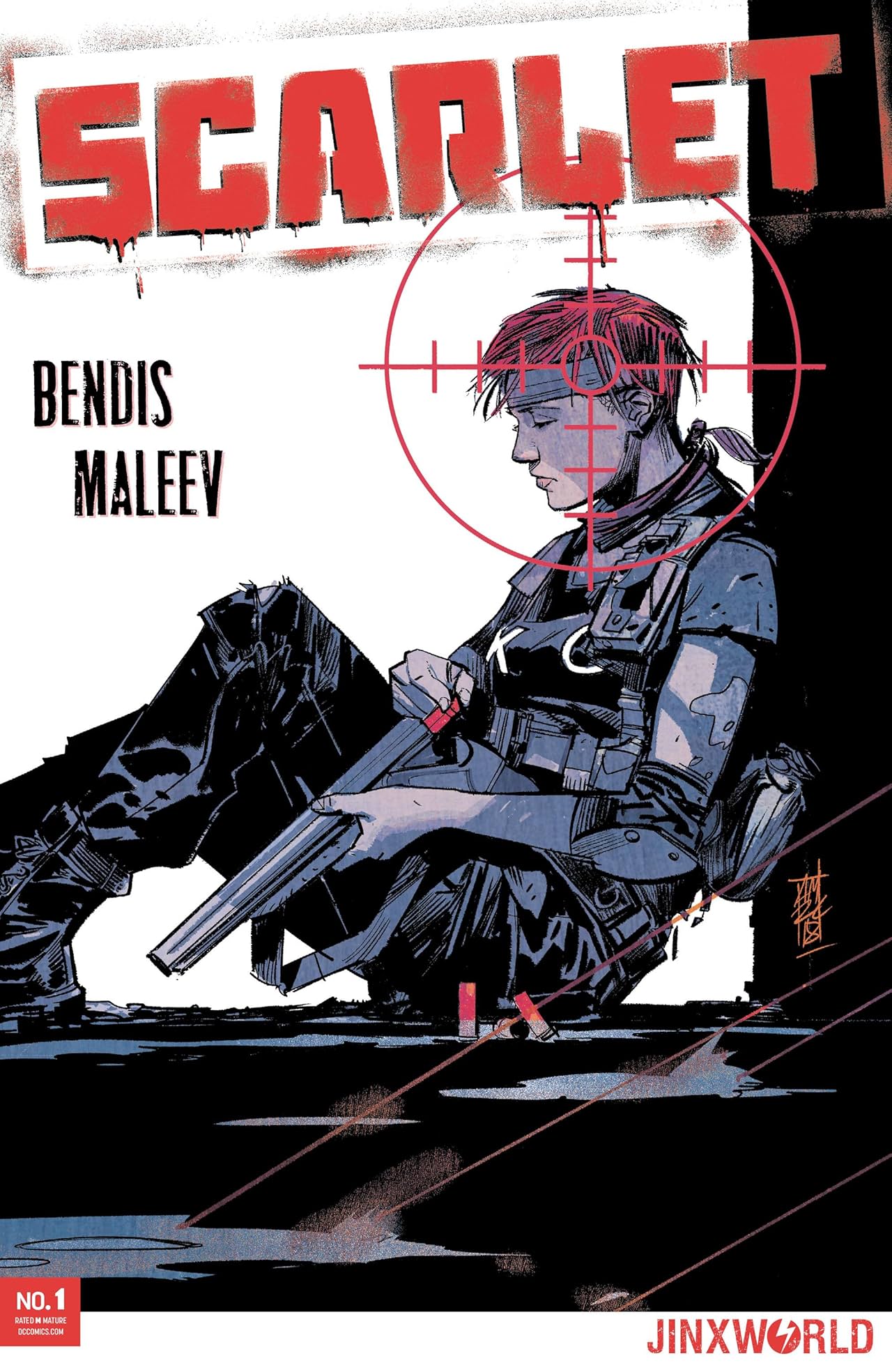
Evolving Revolutions in a Devolving World: Scarlet #1

The following is my review of Scarlet #1, which was posted on PopMatters.com.


Rebellion is one of those unavoidable pitfalls of an imperfect world. Wherever there's injustice, fictional or otherwise, there will be popular uprisings. It's the inspiration for half the music produced in the late 1960s. It's also a rite of passage for any teenager who had to endure an early curfew. By definition, it's deviant because it opposes the status quo. At the same time, it has an uncanny allure because it dares to pursue something better.

Scarlet Rue personifies rebellion in a rawest sense. When Brian Michael Bendis and Alex Maleev introduced her in Scarlet back in 2010, they went out of their way to craft a character who embodies the fighting spirit for those wronged by corrupt authority figures. She's not a superhero. She's not some incorruptible demigod who just shows and decides to do the right thing for the sake of children and puppies. Scarlet is very much a victim of an unjust society that takes corruption to its grittiest extreme.

What she lacks in superpowers, though, she makes up for in endearing grit. She doesn't wear a mask or run around in skin-tight uniforms, either. Most of her attire can probably be found on clearance at a department store and that's important because many of the people she inspires aren't the kind who can afford fancy clothes. They're like her, living in a world where they constantly deal with the misfortune of not being related to a senator, a CEO, or a billionaire. Being able to relate to Scarlet makes her easy to follow and that's what makes Scarlet #1 work.

Her rebellion does not stop at petitions, protests, or spreading witty internet memes. Scarlet Rue throws herself into the heart of a struggle, upsetting the fragile order that relies heavily on people like her just not having the energy or spirit to fight back. The story in Scarlet #1 picks up at a point where the fighting has escalated beyond any protest or riot. Scarlet Rue is now the face of a full-blown revolution and the people rallying fighting alongside her are at their breaking point.

The extent of that revolution is not for those with something to lose. Maleev flexes his unique artistic style by presenting rich, detailed cityscapes that reveal the scars that Scarlet's revolution has left on Portland. Bridges are destroyed, the streets are in ruin, and buildings crumble under the bombardment of constant drone strikes. It's a war-ravaged world, but one in which Scarlet's message gains greater significance every step of the way.

For much of the story, she walks this war-ravaged world, talking to people and giving them a sense of perspective. She makes herself vulnerable by being so bold, but she kind of has to at this point in her revolution. The powers that be aren't ignoring her. As such, they're making it increasingly difficult to operate. There's no electricity, internet access, or infrastructure to work with. All Scarlet has are the streets and the people brave enough to walk them. She manages makes the most of it, though.

As she and her fellow revolutionaries walk the streets, she talks to them about how bad things have gotten. However, she never talks down to them. She doesn't come off as one of those revolutionaries who seeks to overthrow one tyranny just to impose another. She's not some wide-eyed idealist, either. She keeps her message real and concise. She also never elevates herself above that message. At times, she even shows a reluctance to be the face of a revolution. She doesn't avoid her part in it, either.

That's critical for the merits of her struggle because it keeps her from getting the blame for all the damage her revolution has brought. Scarlet acknowledges, at one point, that she is responsible for the destruction her activities have wrought. At the same time, though, she also points out that she isn't the one who blew up the bridges or cut the power. It's those opposing her movement who did that. They just happen to have access to military-grade hardware and are willing to use it to preserve the status quo.

The ramifications of these choices, both for Scarlet and the authorities, take shape towards the end when another building is destroyed by a drone. If the intent is to put pressure on Scarlet and foster resentment among her supporters, then it clearly backfires. The people who survive the attack don't blame her for bringing about so much hardship. They blame the government that sends those drones. They're at a point where nobody trusts anyone in established institutions. Every time they try to dissuade the revolution, they end up giving Scarlet more supporters.

It's a dangerous state of affairs, but one that's more relevant today that it was in 2010. Through Scarlet, Bendis depicts a revolution that has progressed to a point where there's no containing it. Scarlet #1 demonstrates that the government has done as much as they can without resorting to nuclear weapons, but it still doesn't work. Scarlet Rue's movement just keeps getting stronger and people keep rallying to her cause.

It's a uniquely real take on rebellions within a corrupt world, one that relies less on photogenic superheroes and more on people willing to confront the truth. Certain aspects of the story are fairly dense. While Scarlet #1 is friendly to new readers who haven't been following the series, it goes somewhat overboard with the exposition to provide context and setting. It gets a bit wordy at times and that's not just because of Scarlet's personality. It takes a while for a real turning point to occur, but when it does, there's plenty of intrigue.

There are many salient messages within Scarlet #1 that go beyond furthering the personal journey of Scarlet Rue. She's not some loud-mouthed protester who doesn't understand the the complexities of the world around her. Her revolution comes from actual crimes in which she was an actual victim. There's not much complexity beyond that. She's someone who's easy to root for and easier to worry about, given what she's up against. She's also a character who reflects the kind of revolutionary spirit that is all substance and little style. That kind of personality is rare in comics, but even rarer in the real world.

Final Score: 6 out of 10

Tuesday, July 17, 2018

Mixed Matrimonial Machinations: Batman #50

The following is my review of Batman #50, which was posted on PopMatters.com.


Superheroes are like young 80s rock stars at the height of their fame in that it's hard to imagine them settling down. Their lives are so chaotic, hectic, and prone to death/resurrection that just having an opportunity to get married is an achievement few get. Even for those who make it that far, there are a great many forces working against superhero couples. Some are there before they even get to the honeymoon. Others pay a high price for even trying. Just ask Peter Parker.

If there's one superhero who is capable of beating those odds, though, it's Batman. He has no powers, a long list of personal issues, and a colorful history with multiple women. At the same time, though, doing the impossible without the aid of Kryptonian biology is one of his most defining traits. It doesn't matter if marriage is too challenging for superheroes. He's Batman.

That's not to say the challenges he faces aren't daunting. Batman is no Wolverine, but he's no Superman either. Batman is one of those characters who does plenty to attract women, but just as much to push them away. It's part of his mystique as the Dark Knight and most women can't handle that. Catwoman, however, is not most women. In the same way he's in a unique position to defy the traditions of superhero matrimony, Catwoman is uniquely equipped to both handle those rigors and thrive.

Bruce Wayne and Selina Kyle may not share the same star-crossed love story that Superman and Lois Lane enjoy, but that only makes the prospect of their wedding in Batman #50 more meaningful. After the heartbreak in another recent wedding event in X-me Gold #30, a successful culmination feels necessary, if only to avoid starting a less-than-romantic trend in superhero weddings.

In many respects, Batman and Catwoman have much more going for them than Colossus and Kitty Pryde. These characters have a history that spans decades. At times, they go their separate ways, which helps them develop as individuals. Now, after all the excuses and complications, they have an opportunity to come together in a way that both solidifies their relationship and grant them generous tax benefits.

Once again, however, the promise of a heartfelt, tearful wedding full of joyous catharsis does not occur. Despite Batman being up for that challenge, finally taking that step into uncharted territories that so many superheroes and rock stars avoid, the wedding doesn't go through. However, it's not Batman who calls it off. Catwoman is the one who ends it.

Like Kitty Pryde in X-men Gold #30, she waited until the last possible second. Unlike Kitty Pryde, though, the story surrounding it doesn't feel as forced or heartbreaking. It even dares to leave a sliver of hope that there are other forces at work besides someone just changing their mind. What X-men Gold #30 failed to deliver, Batman #50 manages to salvage to some extent. It still comes off as a dramatic letdown, but Tom King puts some substance behind it.

The bulk of the story doesn't focus on the ceremony itself or the less-than-memorable way it plays out. Instead, King sets the stage by exploring the long road Batman and Catwoman take to get to this moment, utilizing imagery from multiple eras of Batman from a cast of artists that includes Neal Adams, Greg Capullo, Rafael Albuquerque, and many others. Within these memorable moments are insights that put Batman's feelings for Catwoman into a context that gives a unique weight to ultimate outcome of the wedding.

Batman is the world's greatest detective and incredibly skilled at reading people, specifically criminals. Catwoman is a criminal by most measures, but when he reads her, he doesn't see the same traits he sees in the likes of the Penguin, the Joker, or the Riddler. The same goes for Catwoman in that when she sees him, she doesn't react the same way most criminals do. She's someone Batman can't use his detective skills to define and he's someone who transforms the pain of childhood trauma into acts of heroism that put put him on the tip tier of the Justice League.

These insights establish how these two feel about each other. Nothing is assumed or overlooked. As a result, Catwoman's decision to leave Batman at the altar doesn't feel forced. It never comes off as melodrama for the sake of melodrama. She gives a reason rather than an excuse, one that builds directly on the events of her clash with the Joker in Batman #49.

To some extent, Catwoman makes a valid point for keeping Batman single. Granted, it's a point the Joker practically shoves in her face beforehand, but it fits with how she feels about him and how she sees him. To her, a happily married Batman means he doesn't have that same pain that he can channel into being the Dark Knight. Marrying him means denying Gotham the hero it needs to survive.

It still comes off as callous because she waits until they're in their wedding attire to make her decision, but added context of her and Batman's reflections helps keep the narrative from collapsing completely. It doesn't give the impression that all the build-up that begins with Batman's proposal in Batman #24 is now completely meaningless. That story is still intact, but the way things play out in Batman #50 really complicate things.

There are details within those complications, though, that leave the door open for some happiness, at least to the extent that's possible with Batman. There's a potential for greater drama, but there's just as much potential for tragedy. Even though tragedy is one of Batman's defining traits, it can also be redundant. Rather than culminate the story of Batman and Catwoman's romance, Batman #50 promises to drag it out even more. For two characters whose love affair spans eight decades, that comes off as pretty bland.

Even with the outcome, though, the fact that Batman and Catwoman make it this far feels like an accomplishment. Batman #50 is presented as a triumph that was decades in the making, but ends up being a prelude to even more strife. It offers powerful revelations for two iconic characters and reaffirms why they keep finding each other.

It doesn't undercut or subvert the merit of superhero marriage, but it certainly reveals how difficult it is. Colossus and Kitty Pryde find that out in the hardest, most shallow way possible in X-men Gold #30. Batman and Catwoman find that out in a way that's still part of a larger story in Batman #50. In that sense, there may still be hope for superhero weddings.

Final Score: 6 out of 10

Friday, June 8, 2018

Justice In Its Totality: Justice League #1

The following is my review of Justice League #1, which was posted on PopMatters.com.


In a perfect world, justice isn't a fluid concept. What's heroic today still holds up a hundred centuries from now. In that world, teams like the Justice League don't need to agonize over too many decisions. Those tried and true standards answer all those hard for them. Even during the family friendly golden age of comics, though, the imperfections of the real and fictional world keep finding their way into the story.

Between the events of DC: Rebirth #1 and Dark Knights: Metal, the Justice League undergoes plenty of upheaval, both as a team and among its individual members. Timelines get re-written, marriage proposals occur, and secrets of the DC universe reveal themselves in ways that would make any hero's decisions much harder to render. It can get confusing, at times, but it still reflects the evolution of the Justice League and the nature of justice itself.

For many of these complications, Scott Snyder is both an architect and a catalyst. The events of Dark Knights: Metal don't just throw in another upheaval, which the DC universe faces every other week. It requires the Justice League to regroup and reorganize themselves. A universe full of talking gorillas and homicidal clowns is chaotic enough. Even demigods, aliens, and billionaire playboys need to adapt along the way. In Justice League #1, Snyder carries the team into a new era of chaos.

From the very beginning, the scope and scale of the chaos is on a level that requires the full strength of DC's heavy hitters. There's no subtlety or steady build-up. The crisis is already at a level that involves Lex Luthor, Vandal Savage, and a hole in the Source Wall. The situation couldn't be more dire without an army of Darkseid clones invading every planet in the universe.

For any one individual hero, including Superman on his best day, it's a level of over-the-top action that is hard to keep up with. For the Justice League, though, it works perfectly. It starts out as an elaborate, albeit generic plot by Vandal Savage involving a race of subterranean creatures called Neoanderthals. While even a simple plan by Savage usually calls for the collective firepower of the League, this conflict is only a precursor to a much greater threat.

It's not enough to just throw powerful villains and their nefarious plots at DC's most powerful heroes. Snyder brings in forces that don't necessarily have a face, an identity, or an evil laugh. It's not just a threat to law, order, and justice. It has the potential to undercut the very nature of the DC Universe itself. The Martian Manhunter calls it the Totality. It's somewhat esoteric, but it presents the Justice League with a unique threat. Conversely, it presents someone like Lex Luthor with an opportunity.

The challenge in any era of Justice League, going back to the pre-Crisis era, is establishing a predicament that requires more than a simple team-up or crossover. Superman can team up with Batman and Wonder Woman can team up with Aquaman ever other week to take on a unique threat that may just be too tedious to handle individually. The primary difference between a casual crossover story and a full-fledged superhero team involves forging a collective identity.

Throughout the history of the DC Universe, the League assembles when there's more than basic justice at stake. Whether it involves infinite Earths or a full-scale invasion from Apokolips, there's a point where heroes can't just be heroes. They have to come together to keep the world, the universe, and every notion of justice intact. Snyder channels some of that Crisis spirit, but stops short of breaking the timeline again.

In the case of Justice League #1, it's not the threat posed by Vandal Savage that's the main catalyst. It's the hole in the Source Wall that pushes the League into a difficult spot. That hole, another byproduct of Dark Knights: Metal no less, creates something the Martian Manhunter calls the Totality. It's somewhat esoteric, but it still carries that ominous aura that reflects DC's commitment to never-ending world-building.

Parts of the Totality reference other aspects of DC lore, but the underlying concept is simple. The fundamental nature of the DC universe is changing and Lex Luthor knows about it. As such, he and others like him are sure to exploit it. Justice, once again, isn't a perfectly consistent concept that always reverts back to a particular form like Superman's iconic red underwear. Given enough time and stress, larger forces will disrupt it.

That theme and its implications are nicely documented through the powerful mind of the Martian Manhunter, who acts as a messenger to the rest of the League. They're not really in a position to do much about the Totality, which for a team as powerful as the Justice League is really telling. They're basically left to brace themselves while Lex Luthor and Vandal Savage get ready to make the most of it.

It's here where the strengths and weaknesses of Justice League #1 really show. In terms of strength, it builds seamlessly from recent upheavals in the DC universe. Even for those not familiar with events like Dark Knights: Metal, the narrative never comes off as too sudden or contrived. As for weaknesses, though, the overall nature of the Totality falls flat and that keeps the story from having a major impact.

Even with a basis in the Source Wall, the Totality comes off as this impersonal chaos that isn't contingent on Lex Luthor's plans or Darkseid's ruthlessness. It just feels like one big disruption within the overall DC universe, one meant to undermine the Justice League's efforts in a way they can't stop. Too much time is spent just trying to make sense of it, which renders the battle against Vandal Savage as somewhat of an afterthought. Seeing as how that battle literally broke the surface of the Earth, that almost seems unjust.

Justice League #1 still does more than enough to carry the League into a new era. Snyder's usage of high-level threats and evolving challenges give the story an appropriate scope. It doesn't entirely fit together just yet, but the pieces are there and Snyder gives himself plenty to work with. The nature of justice and the DC universe may change in accord with every Crisis-level event, but so long as the spirit of the team remains intact, justice still finds a way to prevail.

Final Score: 6 out of 10

Friday, May 11, 2018

Dark Connections and Darker Divinity: Wonder Woman #46

The following is my review of Wonder Woman #46, which was posted on PopMatters.com.


When it comes to the ancient mythologies, the major themes often reflect distinctly human traits. Gods, demigods, and everything in between tend to highlight extremes and embellishments of these traits. The modern superhero genre frequently utilizes the same approach, forging heroes that embody powerful traits that reflect the best and worst of humanity. In that context, Wonder Woman reflects the best of mortals and gods alike.

Unlike the traits embodied in Superman or Batman, Wonder Woman's story is closely tied to that of the Olympian gods that she and her fellow Amazons worship. Much of her power, persona, and heritage stem from the stories of these gods that go back to ancient times. Sometimes, they empower Wonder Woman and drive her forward. Other times, they present her with adversaries and conflicts. In recent times, her struggles under James Robinson utilize a little of both.

There are a great many upheavals going on in Wonder Woman's life, both as high-profile hero in the DC Universe and on the personal front. After being reunited with her long lost twin brother, Jason, she goes through a bit of an adjustment period, having lived much of her life under the assumptions her mother, the gods, and her Amazon sisters instilled. More and more of those assumptions are now coming into question. The events of Dark Nights: Metal and her recent dealings with Grail have Wonder Woman at another crossroads that may result in more than just shocking family revelations.

While secrets and lies are a frequent catalyst in mythology, ancient and contemporary alike, Wonder Woman #46 lays the groundwork with conflict more relevant to Wonder Woman's recent personal struggles. Between discovering her long-lost brother and watching Barbara Minerva transform into Cheetah again, she's already familiar with divine melodrama, albeit on a smaller scale. James Robinson keeps the scale small at first, but it steadily escalates.

It starts with Cheetah's escape. It's sudden, violent, and brings her face-to-face with Veronica Cale, the woman most responsible for Barbara Minerva becoming Cheetah again. On the surface, it presents itself as simple revenge scheme in the mold of John Wick. That's how Wonder Woman approaches it when she enters the picture, but it gets distinctly less simple from there. That tends to happen whenever gods, new and old alike, get involved.

Parallel to Cheetah's story, Diana's twin brother, Jason, follows his own plot that reunites him with his adopted father, Glaucus. Like Cheetah's blood-soaked revenge story, his starts out simple. Rescuing his adopted father from people intent on studying the biology of immortals doesn't break much new ground. As with Diana, though, that changes once some divine details emerge.

Unlike Diana, though, Jason's story is still new and has a few lingering plot holes. Robinson doesn't overlook them, but doesn't give a full answer either. Jason's emergence within Wonder Woman is already heavily influenced by the Olympian gods. His connection with them is a bit less certain compared to his sister, if only because he's shown a tendency to be far less responsible. The hints dropped by Glaucus also indicate that they've influenced Jason more than he thinks.

This provides an ominous backdrop once the impact of Dark Nights: Metal catches up to the story. It's somewhat abrupt, hitting Diana both literally and figuratively as she tries to deal with Cheetah. Most stories involving gods and god-like beings tend to evoke powerful passions throughout the mortal masses, especially among those expected to provide worship. Anything that disrupts that worship is an attack on their very soul.

The passions, in this case, have little to do with piety. True to ancient mythologies that highlight the importance of the gods, their absence or lack of influence leaves the world of dangerous and prone to chaos. This is where Dark Nights: Metal starts spreading its influence and Wonder Woman is on the front line. Being a demigoddess, herself, it's fitting that she finds herself drawn into the chaos. An agent of that chaos even ends up being a familiar face who bears a familiar red cape and symbol on her chest, which further raises the stakes.

Wonder Woman #46 takes its time to set up a new plot involving the Old Gods, the emerging Dark Gods, and how it all effects Wonder Woman, someone's whose story involves battling divine chaos every other week. The connections between Diana's recent clashes and Dark Nights: Metal are subtle, but relevant. However, they're too subtle to generate much impact, aside from the last couple of pages. While the story is full of bloody battles and divinely-fueled chaos, it still moves too slowly to really test Wonder Woman in a meaningful way.

It still makes the necessary connections and establishes a foundation for a divine conflict that will bring new, but familiar contributors to her struggle. Whether they'll help or hinder her efforts remain to be seen. One of ancient mythology's most common themes, aside from gods impregnating mortal women, involves how determined gods are at maintaining their godly status. Those who worship them can be just as determined and if Wonder Woman #46 is any indication, she'll may end up fighting both.

Final Score: 6 out of 10

Friday, April 20, 2018

Truth, Justice, and Unprecedented Achievements: Action Comics #1000

The following is my review of Action Comics #1000, which was posted on PopMatters.com.


In June 1938, the first issue of Action Comics came out, introducing the hero by which so many future heroes are still measured. Toady, it's impossible to assess the state of modern superheroes without appreciating the impact of Superman. From the early days of Jerry Siegel and Joe Shuster to the modern era Geoff Johns and Dan Jurgens, the position Superman holds in the pantheon of the superhero genre is without parallel. He is very much the ideal in terms of just how great a hero can be.

It's hard to imagine how Siegel and Shuster expected their creation to evolve over the years. It's hard to imagine their reaction to the knowledge that this series that began in the latter part of the Great Depression would go on for another 1,000 issues that span eight decades, two reboots, a rebirth, multiple movie franchises, a slew of cartoons, and a never-ending supply of merchandise. Action Comics isn't just special to the brand of DC Comics. It's very much an institution, one in which the milestones carry even more weight.

That's why Action Comics #1000 is a truly momentous achievement for both Superman and the superhero era that he helped to start. It's one of those rare comics for which there is no template to draw from. No other series can offer insight into how such a milestone comic should be handled. That doesn't stopped DC Comics from assembling an all-star team of writers to pack plenty of content into a single comic with a $7.99 price tag.

With so much talent and so many reasons to celebrate, the expectations for Action Comics #1000 are almost too big to contemplate. Then again, much of Superman's entire appeal is his ability to defy the impossible, do what's right, and do it for the right reasons. He already embodies the ideal for multiple generations of superheroes. It's only fitting that he set the bar for such a milestone issue, if only to make things a little less daunting for Detective Comics and Amazing Spider-Man.

Action Comics #1000 doesn't try to reinvent Superman, push him to new extremes, or make him more up-to-date with modern audiences. More than anything else, it's a celebration of who Superman is and everything he represents. It's not just that he can fight off a fleet of alien invaders and make it back to his family in time for dinner. It's not just that he can outwit Lex Luthor, save an innocent woman being held at gun point in the blink of an eye, and even beat an army of alternate versions of himself.

These are all feats of strength and that's par for the course with Superman. There are plenty of superheroes in superhero comics, fiction, and mythology of all kinds with obscene strength. What sets Superman apart isn't in how he uses it. It's in how he inspires others with it. That's what sets Superman apart and makes him the kind of icon who can transcend decades, generations, and trends of all kinds. From upbeat and hopeful to grim and gritty, Superman finds a way to inspire. Of all the impossible things he does on a day-to-day basis, that's the most meaningful.

Celebrating that core ideal of Superman's character is difficult to do with just one story. Action Comics #1000 doesn't bother trying. Instead, it tells a series of short, concise stories that embody the best of who Superman is and why he's such an inspiration. Each story varies in terms of theme and challenge, but the message is the same. Superman doesn't just overcome the impossible. He raises the bar for everyone.

He can even do this without having to throw a single punch. In one story by Dan Jurgans, he attends a special celebration that Metropolis is holding to honor Superman. He's there as Clark Kent, but constantly worrying about other threats. Then, when he finally decides to don his iconic cape and red underwear, he finds out that he doesn't always have to be the one to right these wrongs. The people he inspires, from the heaviest hitters in the Justice League to the ordinary people on the streets, can do the right thing too when the opportunity arises.

In another story by Geoff Johns, Superman confronts the man who he hung from a telephone pole in the first issue of Action Comics in a fitting extension of that historic first issue. Whereas most other heroes are content to either let the man wallow in his humiliating defeat or just throw him in the nearest jail cell, as though that somehow is enough to make someone change their ways. Superman dares to go the extra mile

He talks to the man, but he doesn't talk down to him. Superman tries to relate to him, showing the kind of empathy and understanding that resonates with him. The fact that he can do this while being an alien from another world helps show the strength of Superman's humanity, despite the fact that he's not human. If he, an alien can embody that level of compression, then what's everyone else's excuse?

Through each story, there are insights into Superman's legacy and how he went about crafting it. They cover current and past era, referencing different timelines and iconic moments. Action Comics #1000 doesn't try to tie them all together through some elaborate sub-plot. While that renders the stories disconnected, they still convey the right message with respect to who Superman is and why his legacy matters.

Like the man himself, these insights are crafted to reflect an ideal. They show just how good a hero can be. They demonstrate that just being exceedingly powerful, able to stop a speeding train or break chains of Kryptonite, is not enough. The real power that makes Superman great is in how he uses it, doing the right thing and never hesitating to do so.

A being of his power can do so many other things, right and wrong. He's even tempted at times, both by circumstance and by men like Lex Luthor. No matter the situation or the challenge, Superman will still do what's right and he won't compromise that. He won't make excuses, either. That may make his decisions predictable, but the way he goes about making them only reinforces why he's an icon who has endured for so long.

The fact that Action Comics makes it to 1,000 issues, despite changing trends in culture and the superhero genre as a whole, is a remarkable accomplishment. Action Comics #1000 does plenty to celebrate the past and chart Superman's course for the future. There's still only so much a single issue can do to encapsulate over 80 years of heroics, even with extra content and a higher price tag. Since the stories are so short and focused, it's difficult to show the breadth of Superman's story through the ages.

For a hero like Superman, though, even a 1,000 page comic isn't be enough to tell every aspect of his story or why he's the most iconic hero of all time. It doesn't have to, though. Like the Man of Steel himself, Action Comics #1000 does plenty to raise the bar and bring hope to generations past and present. What started Siegel and Shuster nearly a century ago is still going strong today. It still seems impossible that any character could endear for so long, but that's exactly what makes him Superman.

Final Score: 9 out of 10

Thursday, March 8, 2018

Gloriously Destructive Deconstruction: Batman: White Knight #6

The following is my review of Batman: White Knight #6, which was posted on PopMatters.com.


There comes a point in a long-standing conflict where the mental and physical strain that keeps it going becomes too much to bear. It usually occurs beyond the point where either side has a chance to claim victory. At this stage, the only goal is survival, although that doesn't always entail surviving intact. Given how long Batman and the Joker have been clashing with one another, spanning deaths, resurrections, and retcons, it's surprising they haven't reached this stage sooner.

To some extent, Batman avoids this stage with all his villains. A big part of his efforts to protect Gotham and stop criminals like the Joker involves stopping them before they reach the point where justice becomes a moot point. The Joker just makes that harder than most because he goes out of his way to push Batman and everything he stands for to the absolute limit. For decades, Batman exercises superhuman discipline in avoiding the Joker's traps. That discipline finally falters in Batman: White Knight and the consequences have been both revealing and compelling.

Sean Murphy and Matt Hollingsworth take Batman into uncharted territory, using a sane Joker to deconstruct the very principles that make Batman who he is. As a homicidal clown, Batman is able to fight the Joker's challenges directly with his long list of skills and gadgets. As Jack Napier, though, even those resources aren't enough. Since regaining his sanity in Batman: White Knight #1, Napier keeps hitting Batman in ways that no exploding whoopee cushion can ever match.

The GCPD turns against him. The public turns against him. Even his own family turns on him with Nightwing and Batgirl leaving him to join Napier's new initiative. It's not just a deconstruction of Batman's principles. It's utterly destroys all the systems and support structures that once allowed him to function. Now, Batman is no longer the savior of Gotham. He's part of the problem and Napier presents himself as the solution. In Batman: White Knight #6, they enter more uncharted territory.

Part of that story is a culmination of the process that begins in Batman: White Knight #1 with Jack Napier setting out to destroy Batman and everything he stands for. Having convinced everyone he's right and Batman is wrong, Napier leads an effort to arrest him. That effort includes some of Batman's greatest defenders, including Jim Gordon. They go along with Napier's plan, but they make clear that they hate every minute of it.

That's an important component of the unique narrative presented in Batman: White Knight. This isn't about Batman's friends and allies being brainwashed, either by the Mad Hatter or some elaborate media conspiracy. They watch what Jack Napier does and listen to what he says. He doesn't force them to agree with him. He doesn't poison them with laughing gas when they disagree either. He just puts them in a situation where they cannot escape the truth.

Characters like Jim Gordon, Nightwing, and Batgirl hate every second of it. They fight it every step of the way, but they cannot get around the implications of Napier's agenda. He gives them too many reasons to go along with him and Batman keeps giving them too few. The consequences of losing that support play out in a way that feels tragic, but predictable in Batman: White Knight #6.

For once, Batman's incredible skill, strength, and endurance aren't enough. It's one thing to escape one of the Joker's elaborate death traps. It's quite another to stand against those he considers his closest allies when they're not brainwashed. Batman does not at all come off as Batman. He comes off as someone who just can't be the same hero without all the support systems that allow him to operate. It shows that Batman is only as capable as the allies around him.

He almost comes off as inept in how he falls into Napier's trap, which feels pretty out of character for Batman. Even with the loss of some of his closest allies, he doesn't show the same mental toughness as someone who can battle Ra's Al Ghul, Killer Croc, and Poison Ivy in the same day and still keep his sanity. Some of that feels like a direct effect of Napier turning the world against him. Some of it just comes off as Batman faltering when he doesn't falter.

This part of the narrative, with Napier finally subduing Batman alongside the GCPD, contains some of the most dramatic moments of the story to date. The other part of the narrative, which involves Napier responding to a threat from the less sane, more obsessive Harley Quinn that has been running around since he regained his sanity. It's a threat that has been unfolding behind the scenes of previous issues, but unfolds just as Batman succumbs to Napier's agenda.

While this moves the story forward, it somewhat detracts from the drama surrounding Batman finally losing to the Joker. As soon as Batman goes down, he seems to lose his relevance in Napier's ongoing story, which now faces a different kind of challenge. In a sense, turning people against Batman and bringing him in is the easy part. Now, Napier has to actually demonstrate that he's right, Batman was wrong, and he can deliver where Batman failed.

It's the final step in the total deconstruction of Batman. Napier knows on some levels that even if he succeeds in taking Batman down, he'll only end up vindicating Batman if Gotham cannot handle threats that involve villains in clown makeup and giant freeze rays without him. In fact, he may end up empowering Batman even more if he shows he cannot deliver. It's a stressful situation for someone whose sanity is always in question. His ability to handle that situation remains uncertain, even with his sanity intact.

In a sense, Batman: White Knight #6 encompasses two distinct stories. One is the culmination of Batman's world collapsing around him and the other is a setup for Napier's ultimate test. One is heavy on drama, but the other somewhat distracts from that drama. It still makes for a powerful, compelling narrative that undercuts Batman's core identity. Some of that narrative, however, gets undercut by Napier's own evolving conflicts.

The ending still provides compelling insights that hint at the growing instability of Jack Napier's efforts. He's succeeding in his efforts to ultimately defeat Batman, but it's not without complications and for once, those complications don't involve a shortage of clown makeup or exploding cupcakes. Whether or not Jack Napier can succeed where Batman fails will prove whether such deconstruction is ultimately good for Gotham or just another bad joke.

Final Score: 6 out of 10

Thursday, March 1, 2018

Royal Vulnerabilities and Regal Strength: Mera: Queen of Atlantis #1

The following is my review of Mera: Queen of Atlantis #1, which was posted on PopMatters.com.


In the vast, diverse structure of the fantasy genre, there are few concepts more straightforward than that of royalty. Whether it's part of the vast world-building carried out by the likes of J. R. R. Tolkien in Lord of the Rings or the bloody feuds that fuel Game of Thrones, the roles associated with royalty tend to be the simplest part of the narrative. There's a king who rules a kingdom with a queen at his side. If there are any princes and princesses involved, then chances are that'll be a source of conflict.

In recent years, thanks largely to those same blood feuds that play out in Game of Thrones, these structures of royalty are getting an overdue dose of complexity. It's no longer enough to just craft stories around a king who rules, a queen who supports him, and bratty children who whine about who's in line for the throne. It's now more likely to see queens fighting to play a more active role in royal affairs, often beyond those of just managing said bratty children.

Few queens enjoy a greater sense of equality with her king than that of Mera, the wife and companion of Aquaman. There are plenty of jokes about Aquaman, his role in the Justice League, and his ability to talk to fish. Few, however, dare to joke about Mera. She's not just a queen, a lover, and a spouse. She's a powerful character in her own right who has always been able to hold her own against the many threats that plague the DC universe. She won't just support her king. She'll make him stronger while showing off her own strength.

Given these trends in the fantasy genre, Mera: Queen of Atlantis #1 is coming along at the perfect time. Between Disney movies featuring more princess that don't need rescuing, Mera is in prime position to show that she's the kind of queen who can hold her own in any kingdom, from Mount Doom to Westeros. Dan Abnett and Lan Medina put her in a position where she does not have the usual resources, privileges, and servants of a typical queen.

However, she still has the kinds of roles, responsibilities, and vulnerabilities that plague all levels of royalty. There are no dragons or magic rings involved, but Mera's tenuous predicament helps flesh out why she's better-equipped to handle royal responsibilities than most. The story surrounding that predicament spin right out of the ongoing events of Aquaman. These aren't trivial events either. Atlantis is in the midst of a civil war that has already stripped Arthur of his crown and Rath, a man who treats royal power like cheat codes on a real-time strategy game, is now king.

The events of that conflict are still unfolding, but Mera finds herself stuck on the sidelines due to an injury that forces her to remain on the surface, away from the battle, and away from Arthur's side. It's a difficult position, one that requires more than just waiting. Due to the same royal traditions that make civil wars so common in the first place, Mera is still the official queen of Atlantis while Arthur is technically deposed. That technicality means Mera is more vulnerable than most royal figures with one too many jealous siblings.

Abnett and Medina don't give her much time to heal or enjoy her time away from the civil war. She's the target of assassination almost immediately, requiring her to defend herself at a time when she's severely weakened and without support. Even so, she still manages to hold her own. She still shows that she's every bit as capable as Aquaman, even when he's not there to support her. She proves that she's the kind of queen that every idealistic princess wishes hopes they can be before they end up having to marry their cousin.

Mera surviving on her own, at a time when powerful people have more incentive than usual to kill a queen, also provides greater insight into the kind of character she is. Throughout the story, these insights explore Mera's burdens and ambitions. For those who only know Mera as the redheaded mermaid woman who fights beside Aquaman, it provides layers and complexity to a character who rarely gets a chance to shine outside of being a wife and queen.

At her core, Mera embodies the old royal traditions of duty to the letter. She starts out as an assassin on behalf of Xebel, a hated rival of Atlantis. She ends up falling in love with Atlantis' future king, only to take on the role of a queen. She acknowledges these duties and the burdens behind them. However, she never whines about them or uses them as an excuse to become bitter. She's the complete antithesis of every evil Disney character that goes onto become an evil king or queen. The burdens of royalty do put stress on her, but they don't break her spirit.

In another testament to her royal strength, Mera doesn't let others do the fighting for her. When Superman and Wonder Woman show up to offer help, she refuses. It never comes off as an act of royal snobbery either. She understands how royal conflicts need to be resolved. Bringing outside forces into the mix only tends to create new complications and new conflicts. Anyone with a passing knowledge of the fantasy genre or a marginal understanding of the history of Medieval Europe can appreciate that approach.

The narrative in Mera: Queen of Atlantis #1 makes abundantly clear that Mera is the kind of queen everyone can root for. She's someone who deserves that title. It's not necessarily a question that needed to be asked or answered. While that undercuts some of the tension, it's still worth reinforcing, especially with the major reveal at the end that promises to test Mera even more. How this plays into the ongoing events in Aquaman remains unclear, but it ensures she'll remain a target.

At the same time, it ensures that much of the conflict in Mera: Queen of Atlantis will remain linked to the civil war playing out in Aquaman. While that helps provide a sense of context to the series, it also hinders certain aspects of the story. It's a story that really can't stand on its own without a basic understanding over those events. Abnett and Medina make a concerted effort to fill in some of those details, but while they help provide connective tissue to those events, they don't necessarily carry the same weight.

In a sense, Mera: Queen of Atlantis #1 is very much a metaphor for Mera's character. Her story is closely tied to that of Aquaman's. As a character, she stands on equal footing with him in terms of strength, spirit, and ability. In terms of her own personal story arc, though, she's still dependent Aquaman's narrative. That still doesn't take away the substance of the story in Mera: Queen of Atlantis #1. Mera is still very much the kind of queen that anyone would be happy to serve. In an era where evil queens and sadistic kings are more prevalent than ever, it's pretty refreshing.

Final Score: 7 out of 10

Thursday, February 15, 2018

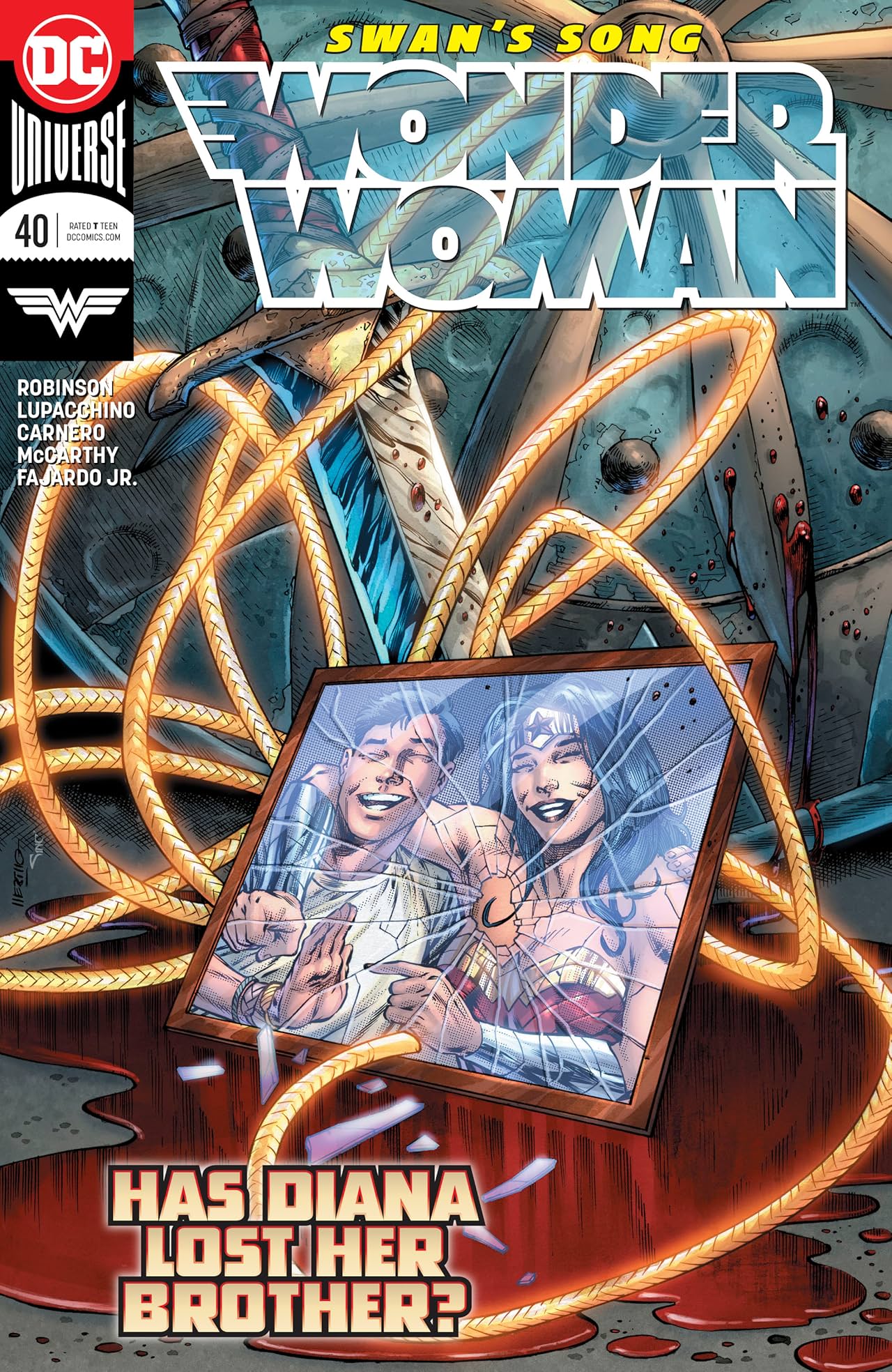
Petty Villains Makes For Shallow Conflict: Wonder Woman #40

The following is my review of Wonder Woman #40, which was posted on PopMatters.com.


There are certain villains who don't need much push to fall into that never-ending cycle of evil, resentment, and constantly seeking new henchmen. Characters like Thanos, Lex Luthor, or Darkseid rarely a lot of motivation to walk that path. They're kind of expected to because they fill a particular role. They're the kind of villains whose existence makes the struggle of the heroes necessary. They provide obstacles that often have to be fought with fists rather than words.

Then, there are the villains who need a much harder push to walk that path. These are the Walter Whites of villains, characters who tried to live an honorable life, but chose a different path when circumstances worked against them. As such, the dynamics driving these characters tend to be more complex. Sometimes, they can be downright erratic because it's not always clear whether such a character qualifies as a villain. When those dynamics are working, though, these kinds of characters can be uniquely compelling.

Most of Wonder Woman's villains don't fall into the category of a Walter White. Historically, her villains involve gods, demigods, mythical monsters, and alien tyrants. The dynamics with those kinds of characters tend to be pretty basic. That's what makes Silver Swan a breath of fresh air in James Robinson's ongoing run in Wonder Woman. She's no demigod or mythical monster, but her conflict with Wonder Woman is uniquely dramatic in that it's so personal.

The story that begins in Wonder Woman #38 takes someone who never showed an inclination towards evil and guides them down that path. Wonder Woman #40 marks the culmination of that journey. It puts Wonder Woman in a difficult position, one in which every punch and every attack she unleashes against Silver Swan is like a jab to the heart. It's one of those battles that's destined to feel like a loss, even when she wins. That kind of inner struggle and tends to bring out the best in Diana.

There are key instances in the story where Wonder Woman demonstrates that unique strength. The path that leads to her showdown with Silver Swan is pretty direct. There aren't many diversions or mysteries to solve. There's no need for Batman's detective skills or a favor from Olympus either. The path to that dramatic clash is pretty straightforward, so much so that there isn't much room for tension. Given Silver Swan's willingness to attack a hospitals and slit throats, particularly the one of the long-lost brother that Diana just reunited with, there isn't much need for it.

Much of the clash and the story around it is fairly basic. Silver Swan's motivations don't include some grand, deranged vision that involves tearing the universe asunder while using the pained cries of her enemies as background music. She just hates Wonder Woman because she feels betrayed by her. Before she becomes Silver Swan, she believes she's Wonder Woman's friend. She draws strength from that as she deals with her own personal issues. Then, when she really needs that friendship, it's not there and that pushes her over the edge.

In terms of the catalyst that turns someone from a friend to an enemy, it's pretty shallow. Silver Swan is no Lex Luthor or Joker. She's no Mole Man either. She never comes off as psychotic or broken. If anything, she comes off as petty, as though she's somehow entitled to Wonder Woman's support during her time of need. She sees her as the emotional equivalent of an Uber driver, someone she can call on to feel strong and loved again. She doesn't seem to realize that Wonder Woman, as a full-fledged member of the Justice League who has to battle alien tyrants and demigods every other week, has a lot on her plate.

This is what makes Silver Swan seem downright petty, even by villain standards. It also makes it hard to see her side things when the battle between her and Wonder Woman finally erupts. Quality villains, even the exceedingly unlikable kind like Lex Luthor and Darkseid, have some sort of grievance to bring to the table that makes their hatred of heroes seem legitimate. Silver Swan primary grievance is that Wonder Woman didn't inconvenience herself enough for her. That makes her difficult to sympathize with, let alone root for.

She still manages to come off as a highly-driven villain that hurts Wonder Woman on an emotional level. That part of the story still carries plenty of dramatic weight and that gives Wonder Woman #40 a sense of depth. However, the impact of that depth is somewhat undermined by how rushed the final battle ends up being. There isn't much time to build the tension. There's still plenty of heartfelt strain, but it ends before anyone needs to catch their breath.

That's somewhat necessary, though, because a good chunk of the story is spent on how Diana's long-lost brother, Jason, is adapting to being part of Wonder Woman's life. That's a compelling story in its own right and while it does make for some colorful moments in previous issues, it's more of a distraction in Wonder Woman #40. Despite being a demigod like Wonder Woman, Jason does more to hinder rather than help his sister's efforts against Silver Swan.

The family drama and the personal drama just don't effectively mix. Given how dramatic and convoluted things can get whenever demigods are involved, that comes off as a missed opportunity. The aftermath of the battle itself also leaves a lot of issues unresolved. While Robinson does plant the seeds of new mysteries and further complications with Jason, it doesn't make for much impact because it contributes so little to the battle against Silver Swan.

On paper, the story surrounding Silver Swan and Wonder Woman's newfound family connections has all the necessary components for a big, dramatic story full of heart, tragedy, and jokes about Zeus' various infidelities. It's an opportunity to create a new villain for Wonder Woman that tests her in ways that make iconic heroes even greater. Just being able to do that without creepy clown makeup is an accomplishment in modern comics.

Unfortunately, the story that culminates in Wonder Woman #40 doesn't make use of those components. The characters and situations are there, but connections and motivations aren't. Silver Swan isn't going to be placed in the same tier as Lex Luthor, the Joker, or even Cheetah anytime soon. Robinson does leave her story open for more development, she has a long way to go before she becomes the kind of villain that deserves Wonder Woman's tears and fists.

Final Score: 5 out of 10

Friday, January 12, 2018

Jokes And Harsh Truths: Batman: White Knight #4

The following is my review of Batman: White Knight #4, which was posted on PopMatters.com.


If any competent therapist were to sit down with most superheroes not named Superman, then it's very likely they would diagnose them with some form of mental illness, be it a chemical imbalance or personality disorder. It says something about the persona of superheroes that part of what makes them who they are requires some sort of psychological aberration that drives them to do what they do.

While some heroes carry themselves better than others, it's hard to argue that Batman is the picture of mental health. So much of what he does and why he does it is built around the trauma he experiences as a child. In a sense, Bruce Wayne is the mask he wears in that it hides just how tortured he is by that trauma. Batman is his true persona and no licensed therapist would dare call that healthy. It's one of those unspoken truths that often hides within the Batman narrative. Part of what makes the Joker his greatest enemy is his efforts to expose why pretending he's sane is the greatest joke of all.

That's exactly what makes the premise of Batman: White Knight so intriguing. Sean Murphy and Matt Hollingsworth skip the part where they try to find a novel way for the Joker to poke Batman beyond the strict limits he imposes upon himself. Instead, they remove the limits that hold the Joker back, treating his insanity as a barrier similar to the ones on Batman. Absent those barriers, he becomes something far more menacing than a clown armed with exploding whoopee cushions.

Without his insanity, the Joker becomes a threat unlike anything Batman has ever faced before. He's no longer out to just expose his efforts as one elaborate joke. He's out to subvert the entire concept of Batman. Batman: White Knight #4 acts as an indictment of how both Batman and the Gotham City Police operate. In a sense, by being sane, the Joker makes it abundantly obvious just how much of a joke those operations are in practice.

Joke or not, nobody is laughing and that's exactly what makes the narrative so compelling. The Joker, now operating as a public advocate in Jack Napier, uses the same charisma that gets henchmen to wear clown makeup to rally support from the media and the population. What he does is devious, but not in the sense of pumping laughing gas into a crowded warehouse. Rather than make people laugh with hard truths, Jack Napier shoves the truth in everyone's face in a way they can't ignore.

It's haunting in its effectiveness. It comes off as something that could very well play out in the real world, minus the costumed villains and exploding pies. Conceptually, Gotham City has always been a metaphor for a troubled city plagued by crime and corruption, but the only method for confronting those troubles comes from Batman. Jack Napier dares to offer an alternative, one that brings to light the inherent flaws in Batman's approach.

It doesn't help that Batman ends up playing into Napier's hands throughout the course of Batman: White Knight #4. His reactions come off as self-destructive at times, which is understandable given the complications Bruce Wayne is dealing with outside the mask. There's a sense that the trauma that drives Batman is finally catching up with him. Jack Napier is just accelerating the process by putting him in the worst possible situation and without even cracking an insidious smile.

Napier doesn't just go after Batman's principles and sanity. He even goes after his support structure within the Batman family. He does what few have dared to do and offer an alternative to simply letting Batman operate freely with no accountability or oversight. He actually makes an offer to Nightwing and Batgirl that's both intriguing and practical. He doesn't just try to undermine Batman. He tries to one-up him by doing what he's trying to do, but more effectively. That ends up making any effort on Batman's part to cling to his old approach an even bigger joke.


That, in many ways, is the most brilliant part of Jack Napier's plan. He's still doing what the Joker has been attempting to do for years, but without the clown makeup and insane plans that involve exploding novelty gags. He's trying to expose Batman and the injustice around him as a joke and it's working with terrifying efficiency. Nobody is laughing, but there's still plenty of intrigue.

That's not to say everything Jack Napier does in Batman: White Knight #4 goes flawlessly. He does encounter complications, as anyone operating in Gotham City would expect. There are still deranged criminals running around and not all of them wear clown makeup. With or without Batman, these are problems that nobody can ignore for too long, even a reformed Joker. However, the way he handles it is a testament to just how charismatic he can be, even without the makeup.

With every issue of Batman: White Knight, Batman's credibility crumbles and Jack Napier's efforts make more and more sense. Batman: White Knight #4 makes clear that these two personalities cannot coexist, regardless of how sane or insane one of them is. At some point, one of them has to fall and every conceivable force is now working against Batman.

The conclusion of Batman: White Knight #4 opens the door even more distressing truths that will strike Batman to his core. With every truth, what Bruce Wayne does and why he does it becomes less a joke and more a tragedy. The extent of that tragedy, of which much of Batman's motivation is built from, is entering new and distressing territory with Batman: White Knight.

However distressing it may be, the implications are both compelling and revealing. If a superhero's greatest villain can expose the serious flaws in their approach for seeking justice, then what does that say about superheroes in general? It's not an easy question to ask in the first place, but Batman: White Knight's attempt at answering it offers some dark possibilities.

Final Score: 8 out of 10

Thursday, December 14, 2017

Missed/New Opportunities In Prestige: Supergirl #16

The following is my review of Supergirl #16, which was posted on PopMatters.com.


It's rare for any hero who isn't Superman to gain the kind of credibility that grants them the implicitly, unflinching trust of the public. In fact, even Superman struggles to maintain that credibility and he's Superman. If the ultimate paragon of heroes struggles with maintaining the trust of the public, then what hope does any hero have?

In that context, Supergirl has a greater advantage than most and not just because she's Superman's cousin and bears the same emblem when she's out being a hero. She comes from the same lineage and traditions as Superman. She has his unflinching support, more so than any woman not named Lois Lane. In a sense, she has fewer excuses than most heroes for not having a similar level of implicit trust among the public. That's exactly why the situation she finds herself in with Supergirl #16 is so intriguing.

Taking a page right out of Supergirl's hit TV show, Steve Orlando and Jody Houser give her a city to call home, one in which she can establish herself as the kind of hero who deserves to wield the same emblem as Superman. National City is no Metropolis, but it bears many of the same traits. It's a vibrant city full of people who are more eager than any resident in Gotham to embrace a hero. To her credit, Kara makes the most of that opportunity, especially after the events of DC Rebirth #1. However, the events surrounding Supergirl #16 count as both a setback and a reminder of why such credibility is so rare, even for blood relatives of Superman.

It's not just bad PR that Supergirl is dealing with. The Department of Extranormal Operations, which had previously been an important, is now working against her. Eliza and Jerimiah, her adopted parents, once kept that from happening, but are no longer with the organization and utterly powerless to change that. Even for someone as powerful as Supergirl, it creates a very different environment in which to be a hero.

People aren't cheering her on, thanking her for her heroism, or even stopping to take a selfie. They aren't reacting with fear or dread either, which is a big reason why Batman can get away with having such limited credibility. They see Supergirl saving the day, but they also see someone they don't trust. Unfortunately, events throughout the series give the average person plenty of reasons to question her more than her cousin. Much of that is a product of bad circumstances, inexperience, and being a teenager. Her ability to still raise to the occasion, like her cousin, is a big part of what gives Supergirl her appeal.


Supergirl #16 presents her with a unique opportunity to confront and navigate this trust disparity. It's an opportunity that Superman doesn't face as often anymore and one that offers Supergirl a chance to set herself apart. Initially, the narrative gives promise that, even in the face of public mistrust and one too many enemies in the DEO, she'll still rise to the challenge and be the hero that everyone expects her to be. However, this narrative collapses quickly.

The events that play out, from Supergirl's clash with Sharon Vance to her uncomfortable encounters with DEO agents, effectively throw away any notion that Kara will have to win the public's trust the hard way. It's not long before a generic conspiracy/smear campaign emerges, revealing that her struggles have less to do with her growing into a great hero and more to do with evil villains working against her. In terms of establishing a growth period for a hero, it's basically the equivalent of letting someone take a shortcut.

The subversive efforts of the villains involved effectively ensure that things will snap back to normal fairly easily once Supergirl learns the truth. It's akin to disabling a mind-control device or revealing that someone accepted bribes from Lex Luthor. It reduces what could've been an important step in the maturation of a hero to simply finding the right person to punch and letting that solve all the necessary issues.

While this revelation overly simplifies the narrative, it does help create new opportunities in the sense that it puts Supergirl within a different conflict. The plot surrounding her winning back the trust of the public may have collapsed, but in its place is a different kind of conflict that relies on her having to do more than just find who to punch.

Orlando and Houser use this as an opportunity to get Kara's friends and adopted parents involved, which helps strengthen the support structure that helps guide Supergirl through her narrative. It also reveals a larger threat with more menacing villains, which is always a challenge whenever a hero has power on the same level as Superman. Kara being a teenage girl as well adds more complications, albeit the kind that keep her likable.

While the overall plot in Supergirl #16 is disappointing in that it abandons a potentially rich concept, the story never gets completely derailed, nor does it undermine Supergirl's inherent heroism. It's tempting in the era of Christopher Nolan and Zack Snyder movies to have heroes endlessly doubt their worth in the face of declining public support. Supergirl never gives into that temptation. She just grits her teeth, puts on that iconic cape, and does what she can within a messy situation. That's what makes her a great hero, even when she misses out on a major opportunity to prove it.

Final Score: 5 out of 10

Wednesday, November 29, 2017

Secrets, Convergence, and the Sacred: Doomsday Clock #1

The following is my review of Doomsday Clock #1, which was posted on PopMatters.com.


In the colorful history of comics, there are only a handful of sacred concepts that can never be sullied. They can be refined, reimagined, or expanded, but to twist them is akin to poking the Hulk in the eye. It's just a reckless invitation for outrage and anguish. Whether it's Superman's virtue, Batman's gadgets, or Deadpool's love of tacos, these ideas have a special place in comics lore that may as well be carved in adamantium.

In the annuls of the DC mythos, few stories are as sacred or revered as Alan Moore's Watchmen. Even today, it's impossible to overstate just how groundbreaking this story was for DC and comics, as a whole. That story, in all its dark and cynical glory, shows just how far comics can take a particular concept. Watchmen really went for broke, taking on everything from the merits of heroism to the corruption that comes with god-like power. These are all concepts that play out in countless myths and Watchmen found a way to break new ground on these concepts.

It's for that reason that incorporating Watchmen into the DC universe carries a huge risk. It's one thing to expand the world of Watchmen, which was done in the Before Watchmen series. It's quite another to work it into the ongoing upheavals of the DC universe. Geoff Johns and Gary Frank set these worlds on a collision course with the events of DC Rebirth #1.

Now, with Doomsday Clock #1, the collision is imminent and the sacred status of Watchmen is at stake. Given that Johns and Grank are DC's creative equivalent of the A-Team, this historic gamble is in the best possible position to pay off. Doing so, however, means recapturing the same complexities and quirks of Watchmen. That's exactly what Doomsday Clock #1 spends most of the time doing and while Alan Moore may still resent everything DC does with his creations, it finds a way to succeed.

The world of Watchmen is still as dark as ever, but Doomsday Clock #1 effectively doubles down on it, building upon a world where heroes and men with god-like power set humanity on a dark, dangerous course. In a sense, it picks up where the last panel of Watchmen left off in a very literal sense. Rorschach's journal, which thoroughly documented the events of the original Watchmen, helps expose Ozymandias' elaborate ruse. From there, a world built on cynicism and disillusion somehow becomes even darker.

In a sense, the world of Doomsday Clock is the ultimate extreme in terms of what happens when a lie becomes too big to brush aside as an alternate fact. This concept is wholly relevant in an era where the biggest threat isn't the Soviet Union launching a nuclear attack. It's people who buy into the lies, half-truths, and agendas. A willingness to buy into those lies is exactly what characters like Ozymandias exploit, what Rorschach despises, and what the Comedian laughs at.

It's one thing to brush aside stories of presidents colluding with foreign agents. It's quite another to brush aside a massive deception that unleashes armies of monsters and kills millions in a bid to unite the world. That's a lie that nobody in the world of Doomsday Clock can accept or spin. Even the news media at their worst cannot hope to twist the facts into serving an agenda.

Johns and Frank really channel their inner Alan Moore and David Gibbons, which may be much easier today than it was in the mid-80s. They don't just guide the narrative through a darker, more cynical path. They push it to an extent where extremes like nuclear war feel expected, if not logical. They build a world full of people who find out that their heroes and their most powerful icons lied to them in a way that killed millions. It's a dark world, to say the least, and one where outrage manifests in more than hashtags.

Doomsday Clock once again puts the world of Watchmen on the brink of destruction. However, it's the ties to the world of DC Rebirth that really raises the stakes. What happens in this world can't just be brushed aside like one of the many elseworlds that build their structures around apocalyptic scenarios. Due to the events of DC Rebirth #1, these worlds are entwined now. That makes the story that unfolds in Doomsday Clock #1 feel so impactful.

That story doesn't rely heavily on DC's biggest heroes, nor does it try to incorporate the entire cast of Watchmen into the mix. It focuses on key characters like Ozymandias and Rorschach with support from secondary characters like Marionette and the Mime. They guide the bulk of the narrative, bringing Superman and the world of DC's heroes at the end. The ties between the two worlds are somewhat loose, but since they are already established thanks to DC Rebirth #1, there's still a strong sense of cohesion.

A big part of what makes Watchmen such a powerful story is how well it reflects the sentiments of a certain period in history. It's something that Before Watchmen didn't attempt, but Doomsday Clock #1 dares to follow that same approach. By nearly every measure, it works. The themes in the story are even more relevant in 2017 than they were in 1985. Adding the impact on the greater DC Universe only heightens the importance of those themes.

Every comic tries to be groundbreaking in its own right, but few have the context and the themes to achieve this. Watchmen succeeded by being ambitious at just the right time with just the right kind of story. That's a big part of why it has such a sacred status in the history of comics. Doomsday Clock can't achieve that same sacred status just yet, but it succeeds in capturing many of the elements that make Watchmen such a powerful story.

The prospect of the world of Watchmen impacting that of the larger DC universe remains intriguing. The events of Doomsday Clock #1 helps set that story up in a way that captures the same sentiments that make both worlds so compelling. Such an effort still has some lofty goals with some long odds, but so far, that gamble is paying off in a profound way.

Final Score: 9 out of 10

Friday, October 27, 2017

Evil Wonders: Wonder Woman #33

The following is my review of Wonder Woman #33, which was posted on PopMatters.com.


No matter how dysfunctional a family is, there's usually some kind of sentiment binding it together. That sentiment isn't always healthy. Many sitcoms, good and bad alike, are built on that kind of dysfunction. Add gods, demigods, and superheroes to the mix and that dysfunction takes on a level that even the trashiest prime-time sitcom can't match. Wonder Woman's family may not have that kind of dysfunction, but whenever gods and demigods enter the mix, it usually means she'll eventually start punching something.

Wonder Woman's family already has its share of complications, thanks largely to an origins story that is still muddled between clay figurines and Zeus not being able to keep it in his pants again. The events of Darkseid Wars adds another complication in the form of Grail, who is basically the anti-Wonder Woman. As the daughter of Darkseid and a self-professed daddy's girl, she exists to spit on everything Wonder Woman stands for while looking more menacing than any illegitimate offspring that Zeus could ever sire.

Grail is one of those characters who has the potential to be a true nemesis to Wonder Woman. Superman has Lex Luthor. Batman has the Joker. Wonder Woman really doesn't have anyone on that level who isn't a renegade god or demigod. Grail, after taking down the entire Justice League in Darkseid Wars, can challenge Wonder Woman on every conceivable level. Wonder Woman #33 finally puts Grail in that position and James Robinson makes the most of it.

Darkseid War introduced Grail, but offers little insight into who she is and what motivates her. She never comes off as an overly complex character. There's no effort to craft some elaborate story about how she ends up on the path of evil. Her father is Darkseid. Evil is literally in her blood and she doesn't even try to avoid that. She embraces it. Like Lex Luthor and the Joker, she is not in conflict with who she is. She's evil and she's fine with that. That kind of self-awareness may be basic, but it's oddly refreshing in an era where too many villains try to come off as tragic figures.

That simple, streamlined persona helps move the story along. Wonder Woman #33 isn't just about establishing Grail as someone who can battle Wonder Woman without relying entirely on played out themes from Greco-Roman mythology. It's about tying her story into Wonder Woman's world, specifically the ongoing conflict with her long lost brother. Again, Wonder Woman's divine brands of family dysfunction are complicated, but that makes Grail's simplicity all the more appropriate.

Like Wonder Woman, much of Grail's story revolves around her family. She isn't just driven by her dark heritage. She actively works to protect and preserve it. The recent events surrounding Dark Knights: Metal puts Darkseid in a strange, but vulnerable position. After his defeat, he reverts to the form of an infant and it's up to Grail to play the role of mother to her father. It sounds weird, but when Greco-Roman traditions involve multiple instances of incest, infidelity, and unholy unions, it barely raises an eyebrow.


Grail still embraces this role. She never shows any hesitation or reservations about helping Darkseid return to form. She's just like him, wanting nothing more than to spread death and destruction to everything she touches. Even when aiding her father means murdering various demigods, mostly the many illegitimate children of Zeus, she does so without a second thought. She never sees it as evil or inconvenient, for that matter. She's just an evil daughter helping her evil father.

This makes for plenty of brief, but brutal moments that reinforce the extent of Grail's persona. She is evil to the core and that doesn't bother her in the slightest. While this goes a long way towards establishing her as a menacing villain for Wonder Woman, it doesn't make for too compelling a plot. Wonder Woman #33 offers a great many insights into Grail, at least with respect to her role in the ongoing story surrounding Wonder Woman's brother. Beyond that, though, there aren't many complexities or revelations.

The simplicity of Grail's character may help move the story along, but it offers little else, in terms of intrigue. She has a problem, namely her father's nascent state. She has to solve that problem by killing the many demigods that Zeus sired when he kept thinking with the wrong head. She goes about solving that problem with the kind of gratuitous violence that would make any evil father proud. There's not much more to the story beyond that.

There are some characters whose evil nature needs to be belabored every now and then. Grail established during Darkseid Wars that she is not one of them. Anyone who has Darkseid for a father doesn't need that kind of effort. While giving her a defined role in Wonder Woman's ongoing narrative is important, Grail doesn't get much depth beyond that. For her to truly become the Lex Luthor or Joker for Wonder Woman, she needs more than just a desire to help her father.

Wonder Woman #33 still succeeds in exploring Grail, demonstrating just how menacing a threat she can be to anyone she faces, demigod or not. Robinson skillfully guides her into a collision course with Wonder Woman while the artwork of Emanuela Lupacchino provides the necessary brutal imagery to that journey. More than anything else, that journey ensures that any pending clash between Grail and Wonder Woman will carry a lot of dramatic weight.

The family dynamics for both Wonder Woman and Grail, as dysfunctional and divine they may be, create a unique appeal that feels right at home in the bizzare, yet lecherous world of Greco-Roman mythology. Wonder Woman still embodies the higher values that mythos, but Grail is set to embody the worse. The fact she can do all of this without being the bitter offspring of Zeus makes that feat all the more remarkable.

Final Score: 6 out of 10

Saturday, October 7, 2017

The Joke's On Batman: Batman White Knight #1

The following is my review of Batman White Knight #1, which was posted on PopMatters.com.


Between Marvel and DC Comics, there's a significant glut of alternate universes, alternate versions, and blatant rip-offs of various characters. When a character becomes as successful and iconic as Batman, it's somewhat unavoidable. For every iconic hero, there are a hundred more that are as much an afterthought as a typical storm trooper on Star Wars. For that same hero, there are plenty of other versions that attempt to milk the success of that icon to the utmost and beyond.

Batman is no stranger to derivations and alterations. Some, such as Terry McGuinness from Batman Beyond, find a way to be successful. Others turn into gimmicks, at best. However, none can every claim to have tried something as bold as Sean Murphy tries in Batman: White Knight #1. This story doesn't just tweak the winning formula that has made Batman so successful over the past 70 years. It turns it on its head, inside out, and everything in between.

Murphy dares to invert one of the most fundamental conflicts in the Batman mythos, namely that between him and the Joker. This struggle, which dates back to the earliest days of Batman, is the conflict that most defines him. His pursuit of justice is an unstoppable force, but the Joker's maniacal chaos is an immovable object. For decades, neither one of them seems able to subvert the other. Murphy decides to take that conflict a step further, so much so that changes the rules of the conflict entirely.

It's a concept that can either break new ground or collapse on itself. Batman: White Knight #1 walks a fine line with that concept, attempting to flesh it out without the aid of time paradoxes, lazarus pits, or meddling by Dr. Manhattan. When dealing with someone as deranged as the Joker, that counts as an accomplishment. However, by the end of the issue, it's not the Joker that seems deranged. It's Batman and that counts as an even greater accomplishment.

Murphy doesn't necessarily deconstruct Batman. He isn't driven crazy, broken spiritually, or manipulated with some elaborate mind game. Instead, the Joker simply puts himself in a position to point out the glaring flaws in how Batman conducts himself. It goes beyond any arguments around justice, chaos, or the comedic value of clowns. He dares to stand up to Batman and tell him, flat out, that he's the crazy one. He's the one who does far more damage to Gotham than any maniacal clown ever could.

It's a strange, but compelling argument. On paper, it doesn't check every box, but it's hard to overlook the signs. Batman is, as the Joker puts it, a catalyst for the crime and injustice that he claims to fight against. He doesn't see his efforts to fight criminals as an effort to improve Gotham. He sees it as some selfish ploy by Batman to fix a soul that was broken before the Joker ever introduced anyone to exploding pies. While he doesn't put too much substance behind the argument, it does highlight some glaring issues with Batman that even his most ardent defenders can't deny.


That argument makes the narrative of Batman: White Knight #1 engaging and nuanced. It comes off as a necessary and overdue criticism, of sorts, for Batman's methods and the extent to which the Gotham Police tolerate it. Beyond that argument, though, the particulars are somewhat underdeveloped. There are more than a couple contrivances that get squeezed into the story to make it work, primarily the method Batman uses to render the Joker sane enough to make these arguments in the first place. It's not the same as another chemical bath or a trick by Mr. Mxyzptlk, but it's not far off.

The ease with which the Joker tempts Batman and the apparent lack of effort Batman puts into resisting that temptation comes off as shallow. The complexities of Batman that are almost always on full display seem muted. While there is some context to Batman's shortsightedness, it relies too much on making excuses for his attitude rather than actually countering the Joker's arguments. The fact it's an excuse ripped from the Batman and Robin movie doesn't help either.

In addition, Batman: White Knight #1 doesn't attempt to flesh out the mystery surrounding the Joker's backstory, which has been a key element to his character since the days of Alan Moore. It essentially removes the mystery, giving the Joker a name, a method, and an identity behind the clown makeup. There's no shocking revelation or cosmic insight from the Mobius Chair. It's presented as something that could easily be gleaned from a quick Wikipedia search.

In some respects, though, removing the Joker's mystery is necessary for the story. It's the only way for him to really counter Batman on a personal and philosophical level. Once the clown makeup comes off, he somehow becomes more daunting because he no longer has insanity holding him back. Instead, he becomes a man who exposes the lies, jokes, and frauds without laughing at them. Take away that twisted sense of humor and it's not clear whether he's a villain or a hero at this point.

That's the greatest appeal of Batman: White Knight #1. It presents Batman with an existential crisis that doesn't involve deadly novelty gags, crippling close friends, or corrupting innocent souls. It calls into question the methods and justifications he puts into being Batman, as well as the price that others pay for his actions. In a sense, nobody has ever been either crazy or sane enough to attack Batman on this level. It's only fitting that the one person capable of that feat is the Joker.


Final Score: 7 out of 10

Thursday, June 29, 2017

From Rebirth To Resolve: Wonder Woman #25

The following is my review of Wonder Woman #25, which was posted on PopMatters.com.


By every measure, Wonder Woman is having a great year. For the first time in her history, it's not unreasonable to say that hers is the brightest star in the DC trinity. Superman and Batman can have their epic battles and bitter disputes, but only Wonder Woman can say she raised her profile while maintaining the heart that makes her so endearing. She's conquered both the box office and the critics on Rotten Tomatoes, something that Batman and Superman's epic clash cannot claim.

Wonder Woman's star is burning so brightly at the moment that it's easy to forget that part of that flame has been regularly stoked by Greg Rucka and Liam Sharp in her comics. After the events of DC Rebirth, Wonder Woman goes through a sobering process of sorts. The world she thought she knew is shrouded with lies that she didn't know were plaguing her. The life she thought she had lived has gaping holes in it that she cannot ignore. For a woman used to extracting truth with her lasso and her charm, that's an unfamiliar feelings.

Like many other DC Rebirth titles, the narrative in Wonder Woman is crafted in a way that builds and escalates. At times, it tends to drag. On top of that, Rucka and Sharp explore some of the gaps that emerged while the DC universe underwent its messy rebirthing process. They end up having to retell, reshape, and update Wonder Woman's story, often while trying to tell a parallel story in the present. It's easy to lose track of the story, but it can make for a uniquely satisfying payoff.

Wonder Woman #25 marks the end of Rucka's run on the series. It also marks the epilogue of sorts of all the various plots within Wonder Woman's rebirth-induced history. It's no easy feat, revamping and retelling Wonder Woman's entire history in just 25 issues while a major Hollywood movie is making headlines in the background. Rucka rises to the challenge, providing a capstone of sorts to a journey that balances the hardened warrior, the loving spirit, and the feminine ideal that she embodies.

It's an important balancing act for Wonder Woman. Throughout her history, multiple writers approach her from various angles. For some, she's only that hardened warrior. For others, she's only that loving spirit and feminine ideal. As iconic a character she is, the stories about her tend to segment her character. All too often, only parts of her personality are explored. Rucka dares to use every one of them in Wonder Woman #25 and in many ways, it completes her rebirth process.

The story itself is built around the aftermath of a lengthy arc that jumps between time periods, exploring Wonder Woman's initial arrival into man's world and her latest clash with a couple menacing gods. Along the way, she faces an identity crisis that makes a rebirth all too necessary. She faces a painful, soul-crushing revelation. For someone who's used to getting the truth out of everyone with ease, that's an accomplishment, even for gods.

Entire chunks of Wonder Woman's life are called into question. Her faith in the gods, her heritage, and herself become subject to major doubt. At the same time, she's still trying to help her friends and still be a full-time member of the Justice League. It's stressful, to say the least. It sends the message that if someone like Wonder Woman can crack under the strain at times, then what hope does anyone have?

That hope doesn't stay lost for long, though. Early on, Rucka shows that Wonder Woman can still be Wonder Woman in the midst of so much upheaval. She can arrive on the scene with the Justice League, fight giant monsters, and hardly break a sweat in taking it down. The hardened warrior aspect of her character is rightly preserved. However, that's not the sole focus of the story or Wonder Woman's journey over the course of the past 25 issues. It's never more than a secondary focus because Wonder Woman embodies more than just a fighting spirit.

Much more of Wonder Woman #25 focuses on her heart, which is heavy and wounded. She spent a great deal of her recent journey trying to save Dr. Barbara Minerva from the clutches of Cheetah, but circumstances beyond her control make that impossible. That's pretty heart-wrenching because when something is impossible for Wonder Woman, who regularly deals with gods, monsters, and Batman, that makes clear that some things are just beyond anyone's control.

She still makes an effort to help her former friend. She also makes a desperate plea for help from the last person who would want to help her. Even with all her love and heart, it isn't enough. It shows in the way she fights. Even her fellow friends on the Justice League sense it. When she finally gets around to confronting it, she has to essentially accept what she can't control. The truth may hurt, but that doesn't make it any less important. There are people who go their entire lives avoiding that. Wonder Woman confronts it, even when she's angry and wounded. Given her immortal heritage, that's quite an accomplishment.


Rucka goes heavy on the symbolism, giving Wonder Woman a love/hate relationship with her magic lasso at a time when the truth can hurt even an immortal warrior woman. Sharp's colorful artwork keeps the tone of the story from getting too bleak or dire. In the end, her willingness to take back her lasso and accept the harsh truth for what it is highlights the end of a journey that Wonder Woman needed to take. It's a journey that strengthens every part of her character, as well as those around her.

As fitting an end as Wonder Woman #25 is to that journey, it does gloss over a few issues and rushes a few others. There's never a clear resolution with Cheetah and Wonder Woman's acceptance of the truth feels somewhat rushed. The fact she only needs a pep talk before taking back her lasso feels somewhat unremarkable, if not contrived. There are a lot of arguments she could've and probably should've had with the gods that deceived her. However, those conversations are essentially shrugged off in favor of some sexy time with Steve Trevor. On some levels, though, that's a fair trade-off.

Overall, Rucka's run on Wonder Woman is a remarkable accomplishment. At a time when Gal Gadot, Chris Pine, and Patty Jenkins are elevating Wonder Woman's star to new heights, her DC: Rebirth journey finds a way to make that star burn a little brighter. Wonder Woman is tough, compassionate, loving, loyal, and beautiful on every level. It's not something that most people need to be reminded of, but some reminders are still worth having.

Final Score: 8 out of 10