Showing posts with label Civil War. Show all posts

Tuesday, January 3, 2017

Winning Streaks and Resolutions: Civil War II #8

The following is my review of Civil War II #8, which was posted on PopMatters.com.


Every major sports dynasty in every meaningful sport learns at some point that a winning streak has to end. Whether it's the Russians in the 1980 Winter Olympics, the undefeated New England Patriots in Super Bowl XLII, or the New York Yankees every five years or so, they learn that no winning streak can last forever. More often than not, learning that lesson is pretty painful.

In the context of Marvel Comics, Tony Stark is very much on par with the New York Yankees. He's been managing a winning streak that dates back to the conclusion of the first Civil War back in 2005. Within the Marvel/Disney hierarchy, he's right up there with princesses and talking animals in terms of importance and prominence. He's not just the character that revived Robert Downey Jr.'s career. He's very much the catalyst for the modern Marvel universe, as it has manifested over the past decade.

With Civil War II, he faces the biggest threat to his losing streak to date. Once again, he finds himself leading a team of heroes against another team of heroes, caught up in a powerful philosophical struggle on how heroes should conduct themselves. This time, it's not just Captain America or the American legal system he's up against. He's taking on Captain Marvel, who has a winning streak of her own, and the very forces that shape the future of the Marvel universe. Even with the star power of Robert Downey Jr., Tony Stark faces extreme odds.

He finally puts his vision and his winning streak on the line in Civil War II #8 for the final struggle. It has the fixings of a dramatic struggle, ripe with the same high emotions as Mark Millar's memorable narrative in the first Civil War. Unfortunately, those high emotions that worked so well for Millar end up falling much flatter with Bendis.

That's not to say that Civil War II #8 doesn't deliver in terms of drama and high emotions. Those factors are definitely in place and they do give the story plenty of weight. However, the actual mechanics of the story and the way everything gets resolved just come off as rushed and contrived. Nobody will be gasping for air or picking their jaw up off the floor with the big climax of the story here. The most anyone will probably do is shrug and sigh, but not necessarily in a bad way.

There are some powerful moments that play out here. These moments highlight the sheer strength and weight that Captain Marvel and Iron Man wield in the context of the current Marvel hierarchy. These are two of Marvel's most popular characters fighting over a conflict that Bendis made sure was every bit as balanced as the one Mark Millar molded in the first Civil War. The clash never feels like a glorified street fight or something that can be written off as a product of mind control, clones, or Skrull agents.


Captain Marvel and Iron Man are literally fighting for the future of the Marvel universe and their place in it. Over the course of that fight, it's clear that neither character harbors a seething hatred of the other. They don't insult each other. They don't engage in the kind of trash talk usually reserved for a rap battle. They carry themselves with the utmost conviction that they're right. They both believe they are the New York Yankees on the cusp of another championship.

In the end, only one can win out. Eventually, one does win out, albeit in an outcome that feels somewhat hollow. After all the high emotions that helped make Civil War II so impactful, from the first battle against a rogue Celestial to the death of Bruce Banner, the end result feels muted because the battle doesn't really resolve the main issue. In some respects, the issue resolves itself, which makes the conflict seem more trivial than it actually is.

Nothing that Captain Marvel and Iron Man do, either through fighting or through the hard choices they make, influences what happens to Ulysses. As the Inhuman who started this all, his role in the final conflict is surprisingly minimized, which really undermines the narrative. It's like Wolverine trying to win a fight without his claws. It is possible, but it lacks that a certain touch that gives the conclusion its satisfying feel.

Absent this satisfaction, the conclusion in Civil War II feels so rushed. If the conflict does affect Ulysses, it's an indirect influence at most and that influence is not really clear. Unlike the first Civil War, neither side gets a chance to really prove that their side was right. There's no way to actually put into practice all these the passionate arguments that Captain Marvel and Iron Man make throughout the conflict. They still fight, but they don't get to find out whose ideas actually win out.

Despite this lack of resolution, Civil War II still tries to establish a clear winner. It succeeds in this to some degree. It makes clear who comes out ahead and whose winning streak comes to an abrupt end. However, establishing the winner in the story doesn't necessarily explain why they're the winner in the first place. There's an argument to be made that nobody really won Civil War II. In the end, one person is still standing. That's more a technicality than a win, but it still counts. It's like a championship game ending in a tie, but one side still gets to act like a winner.


On the whole, Brian Michael Bendis and Oliver Copiel succeed on numerous levels in making Civil War II the same high-stakes, high-drama conflict as its predecessor. The heavy emotions and painful losses are there. The impact of those losses are felt. Civil War II #8 does nothing to underscore those emotions or those losses. The characters never feel insincere. There's never a sense that one of them could be a Skrull agent. The refinements are there. It's the overall resolution that's lacking.

One winning streak ends. Another winning streak continues. There are impacts, scars, and plenty of arguments to be had on message boards for years to come. In the grand scheme of things, Civil War II counts as a success. It's just not the kind of success that will make anyone less tired of superheroes fighting each other.

Final Score: 6 out of 10

Monday, July 18, 2016

Heavy Impacts with Heavy Hearts: Civil War II #3

The following is my review of Civil War II #3, which was posted on PopMatters.com.


In major and minor wars alike, there is usually a spark that ignites the conflict. That spark doesn't always get its own documentary on the History Channel, but it often reveals the scope and scale of the conflict that unfolds. In Civil War II, the spark is lit. The conflict over Ulysses, the Inhuman who can predict the future on a level that fantasy sports fans dream of, is just starting to grow.

It's a conflict that has already claimed multiple casualties, namely War Machine and She-Hulk. So already, the scope and scale of this conflict is pretty big. Brian Michael Bendis gives both sides plenty of reasons to shoot, punch, and yell at each other. These reasons aren't petty or contrived either. This goes beyond opposing an unjust law, suspecting who may or may not be a Skrull, or falling in love with the same redhead. True to Marvel's Civil War tradition, this conflict reflects real-world conflicts in terms of justice, due process, and using precognitive powers for more than just fantasy sports.

However, the true extent of the conflict Civil War II is still developing. There isn't yet a rallying point where the lines are drawn, the teams assemble, and the property damage escalates. So far, the conflict is still Iron Man and Captain Marvel having a friendly disagreement. In Civil War II #3, there's nothing friendly about it anymore. That spark is a raging inferno now. The lines are drawn, the divisions are clear, and the outrage cannot be contained in a message board.

Bendis uses a common tactic in major crossover events, crafting the big turning point around the death of a major character. However, the tactics Bendis uses to make this death meaningful in Civil War II #3 aren't quite so common. This being Marvel's second attempt at a Civil War story, the formula requires some tweaking. It can't go too overboard either. As the last Fantastic Four movie so tragically demonstrates, this can backfire.


Bendis avoids that pitfall by framing the conflict in Civil War II in a more sophisticated manner. There's a not much emphasis on the death itself. There isn't even much emphasis on the one who causes it. Instead, Bendis explores the larger implications. Those implications help expand the conflict in a way that feels personal, profound, and dramatic.

These same implications are the fuel that raises the stakes in Civil War II. It still echoes the same conflict that begins as a simple disagreement between Iron Man and Captain Marvel. That disagreement, however, is now a war that is claiming multiple casualties. Those casualties make the difficult questions surrounding Civil War II more pressing.

These questions are repeated in Civil War II #3, but in very different circumstances and in a very different context. The content is still the same though. Is it right to punish a crime before it is committed? Even when they have a powerful tool at their disposal in Ulysses that gives them unprecedented foresight? The answers to these questions, as well as the merits of those answers, is put on trial in a semi-literal way. It may not be as exciting as the battle against the renegade Celestial in Civil War II #1, but its contribution to the narrative is every bit as meaningful.

The narrative actually alternates between the present and the past, providing details and drama to the circumstances that led to this pivotal turning point. It gets a little chaotic, but never becomes overly confusing. That's quite an accomplishment at a time when the Marvel Universe is full of time-displaced characters and characters from other universes.

The shifting timeframe also allows for some powerful moments with certain characters, especially Bruce Banner and Hawkeye. Nobody does anything with a wink and a shrug. Nobody tries to lighten the mood. There are a lot of heavy hearts and serious concerns. Even Spider-Man doesn't dare make any wisecracks, which is a major sign in and of itself.

The most important impact, in terms of the bigger picture, is how the events of this issue entrench the two opposing sides. Carol Danvers, despite being personally affected by the growing list of casualties, makes her position clear. She believes that using Ulysses' visions to save lives is justified. The heavy losses she endures don't change that. If anything, they strengthen her resolve.


These events do the same for Iron Man, albeit in the opposite direction. The loss in this issue only confirms his greatest fears. He sees punishing a crime before it is committed as a crime itself. Once again, Bendis captures the most important element of Civil War by presenting both sides as reasonable. This isn't a debate on the morality of child labor laws or free medicine for sick orphans. This is a clash in philosophies where both sides occupy a very gray area of morality.

If there are any shortcomings in this clash, it's the lack of contribution from other heroes not named Iron Man, Captain Marvel, or Hawkeye. Nearly every major superhero team in the Marvel Universe takes interest in this issue, including those with conflicting movie rights. However, their contributions and reactions aren't really explored or hinted at. Even though the battle lines are drawn, it's difficult to determine who sides with who.

That's not to say that the scope of Civil War II is underplayed. Bendis makes an effort to show just how big a story this is for everyone in the Marvel Universe. He creates the sense that this conflict is being watched at levels not seen since the OJ Simpson trial. It extends the conflict beyond superheroes because for all the public knows, they're just one Ulysses vision away from being the next Red Skull.

Civil War II #3 succeeds in the most important part of any civil war. It draws the battle lines while establishing the merits of both sides. It also ends any possibility that this disagreement between Iron Man and Captain Marvel can end without someone getting punched in the jaw. Heroes are already choosing sides. Arguments are intensifying on message boards. This conflict is bound to get ugly, but Bendis makes sure it's a meaningful, relevant kind of ugly. Anyone who can make ugly things meaningful knows they've accomplished something.

Final Score: 8 out of 10

Monday, June 13, 2016

Fittingly Effective Foresight: Civil War II #1

The following is my review of Civil War II #1, which was posted on PopMatters.com.


There's a reason why some one-hit wonders are destined to fail in any effort to recapture their initial success. As Vanilla Ice and everyone whoever did the Macarena can attest, it's easy to get burned out on something when it's overdone and overexposed. Capturing that same success is even harder than capturing lightning in a bottle a second time. At least lightning obeys the laws of nature. Those that consume media tend to scoff at those laws in ways that frustrate every marketing department that ever existed.

This same dynamic applies to major crossover events in comics. Sometimes, the time and place is right for such an event. Mark Millar's work on Civil War couldn't have come out at a better time. It was a time where issues like the Patriot Act and pre-emptive war actively shaped the mindset of the public. It's hard to determine whether the time and place is right for Civil War II, but Marvel is rolling the dice, hoping they can succeed where Vanilla Ice failed.

Civil War II #1 ignites a conflict that promises to divide Marvel's iconic heroes every bit as much as the Superhero Registration Act/Sokovia Accords. It's a conflict that, much like its predecessor, reflects real-world issues in maintaining a safe and just society. It's all built around the prospect of punishing crime before it occurs. It's an untenable concept outside of a North Korean court, but in a world where there are enough psychics to start their own baseball team, it's a legitimate issue to discuss.

Brian Michael Bendis makes it a point to make this discussion the main driving force of the narrative, but it's the spectacle built around that driving force that gives Civil War II #1 an impact that rivals its predecessor. The story doesn't actually start with the debate. It starts with a full-fledged, unambiguous triumph. It's the kind of triumph usually reserved for the end of a crossover story after every effort is made to make the heroes the underdogs. Bendis effectively flips that script in the best possible way.


A rogue Celestial invades, the heroes of the Marvel universe unite, and they win the day with less collateral damage than mild Hulk rampage. At a time when every major superhero clash incurs enough damage to bankrupt Stark Industries, this feels like a refreshing novelty. However, it's the context in which this battle occurs that gives it a unique weight.

It centers around Ulysses, a recently-formed Inhuman who has the ability to accurately see the future. He's the reason why every hero of the Marvel universe was able to effectively coordinate against a Celestial attack. He shows that with enough warning, prep time, and access to Tony Stark's credit cards, there aren't many threats that Earth's mightiest heroes can't deal with. In the grand scheme of superhero dynamics, it makes perfect sense. Many devastating attacks are built on the element of surprise. Take that away and even Thanos on his best day can't win.

It's a rarity in modern comics, the heroes being so competent and effective in their efforts. It's rare because on paper, it makes for a boring story. There's not much drama behind Superman rescuing a cat from a tree or Captain America telling children to eat their vegetables. In some respects, it's that rarity that makes this epic battle against a Celestial so impactful. It establishes just what Marvel's greatest heroes can accomplish when they have sufficient foresight, effective coordination, and no hindrances from competing movie studios.

This easy, efficient victory leads right into the dramatic debate that echoes the conflict that gives Civil War II the impact it needs to make the narrative work. Carol Danvers and Tony Stark draw the lines and establish the sides. On Carol's side, there's the idea that they should use Ulysses' power to prevent crimes from ever happening. On Tony's side, there's the idea that the punishment shouldn't come before the crime. Both sides make valid points. Both sides make passionate arguments. Both sides are sure to divide fans and inflame message boards, but for all the right reasons.

This argument captures the most important component of the original Civil War. It creates a conflict in which both sides make valid arguments. This isn't a matter of democracy versus fascism, truth versus deceit, or The Phantom Menace versus The Empire Strikes Back. There's a case to be made by both sides. By establishing this important dynamic, Civil War II #1 succeeds at achieving its most critical goal.

With this success, the foundation for the conflict is effectively set. The two opposing sides form and the stakes are established. In terms of the big picture, Civil War II #1 checks all the right boxes. In terms of the little pictures within that big picture, however, the details are lacking. Like Deadpool at a shooting range, the narrative does jump the gun in some areas.


The pacing of the story, as well as the sequence of the events, is poorly organized and disjointed at times. It made sense to rush the battle against the Celestial because of Ulysses' impact. However, the subsequent battle against Thanos that incurred major casualties lacked the necessary context. While this didn't take away from the heavy emotions and high drama, it does come off as contrived to some extent.

Despite the disorganization and inconsistencies, Civil War II #1 hits the ground running in all the right ways for all the right reasons. Brian Michael Bendis succeeds in capturing the same spirit that Mark Millar captured with the original Civil War. It doesn't try too hard to be exactly like its predecessor. It doesn't try to radically reinvent the concept either. Civil War II strikes a perfect balance between the fresh and the familiar. It succeeds where so many one-hit wonders fail. It may be too late for Vanilla Ice, but the timing is perfect for this latest Marvel spectacle.

Final Score: 8 out of 10

Thursday, June 9, 2016

Civil War II: X-men #1 PREVIEW!

It's been a while since I singled out a preview on this blog. To be honest, I put a lot less stock in previews these days because they tend to be shitty teasers that rarely reflect the quality of a book. That's not just a problem Marvel has either. Pretty much all comics do that and like a trailer that gives away all the good parts, I think their value is overstated.

That said, some are worth staying sober for. We all know by now that Marvel has developed a new fetish for fucking over the X-men at every turn. Civil War II will likely contribute to that effort. At the rate it's going, the entire mutant race will need an extra asshole to accommodate the screw-job they'll endure. On the other side, I'm pretty sure the Inhumans will come off so glowing that they could all take a shit in a portopotty and make it smell like a chocolate factory. X-men fans just have to reside themselves to the fact that this is the new normal. Marvel will continue to fuck the X-men with an Inhuman-powered dick until Fox cough's up the rights some time in 2093.

So we can either whine about it or just sit back and enjoy the shit storm for what it is. Thankfully, the X-men comics still have writers like Cullen Bunn, Tom Taylor, and Jeff Lemire. They still seem to be putting a concerted effort to making the X-men comics awesome, despite Marvel's best efforts. While I'm sure it infuriate the lawyers, they do have a Civil War II tie-in book. It's coming out next week and I'm sure the entire mutant race will want to lube up their assholes accordingly.


So there are rich assholes in every group that will try to exploit the shit out of a bad situation. That makes sense. Being a mutant doesn't make anyone immune to being a total cunt. Looking at you, Hope fucking Summers.

Beyond rich assholes jerking off while other mutants suffer because of the Inhuman fart cloud, Magneto is once again showing that he can get shit done in ways that no pacifist can hope to match. It's a huge theme of Cullen Bunn's run on Uncanny X-men. I can only hope he'll take it way too fucking far here in Civil War II. That brings out the best in Magneto and the X-men as a whole. So even though I know this is going to end in a shit storm for mutants, I'm still going to grab a case of beer, sit back, and enjoy the show as best I can with an unsober mind. Nuff said!

Tuesday, May 24, 2016

Through Loosely Connected Sub-plots, a Foundation Is Laid in Civil War II #0

The following is my review of Civil War II #0, which was posted on PopMatters.com.


Any college student cramming for a final exam can attest that procrastination is a common, often unavoidable aspect of human nature. We human beings simply aren't wired to be overly proactive. The caveman in us often refuses to acknowledge the danger until a stampede of wooly mammoths is charging our village at a rate that registers as a small to mid-ranged Earthquake. We try to be proactive. We understand its values and benefits. Despite this, our capacity for foresight is laughable most of the time.

In the world of superheroes, killer robots, invading aliens, and whatever Tony Stark happens to build on an off-day, the stakes are much higher than any exam. Knowing when and how Thanos will attempt to destroy the Earth and spit on its ashes is pretty important. It's the difference between needing another Helicarrier and needing a time machine.

It's a factor that has many real world parallels. Law enforcement, the military, the NSA, and annoying internet ads need a certain level of foresight to function. That's what makes Civil War II such an intriguing concept and Civil War II #0 makes it a point to belabor the importance of this concept. It's a point worth belaboring, as those same procrastinating college students are destined to find out the hard way. The conflict doesn't erupt here, but the mood is definitively established.

The method for establishing this mood in Civil War II #0 isn't necessarily concise, nor is it engaging at times. However, it still conveys the necessary sentiment through the experiences of characters like She-Hulk, War Machine, and Captain Marvel. These characters help shape the mood of the conflict before it erupts. They don't reveal anything about the characters that can't be gleaned from Wikipedia, but they do establish their current mindset within the context of Civil War II.


Through these loosely connected sub-plots, the foundation is laid. On one side, She-Hulk argues passionately for the defense of the Jester, a known villain who most card-carrying members of the Avengers wouldn't hesitate to punch. Her defense, however, is as articulate as it is relevant, both in the context of Civil War II and in the context of the real world where no self-respecting criminal calls themselves the Jester.

The crime in this case may or may not qualify as a crime. The Jester isn't charged with stealing or hurting anyone. He's charged with merely discussing it. For him, the mere act of thinking about a crime is a crime in and of itself. It is, by definition, a thought crime. In the real world, civilized societies find convicting people of such crimes untenable. Maybe it's a little more understandable in a world where telepaths like Emma Frost and Jean Grey exist, but it's still inconsistent with a basic understanding of justice.

Our world might not have telepaths, but it does reflect a real problem, as the original Civil War did a decade earlier. In the realm of justice and security, it's not always clear what constitutes an imminent threat. For some people, a threat only becomes pressing when someone is standing in a doorway dressed as a clown and carrying a knife. For others, a critical tweet constitutes a threat. The line isn't just blurred. It's a constantly shifting, often nebulous concept that rarely keeps up with the needs of society.

She-Hulk ends up losing her case, but her concept of proactive justice is very different from that of Captain Marvel. As a member of the Ultimates, who need to be exceedingly proactive when dealing with threats like Thanos and Galactus, she laments on how many close calls the Earth has had. This doesn't even count all the times retcons and time travel were necessary to save the day. She understands the need for foresight better than most non-psychic characters. Moreover, she expresses a desire to seek means of improving their foresight.

This leads to the primary catalyst for Civil War II, namely the Inhuman named Ulysses. There's really nothing special about his transformation or him as a character. He's as generic and forgettable as most civilians in the Marvel universe with no direct or indirect ties to Peter Parker. He just happens to be outside as the Terrigen Mist sweeps over his college campus. That's really all there is to this key character in Civil War II.

The drama is lacking, but the sentiment expressed by characters like She-Hulk and Captain Marvel are nicely developed. The situations are somewhat contrived, but Brian Michael Bendis does an admirable job crafting the thoughts and feelings of these characters. He sets the right tone and establishes the right mood, ensuring it's ripe for tension and conflict. Since the first Civil War inspired a movie that's on track to make a billion dollars at the box office, this is vital in terms of capturing the spirit of its predecessor.


While this spirit is present and well-developed, the overall story is lacking and disorganized. There are very few connecting threads tying the narrative together. Everything just happens separately and randomly. That's not to say the plot of Civil War II #0 is forced. It simply lacks organization and cohesion. It's the opening credits to a much larger story and not enough is done to make this necessary component of the overall narrative more engaging.

The greatest strength of Civil War II #0 is still the insight of the characters involved. This insight succeeds in the same way the premise of the original Civil War succeeded, creating an issue that has real-world parallels and major implications, especially for a fictional world where planet-eating entities are a legitimate concern. It's bland in terms of substance, but necessary with respect to context. It lacks a larger entertainment value, but such details aren't always possible for a certain narrative, Deadpool being the lone exception.

Final Score: 6 out of 10

Tuesday, January 12, 2016

Marvel Trolls "Dead No More" Again

Let's face it. Death isn't just a revolving door at Marvel. It's basically the anti-TSA. They actively go out of their way to avoid achieving their stated goal. Death is basically the only vacation Marvel heroes ever get. Some get more than others. Some get it for way longer than they want. Just ask Jean Grey, Gwen Stacy, and Richard Rider. But it's never a matter of if Marvel will bring back a dead character. It's never even a matter if Marvel will kill a major character. It's when.

Enter their latest act of trolling and fuck if it doesn't work. Courtesy of CBR and Newsarama, Marvel has declared "Dead No More" with absolutely no context. The part where they basically have their fans by the hearts and the balls is basically implied.

CBR: Marvel Proclaims "Dead No More"


Naturally, this raises the question who will be kicking the grim reaper in the balls this time? It's not like there's any shortage of dead characters. Wolverine, Jean Grey, Cyclops, Richard Rider, half the Fantastic Four...that's a pretty stacked bullpen if ever there was one. And Marvel knows we gladly throw our money at resurrection stories. DC only reinforced that with Blackest Night. So who could it be?

Wolverine? No, too soon. Plus, we've got Old Man Logan and X-23 running around in new roles.

Jean Grey? Tempting, but also too soon. Marvel is having way too much fun with her hormonal, immature teenage self. And Sophie Turner's role in X-men Apocalypse will only reinforce this sentiment.

Richard Rider? And fuck up the added diversity that Sam Alexander brings to the table? Fuck no, they're not going to do that.

The Fantastic Four? Pretty sure Marvel would rather wait until people forget about Josh Trank.

So here's my insanely drunken prediction. It'll be Doc Ock. Yeah, remember him? The asshole that took over Peter Parker's body and did a much better job being Spider-Man than Peter could ever hope? There's no way he'll stay dead. At some point, he has to come back and rub that shit in Peter's face, take back what he built, and send Peter Parker back to square fucking one, as Marvel tends to do every few years or so.

But don't take my word for it. I'm a drunk. I know about as much as the guy claiming to be Jesus on a street corner. This is just my take. I'm usually wrong, but I'm not going to stop trying. Like Al Bundy, I never win, but I never quit either. Nuff said!

Wednesday, November 25, 2015

CAPTAIN AMERICA: CIVIL WAR - Official Trailer #1 (2016) Marvel Superhero...

Let's face it, Disney owns our ass. They have Star Wars. They have Marvel. They have Frozen. They might as well buy their own mint at this point. Well, like a rich douche on Instagram, they insist on flaunting how much they own us every chance they get. Enter the first official trailer for Captain America: Civil War.

It's a movie that's not nearly as hyped as Age of Ultron and maybe that's a good thing. Besides, why does Disney need hype at this point? They have a fucking Star Wars movie coming out in a month. I think they're worried about frying our brains with pure awesome at this point. Having fried my brain enough by sitting through shitty Batman movies in the 90s, I'm okay with letting some hype build for this one.


Will this movie be as big as the original Avengers movie? Probably not. Will it top Star Wars? Definitely not. Will it still be awesome? After seeing this trailer, I'm going to go off on a limb and say fuck yes!

Sunday, February 19, 2012

Sunday Rant: Who Will/Should Win Avengers vs. X-men?

It's Sunday again and I've been drinking. So you know what that means? One, I need to call my neighbor and tell them I took a shit in hot tub again. Two, I'm ready for another rant! I don't want to make these too typical because my liver will kick my ass and because I want to leave more room for reviews, but given the current situation with Marvel comics there's a lot to rant about and my drunken ravings shall be heard!

This week, I want to talk about two important questions surrounding the upcoming Avengers vs. X-men event. One is a question that everyone is asking. The second is a question only a select few with awesome weed are asking. The most pressing is who will come out on top with Avengers vs. X-men? Marvel has said early on that this battle will be a winner and a loser. Now we don't know if Marvel's definition of winning is the Vince Lombardi kind or the Charlie Sheen kind, but as they showed with events like Civil War they are capable of screwing a certain segment of heroes over that were on the wrong side of a conflict. But forget for a moment who will come out on top. Get a little liquor in your system and start asking the question who SHOULD win?

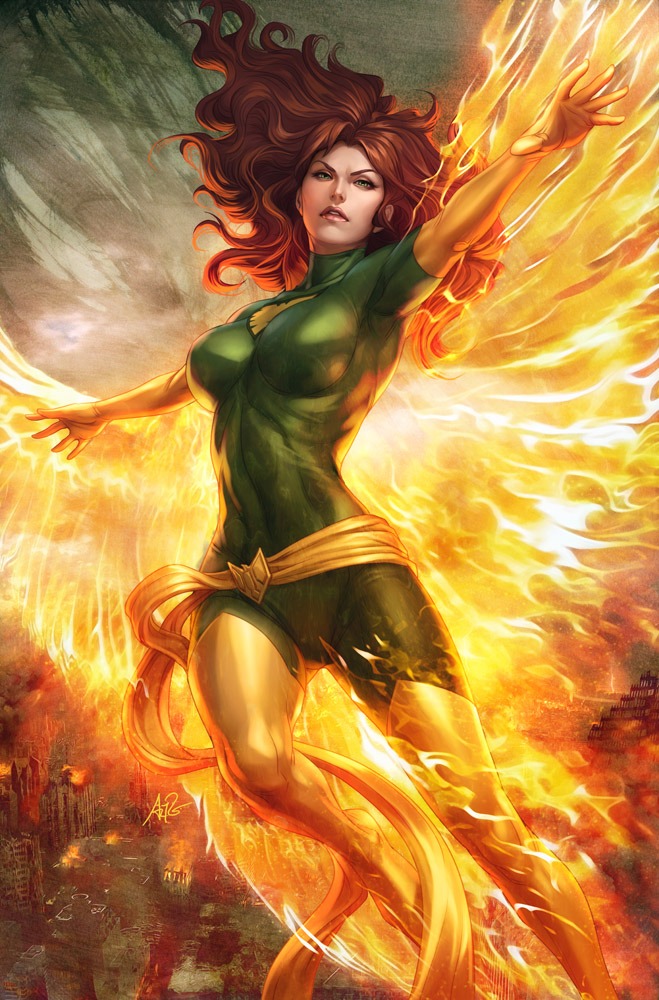
There's no bones about it. The Avengers and the X-men will have plenty of reasons to beat the shit out of each other. The world is set to be torched by the Phoenix Force and for some very convoluted reasons both sides can't agree on how to handle it. Just look at the cover. Diplomacy amounts to precisely dick at this point.


For the moment, Marvel is employing their usual Area 51 style security to prevent any hint at who may be favored. They've focused more on starting fanboy battles where kids in their parents' basement piss and moan about who has a tougher time getting a bikini wax, Rogue or She-Hulk. That's an admirable strategy in it's own right, but if Marvel is being sincere about there being a winner and loser just as they were with Civil War then that raises some interesting possibilities. Since I haven't started dry heaving yet, I'll review some of them.

First, let's look at the Avengers. This is a team that the world respects. They're not mutants. They're officially recognized superheroes. Some of them like Iron Man and Black Widow don't have powers they were born with. Some like Hulk are the result of an accident. Yet they're all a self-contained, well-understood force for justice and all that is good. That's why the public is inclined to look on them favorably for the most part. The events of Fear Itself and Civil War shook the public's confidence in their heroes. They have a much smaller margin for error. If they do something that leads to the kind of destruction that Fear Itself incurred, then they're not going to be seen as heroes as much as they are a nuisance. So when Nova comes back from deep space to let them know that the Phoenix Force is on their way and it's capable of unleashing way more destruction than the Serpent ever could, they know they have to get their shit together. They won't have a very confident public if the public is burnt to a crisp. So their focus is stopping this overgrown parrot before it takes a giant shit on their world.

The X-men are in a very different boat. The world already hates them. They're so hated that homicidal kids are able to take over corporations and launch sentinels on the island nation they had to work so hard to carve out. In the eyes of many, they aren't heroes. There isn't much sympathy for their kind in the same way there isn't much sympathy for the influenza virus. While some do tag team with the Avengers every now and then, for the most part the mutants of Marvel have to contend with being the ticking time bombs in the eyes of every human. Unlike the Avengers, most were born with their powers and they aren't exactly predictable. And most people hate unpredictability, which is why weathermen are so hated. When news emerges that the world is about to be torched, their concerns aren't in line with the Avengers.

If that weren't bad enough, they're an endangered species. The events of House of M reduced their number to a point where you could fit all of them in Donald Trump's office and still have room for a pool. They managed to jump start their species again with Hope Summers in the events of Second Coming, but it hasn't been a smooth ride. You can still count all the new mutants she's sparked on one hand and she did it with the help of the same fiery parrot that is on a crash course with Earth now. Oh, and she has red hair and green eyes. There isn't a good history with characters that have red hair, green eyes, and a connection to the Phoenix Force. Be that as it may, that history is very personal for very obvious reasons.


Need I say more? But beyond the threat the Phoenix inherently poses, the X-men have to think of the larger picture. Their species isn't growing fast enough and the recent Schism between Wolverine and Cyclops has left them less than united. Hope Summers flashed some Phoenix potential and a handful of mutants emerged. Now the Phoenix itself is on it's way and they're a species in need of a rebirth. It's impossible for them to separate the Phoenix Force from the mutant messiah that they've doubled down on after the casino has broken their balls, cut off their fingers, and gouged out their left eye. They want to save their species while the Avengers want to save the world. And therein lies the heart of the problem.

The Avengers and the X-men both possess some pretty heavy firepower, but each side is motivated by different circumstances. One comes off as inherently heroic. The Avengers are just trying to stop the world from becoming a giant ash tray for the Phoenix. But the X-men want to use the Phoenix to jump start their species. This was actually stated in a recent preview for Avengers vs. X-men #1 by Scott fucking Summers of all people. The Phoenix killed his wife and fucked him up in ways that led him to marry her clone. Yet in this preview, he talks about trying to train Hope to tap the Phoenix Force. I know there is a large legion of Cyclops-haters that are jealous of him getting to bury his face in Emma Frost's boobs every night, but they actually have a valid point here. When the man most hurt by the Phoenix Force is arrogant and desperate enough to try and control the Phoenix Force, his giant balls are overshadowed by the extent his head is up his ass.


So Cyclops is willing to risk the entire world being burnt to a crisp like a slab of deer meat on Ted Nugant's grill and entrust the power of the Phoenix to Hope fucking Summers? A girl who in recent issues of Generation Hope has pissed off members of her team to the point where they want to fucking crucify her? Well smear peanut butter on my dick, call my neighbors dog, and give my ex-girlfriend a lesson in oral sex. If that isn't the act of a man who has let his role as dictator of a country and personal giaglo to Emma Frost go to his head, I don't know what is.

This has led me to conclude in my drunken wisdom that Cyclops and the X-men are on the wrong side of the battle, at least they are under the current circumstances. They're the one putting the Earth in danger. They're the one not willing to work with the Avengers to find a way to take down the Phoenix before it shows up. So when asking who SHOULD win the battle between the Avengers vs X-men, I think I speak for the beleaguered residents of the Marvel universe when I say the Avengers should win. And this coming from a guy whose blog and fanfiction series both star the X-men.

But it would be foolish to think that the circumstances would be this basic. With Marvel, they rarely are. There's a wild card in the mix that hasn't been fully finalized yet, thanks in large part to the shitty delays plaguing Avengers: Children's Crusade. That wild card's name is Wanda Maximoff. She's the other side to the Avengers vs. X-men coin. She's the one that made Hope Summers necessary when she lost her fucking mind in House of M and neutered most of the mutant population. She has slowly (emphasis on slowly) regained her sanity in the events of Children's Crusade, but the mutants of the Marvel Universe haven't forgotten that she's still responsible for making them an endangered species. And as previews have shown, she will be a factor in how Avengers vs. X-men plays out.


Both Wanda and Hope have demonstrated that they're capable of restoring mutants. They've also demonstrated that they're capable of fucking reality up in a way that all the LSD in Europe couldn't match. The Avengers may in some ways may also be sheltering the key to the survival of the mutant race while also sheltering her from justice. It's something that makes Cyclops's decision to double down on the Phoenix Force more understandable, but that doesn't make it any less a dick move.

As it stands, the Avengers are still on the right side of history. But that could change as the story unfolds. It begs the question what will happen if one side loses. If the Avengers lose, then they may be reduced to the same kind of scrutiny that mutants face because of their powers. It'll become a much more hostile world for superheroes and one that could make for some very interesting stories. But if the X-men lose, then mutants are more vulnerable than ever. They suddenly become a menace on the level of Days of Futures Past. Utopia could fall. The Jean Grey Institute could be taken over, which wouldn't go over well with Wolverine to say the least. The gap between one group of heroes and the other would be so great that it would completely change the dynamic of how the Marvel Universe works. That also could make for some very interesting stories.

Then there's a chance they could both end up as losers and the world would be that much more fucked. We really don't know at this point, but if I were a betting man that hadn't lost his last mortgage payment betting against the Giants in the Superbowl I would say the Avengers have the better odds. They're the one coming out with the movie later this year. They're the one Marvel is pushing with all their might to be the biggest name in comics. They may or may not succeed, but whatever the case I'll keep drinking and ranting as the truth unfolds. Nuff said!